A Few Sleep Tips From Us To You

276

Your mattress and the position you sleep in may affect your spine.

Choose a mattress that provides medium or firm support, such as a traditional coil spring or adjustable airbed. Avoid waterbeds, thick pillow tops and soft, sagging mattresses.
Always sleep on your back with a pillow either underneath your knees or on your side with a pillow between your knees. Avoid sleeping on your stomach.
Keep your neck and back covered while sleeping to avoid drafts that could cause potential muscle spasms.

Here are a couple of tips to help you get in and out of bed more comfortably:
To lie down: Sit on the edge of the bed, pull your arms to your sides and tilt your body into the bed, maintaining the bend of your knees at 45 degrees. Finally, bring your feet into in a lying position or roll onto your back.
To get up: From a side-lying position with your knees bent, push your body upright into a sitting position, swinging your legs over the edge of the bed as you rise.

If you find that you wake up sore then you may be suffering from any number of conditions that get worse overnight.

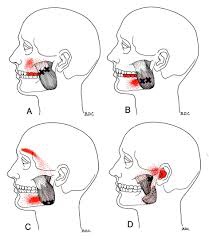
Trigger points in the masseter muscle

The masseter is the main muscle that moves your jaw. It originates on the zygomatic arch and maxilla, and inserts on the coronoid process and Ramus of the mandible. It’s actions are to elevate the mandible and close the jaw. The deep fibres of this muscle also retrude the mandible. This muscle commonly harbours trigger points as a result of teeth grinding. Trigger points in this muscle are often also associated with tmj dysfunction. Trigger points in the upper part of this muscle will refer pain to the upper molars and maxilla often felt as sinusitis. Trigger points in the lower portion of this muscle refer to the lower molars and temple. All trigger points can cause tooth sensitivity

Trigger points in the suboccipitals.

img_0248-1

The suboccipitals are a group or four muscles that attach to the transverse and spinous process of C1 and C2 and the occipital bone.

These muscles provide extension side bending and rotation movements between the occiput and C1 and C2. These muscles are often overloaded due to postural strain. A classic example being sitting in front of a computer all day.

When these muscles are overloaded trigger points can develop. Pain and symptoms of trigger points in the suboccipitals include head pain that penetrates into the skull but is difficult to localize.

Patients are likely to describe the pain as “all over” including the occiput, eye and forehead, but without any clarity. Trigger points in these muscles are often associated with tension head aches

.

How Do We Choose A Mattress?

In-bed-after-no-sleep
The age and quality of your mattress have a major impact on how you feel. A worn-out mattress can certainly contribute to back and neck problems. Most experts agree that traditional mattresses should be replaced every 5-8 years. Since you spend about one third of your life in bed, choosing the right mattress is critical. Unfortunately, mattress selection is a highly individual process as there is no single “best” mattress. The following tips will help you make an informed decision:

* Choose a medium-firm model. Mattresses that are either too soft or excessively firm can aggravate back pain.

* Keep the pillow-top relatively thin. An excessively plush topper is the equivalent of placing a cheap mattress on top of a good one.

* Always replace the box spring foundation when you replace the mattress.

* Don’t choose the most expensive mattress in the store- but don’t set your budget unreasonably low. Bargain mattresses are not a good option. Your savings should be focused on avoiding unnecessary add-ons (mattress covers, custom sheets, pillows, etc).

* Look for vendors that provide an in-home warranty that allows you to exchange the mattress if it does not meet your expectations.

* Your chiropractor may be able to provide additional suggestions to help you choose between, coil spring, memory foam, water and air beds.

Neck Pain Reduction Strategies

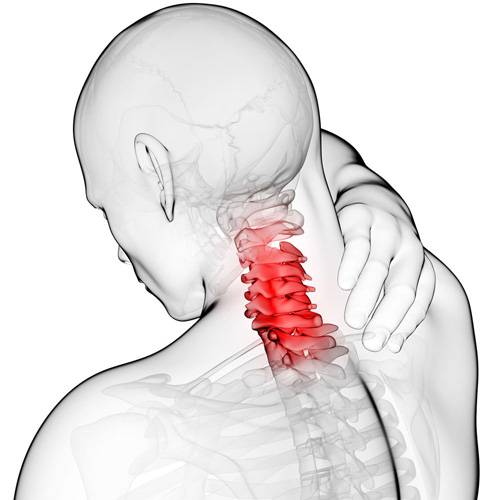
Cervical Strain

Neck pain is very common! According to one study, between 10-21% of the population will experience an episode of neck pain each year with a higher incidence rate among office workers. Between 33-65% will recover within one year, but most cases become “chronic, recurrent” meaning neck pain will come and go indefinitely. The more we can learn WHAT to do to prevent these episodes, the better.

1.  SLEEP: Use a cervical pillow so the NECK is fully supported during sleep. This keeps your head in alignment with your spine. Also, if possible, sleep on your back!

2. OFFICE: Position the computer screen so that it’s at or slightly below eye level and straight in front of you. The “KEY” point is that you feel comfortable with the height of the monitor. Keep your chin “tucked in” so the 10-11 pound (4.5-5 kg) weight of your head stays back over your shoulders—this will place less of a load on your upper back and neck muscles to hold your head upright! Set a timer on your cell phone to remind you to get up and move around every 30-60 minutes.

3. TELEPHONE: If you are using the phone a lot during the day, GET A HEADSET! If you are pinching the phone between your shoulder and ear, you WILL have neck problems!

4.  EXERCISE: Studies show people who are more physically active are less likely to report neck pain.

5.  NUTRITION: Search for information on the “anti-inflammatory diet.” It’s basically fruits, veggies, and lean meat, with a few other twists. Also, stay hydrated by drinking plenty of water each day.

6.  LIFT/CARRY: A heavy purse, brief case, or roller bag can really hurt your neck. Take ONLY what you need and put the rest in a secondary bag that stays in your car or where you can access it when needed. Switch to a backpack if possible vs. a heavy brief case.

7.  SELF-MASSAGE: Reach back and dig your fingers into your neck muscles and “work” the tight fibers back and forth until they loosen up. Roll your head over the top edge of a chair by sliding down until the top of the chair back rests in your neck. Search for the tight fibers and work them loose!

8.  WHIPLASH: If you are injured, DO NOT WAIT! Those who seek chiropractic care shortly after an accident have less long-term trouble!

Sleep Tips for Fibro 1-5

In-bed-after-no-sleep

Last week, we discussed the connection between sleep disturbance and the presence of widespread pain found with fibromyalgia (FM). This month’s topic will center on how we can improve our sleep quality with the goal of feeling restored upon waking in the morning!

1)  NOISE & LIGHT: Block out noise with earplugs or a sound machine and light with window blinds, heavy curtains, and/or an eye mask. The light emanating from the LED or LCD from TVs, DVRs, or stereos has been found to suppress the pineal gland’s melatonin production (the “sleep hormone”) and thus can interfere with sleep, so try to keep them away from the bedroom. However, a small night light can assist for nighttime bathroom callings!

2) FOOD: Avoid large meals at least two hours before bedtime. Try a glass of milk, yogurt, or a small protein snack if hunger overcomes you. Milk is unique as it contains the amino acid L-tryptophan, which studies show, helps people sleep!

3)  EXERCISE: Aerobic exercise during the day is HIGHLY therapeutic. It reduces stress, reduces pain, reduces depression, and wakes us up! Avoid heavy exercise within three hours before bedtime. Exercise on a REGULAR basis to promote high-quality deep sleep.

4)  SLEEP HABITS: Develop good sleeping habits by going to bed at a regular time. Avoid napping in the late afternoon. A “POWER NAP” of no more than 10-15 minutes, ideally about eight hours after waking, is a GOOD THING as it can help you feel refreshed.

5)  MENTAL TASKS: Avoid mentally stimulating activity one hour before bedtime to calm the brain.


If you, a friend or family member requires care for Fibromyalgia, we sincerely appreciate the trust and confidence shown by choosing our services!

Fibromyalgia and Sleep

Is there a connection between fibromyalgia (FM) and sleep disturbance? Let’s take a look!

FM is a condition that causes widespread pain and stiffness in muscles and joints. Patients with FM often experience chronic daytime fatigue and some type of sleep problems like getting to sleep, staying asleep, and/or feeling restored in the morning upon waking. The National Institutes of Health estimates between 80-90% of those diagnosed with FM are middle-aged women, although it can affect men and happen at any age. As little as 10-20 years ago, it was hard to find a doctor who “believed” in FM, and it was common for the patient to be told that their pain “was all in their head.” FM has now been studied to the point that we know it is a real condition, and it affects between 2-6% of the general population around the world.

It is well established that sleep disturbance frequently occurs after surgery, which usually normalizes as time passes. One study used a group of healthy women who were deprived of sleep (particularly slow wave sleep) for three days to see if there was a link between sleep disturbance and pain. Results confirmed that the women experienced a decrease in pain tolerance and increased levels of discomfort and fatigue after three days—the same symptoms found among FM sufferers!

Fibromyalgia may have NO known cause, or it can be triggered by other conditions such as repetitive stress injuries, car crash injuries, and other forms of trauma. FM also appears to run in families though it’s still NOT clear if this is a true genetic link or caused by shared environmental factors. Some feel FM is a rheumatoid condition, and though FM is NOT a true form of arthritis, it has been found that people with arthritis are more likely to have FM.

FM sufferers frequently suffer from conditions such as irritable bowel syndrome, chronic fatigue syndrome, migraine headaches, arthritis, lupus, and major depressive disorders. Approximately 20% of FM patients have depression and/or anxiety disorders, and a link between chronic pain and depression exists and seems to play a role in people’s perception of pain.

Because conditions such as sleep apnea can result in symptoms similar to FM, it’s recommended that patients suspected of FM keep a sleep/sleepiness diary in order to rule out sleep apnea as a cause for their condition.

There are many “tips” for improving sleep quality, which we will dive into next month, as these may prove VERY HELPFUL in the management of FM!

If you, a friend or family member requires care for Fibromyalgia, we sincerely appreciate the trust and confidence shown by choosing our services!
Diet & Exercise Tip Of The Month

Exercise Tip

Research has shown that working out first thing in the morning will rev up your metabolism for the rest of the day. If you’re short on time in the mornings, opt for a quick, but high-intensity workout of the basics, such as jumping jacks, push-ups, and squats.