Weight Training and Hockey

Hockey players need to weight train in order to improve their performance on the ice. Weight training can help improve a player’s strength, speed, and agility. It can also help reduce the risk of injuries.

Weight training can help improve a player’s strength. When a player is stronger, they can generate more power and speed on the ice. This can help them make better plays and take control of the game. Weight training can also help improve a player’s speed. When a player is faster, they can move around the ice more easily and get to the puck faster. This can help them create more scoring opportunities.

Weight training can also help improve a player’s agility. When a player is more agile, they can move around the ice more easily and avoid being hit by the other team. This can help them stay in the game longer. Weight training can also help reduce the risk of injuries. When a player is stronger, they are less likely to get injured. This can help them stay on the ice longer and help the team win more games.
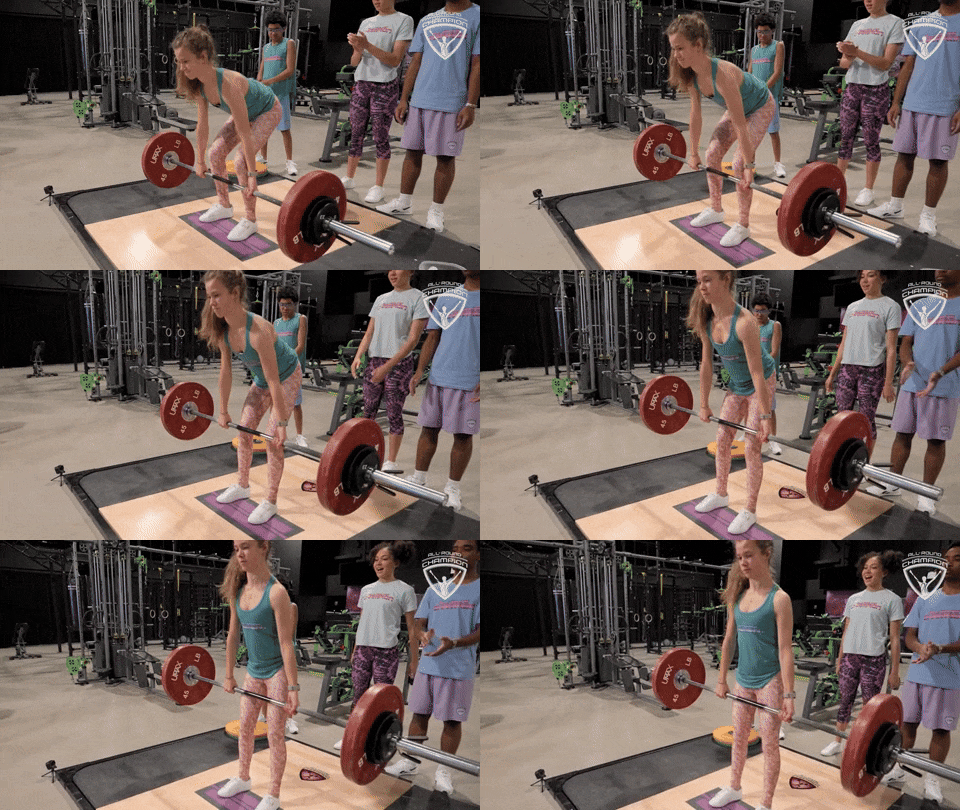

Weight Training For Young Athletes

Weight training is an important part of any young athlete’s training program. It can help improve strength, speed, and power. Weight training can also help prevent injuries.

Weight training can help improve the strength of young athletes. Strength is important for athletes because it allows them to generate more power and run faster. Weight training can also help improve the athletes’ endurance, which is important for long distance events.

Weight training can help improve the speed of young athletes. Speed is important for athletes because it allows them to run faster and cover more ground. Weight training can help improve the athletes’ stride length and frequency, both of which are important factors in running speed. Weight training can help improve the power of young athletes. Power is important for athletes because it allows them to run faster and jump higher.

Weight training can help improve the athletes’ explosive power, which is important for athletes who compete in sports that require speed and power. Weight training can also help prevent injuries in young athletes. Weight training can help improve the strength and flexibility of the muscles and tendons. This can help prevent injuries caused by overuse or sudden movements. Weight training is an important part of any young athlete’s training program. It can help improve strength, speed, and power. Weight training can also help prevent injuries.

Contact us for treatment in Winnipeg

Find and Follow us on Twitter and Instagram!

Sprinting

The key to getting a higher top speed

Sprinting is one of the most important exercises an athlete can do to develop a higher top speed. It is a plyometric exercise that uses the athlete’s own body weight to create resistance and improve explosiveness.

Sprinting also helps improve an athlete’s stride length and frequency, both of which are important factors in running speed. Sprinting is a great way to improve an athlete’s overall speed. It is a very explosive exercise that uses many of the same muscles used in running. Sprinting also helps improve the athlete’s stride length and frequency, both of which are important factors in running speed.

Sprinting is a plyometric exercise, which means that it uses the athlete’s own body weight to create resistance and improve explosiveness. Plyometric exercises are important for athletes because they help improve the explosive power of the muscles. This is important for athletes because it allows them to run faster and jump higher.

Sprinting also helps improve the athlete’s overall conditioning. It is a very demanding exercise that requires the athlete to use many of the same muscles used in running. This helps improve the athlete’s overall running speed and endurance. Sprinting is a great exercise for athletes of all levels. It is a very demanding exercise, but it can be modified to fit the athlete’s level of conditioning. Sprinting is a great way for athletes to improve their top speed and overall conditioning.

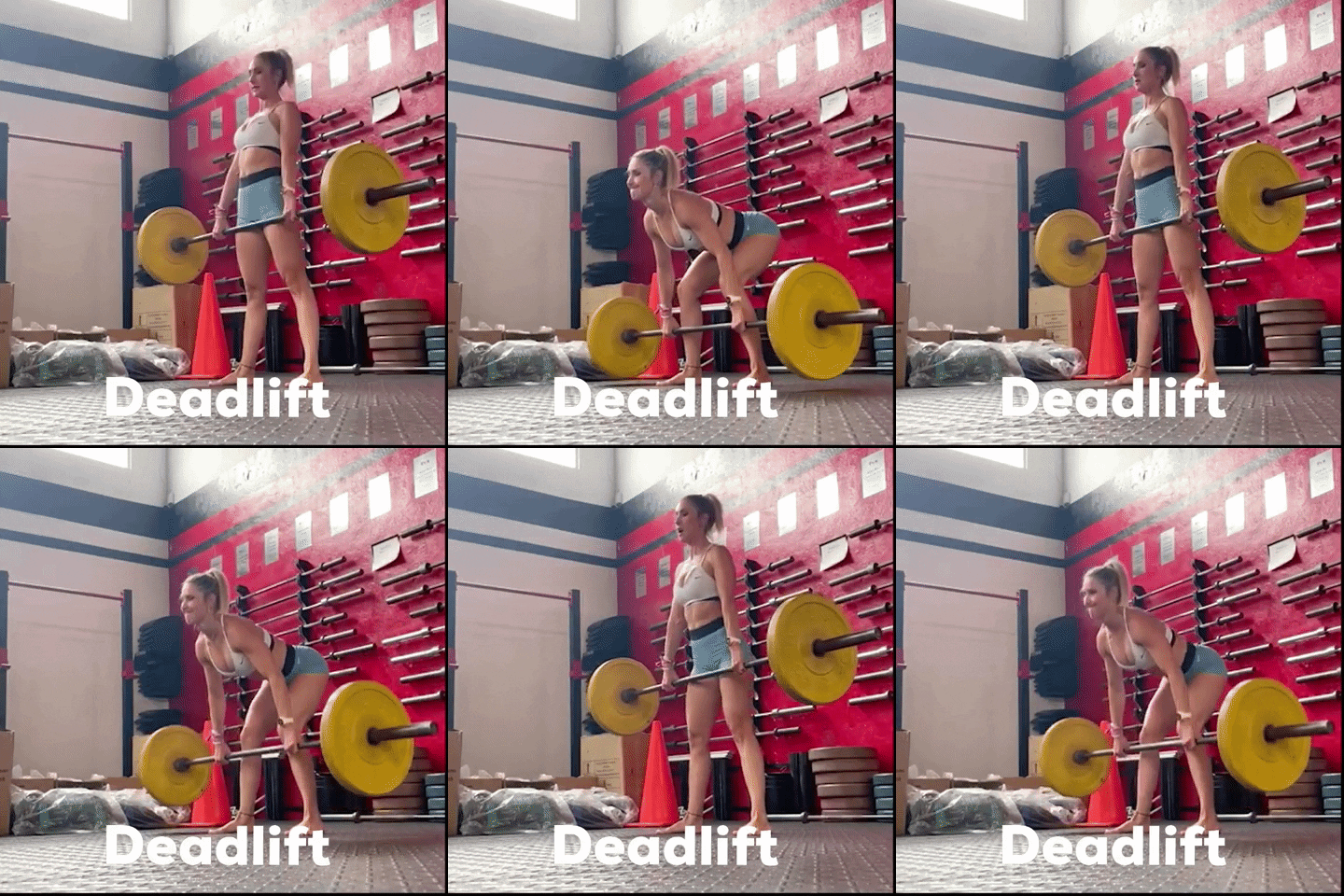
The Deadlift

Want to be an athlete? Better deadlift….

Deadlifting is a weightlifting exercise that involves lifting a weight off the ground from a bent-over position. It is a common exercise in weightlifting and bodybuilding. Deadlifting can be safely performed if proper form is followed.

The most important part of deadlifting is maintaining a neutral spine. This means keeping the spine in a natural position, not rounding or hyperextending. When the spine is in a neutral position, the weight is distributed more evenly, which reduces the risk of injury.

To maintain a neutral spine, keep the shoulders back and the chest up. Tighten the abdominal muscles to keep the spine stable. When lifting the weight, use the legs and hips to lift the weight, not the back.

If the weight is too heavy, it can cause the back to round. This can cause injuries such as disk herniation and spinal cord compression. If the weight is too light, the muscles will not be challenged and the exercise will not be effective.

The best weight to use for deadlifting depends on the person’s strength and experience. Start with a weight that is challenging but not too heavy. As the person becomes stronger, they can increase the weight.

Deadlifting can be safely performed if proper form is followed. To maintain a neutral spine, keep the shoulders back and the chest up. Use the legs and hips to lift the weight, not the back. If the weight is too heavy, it can cause injuries. If the weight is too light, the muscles will not be challenged.

Why should athletes see Chiropractors?

What benefits do Chiropractors offer athletes?

Athletes need to see chiropractors for a variety of reasons. One of the most important reasons is that chiropractors can help prevent injuries. They can do this by realigning the spine and helping to keep the body in balance.

This is important because when the body is in balance, it is less likely to be injured.

Another reason that athletes need to see chiropractors is because they can help to speed up the healing process after an injury. This is important because it can help an athlete to get back to playing their sport as quickly as possible.

Finally, chiropractors can help athletes to perform at their best. This is because they can help to keep the body in balance and alignment. When the body is in balance, it is able to function at its best.

Athletes and Nutrition

You are what you eat, so eat elite.

As an elite athlete, you know that proper nutrition and diet are essential for success. But what you may not know is just how important they are. Eating the right foods can help you achieve peak performance, while eating the wrong foods can lead to fatigue and poor performance.

The first step to proper nutrition is understanding your own body. Everyone is different, and what works for one person may not work for another. You need to experiment to find out what foods give you the energy you need to perform your best. In general, athletes need to eat plenty of fruits and vegetables, lean protein, whole grains, and healthy fats. It’s also important to drink plenty of water and avoid sugary drinks.

When it comes to eating for performance, timing is everything. You need to eat a balanced meal several hours before your event, and then have a light snack about an hour before. During the event, you should focus on drinking fluids and consuming energy gels or bars. After the event, it’s important to refuel with a balanced meal that includes protein and carbohydrates. You may also need to take supplements to help you recover.

Proper nutrition and diet are essential for elite athletes. By eating the right foods, you can achieve peak performance, while eating the wrong foods can lead to fatigue and poor performance.

More Hip Mobility Work

Hip mobility work is often under appreciated but required for athletes and the general public. Better hip range of motion will lead to better athletic performance, less pain, better mobility and a better quality of life. Check out a great little routine here. As always, check with your therapist, trainer or coach before starting this kind of routine to make sure it is appropriate for you.

Be sure to follow Eric @BeEliteDaily for more great content like this.

Athletic Rotational Force

Building athletic rotational force is key to power production in almost every sport. Here’s a great example of the kind of programming it takes to get it done. Medicine balls are a great tool when used correctly.

Be sure to give Zach Dechant a follow for more great athleticism content.

Make It Fun!!!

Getting your athletes to buy in to a proper warm up/prep can be a challenge at times. Using something like the routine above can make it a fun, competitive pre-game activity that gets them loose and gets their competitive juices flowing.

Make it fun for the athlete and you’ll see results faster!

Be sure to follow Austin for more great tips like this!

Advanced Hip Opening

Alex Simone (https://twitter.com/SimoneBaseball) shows us some great advanced hip openers for athletes to use to prep for training. When getting your hips and body ready for training or competition we need to consider which movements our sport uses and how we can mimic those movements as part of our prep work.

Baseball, football, hockey and many other athletes will benefit from this type of prep work both on the day of competition and as an addition to their daily routine.