Diet: Healthy Diet & Nutrition Critical for Mental Health.

Diet: Healthy Diet & Nutrition Critical for Mental Health.

A new collaborative study adds to a growing body of evidence showing a relationship between both diet quality and potential nutritional deficiencies and mental health. Studies have shown that many nutrients have a clear influence on brain health including omega-3 fatty acids, B vitamins (particularly folate and B12), choline, iron, zinc, magnesium, S-adenosyl methionine (SAMe), vitamin D, and amino acids. Lead author Dr. Jerome Sarris writes, “While the determinants of mental health are complex, the emerging and compelling evidence for nutrition as a key factor in the high prevalence and incidence of mental disorders suggests that nutrition is as important to psychiatry as it is to cardiology, endocrinology, and gastroenterology.”

The Lancet Psychiatry, January 2014

For more health and wellness tips and information follow us or check out our blog at http://www.aberdeenchiropracticblog.com 

Photo by Vincent Rivaud on Pexels.com

Mental Attitude: Student Loans = Stress for Young Adults.

Mental Attitude: Student Loans = Stress for Young Adults.

A new study finds that student loan debt is a significant cause of stress among young adults. Researchers conducted a survey across the United States and found that those with greater student loan debt reported higher levels of depressive symptoms. Study author Dr. Katrina Walsemann writes, “We are speculating that part of the reason that these types of loans are so stressful is the fact that you cannot defer them, they follow you for the rest of your life until you pay them off.” Further research is needed to determine how student loan debt affects other areas of health and life, such as job choices, marriage, and children.

University of South Carolina, January 2015

For more health and wellness tips and information follow us or check out our blog at http://www.aberdeenchiropracticblog.com 

Photo by Pixabay on Pexels.com

Wellness/Prevention: Positive Emotions May Be Best Anti-Inflammatories.

Wellness/Prevention: Positive Emotions May Be Best Anti-Inflammatories.

University of California, Berkeley researchers have discovered a link between positive emotions and lower levels of inflammatory proteins that are knows to signal the immune system to work harder. The research team found that participants who experienced positive emotions had the lowest levels of the cytokine and interleukin 6, which are known markers of inflammation. Sustained high levels of cytokines are associated with conditions such as type-2 diabetes, heart disease, arthritis, Alzheimer’s disease, and clinical depression.

Emotion, January 2015

For more health and wellness tips and information follow us or check out our blog at http://www.aberdeenchiropracticblog.com 

Photo by Andrea Piacquadio on Pexels.com

Diet: Follow the Mediterranean Diet to Lower Stroke Risk.

Diet: Follow the Mediterranean Diet to Lower Stroke Risk.

New research suggests that the Mediterranean diet may reduce an individual’s risk of ischemic stroke. The Mediterranean diet includes fruits and vegetables, whole grains, legumes, nuts, fish, poultry, and olive oil, with limits on red meat, sweets, saturated fats, butter, and full-fat dairy products. Study author Dr. Paul Wright writes, “Overall, there is strong evidence, based on this study, that strict adherence to a Mediterranean diet significantly reduces stroke risk.”


American Stroke Association, February 2015

For more health and wellness tips and information follow us or check out our blog at http://www.aberdeenchiropracticblog.com 

Photo by Pixabay on Pexels.com

Health Alert: Smoking Deaths Underestimated.

Health Alert: Smoking Deaths Underestimated.

Smoking may be a bigger killer than currently estimated. The current estimate from the United States Surgeon General is that 480,000 Americans die yearly of smoking-related causes, but researchers from the American Cancer Society claim that the figure may be closer to 540,000 after including at least some deaths caused kidney failure, intestinal disease, heart disease caused by high blood pressure, infections, breathing problems, and breast and prostate cancer. Though these diseases are not typically associated with smoking, researchers found that smokers are more likely to die from these conditions than non-smokers. Thus, they believe these additional deaths should be included in smoking-related mortality calculations.

New England Journal of Medicine, February 2015

Photo by Irina Iriser on Pexels.com

Wellness/Prevention: Use of Media Devices Affect Teens’ Sleep Significantly.

Wellness/Prevention: Use of Media Devices Affect Teens’ Sleep Significantly.

A Norwegian study has found that if it takes more than an hour for a teenager to fall asleep, there is an almost 50% likelihood that they are spending more than four hours per day outside of school using electronic devices such as computers, TVs, smartphones, and MP3 players. The findings are of concern since the majority of teens in the United States report having at least one electronic device in their bedroom, and poor sleep has implications on school performance. The authors add, “The current recommendation is not to have a TV in the bedroom. It seems, however, that there may be other electronic devices exerting the same negative influence on sleep, such as PCs and mobile phones. The results confirm recommendations for restricting media use in general.” Scandinavian Journal of Public Health, November 2014

Photo by fauxels on Pexels.com

How are you sitting while you read this?

I’d bet not like this! 

Poor posture while at your desk or while looking at your phone can lead to a myriad of issues including back pain, neck pain and headaches. 

Be aware of your positioning when at your desk and watch those aches and pains disappear! 

Photo by PNW Production on Pexels.com

Chiropractic: Resolution of Shoulder Pain Following Chiropractic Care.

Chiropractic: Resolution of Shoulder Pain Following Chiropractic Care.

A new case study sheds light on the benefits of chiropractic care for shoulder pain. A 73-year-old woman with a one-year history of shoulder pain presented for chiropractic care. Her working diagnosis included brachial neuritis, cervicalgia, arthritis, and cervical spinal joint fixations. She reported resolution of pain, and improvements in both function and quality of life following just eleven chiropractic treatments over the course of ten weeks.

Annals of Vertebral Subluxation Research, February 2015

For more health and wellness tips and information follow us or check out our blog at http://www.aberdeenchiropracticblog.com 

Photo by Karl Solano on Pexels.com

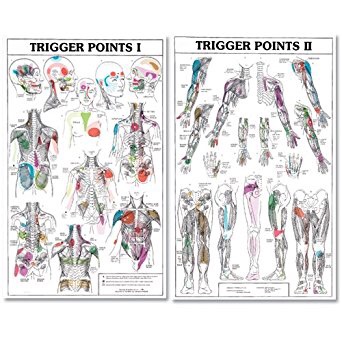
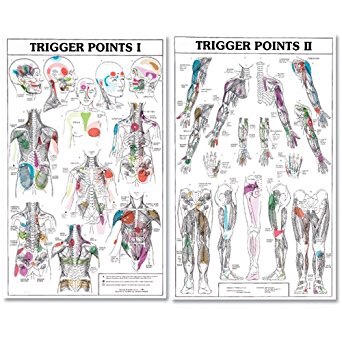
Trigger point referral patterns.

Myofascial trigger points form in a muscle due to overload stress. A portion of muscle fibers lock up into a knot. Once formed these points will irritate sensory nerves that are in proximity to the knot. When this happens,

trigger points have the capacity to refer pain along specific distributions or patterns that are well mapped out. sometimes pain may be felt at a great distance away from the actual point itself.

Trigger points

Trigger Points in muscle and other soft tissue are one of the most common causes of a wide variety of pain and dysfunction, including (but not limited to):


• Achy persistent pain
• Severe local pain
• Arm / leg pain
• Back pain
• Radiating pain
• Weakness
• Stiffness

• Pain resulting from a medical condition, such as
– Migraines
– Sciatica
– TMJ dysfunctions
– Arthritis
– Fibromyalgia
– Carpal tunnel syndrome
– Soft tissue injuries
– And more…