Diet: Oatmeal for Breakfast = Fullness & Lower Calorie Intake at Lunch.

Diet: Oatmeal for Breakfast = Fullness & Lower Calorie Intake at Lunch.

Your breakfast choice may affect how full you feel during the rest of the morning and how much you eat for lunch. Scientists from the New York Obesity Nutrition Research Center at Mount Sinai St. Luke’s Hospital report that having oatmeal for breakfast results in greater fullness, less hunger, and fewer calories eaten during lunch compared with those eating a ready-to-eat cereal for breakfast. The researchers believe that the greater satiety effect of oatmeal cereal compared to sugared ready-to-eat cereal or water might be due to slower gastric emptying, as they found that oatmeal took longer to leave the stomach.

Annals of Nutrition and Metabolism, January 2015

For more health and wellness tips and information follow us or check out our blog at http://www.aberdeenchiropracticblog.com 

Photo by Life Of Pix on Pexels.com

Diet: Follow the Mediterranean Diet to Lower Stroke Risk.

Diet: Follow the Mediterranean Diet to Lower Stroke Risk.

New research suggests that the Mediterranean diet may reduce an individual’s risk of ischemic stroke. The Mediterranean diet includes fruits and vegetables, whole grains, legumes, nuts, fish, poultry, and olive oil, with limits on red meat, sweets, saturated fats, butter, and full-fat dairy products. Study author Dr. Paul Wright writes, “Overall, there is strong evidence, based on this study, that strict adherence to a Mediterranean diet significantly reduces stroke risk.”


American Stroke Association, February 2015

For more health and wellness tips and information follow us or check out our blog at http://www.aberdeenchiropracticblog.com 

Photo by Pixabay on Pexels.com

Health Alert: Smoking Deaths Underestimated.

Health Alert: Smoking Deaths Underestimated.

Smoking may be a bigger killer than currently estimated. The current estimate from the United States Surgeon General is that 480,000 Americans die yearly of smoking-related causes, but researchers from the American Cancer Society claim that the figure may be closer to 540,000 after including at least some deaths caused kidney failure, intestinal disease, heart disease caused by high blood pressure, infections, breathing problems, and breast and prostate cancer. Though these diseases are not typically associated with smoking, researchers found that smokers are more likely to die from these conditions than non-smokers. Thus, they believe these additional deaths should be included in smoking-related mortality calculations.

New England Journal of Medicine, February 2015

Photo by Irina Iriser on Pexels.com

Wellness/Prevention: Use of Media Devices Affect Teens’ Sleep Significantly.

Wellness/Prevention: Use of Media Devices Affect Teens’ Sleep Significantly.

A Norwegian study has found that if it takes more than an hour for a teenager to fall asleep, there is an almost 50% likelihood that they are spending more than four hours per day outside of school using electronic devices such as computers, TVs, smartphones, and MP3 players. The findings are of concern since the majority of teens in the United States report having at least one electronic device in their bedroom, and poor sleep has implications on school performance. The authors add, “The current recommendation is not to have a TV in the bedroom. It seems, however, that there may be other electronic devices exerting the same negative influence on sleep, such as PCs and mobile phones. The results confirm recommendations for restricting media use in general.” Scandinavian Journal of Public Health, November 2014

Photo by fauxels on Pexels.com

How are you sitting while you read this?

I’d bet not like this! 

Poor posture while at your desk or while looking at your phone can lead to a myriad of issues including back pain, neck pain and headaches. 

Be aware of your positioning when at your desk and watch those aches and pains disappear! 

Photo by PNW Production on Pexels.com

Chiropractic: Resolution of Shoulder Pain Following Chiropractic Care.

Chiropractic: Resolution of Shoulder Pain Following Chiropractic Care.

A new case study sheds light on the benefits of chiropractic care for shoulder pain. A 73-year-old woman with a one-year history of shoulder pain presented for chiropractic care. Her working diagnosis included brachial neuritis, cervicalgia, arthritis, and cervical spinal joint fixations. She reported resolution of pain, and improvements in both function and quality of life following just eleven chiropractic treatments over the course of ten weeks.

Annals of Vertebral Subluxation Research, February 2015

For more health and wellness tips and information follow us or check out our blog at http://www.aberdeenchiropracticblog.com 

Photo by Karl Solano on Pexels.com

Exercise: Make it Fun and Keep Going.

Exercise: Make it Fun and Keep Going.

When exercising, it is important to make your routine enjoyable and fun to help ensure that you keep exercising. The American Heart Association suggests the following: wear shoes that are comfortable and fit properly, wear clothing that is appropriate for weather conditions, start slow, stick to a consistent workout time, make expectations reasonable for your health and abilities, include fun activities with family and friends, track you progress, and reward yourself for success. American Heart Association, February 2015

Photo by Pixabay on Pexels.com

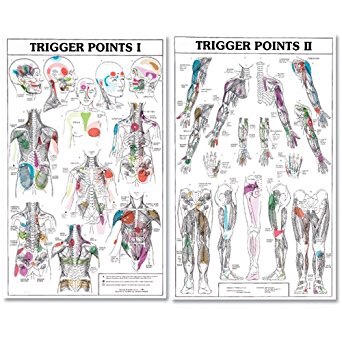
Trigger points

Trigger Points in muscle and other soft tissue are one of the most common causes of a wide variety of pain and dysfunction, including (but not limited to):


• Achy persistent pain
• Severe local pain
• Arm / leg pain
• Back pain
• Radiating pain
• Weakness
• Stiffness

• Pain resulting from a medical condition, such as
– Migraines
– Sciatica
– TMJ dysfunctions
– Arthritis
– Fibromyalgia
– Carpal tunnel syndrome
– Soft tissue injuries
– And more…

Trigger points and fibromyalgia

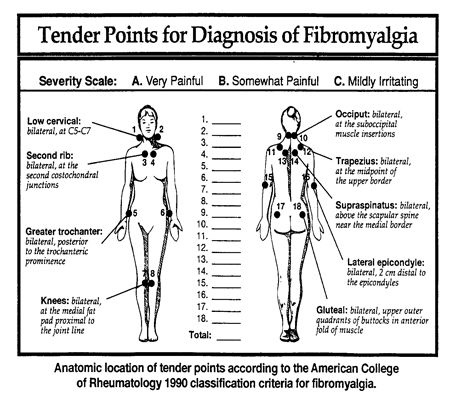
Myofascial pain syndrome (trigger points) and fibromyalgia are often confused to be the same condition and while there is a lot of interrelatedness between the two they are not quite identical. The clinical definition of a trigger point is “a hyper irritable spot associated within a taut band of skeletal muscle that is painful on compression or muscle contraction, and usually responds with a referred pain pattern distant from the spot”. Trigger points form from an overload trauma to the muscle tissue. This is contrasted with fibromyalgia which is defined as “a medical condition characterized by chronic widespread pain and a heightened pain response to pressure. Other symptoms include tiredness to a degree that normal activities are affected, sleep problems and troubles with memory. Some people also report restless leg syndrome, bowel and bladder problems, numbness and tingling and sensitivity to noise, lights and temperature. It is also associated with depression, anxiety, and post traumatic stress disorder”. Fibromyalgia will also present with localized tender points which are often mistaken for trigger points. Where these two conditions become somewhat interrelated is via the nervous system. Fibromyalgia patients suffer from a super-sensitization of the nervous system causing hyperirritability and pain. Myofascial trigger points can be caused by,or be the cause of, super sensitization. An active trigger point will irritate the sensory nerves around it eventually leading to super-sensitization. Trigger points have also been showed to form of become active due to super-sensitization. Both of these conditions can perpetuate the other, leading to layers of pain and symptoms. This being the case, trigger point therapy can have a very positive effect on decreasing the severity of pain and symptoms in patients suffering from fibromyalgia.

Bryan Cobb RMT.

Since 2005, Bryan has been dedicated to helping all people with chronic and acute pain caused by soft-tissue damage.

His training and experience make him uniquely qualified to treat a wide variety of pain and dysfunction and to give instruction on prevention and self-care.

Bryan is the only Massage Therapist in Manitoba — and one of the few in Canada — to be certified by the Certification Board for Myofascial Trigger Point Therapists (CBMTPT).

Bryan holds a degree as an Advanced Remedial Massage Therapist (ARMT) from the Massage Therapy College of Manitoba.  Course work at MTCM includes
• over 2,000 hours of practice, as well as
• intensive course work,
• a supervised clinical practicum, and
• community outreach placements.

MTCM has a credit transfer affiliation with the University of Winnipeg, ensuring that its courses are held to the highest level.  When Bryan studied at MTCM, the college was the only massage therapy college in western Canada accredited by the Commission on Massage Therapy Accreditation.  Today, the college is a member of the Canadian Council of Massage Therapy Schools.

Bryan is a member in good standing of the Natural Health Practitioners of Canada.

Bryan also has a background in Anatomy, Exercise Physiology, and Sport Sciences from the University of Manitoba, and he has worked as a personal trainer and fitness leader.

He is an avid natural bodybuilder and fitness enthusiast, and has a blue belt in Brazilian jiu-jitsu.