
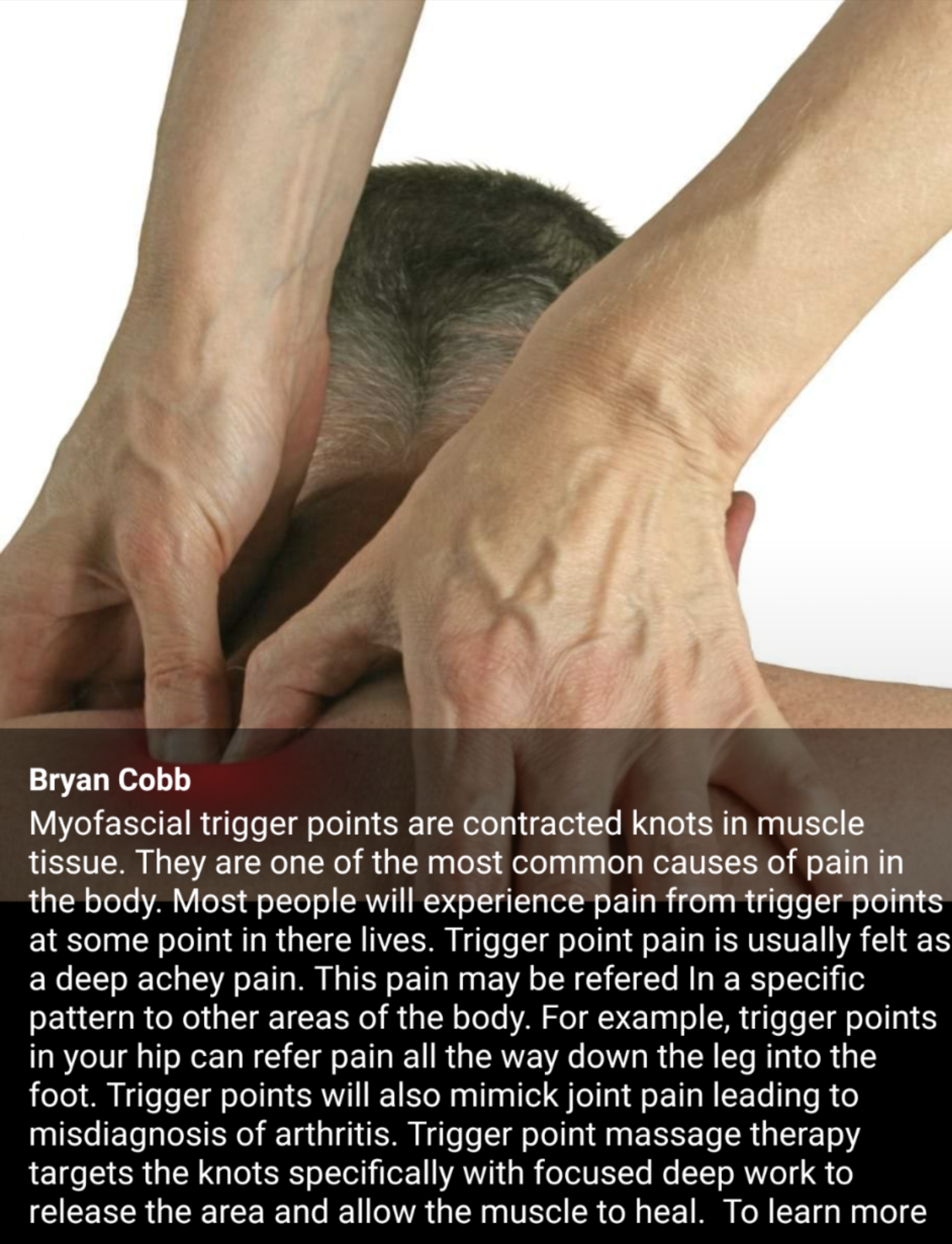
Myofascial pain.

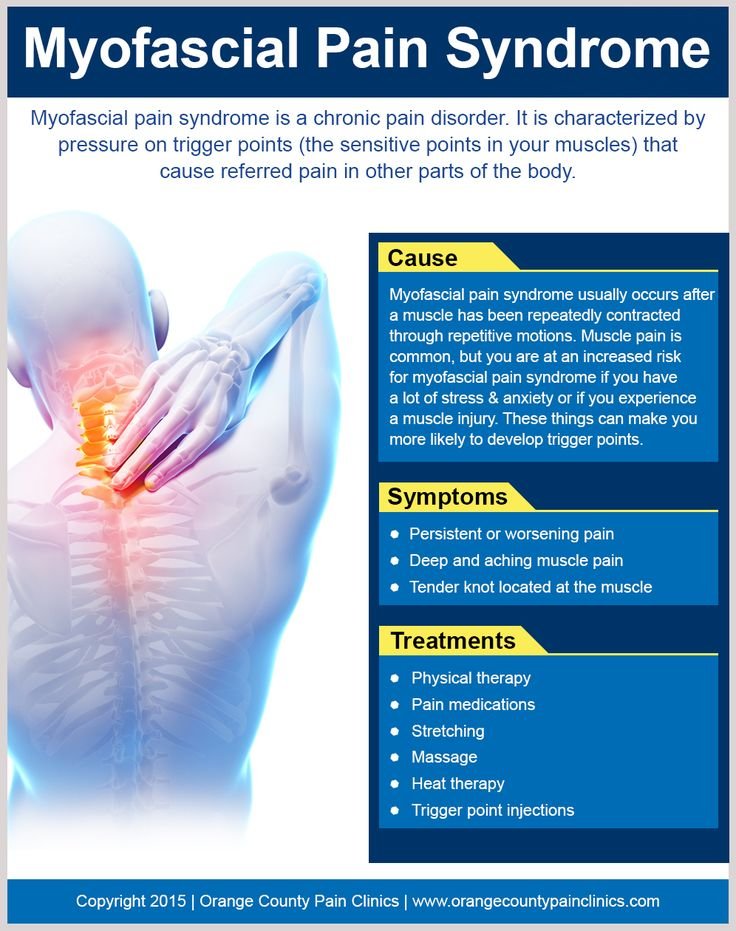
Myofascial pain syndrome is a chronic pain disorder. In this condition, pressure on sensitive points in your muscles (trigger points) causes pain in the muscle and sometimes can cause pain spread to other parts of your body. This is called referred pain. Trigger points can also cause stiffness and weakness.
This syndrome typically occurs after a muscle has been contracted repetitively. This can be caused by repetitive motions used in jobs or hobbies or by stress-related muscle tension.
While nearly everyone has experienced muscle tension pain, the discomfort associated with myofascial pain syndrome persists or worsens. Treatment options include massage therapy, dry needling, and physical therapy. relaxation techniques such as meditation also can help.
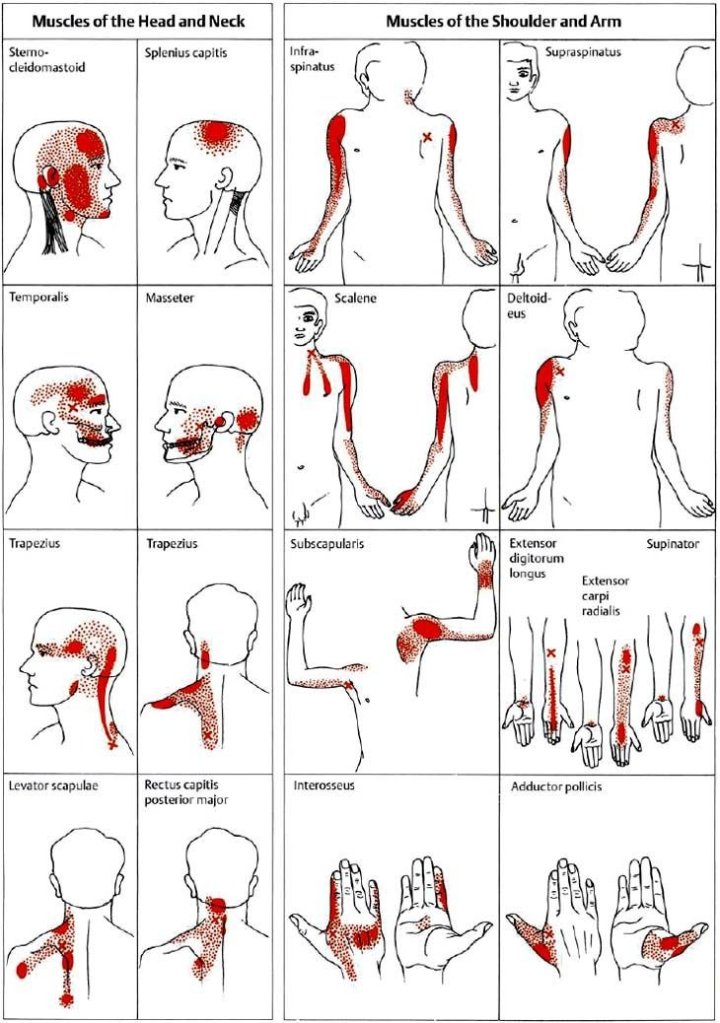
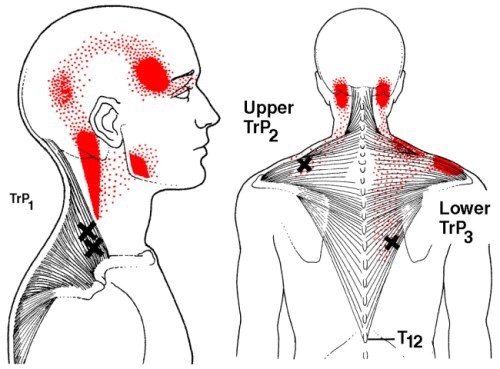
One of the most common forms of pain I see in my practice is neck and shoulder pain. Many people have jobs that require the muscles of the neck and upper back to work overtime to keep proper neck posture. Sitting in front of a computer all day or being stuck in a car or truck for example will eventually cause these muscles to become strained and develop trigger points. These trigger points will then cause pain, referred pain, stiffness and weakness. Neck and upper back trigger points will refer pain into the neck and head.
The Abdominal muscles what people think of as your six pack muscles. They are mostly responsible for flexing the spine and postural stability. These muscles are often tight in people with poor posture with a rounded spine. This causes trigger points to developed. Trigger points in the abs cause pain to be felt in the abdomen, but also frequently in the back. Trigger points in the upper abdominals refer pain into the mid back, and points in the lower abdominals produce lower back pain.

Trigger points are one of the most common sources of pain in the body. Almost everyone has experienced pain from trigger points at some point in their lives. Without treatment trigger points don’t go away. Trigger point massage therapy is one effective way to treat trigger points.
The scalenes muscles are located in the neck and help with neck movements and inspiration. The anterior scalene runs directly over the brachial plexus that gives nerve and blood supply to the arm. Poor neck and head posture as well as poor breathing mechanics can cause this muscle to become overloaded and develope trigger points. These points will refer pain into the shoulder, arm, and hand. As well as the shoulder blade. When tight, the anterior scalene muscle can put pressure on the brachial plexus causing numbness and tingling felt in the fingers and hand.

The sternocleidomastoid muscle is a thin strap like muscle located on both sides of the front of the neck. It helps with movement and posture of the head and neck. This muscle often becomes shortened and tight in people with poor head forward posture. As a result trigger points can form, and these points can cause pain to refer into the skull, and face around the eye. Trigger points in this muscle can also refer into the inner ear.


The levator scapulae muscle is a thin strap like muscle in your neck. It helps to shrug the shoulders and to side flex the neck. This muscle often becomes over worked when the head is tilted forward, or the shoulders are in an elevated position for prolonged periods of time. When strained trigger points develop. These points will refer pain into the neck and shoulder blade area. Trigger points in the levator scapulae are a main cause of a stiff neck.


