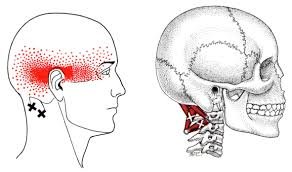
The suboccipital muscles are small muscles at the base of the skull. These muscles often get strained by poor neck and head posture. Chronic strain will cause trigger points to form. Trigger points in the suboccipital muscles are major cause of headache pain. These points refer an achy pain deep into the skull being that eye and into the temple.
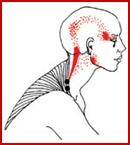
One of the most common things I treat in my practice is myofascial trigger points in the neck muscles. More often than not these points have been caused to develop due to poor neck and shoulder posture. You know the posture, head forward, shoulders rounded, spine curved. Anyone that has had to sit in front of a computer all day, or in car for a long period of time, or spends a lot of time on their phone has experienced this type of posture. The muscles that are responsible for holding your neck up, and your shoulders back, become fatigued over time causing a chronic overload stress. When this happens trigger points can be formed in the muscle tissue. Trigger points are areas of the muscle that have been jammed in the “on” position. They are Almost like a micro cramp within the muscle. These points are hyper sensitive and cause pain, referred pain, stiffness, and weakness among other symptoms. Trigger points in the neck muscles not only cause neck pain, but also refer pain into the head and face, mimicking headache and migraine type pain.
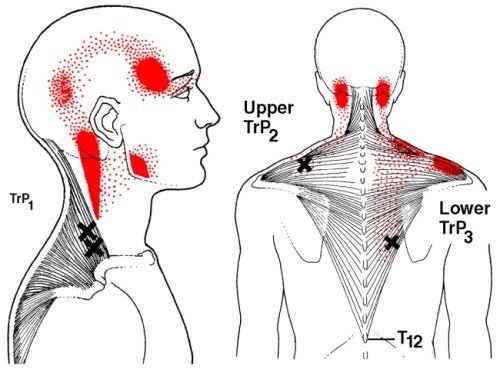
One of the most common forms of pain I see in my practice is neck and shoulder pain. Many people have jobs that require the muscles of the neck and upper back to work overtime to keep proper neck posture. Sitting in front of a computer all day or being stuck in a car or truck for example will eventually cause these muscles to become strained and develop trigger points. These trigger points will then cause pain, referred pain, stiffness and weakness. Neck and upper back trigger points will refer pain into the neck and head.
Neck pain and stiffness are very common. Most of us have, at one point or another experienced it. Neck pain can range from being an annoyance to being excruciating and debilitating. Lots of issues can cause neck pain, but one of the most common causes are myofascial trigger points. Trigger points from in muscles tissue from overload stress. This stress causes muscle fibers in a muscle to become contracted into a knot. These knots will produce pain, referred pain, stiffness and weakness among other symptoms. Trigger points in the levator scapulae and the trapezius muscles are a leading cause of neck pain and stiffness.
Myofascial pain syndrome is a chronic pain disorder. In this condition, pressure on sensitive points in your muscles (trigger points) causes pain in the muscle and sometimes in seemingly unrelated parts of your body. This is called referred pain.
This syndrome typically occurs after a muscle has been contracted repetitively. This can be caused by repetitive motions used in jobs or hobbies or by stress-related muscle tension.
Signs and symptoms of myofascial pain syndrome may include:
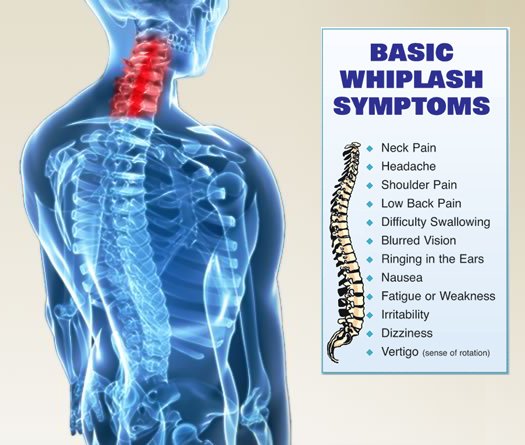
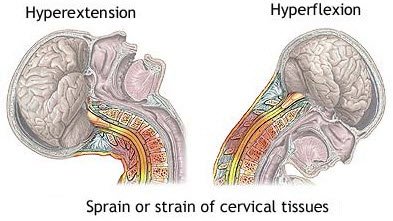
A whiplash injury can cause a wide variety of symptoms. Myofascial trigger points that form in the muscles of the neck and back as a result of this injury can cause all of these symptoms listed below. For a complete treatment plan for whiplash, trigger points must be released.
During a whiplash injury the soft tissue in both the front and back of the neck can get damaged. When this happens trigger points will form in the muscles. These points will produce pain, refered pain, as well as stiffness and weakness. Trigger points in the neck muscles quite often refer pain into the head causing headaches and migraine pain. These points don’t resolve with stretching or rehabilitation exercises, they must be specifically released with a technique such as trigger point massage therapy.