Mobility Myth #2

what-is-mobility-mobility-myths-foam-rolling

Myth: You can get rid of knots or scar tissue with foam rolling or massage.

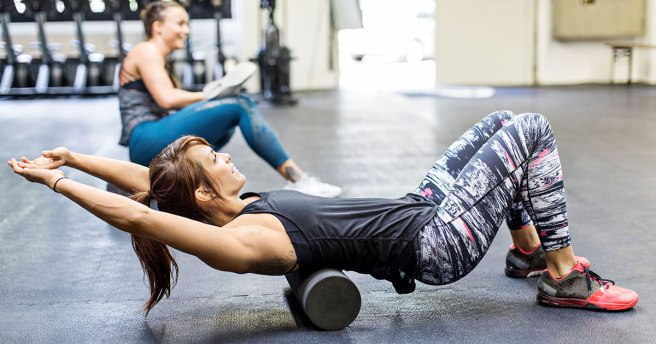
Truth: “You probably hear of ‘breaking up fascia’ and ‘breaking up scar tissue,’ but the reality is that it literally takes 200 tons to deform scar tissue or cause mechanic changes to the fascia,” says Los Angeles–based physical therapist Jen Esquer, D.P.T., creator of the Mobility Method program. So whenever you’ve been told that someone is “massaging out a knot” in your back, or that foam rolling is “realigning your muscle fibers,” it’s a load of B.S. (You’ve probably also heard that foam rolling can get rid of cellulite.)

“Think: If you bump into something super hard, yeah, you might bruise, but you’re not actually breaking something in your body or tearing tissue,” says Esquer. “So why would we think that lying or rolling around on a foam roller for a while would have that extreme effect?”

You might be thinking, “But it totally helps!” You’re not wrong—it does. It just helps for a different reason: “Really, foam rolling and massage work by bombarding the brain with safe, feel-good information, convincing the muscle to relax and let go,” says Ardoin. That calming of the nervous system results in the release of tension and tightness that you feel.

And since it’s all about relaxation, you should never be trying to create pain in the body, says Esquer: “You don’t want to fire anything back up and make it potentially worse. It always comes back to relaxation.”

Put the shovel down and read this!

Your low back consists of 5 individual vertebrae stacked on top of each other. Flexible cushions called “discs” live between each set of vertebrae. A disc is made up of two basic components. The inner disc, called the “nucleus”, is like a ball of jelly about the size of a marble. This jelly is held in place by the outer part of the disc called the “annulus”, which is a tough ligament that wraps around the inner nucleus much like a ribbon wrapping around your finger.
Your low back relies on discs and other ligaments for support. “Discogenic Low Back Pain” develops when these tissues are placed under excessive stress, much like a rope that frays when it is stretched beyond its normal capacity. Most commonly, disc pain is not the result of any single event, but rather from repeated overloading. Your lumbar discs generally manage small isolated stressors quite well, but repetitive challenges lead to injury in much the same way that constantly bending a piece of copper wire will cause it to break. Examples of these stressors include: bad postures, sedentary lifestyles, poor fitting workstations, repetitive movements, improper lifting, or being overweight.

Approximately one third of adults will experience pain from a lumbar disc at some point in their lifetime. The condition is more common in men. Most lumbar disc problems occur at one of the two lowest discs- L5 or L4. Smokers and people who are generally inactive have a higher risk of lumbar disc problems. Certain occupations may place you at a greater risk, especially if you spend extended periods of time sitting or driving. People who are tall or overweight have increased risk of disc problems.

Symptoms from disc pain may begin abruptly but more commonly develop gradually. Symptoms may range from dull discomfort to surprisingly debilitating pain that becomes sharper when you move. Rest may relieve your symptoms but often leads to stiffness. The pain is generally centered in your lower back but can spread towards your hips or thighs. Be sure to tell your doctor if your pain extends beyond your knee, or if you have weakness in your lower extremities or a fever.

Repeated injuries cause your normal healthy elastic tissue to be replaced with less elastic “scar tissue.” Over time, discs may dehydrate and thin. This process can lead to ongoing pain and even arthritis. Patients who elect to forego treatment and “just deal with it” develop chronic low back pain more than 60% of the time. Seeking early and appropriate treatment like the type provided in our office is critical.

Depending on the severity of your injury, you may need to limit your activity for a while, especially bending, twisting, and lifting, or movements that cause pain. Bed rest is not in your best interest. You should remain active and return to normal activities as your symptoms allow. Light aerobic exercise (i.e. walking, swimming, etc) has been shown to help back pain sufferers. The short-term use of a lumbar support belt may be helpful. Sitting makes your back temporarily more vulnerable to sprains and strains from sudden or unexpected movements. Be sure to take “micro breaks” from workstations for 10 seconds every 20 minutes.

TMJ dysfunction

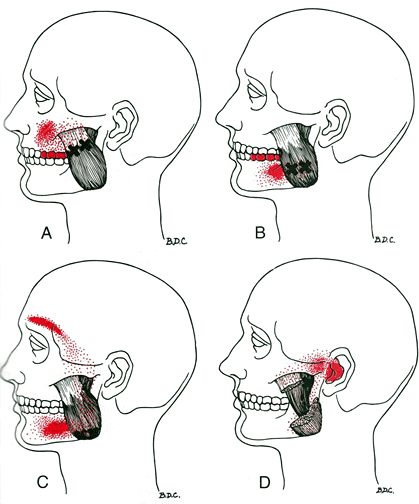
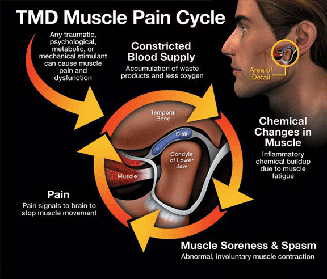
Temporomandibular joint dysfunction is a blanket term that refers to pain and dysfunction of the jaw muscles and the tempomandibular joints which connect the mandible to the skull. The most common symptoms are pain and restricted mandibular movement as well as grinding noises coming from the joint. This condition is more common in women then in men, and affects a large portion of patients suffering from fibromyalgia. Trigger points in the muscles of mastication are frequently involved in TMJ dysfunction. Trigger points in the pterygoid and masseter muscles for example will not only refer pain into the tempomandibular joints, but will also cause a dysfunctional movement pattern that can restrict range of motion. Trigger point therapy can be an effective modality to treat TMJ dysfunction.

Trigger points and fibromyalgia

Myofascial pain syndrome (trigger points) and fibromyalgia are often confused to be the same condition and while there is a lot of interrelatedness between the two they are not quite identical. The clinical definition of a trigger point is “a hyper irritable spot associated within a taut band of skeletal muscle that is painful on compression or muscle contraction, and usually responds with a referred pain pattern distant from the spot”. Trigger points form from an overload trauma to the muscle tissue. This is contrasted with fibromyalgia which is defined as “a medical condition characterized by chronic widespread pain and a heightened pain response to pressure. Other symptoms include tiredness to a degree that normal activities are affected, sleep problems and troubles with memory. Some people also report restless leg syndrome, bowel and bladder problems, numbness and tingling and sensitivity to noise, lights and temperature. It is also associated with depression, anxiety, and post traumatic stress disorder”. Fibromyalgia will also present with localized tender points which are often mistaken for trigger points. Where these two conditions become somewhat interrelated is via the nervous system. Fibromyalgia patients suffer from a super-sensitization of the nervous system causing hyperirritability and pain. Myofascial trigger points can be caused by,or be the cause of, super sensitization. An active trigger point will irritate the sensory nerves around it eventually leading to super-sensitization. Trigger points have also been showed to form of become active due to super-sensitization. Both of these conditions can perpetuate the other, leading to layers of pain and symptoms. This being the case, trigger point therapy can have a very positive effect on decreasing the severity of pain and symptoms in patients suffering from fibromyalgia.

Mobility Myth #1

what-is-mobility-mobility-myths-foam-rolling

Great stuff from our friends at Shape.com:

Myth: Stretching and foam rolling will address all of my mobility problems.

Truth: Stretching and soft tissue work (like foam rolling and massage) may seem like the bread and butter of mobility, but there’s more to know. “If you have a true mechanical mobility problem, soft tissue work and different stretching techniques are definitely great options,” says Ardoin. But you might experience tightness or a loss of motion that doesn’t have anything to do with tissue restrictions like tight muscles or joint stiffness.

“In these particular people, they actually have the mobility needed, but their brain doesn’t know how to access it,” says Ardoin. This sort of muscle-brain disconnect could be because of current pain, previous injuries, or, “sometimes people just forget how to move,” he says.

In this case, your muscles are working against each other instead of synergistically—and it’s not something stretching or foam rolling will fix. The good news is that there’s not actually anything physically wrong. The bad news: This is tough to diagnose on your own. “If you have a loss of motion while you perform the motion yourself but have full ROM when performed passively, then it’s safe to assume that you have the ROM available but your brain doesn’t know how to access it,” says Ardoin.

For example, let’s say you have a “tight” shoulder. Make a large, slow circle with your right arm. Then totally relax your arm while someone else rotates your arm in a circle for you. Did it go farther while you let the motion happen passively? Ding, ding! Could be a brain problem, not a muscle problem. Think this might be you? Seeing a trainer or physical therapist to confirm it (and help you work on the issue) can’t hurt.

Trigger points in the adductor longus and brevis.

These muscles are located in the groin. The longus originates on the pubic body just below the pubic crest and inserts on the middle third of the linea aspera.The brevis muscle originates on the inferior ramus and body of the pubis and has its attachment to the lesser trochanter and linea aspera of the femur. Trigger points in these muscles are the most common muscular cause of groin pain. Distal trigger points refer pain to the upper medial knee and down the tibia. Proximal trigger points refer into the anterior hip area.

The Most Common Work Injury We See? This Might Be It…..

Your “lumbar spine”, or low back, is made up of five bones stacked on top of each other with a shock-absorbing disc between each level. Your low back relies on muscles and ligaments for support. “Sprains” and “strains” are the result of these tissues being stretched too hard or too far, much like a rope that frays when it is stretched beyond its normal capacity. The term “sprain” means that the

tough, durable ligaments that hold your bones together have been damaged, while “strain” means that your muscles or tendons that move your trunk have been partially torn.

Most people experience low back pain at some point in their lifetime, and 70% of those patients can attribute their symptoms to sprain/strain injuries. Lumbar sprains and strains may result from sudden or forceful movements like a fall, twist, lift, push, pull, direct blow, or quickly straightening up from a seated, crouched, or bent position. Most commonly, sprains and strains are not the result of any single event, but rather from repeated overloading. The spine can generally manage small isolated stressors quite well, but repetitive challenges lead to injury in much the same way that constantly bending a piece of copper wire will cause it to break. Examples of these stressors include: bad postures, sedentary lifestyles, poor fitting workstations, repetitive movements, improper lifting, or being overweight.

Symptoms from a sprain/strain may begin abruptly but more commonly develop gradually. Symptoms may range from dull discomfort to surprisingly debilitating pain that becomes sharper when you move. Rest may relieve your symptoms but often leads to stiffness. The pain is generally centered in your lower back but can spread towards your hips or thighs. Be sure to tell your doctor if your pain extends beyond your knee, or if you have weakness in your lower extremities or a fever.

Sprain/strain injuries cause your normal healthy elastic tissue to be replaced with less elastic “scar tissue.” This process can lead to ongoing pain and even arthritis. Patients who elect to forego treatment and “just deal with it” develop chronic low back pain more than 60% of the time. Seeking early and appropriate treatment like the type provided in our office is critical.

Depending on the severity of your injury, you may need to limit your activity for a while, especially bending, twisting, and lifting, or movements that cause pain. Bed rest is not in your best interest. You should remain active and return to normal activities as your symptoms allow. The short-term use of a lumbar support belt may be helpful. Sitting makes your back temporarily more vulnerable to sprains and strains from sudden or unexpected movements. Be sure to take “micro breaks” from workstations for 10 seconds every 20 minutes. Following acute injuries, you can apply ice for 15-20 minutes each hour. Heat may be helpful after several days or for more chronic origins of pain. Ask your doctor for specific ice/heat recommendations. Some patients report partial relief from sports creams.

A weak lateral chain will stop you in your tracks.

One very important job of your hip muscles is to maintain the alignment of your leg when you move. One of the primary hip muscles, the gluteus medius, plays an especially important stabilizing role when you walk, run, or squat. The gluteus medius attaches your thigh bone to the crest of your hip. When you lift your left leg, your right gluteus medius must contract in order to keep your body from tipping toward the left. And when you are standing on a bent leg, your gluteus medius prevents that knee from diving into a “knock knee” or “valgus” position.
Weakness of the gluteus medius allows your pelvis to drop and your knee to dive inward when you walk or run. This places tremendous strain on your hip and knee and may cause other problems too. When your knee dives inward, your kneecap is forced outward, causing it to rub harder against your thigh bone- creating a painful irritation and eventually arthritis. Walking and running with a relative “knock knee” position places tremendous stress on the ligaments around your knee and is a known cause of “sprains”. Downstream, a “knock knee” position puts additional stress on the arch of your foot, leading to other painful problems, like plantar fasciitis. Upstream, weak hips allow your pelvis to roll forward which forces your spine into a “sway back” posture. This is a known cause of lower back pain. Hip muscle weakness seems to be more common in females, especially athletes.

You should avoid activities that cause prolonged stretching of the hip abductors, like “hanging on one hip” while standing, sitting crossed legged, and sleeping in a side-lying position with your top knee flexed and touching the bed. Patients with fallen arches may benefit from arch supports or orthotics. Obesity causes more stress to the hip muscles, so overweight patients may benefit from a diet and exercise program. The most important treatment for hip abductor weakness is strength training. Hip strengthening is directly linked to symptom improvement. Moreover, people with stronger hip muscles are less likely to become injured in the first place. The exercises listed below are critical for your recovery.

What does a shoulder separation actually mean?

Impingement

The term “acromioclavicular sprain” means that you have damaged the strong fibrous bands (ligaments) that hold the end of your collarbone (clavicle) to the tip of your shoulder blade (scapula). Another term sometimes used to describe this injury is “shoulder separation.” 40-50% of all athletic shoulder injuries involve the acromioclavicular (AC) joint. AC injuries are common in adolescents and young adults who participate in contact sports, like hockey and football. Males are affected five times more often than females.

Injuries may range from mild fraying of a single ligament to complete rupture of all of the supporting ligaments. Significant tears can allow your collarbone to move upward, out of its normal position, creating a raised bump under your skin. AC joint injuries are categorized (Grade 1-Grade 6) based upon the amount of damage. Grade 1 injuries are tender without joint separation. Grade 2 injuries may be accompanied by a slight separation of the joint. Grade 3 and above will show significant joint separation.

Injuries typically occur following a fall onto the point of your shoulder, while your arm is at your side, or by falling onto your outstretched hand. You will most likely feel pain and swelling on the very top of your shoulder. More significant injuries may produce bruising or a visible “bump” beneath the skin. Moving your shoulder will likely be painfully limited for a while.

Your treatment will vary, depending upon the severity of your injury. Grade 1, 2, and most Grade 3 injuries are best managed conservatively. A sling may be used only when needed to control painful movements. Initially, you will need to limit activity, especially reaching overhead, behind your back, or across your body. The exercises described below are an important part of your rehab and should be performed consistently to avoid long-term problems. Using an ice pack for 10-15 minutes each hour may help to limit swelling and pain.

Some mild separations will heal by themselves within a week or two. More significant injuries can take longer, and disabilities typically range between one and eight weeks. Patients who have suffered a significant amount of ligament damage may have a permanent bump on their shoulder, regardless of treatment. This bump does not usually cause ongoing problems.

If you or someone you know suffers from this condition, call our office today. Our doctors are experts at relieving many types of pain including shoulder injuries.

AC Joint

Avoiding Back Pain At Sedentary Jobs

Some great tips on how to prevent back pain when working a sedentary job from our friends at Silicon Republic. Check out the article below.

How to prevent back pain in the workplace

1. Take regular breaks to stretch and walk around

Try to walk around for between three and five minutes every half hour.

2. Make sure not to hunch over while working

Everyone intuitively understands that hunching over the computer is bad for them, but it’s easy to fall into the most natural and comfortable – albeit unhealthy – sitting position while you’re in the flow of things.

3. Consider a standing desk

A standing desk offers you the opportunity to alternate your position throughout the day.