Shoulder Impingement Syndrome

Shoulder Impingement Syndrome
Impingement syndrome
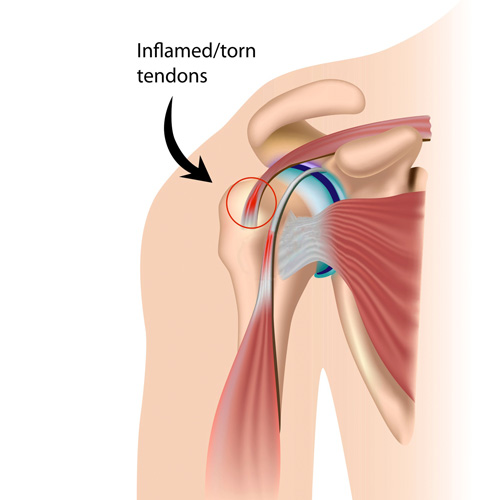
Impingement syndrome is an irritation of the structures between the upper portion of your arm and your shoulder blade mainly during overhead arm movements.The rotator cuff is comprised of four muscles that help position the humerus, your upper arm bone, into the shoulder socket during arm movement.The shoulder has great mobility but at the same time is prone to injury during falls or accident, or when there is a lack of motor control (altered biomechanics).Men over 40 performing manual labour are the most affected with this condition. It is also present in young athletes practicing sports involving repeated overhead motion such as swimming, baseball or tennis.

▬▬▬▬▬

Structures involved

The tendons of the rotator cuff, ligaments of your shoulder and subacromial bursa are the most commonly affected structures. The subacromial space gets smaller during overhead movements. This can cause, over time, irritation, inflammation and/or a lesion of the rotator cuff tendons.

page1image3462066528

▬▬▬▬▬

Signs & Symptoms that you may experience

Everyone will react differently after an injury and recovery will depend on the severity of it.

Impingement syndrome can cause but is not limited to, pain at the front of the shoulder and localized swelling. Pain or tightness is often felt when you lift your arm overhead or when you lower it from an elevated position. Pain can also be felt around your shoulder blade in your back.

Other early symptoms can include light pain with activities or during rest and in some cases, irradiating pain around your shoulder. In severe cases, you might feel pain at night and a loss of strength or range of motion. Impingement syndrome can lead to rotator cuff tendinitis or shoulder bursitis when left untreated.

▬▬▬▬▬

Recovery

Your rehabilitation plan, health, fitness & nutritional status will affect recovery speed. Most of the time, you can expect to recover fully from impingement syndrome. As a rule of thumb, this condition can take up to three months to fully recover.

▬▬▬▬▬▬▬▬▬▬▬▬▬▬▬▬▬▬▬▬▬▬▬▬▬▬▬▬▬▬▬▬▬▬▬▬▬▬▬▬▬▬▬▬▬▬▬▬▬
▬▬▬▬▬▬▬▬▬▬▬▬▬▬▬▬▬▬▬▬▬▬▬▬▬▬▬▬▬▬

▶ WHAT TO DO

Early Stage

Relative rest is a good way to protect your shoulder and prevent further damage, but it’s important to avoid overprotecting your injury. A few days rest where you avoid pain-inducing movement and activities might be necessary. A quick but progressive return to your activities of daily living, light cardiovascular exercise and specific range of motion and strengthening exercises will allow better recovery.

Rehabilitation

Follow your practitioner’s advice. It will help you manage the different phases of the recovery process and will increase the likelihood of successful rehabilitation. Your practitioner will assist you during your rehabilitation program in order to regain your normal range of motion, strength and endurance, optimal motor control and functional status.

As per the principles of rehabilitation for impingement syndrome, movement training through therapeutic exercises is an important part of functional recovery. A progressive exercise program performed over a few weeks period is pretty standard.

▶ WHAT TO AVOID

Don’t rely on passive treatment only. Each phase of the rehabilitation process is important. Patients that are actively involved in their treatment plan tend to recover faster. Keep in mind that pain is not always a good indicator of tissue damage. As soon as you feel better and the pain is well managed in collaboration with your therapist, you should reintroduce light strengthening exercises as tolerated.

Stress and Weight 

Photo by RODNAE Productions on Pexels.com

Bottom Line:

A recent research study found over 75% of people experience at least a moderate amount of stress every day! 

Chronic stress is not fun to deal with, but did you know it can also affect your weight? 

When you are stressed your body goes into survival (or “fight or flight”) mode which changes your hormonal balance. You don’t need to be running from a saber tooth tiger to enter fight or flight mode. Even everyday events like traffic and stress at work can cause you to have that physiological response. 

Why it Matters:

Recent research suggests that chronic stress can result in:

  • high blood pressure,
  • changes in your brain,
  • and weight gain.

When you are stressed out, it is more likely that you will over-eat and less likely that you will get enough sleep and exercise. Stress causes your body to release cortisol, a hormone that can produce a build-up of fatty tissue and cause weight gain. Cortisol increases both your appetite and the amount of fat the body stores. By recognizing your stressors, and engaging in a few simple relaxation techniques, you can learn to reduce your body’s natural stress response. 

  • The hormone Cortisol is released in response to stress and increases your blood sugar.
  • Chronic stress can lead to elevated cortisol levels. 
  • An association has been found between increased cortisol levels and obesity.

Next Steps: 

Relaxation techniques such as meditation, yoga, or even simple breathing exercises can help your body counter the stress response. Also, exercise has been shown to decrease stress levels substantially. 

The next time you are feeling stressed out, take a moment to breathe a few deep breaths and try to get some exercise into your schedule that day. Not only will you feel better mentally, but your body will be able to reduce the amount of Cortisol produced which will limit your body’s fat storage and help curb any thoughts of over-eating. Staying fit and trim does start in your head! 

Science Source(s): 

Hair Cortisol and Adiposity in a Population‐Based Sample of 2,527 Men and Women Aged 54 to 87 Years. Obesity 2017

Don’t Have Enough Time to Exercise? 

Photo by Ketut Subiyanto on Pexels.com

Bottom Line:

You’re busy and you’re stressed out. Well, you’re not alone. 

These are two of the most common reasons people give for not exercising consistently. Ironically, these are the two exact reasons you should be exercising and moving your body! 

Moving your body releases endorphins which help you feel good, relaxes your mind which reduces stress, and burns calories to keep you looking great. 

Why it Matters:

Your body is meant to move. Long hours commuting in your car or sitting at a desk can place a lot of stress on your musculoskeletal system. 

If your spine and core muscles are weak and unstable, then you are more likely to suffer an injury which can cause a downward spiral that impacts your relationships with food, sleep, and exercise. So taking a pro-active approach to your exercise routine is crucial to live your best life. Chiropractic adjustments are an essential part of the picture because they can help you feel good mentally and keep you moving physically. 

  • Maintaining a healthy weight can decrease the risk factors for cardiovascular and heart disease.
  • Even 15 minutes of light exercise can make a difference in your overall health.
  • Exercise can help you feel good both physically and mentally.

Next Steps: 

Schedule time every day to exercise. But, don’t get discouraged if you feel like you aren’t doing enough. Rome wasn’t built in a day! 

Even 15 minutes of walking during your afternoon break can provide you with the health benefits you are looking for. Burning an extra hundred calories per day (which could be accomplished with 10 minutes of walking) adds up to thousands of calories each month. Continue that trend, and you will notice inches falling off your waistline before you know it! 

Science Source(s): 

The Role of Exercise and Physical Activity in Weight Loss and Maintenance. Prog Cardiovasc Dis 2015

Block out that noise 

The world’s noise gets very quiet when you’re in tune with yourself

Wise words indeed. When we are out of sorts with ourselves we get what professional athletes call “rabbit ears”. We hear everything going on around us and it distracts us from what we need to do. 
Get your body, your conscious mind and your subconscious mind all pulling in the same direction and those outside distractions become nothing more than white noise. 

Chiropractic: Obesity, Smoking, & Drinking Associated with Low Back Pain.

SMoking and back pain
Photo by Irina Iriser on Pexels.com

Chiropractic: Obesity, Smoking, & Drinking Associated with Low Back Pain.

New research presented at the American Academy of Orthopedic Surgeons annual meeting suggests that low back pain sufferers who smoke, drink, and/or are obese may possibly ease their agony by making healthier lifestyle choices. A review of data from 26 million men and women found that people who are smokers, are alcohol-dependent drinkers, and/or are categorized as obese are between four and five times more likely to currently experience back pain than individuals who don’t smoke or drink, and maintain a healthy weight. American Academy of Orthopaedic Surgeons, March 2015

Exercise: Improves Cognitive Function in Women!

Exercise: Improves Cognitive Function in Women!

Regardless of age, females who are highly physically fit have faster neural reaction times than their less fit peers. Near infrared spectroscopy scans showed that physical fitness is associated with greater cerebral oxygenation, which may be the underlying mechanism for the observed elevations in brain function.


Frontiers in Human Neuroscience, February 2015

For more health and wellness tips and information follow us or check out our blog at http://www.aberdeenchiropracticblog.com 

Photo by August de Richelieu on Pexels.com

Stiff neck??

One of the most common causes of a stiff neck are trigger points in the levator scapulae muscle. This muscle runs up the side of the neck from the top of the shoulder blade. It helps to shrug the shoulders and move and stabilize the neck. When trigger points form in this muscle they will produce pain and stiffness in the neck. Deep tissue trigger point massage applied to these knots is an effective treatment method.

Photo by Karolina Grabowska on Pexels.com

Mental well-being linked to better cardiovascular and overall health

https://www.medicalnewstoday.com/articles/mental-well-being-linked-to-better-cardiovascular-and-overall-health

Photo by Andre Furtado on Pexels.com

Cardiovascular and general, overall health are well established factors to general wellbeing and mental health. Likewise, improving your overall health and specifically cardiovascular health will lead to improvements in your mental health and overall outlook.

Get fit and feel great!

Photo by Kat Smith on Pexels.com

Sunday’s Huge Health Update!

Mental Attitude: Stress Affects Women’s Recovery After a Heart Attack. Researchers analyzed data collected from 2,397 women and 1,175 men and found that women had more difficulty recovering from a heart attack than men, possibly due to the significantly higher levels of mental stress measured among the females in the study. The findings emphasize the need to consider how stress and other psychosocial factors can affect the recovery of patients following heart attack. American Heart Association, February 2015

Health Alert: Mercury Exposure May Be a Risk Factor for Autoimmune Diseases. Exposure to high levels of methylmercury is known to cause damage to the nervous system, and it can be particularly harmful to a developing fetus. Researchers now claim that even at levels considered to be safe, mercury exposure may be a risk factor for autoimmune disorders in women of childbearing age. They found that the higher the levels of mercury detected in women, the higher the levels of autoantibodies, proteins that are a characteristic of autoimmune diseases. Lead researcher Dr. Emily Somers explains, “The presence of autoantibodies doesn’t necessarily mean they will lead to an autoimmune disease. However, we know that autoantibodies are significant predictors of future autoimmune disease, and may predate the symptoms and diagnosis of an autoimmune disease by years.”

Environmental Health Perspectives, February 2015

Diet: Low Vitamin D Levels During Childhood Linked to Heart Risks. A multi-decade study found that low vitamin D levels during childhood are associated with a significantly higher risk for artery hardening in adulthood. The findings highlight the need to ensure children get adequate levels of vitamin D in their diet or through sun exposure.
Journal of Clinical Endocrinology & Metabolism, February 2015

Exercise: Why Should We Exercise? The Mayo Clinic lists seven benefits of exercise, which include the following: helps controls weight, helps combat chronic health conditions and diseases, improves mood, boosts energy levels, promotes better sleep, reduces stress, and it can even be fun! As a general rule, strive for at least 30 minutes of physical activity every day.
Mayo Clinic, February 2015

Chiropractic: Resolution of Plantar Fasciitis Following Adjustments. In this case study, a 23-year-old woman with plantar fasciitis presented for chiropractic care. Her previous medical care included prescription orthotics, stretching, and Ibuprofen, all which failed
to resolve her heel pain and related symptoms. Her chiropractic treatment regimen consisted of adjustment to the spine and lower extremities, ultrasound therapy, taping of the foot, and neuromuscular re-education. Over the course of ten treatments, the patient noted improvements in both pain and function, supporting the benefits of multi-modal chiropractic management of plantar fasciitis. Annals of Vertebral Subluxation Research, October 2014

Wellness/Prevention: Naps Improve Your Health. A new report claims that brief daytime naps can protect against the harmful health effects of a poor night’s sleep. The study included eleven healthy men and revealed that naps appear to return the hormones and proteins involved in stress response and immune function to more normal levels. According to the Centers for Disease Control and Prevention, lack of sleep can increase the risk of health problems such as obesity, diabetes, high blood pressure, and depression, and decreased sleep is also linked to reduced work productivity, as well as an increased risk of traffic and industrial accidents. Study author Dr. Brice Faraut adds, “Napping may offer a way to counter the damaging effects of sleep restriction by helping the immune and neuroendocrine systems to recover. The findings support the development of practical strategies for addressing chronically sleep- deprived populations, such as night and shift workers.” Journal of Clinical Endocrinology & Metabolism, February 2015

Quote: “You should never be surprised when someone treats you with respect, you should expect it.” ~ Sarah Dessen

For More Information on Back Pain, Neck Pain, Headaches, Carpal Tunnel Syndrome, Fibromyalgia, and Whiplash, and more, Go To: http://www.AberdeenChiropracticBlog.com

Photo by MART PRODUCTION on Pexels.com