Back Pain
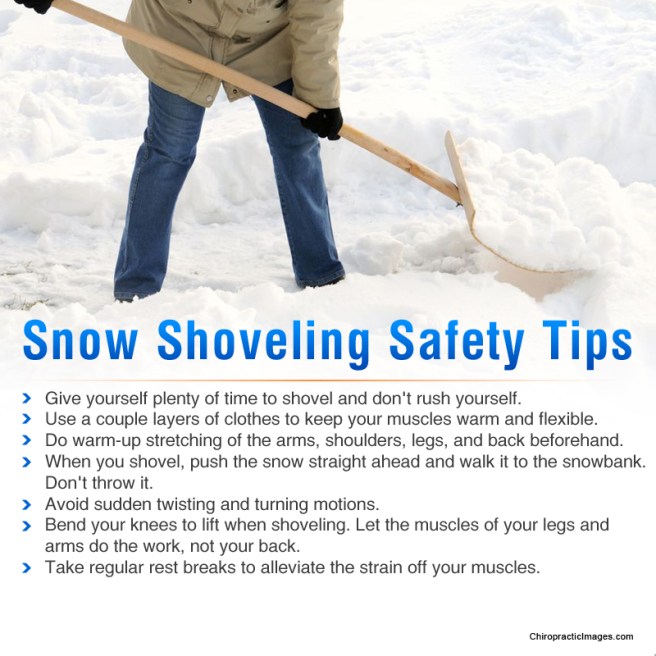
Snow Shoveling Tips!

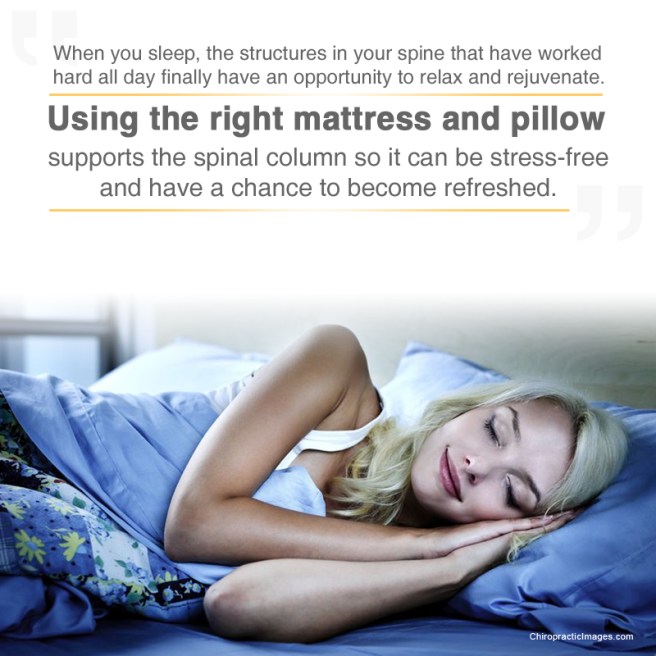
Avoid Doing This Before Bedtime.

Your habits just before going to bed could be sabotaging your sleep.
The National Sleep Foundation recommends avoiding the following: over-the-counter medications that contain pseudoephedrine, which can be found in common cold medicines; texting, watching TV, or spending time on the computer shortly before bed; indulging in a greasy, fattening, salty bedtime snack, which can be stimulating and trigger nightmares; and drinking caffeine beyond the morning, as it can stay in your system for as long as twelve hours.
National Sleep Foundation, October 2016
Canada’s Pain Crisis
In a nation of only 36 million people, over 5 million people turned to opioid use for their pain despite the availability of better options. Opioids should never be the first step in pain management; preventing overuse takes education of both the public who are using and the professionals prescribing these drugs.
At Aberdeen Chiropractic we are proud to be part of the solution to Canada’s opioid crisis by providing safe, effective care for back pain, neck pain and headaches. Our goal is to assess, correct and prevent your pain with a variety of interventions including Chiropractic, Acupuncture, Laser, Exercise Rehabilitation and Trigger Point Therapy.

The Hip Cycle
Meet the Hip Cycle. A great way to activate those pesky hip stabilizers and get your lower limb ready for squatting, running, sports or even just walking.
You can thank me later.
1. Side lying with back and shoulders against a wall so you can’t roll back.
2. Bend your bottom leg and put the sole of your foot against the wall to be more stable.
3. Start position is with your foot directly in line with your hip. Do not let it get any lower than that. The highest point of your foot needs to be the bump on the outside of your ankle.
Do 5-10 reps of each of the following without rest between exercises twice a day. The goal is 20 reps each.
a. 6″ leg raises in abduction
b. Knee up to chest (90* knee and hip)
c. 12″ leg raises into abduction
d. Bicycling (knee up to chest, extend knee and sweep back to start with leg straight)
e. Clockwise circles
f. Counterclockwise circles
Good luck.

How does my neck cause headaches?

Headaches can arise from many different causes. A partial list includes stress, lack of sleep, allergies, neck trauma (particularly sports injuries and car accidents), and more. In some cases, the cause may be unknown.
A unique common denominator of headaches has to do with cervical spine anatomy, in particular the upper part of the neck. There are seven cervical vertebrae, and the top three (C1-3) give rise to three nerves that travel into the head. These nerves also share a pain nucleus with the trigeminal nerve (cranial nerve V), which can route pain signals to the brain.
Depending on which nerve is most irritated, the location of the headache can vary. For example, C2—the greater occipital nerve—travels up the back of the head to the top. From there, it can communicate with another nerve (cranial nerve V or the trigeminal nerve), which can refer pain to the forehead and/or behind the eye.
When C1—the lesser occipital nerve—is irritated, pain travels to the back of the head, while irritation to C3—the greater auricular nerve—results in pain to an area just above the ear. When a nerve is pinched, the altered sensation can include pain, numbness, tingling, burning, itching, aching, or a combination of these sensations.
These are classified as cervicogenic headaches (CGH), and as the name implies, the origin of pain/altered sensation arises from the neck.
A 2013 study reviewing the literature on CGH found that manipulation and mobilization improved pain, disability, and function. The most effective approach included manipulation combined with neck-upper back strengthening exercises.
But what about migraine headaches? Migraines are vascular headaches, and some (but not all) are preceded by an aura or a pre-headache warning that may include blurry vision, tingling, strange olfactory sensations, etc. One study of 127 migraine sufferers reported fewer attacks and less medication required by those who received chiropractic care.
The good news is that spinal manipulation is very safe, and a trial is often very rewarding for many types of headaches.
Can We Prevent Carpel Tunnel?

Carpal tunnel syndrome (CTS) is the most common of the many “entrapment neuropathies”— nerve pinches in the arms or legs—likely because we use our hands and fingers repetitively for long time frames at work and during many of our hobbies. In addition, the wrist is a very complicated joint because it’s not a simple ball-and-socket or hinge, like the hip, elbow, or knee.
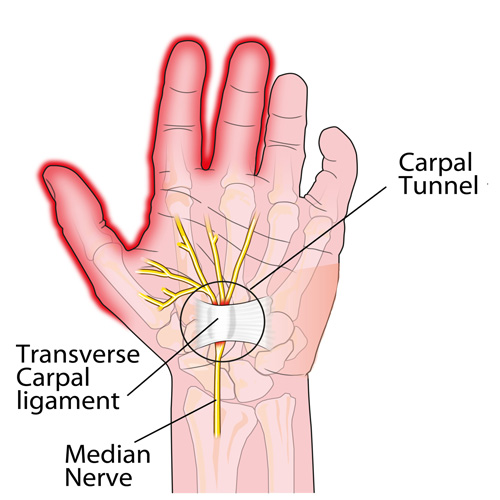
The wrist is made up of eight small “carpal” bones that are all shaped very differently and fit together a bit like a puzzle. These eight bones are lined up in two rows of four bones that form the “roof“ of the tunnel.
The shape of the tunnel changes with different activities, and the contents within the tunnel have to accommodate for this. Nine of the tendons that allow the hand to move the fingers also travel through the tunnel. Look at the palm-side of your wrist as you wiggle your fingers. See all the activity going on there? The median nerve travels through the tunnel as well, just under the “floor”, which is a very strong ligament that stretches from the pinky to the thumb-side of the tunnel.
Virtually ANY condition that increases the pressure inside the already tightly packed tunnel can create CTS symptoms like numbness, tingling, burning, etc. Over time, grip strength may weaken, causing one to accidentally drop objects.
To add to the causation list of CTS, conditions like obesity, pregnancy, diabetes, hypothyroid, rheumatoid arthritis (and other “arthropathies”), taking birth control pills (BCPs), and more can cause CTS without any increase in hand/wrist activities!
So HOW can we prevent CTS?
First, consider your job and your “workstation.” There are ergonomic keyboard and mouse options that can help you maintain a “neutral” wrist posture. If you have to bend your wrist a lot to do your work tasks—like placing items in a package, assembly work, etc.—see if you can change the angle of the package or assembly set up that allows your wrist to be straight, NOT BENT! Also, sit/stand up straight, chin tucked back, and DON’T SLOUCH!
A “night splint” forces the wrist to stay straight and can REALLY help! Managing your weight and health (manage your diabetes, thyroid, and medications that increase swelling like BCPs) is VERY important! There are also natural anti-inflammatory vitamins and herbs like ginger, turmeric, and bioflavonoid you may want to consider—your doctor of chiropractic can help you with this!
Chiropractors can manage CTS very well and can frequently help patients avoid the need for a surgical release. The “KEY” is to not wait—get treated early on!
Happy World Spine Day!

Happy #WorldSpineDay !!!
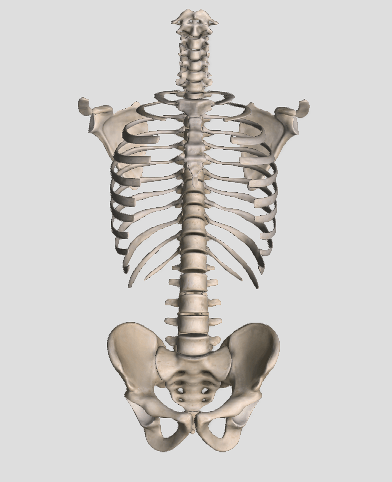
The spine is made up of 24 bones, called vertebrae. Ligaments and muscles connect these bones together to form the spinal column. The spinal column gives the body form and function. The spinal column holds and protects the spinal cord, which is a bundle of nerves that sends signals to other parts of the body.
.
.
.
.
.
.
.
.
#Chiropractic
#Spine
#Health
#fitness
#chiropractor
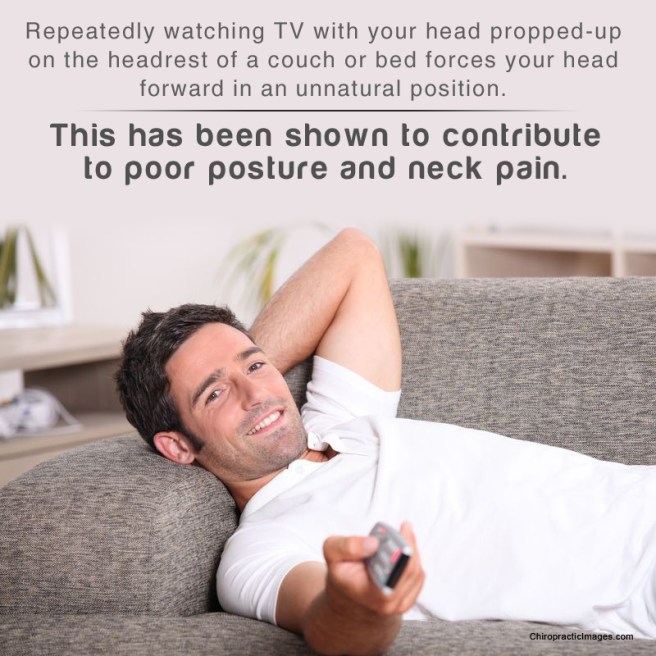
Posture Matters!