

Neck pain and massage therapy.
One of the most common causes of neck pain and headaches that I see in the clinic is poor neck posture. This posture presents itself as a neck forward head up posture. The neck is usually rounded forward and down but the head has to be tilted up in order to see what’s in front of you. This posture will cause all types of imbalances with a combination of strained and contracted muscles. This can lead to not only a stiff achy neck, but also headache pain as well. Trigger points often develop in muscles subjected to this type of chronic strain. These points will cause pain, refered pain, stiffness, and weakness. These points will also mimick numerous other symptoms. Trigger points are difficult to deal with as rest and stretching usually aren’t enough to treat them. Trigger point massage therapy is one of the proven methods of treating trigger points.

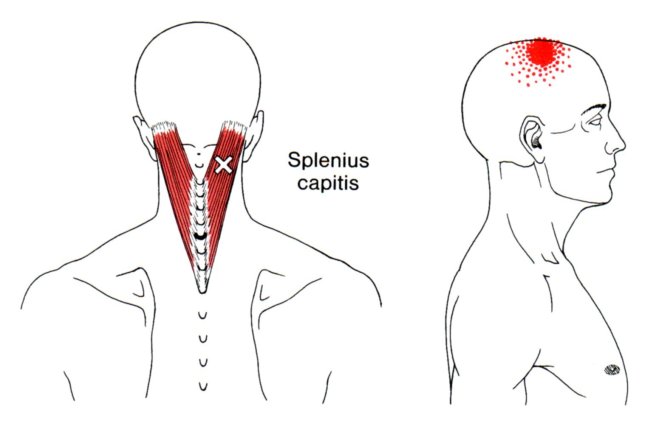
The Splenius capitis muscle is located in the back or the neck. It originates on the ligamentum nuchae and the spinous processes of C7 to T6. It attaches to the occipital bone and the mastoid process of the temporal bone. This muscle functions bilaterally to produce neck extension, and unilaterally to produce rotation of the head to the same side. When trigger points develop in this muscle they will produce restriction in neck movement, as well as pain felt in the neck, but also strongly in the top of the head. Trigger points in this muscle are a common cause of headaches.
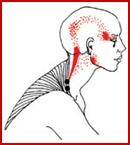
The Trapezius muscle is a large diamond shaped muscle located in the back and neck. It is responsible for for a number of shoulder and neck movements and helps maintain proper posture. This muscle is probably the most common muscle that I work on in the clinic. It is frequently strained and develops trigger points easily. The trigger points in the upper portion of this muscle are the most common to be found in the body. Trigger points will refer pain into the upper back, neck, shoulder, and even into the head and temple causing headaches. Chronic trigger points in this muscle are also a frequent cause of a stiff neck.

The trapezius muscle is a large diamond shaped muscle in your upper and middle back and neck. It it responsible for both shoulder and neck movements. Trigger points in the upper portion of this muscle are the most common points to develop in the body. These trigger points most often occur due to poor posture, such as a slumped sitting posture. Trigger points in the upper portion of the traps will cause pain to refer into the neck, head, and into the temple. These points are one of the most common causes of headaches.
The scalene muscles are located in your neck. They function to stabilize the cervical spine against lateral movement and elevate the first and second rib to assist inspiration. These muscles are often overloaded and develop trigger points from pulling, lifting, and tugging movements, prolonged cough due to illness, shallow breathing mechanics, and poor neck posture. Trigger points in these muscles can refer in two finger-like projections into the chest, other common patterns are into the shoulder, scapula and down the lateral arm, into the thumb and index finger. The scalene can impinge on the brachial plexus causing nerve pain or numbness down the arm. This is called thoracic outlet syndrome.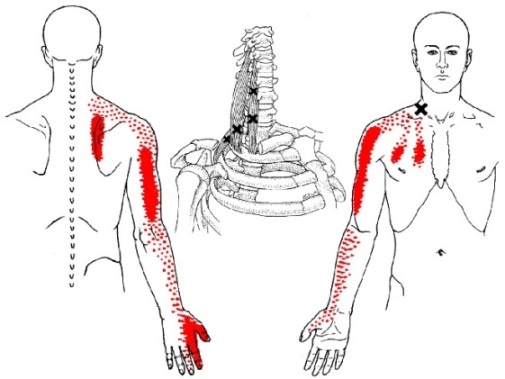
People often think of a massage as a relaxing experience, something they might do occasionally, or give as a gift along with a trip to the spa. Trigger point massage therapy is another kind of massage used to treat pain and physical dysfunction. Trigger points can develop in people from all walks of life. They can affect people of all ages, office workers and labourers, elite and weekend athletes, post surgical patients, people with acute pain from injury and people with chronic pain. Trigger point massage therapy can treat a wide variety of physical conditions such as:
– Migraines
– back pain.
– sciatica
– Carple tunnel syndrome
– achy persistent pain
– pain from Fibromyalgia
– post surgical pain and scarring
– soft tissue injuries related to sports
– TMJ dysfunction

The levator scapulae muscle is located in the neck. It attaches from the cervical vertebrae to the top of the shoulder blade. It is responsible for elevation of the shoulder and lateral flexion of the neck. This muscle is often overloaded from poor shoulder posture such as holding your shoulders up to your ears when stressed. When this happens trigger points will develop causing pain to be felt along the shoulder blade and into the neck. Trigger points in this muscle are the most common cause of a stiff sore neck.

TP’s were first brought to the attention of the medical world by Dr. Janet G. Travell. Dr. Travell, physician to President John F. Kennedy, is the acknowledged Mother of Myofascial Trigger Points. In fact, “Trigger Point massage, the most effective modality used by massage therapists for the relief of pain, is based almost entirely on Dr. Travell’s insights.”2 Dr. Travell’s partner in her research was Dr. David G. Simons, a research scientist and aerospace physician.
Trigger Points are very common. In fact, Travell and Simons state that TP’s are responsible for, or associated with, 75% of pain complaints or conditions.1 With this kind of prevalence, it’s no wonder that TP’s are often referred to as the “scourge of mankind”.
Trigger Points can produce a wide variety of pain complaints. Some of the most common are migraine headaches, back pain, and pain and tingling into the extremities. They are usually responsible for most cases of achy deep pain that is hard to localize.
A TP will refer pain in a predictable pattern, based on its location in a given muscle. Also, since these spots are bundles of contracted muscle fibres, they can cause stiffness and a decreased range of motion. Chronic conditions with many TP’s can also cause general fatigue and malaise, as well as muscle weakness.
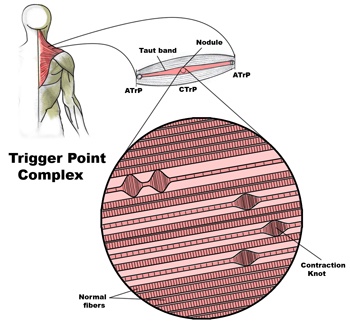
Trigger points are contracted knots in muscles. They form from overload stress causing muscle fibers to become locked together in a self perpetuateing spasm. Trigger points will then produce pain, usually deep achy pain, as well as refered pain. Because of the contraction of the tissue trigger points will also produce stiffness and weakness. Trigger points are also known to mimick other symptoms such as Carple tunnel, and sciatica symptoms. Trigger points are one of, if not the most common cause of pain in the body. Regular massage therapy is not specific or deep enough to release trigger points, a specific technique of applying deep focused pressure to the heart of the knot is required for the point to release. This is called trigger point massage.
 Aberdeen Chiropractic