
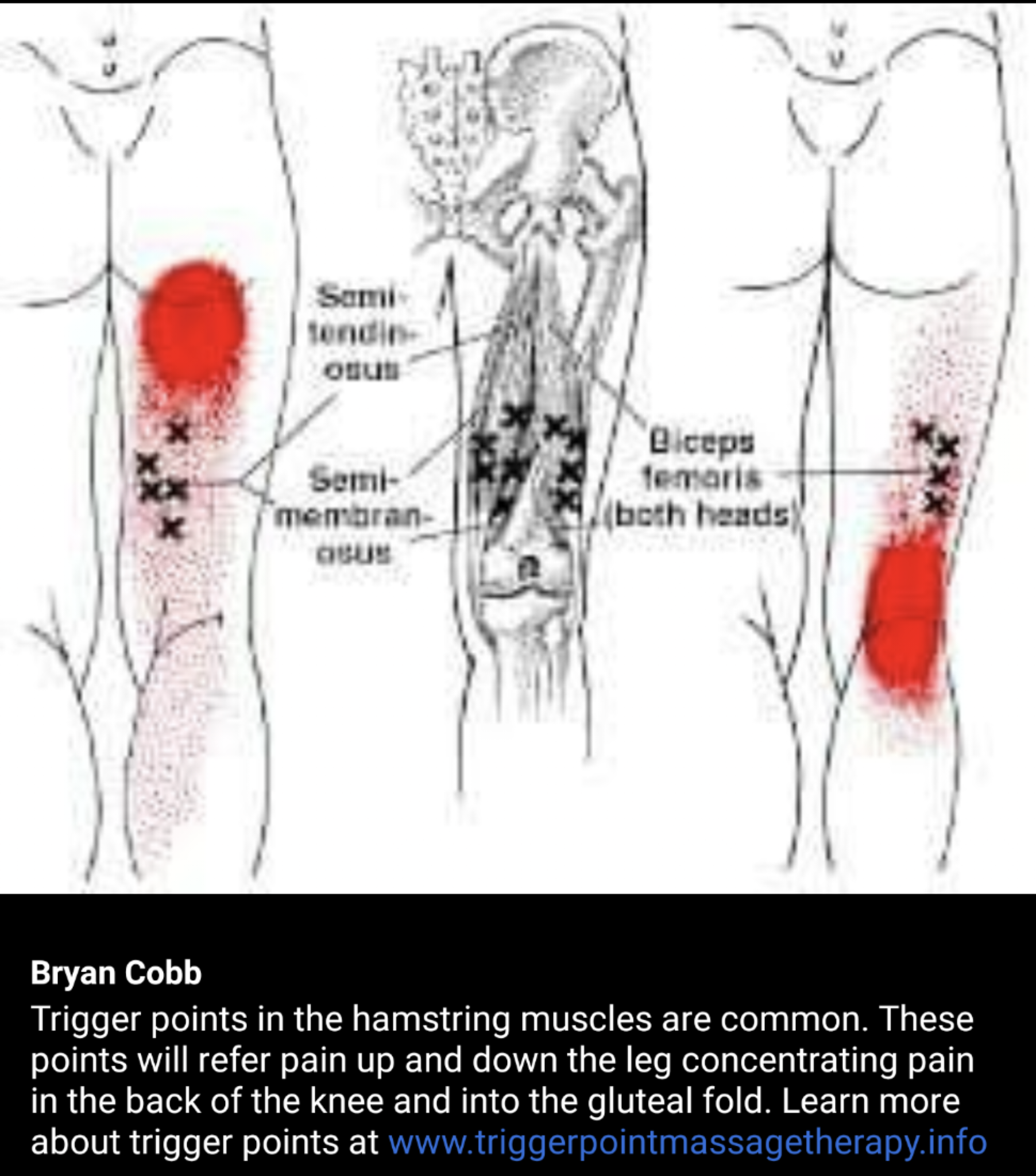


If this looks familiar to you, then you probably have trigger points. The muscles in your back and neck become strained and overloaded and the muscles in the front become shortened and contracted. When this happens trigger points can develop. These points will cause pain, refered pain, stiffness and weakness. Trigger points in the neck muscles can refer pain into the head and cause headaches.

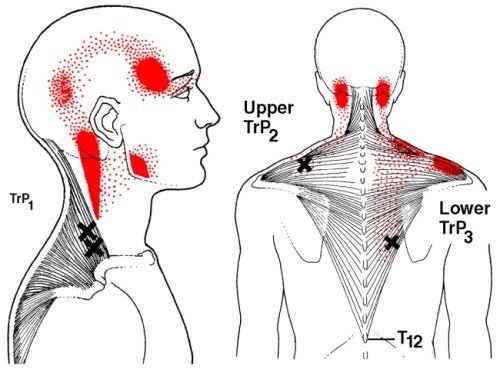
The trapezius muscle or traps is a large diamond shaped muscle located in your back and neck. It is responsible for both neck and shoulder movements as well as stabilizing these areas. Because of this the traps are a very common muscle to become overloaded and strained. When this happens trigger points form in the muscle and cause pain, refered pain, stiffness, and weakness. The upper portion of the muscle is the most common area in the body to develop trigger points. These points refer pain up the neck, behind the ear, and into the temple causing headaches. Trigger points in the lower parts of the muscle will cause shoulder and upper back pain. Trigger points need direct attention to be treated. Otherwise they can out live you! –
One of the often overlooked muscles affected by poor rounded shoulder posture is the latissimus dorsi muscle. They are the largest muscles in the back and function primary to adduct the arm and to assist in medially rotating the arm. Chronic strain causes trigger points to build up in the muscle tissue causing pain, referred pain, stiffness and weakness. Trigger points in the lats refer pain into the back, shoulder, and down the arm into the fingers.

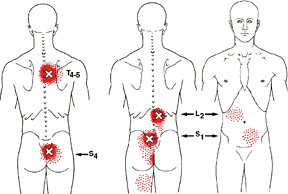
The erector spinae muscles are a group of muscles the travel the length of your spine. They are responsible for spinal movement and stabilization. These muscles often become overloaded with poor posture of the spine. As a result trigger points often form. These points can cause pain to be felt anywhere along the spine and back. Some of these points can even refer pain into the front abdomen as well
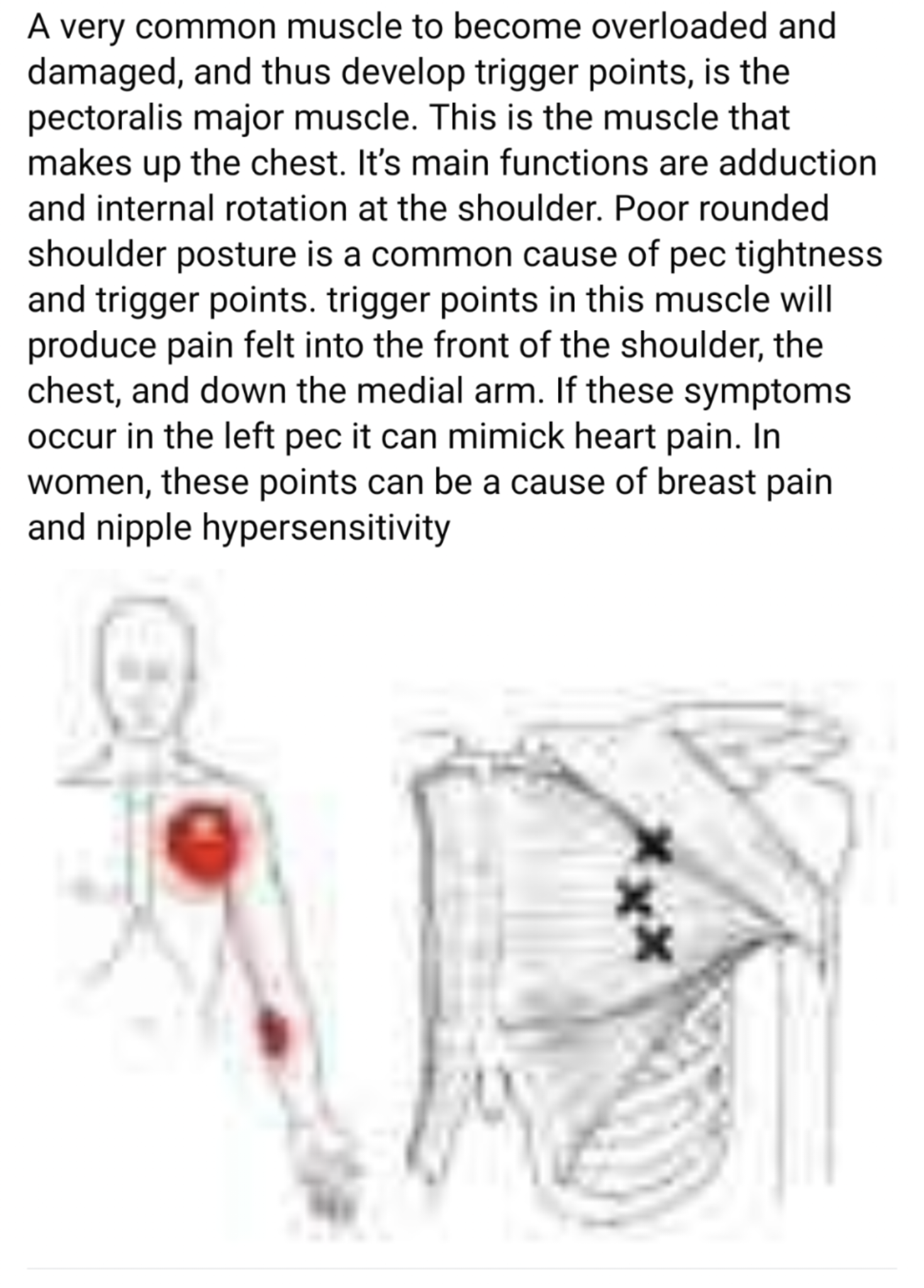
The pectoralis minor muscle is a small strip like muscle located underneath the pectoralis major. It functions to protect the shoulder and aid in scapular movement and stabilization. This muscle almost always has trigger points in it due to chronic poor posture where the shoulders are rounded. Federal pain from these trigger points will cause pain to be felt in the chest and down the arm.

 Aberdeen Chiropractic