

If this looks familiar to you, then you probably have trigger points. The muscles in your back and neck become strained and overloaded and the muscles in the front become shortened and contracted. When this happens trigger points can develop. These points will cause pain, refered pain, stiffness and weakness. Trigger points in the neck muscles can refer pain into the head and cause headaches.
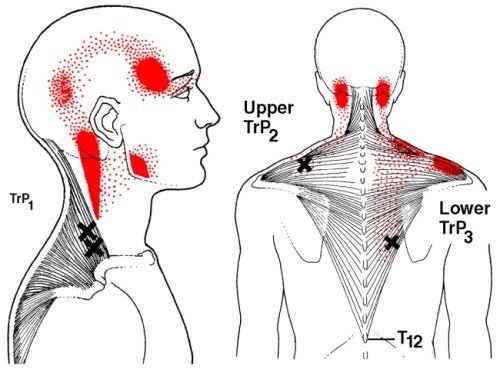
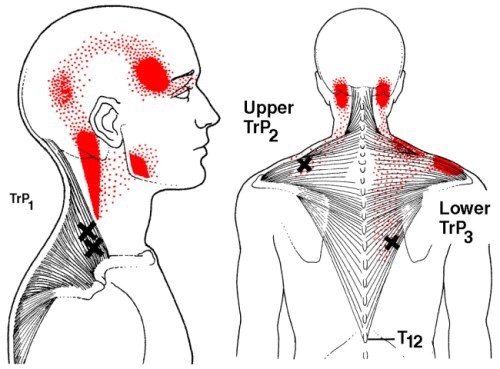
The trapezius muscle or traps is a large diamond shaped muscle located in your back and neck. It is responsible for both neck and shoulder movements as well as stabilizing these areas. Because of this the traps are a very common muscle to become overloaded and strained. When this happens trigger points form in the muscle and cause pain, refered pain, stiffness, and weakness. The upper portion of the muscle is the most common area in the body to develop trigger points. These points refer pain up the neck, behind the ear, and into the temple causing headaches. Trigger points in the lower parts of the muscle will cause shoulder and upper back pain. Trigger points need direct attention to be treated. Otherwise they can out live you! –
One of the most common forms of pain I see in my practice is neck and shoulder pain. Many people have jobs that require the muscles of the neck and upper back to work overtime to keep proper neck posture. Sitting in front of a computer all day or being stuck in a car or truck for example will eventually cause these muscles to become strained and develop trigger points. These trigger points will then cause pain, referred pain, stiffness and weakness. Neck and upper back trigger points will refer pain into the neck and head.
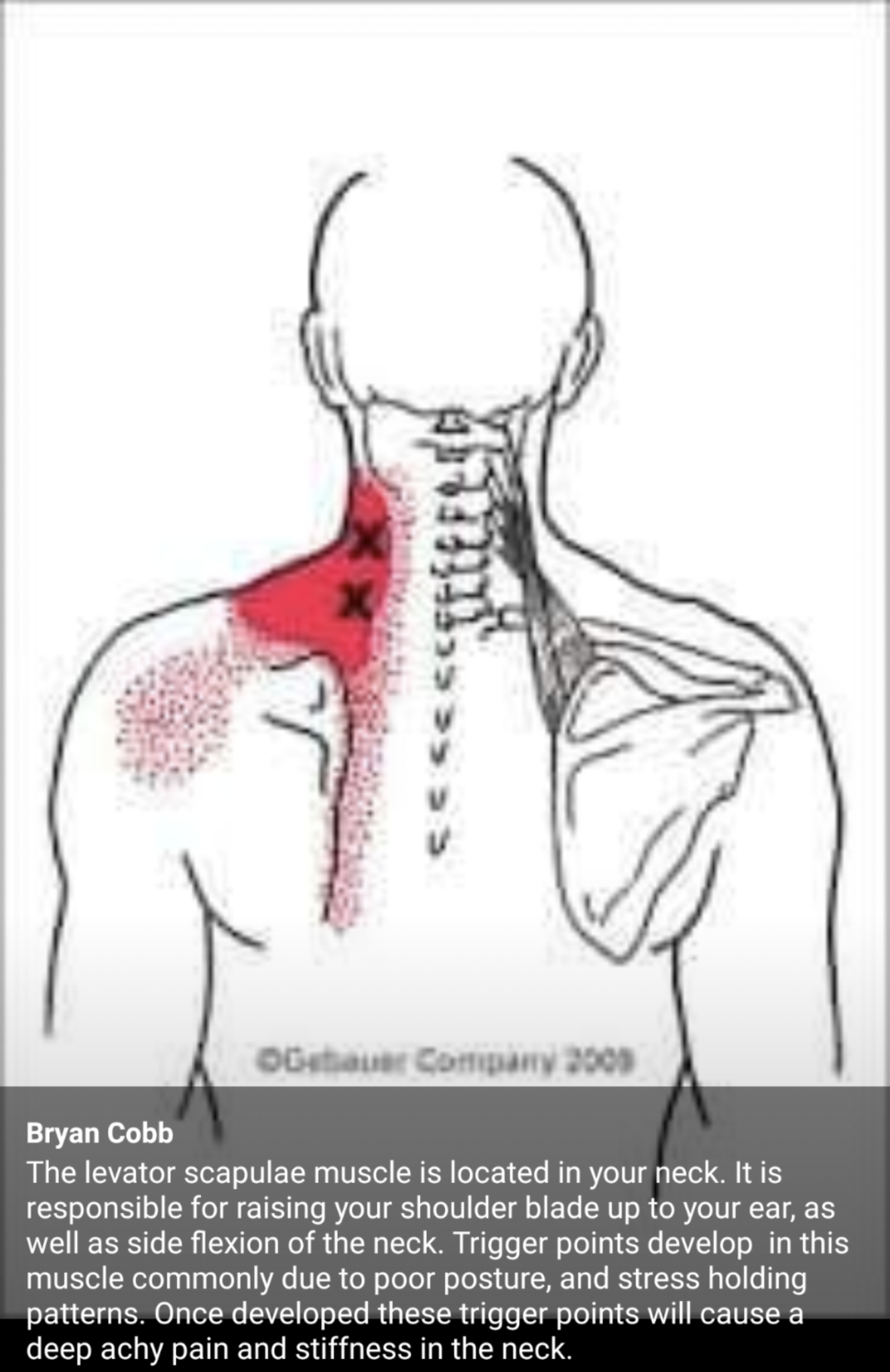
The levator scapulae muscle is a thin strap like muscle in your neck. It helps to shrug the shoulders and to side flex the neck. This muscle often becomes over worked when the head is tilted forward, or the shoulders are in an elevated position for prolonged periods of time. When strained trigger points develop. These points will refer pain into the neck and shoulder blade area. Trigger points in the levator scapulae are a main cause of a stiff neck.

The trapezius muscle is a large diamond shaped muscle in your back and neck. It helps with shoulder and neck movements. This muscle is often over worked due to poor posture, such as sitting in front of a computer. This muscle is also a common ” stress” muscle where people have their shoulders hunched up to their ears. As a result trigger points in the upper traps are very common. These points refer pain into the temple and behind the ear. Upper trap trigger points are a common cause or headaches.
One of the most common forms of pain I see in my practice is neck and shoulder pain. Many people have jobs that require the muscles of the neck and upper back to work overtime to keep proper neck posture. Sitting in front of a computer all day or being stuck in a car or truck for example will eventually cause these muscles to become strained and develop trigger points. These trigger points will then cause pain, referred pain, stiffness and weakness. Neck and upper back trigger points will refer pain into the neck and head.
Neck pain and stiffness are very common. Most of us have, at one point or another experienced it. Neck pain can range from being an annoyance to being excruciating and debilitating. Lots of issues can cause neck pain, but one of the most common causes are myofascial trigger points. Trigger points from in muscles tissue from overload stress. This stress causes muscle fibers in a muscle to become contracted into a knot. These knots will produce pain, referred pain, stiffness and weakness among other symptoms. Trigger points in the levator scapulae and the trapezius muscles are a leading cause of neck pain and stiffness.

With a whiplash injury the muscles of the neck get overloaded and strained. When this happens trigger points can form in any or all of these muscles. Trigger points in the neck muscles will refer pain into the head and face causing headaches and migraines. These points won’t release with rest, stretching, or rehab exercise. They require a manual technique like trigger point massage for them to resolve.

 Aberdeen Chiropractic