Teens & Headaches? What?

Migrane

In 2016, researchers at Curtin University in Perth examined the seated posture and health data of 1,108 17-year olds in an effort to determine if any particular posture increased the risk of headaches/neck pain among late adolescents.

Among four posture subgroups—upright, intermediate, slumped thorax, and forward head—the researchers observed the following: participants who were slumped in their thoracic spine (mid-back region) and had their head forward when they sat were at higher odds of having mild, moderate, or severe depression; participants classified as having a more upright posture exercised more frequently, females were more likely to sit more upright than males; those who were overweight were more likely to sit with a forward neck posture; and taller people were more likely to sit upright.

While they found biopsychosocial factors like exercise frequency, depression, and body mass index (BMI) ARE associated with headaches and neck pain, their data did not suggest any one particular posture increased the risk of neck pain or headaches more than any other posture among the teenagers involved in the study.

This is noteworthy as studies with adults do indicate the risk for neck pain and headaches is greater in individuals with poor neck posture. In particular, postures such as forward head carriage, pinching a phone between the ear and shoulder, and prolonged neck/head rotation outside of neutral can all increase the risk of cervical disorders. This suggests that in younger bodies, the cause of neck pain and headaches may be multifactoral and not limited to just poor posture and that treatment must address all issues that may increase one’s risk for neck pain/headaches in order to reach a desired outcome.

The good news is that chiropractic has long embraced the biopsychosocial model of healthcare, looking at ALL factors that affect back and neck pain and quality of life. Through patient education, spinal manipulation, mobilization, exercise training, the use of modalities, and more, chiropractors can greatly help those struggling with neck pain and headaches!

Trigger points and headaches

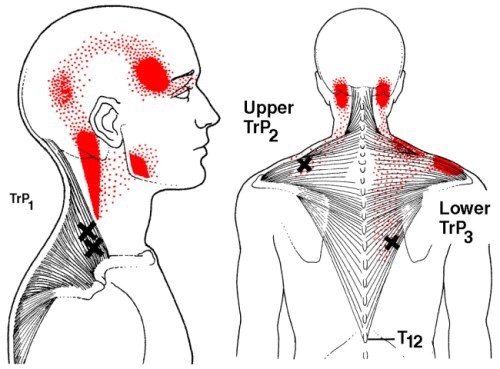
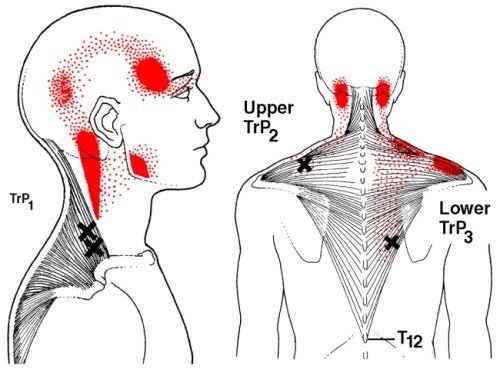
Trigger points are contracted knots of muscle tissue that form in any muscle as a result of overload stress. Trigger points cause pain, referred pain, stiffness and weakness. Trigger points that form in the muscles of the neck and head often refer pain into the head and face. This is one of the most common causes of headache pain. Trigger point massage is an effective way to treat trigger points.

Poor posture and trigger points

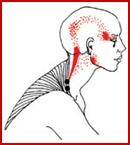
If this looks familiar to you, then you probably have trigger points. The muscles in your back and neck become strained and overloaded and the muscles in the front become shortened and contracted. When this happens trigger points can develop. These points will cause pain, refered pain, stiffness and weakness. Trigger points in the neck muscles can refer pain into the head and cause headaches.

Trigger points and neck pain.

One of the most common forms of pain I see in my practice is neck and shoulder pain. Many people have jobs that require the muscles of the neck and upper back to work overtime to keep proper neck posture. Sitting in front of a computer all day or being stuck in a car or truck for example will eventually cause these muscles to become strained and develop trigger points. These trigger points will then cause pain, referred pain, stiffness and weakness. Neck and upper back trigger points will refer pain into the neck and head.

Trigger points in the scalenes muscles

The scalenes muscles are located in the neck and help with neck movements and inspiration. The anterior scalene runs directly over the brachial plexus that gives nerve and blood supply to the arm. Poor neck and head posture as well as poor breathing mechanics can cause this muscle to become overloaded and develope trigger points. These points will refer pain into the shoulder, arm, and hand. As well as the shoulder blade. When tight, the anterior scalene muscle can put pressure on the brachial plexus causing numbness and tingling felt in the fingers and hand.

Suboccipital trigger points

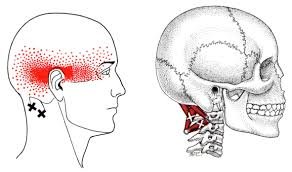
The suboccipital muscles are small muscles at the base of the skull. These muscles often get strained by poor neck and head posture. Chronic strain will cause trigger points to form. Trigger points in the suboccipital muscles are major cause of headache pain. These points refer an achy pain deep into the skull being that eye and into the temple.

Trigger points in the upper traps.

The trapezius muscle is a large diamond shaped muscle in your back and neck. It helps with shoulder and neck movements. This muscle is often over worked due to poor posture, such as sitting in front of a computer. This muscle is also a common ” stress” muscle where people have their shoulders hunched up to their ears. As a result trigger points in the upper traps are very common. These points refer pain into the temple and behind the ear. Upper trap trigger points are a common cause or headaches.

Trigger points and neck posture.

One of the most common things I treat in my practice is myofascial trigger points in the neck muscles. More often than not these points have been caused to develop due to poor neck and shoulder posture. You know the posture, head forward, shoulders rounded, spine curved. Anyone that has had to sit in front of a computer all day, or in car for a long period of time, or spends a lot of time on their phone has experienced this type of posture. The muscles that are responsible for holding your neck up, and your shoulders back, become fatigued over time causing a chronic overload stress. When this happens trigger points can be formed in the muscle tissue. Trigger points are areas of the muscle that have been jammed in the “on” position. They are Almost like a micro cramp within the muscle. These points are hyper sensitive and cause pain, referred pain, stiffness, and weakness among other symptoms. Trigger points in the neck muscles not only cause neck pain, but also refer pain into the head and face, mimicking headache and migraine type pain.