The suboccipital muscles and headaches.

The suboccipital muscles are four small muscles located at the base of the skull. These muscles work to stabilize the skull on the cervical spine as well as produce movements of the head and the first two vertebrae. The suboccitpitals are often overworked from poor posture such as sitting in front of a computer for prolonged periods of time. When this happens trigger points can form in the muscles. These points will produce a deep achy pain felt through the inside of the skull into the temple and behind the eye. Trigger points in these muscles are a major cause of headaches.

Trigger points and headaches

Trigger points in a number of muscles can refer pain into the head causing headaches. One of the most common muscles is the trapezius. This is a large diamond shaped muscle in the upper back and neck. Trigger points in the upper portion of this muscle are the most common trigger points in the body. These points will refer pain into the head, behind the ear and into the temple. Trigger points usually won’t resolve on their own, a therapeutic intervention is required to release the point.

Trigger points and headaches.

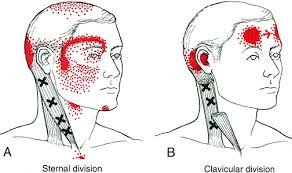
Myofascial trigger points are contracted knots of muscle tissue. They result from overload stress, and are one of the most prevelent injuries to muscle tissue. They are also one of the most common sources of pain in the body. Headaches are one type of pain that trigger points frequently cause. A number of muscles can cause pain to refer into the head and temples. One of the more common offenders is the sternocleidomastoid muscle. This muscle is often overworked from poor neck posture, and the trigger points that can form will refer pain into the head, temple, and around the eye. Trigger points don’t release on their own, a manual therapy like trigger point massage is required to treat the area and relieve symptoms.

Trapezius trigger points.

The trapezius muscle is a large diamond shaped muscle in your upper and middle back and neck. It it responsible for both shoulder and neck movements. Trigger points in the upper portion of this muscle are the most common points to develop in the body. These trigger points most often occur due to poor posture, such as a slumped sitting posture. Trigger points in the upper portion of the traps will cause pain to refer into the neck, head, and into the temple. These points are one of the most common causes of headaches.

Trigger points in the temporalis muscle

The temporalis muscle is located on the sides of the skull at the temple. This muscle assists in jaw movements for chewing and talking etc. This muscle can become overworked from excessive clenching of the jaw and grinding of the teeth from stress. Poor neck posture can also stress the muscles of the jaw. When this happens trigger points can form. These points can refer pain into the temple, skull, and face. These trigger points can also cause tooth sensitivity and pain.

Trigger points in the lateral pterygoid.

The lateral pterygoid muscle is involved in movement of the jaw. It can become become strained from chronic clenching of the jaw and grinding of the teeth. When this happened trigger points can form. This leads not only to pain and refered pain, but also dysfunctional joint mechanics. This muscle is a major player in TMJ dysfunction syndrome.

Trigger points in the medial pteragoyd muscle

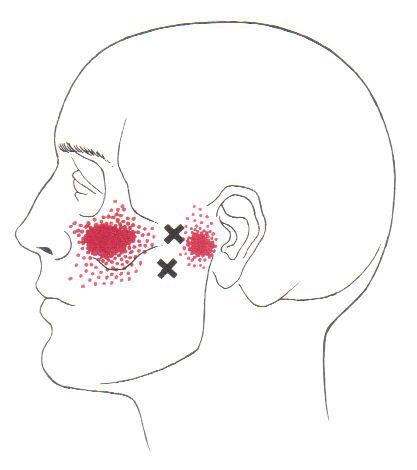
The medial pteragoyd muscle is located on the inside of the jaw. It is responsible for jaw movements during talking and chewing. This muscle becomes over loaded from poor neck posture as well as stress resulting in grinding the teeth or excessive clenching of the jaw. Trigger points in this muscle will refer deep into the jaw and the tempomandibular joint producing “tmj dysfunction syndrome.

Trigger points in the multifidus muscle.

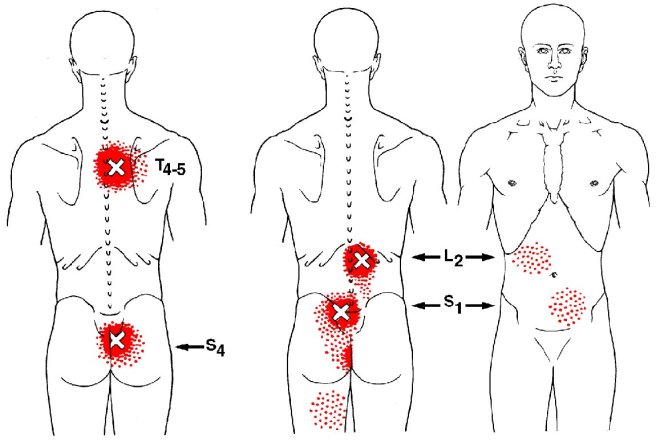
The multifidus muscle is a long muscle that travels the length of the spine. It has different actions on different parts of the spine. It extends and laterally flexes the cervical and lumbar spine, and rotates the thoracic spine. Trigger points in this muscle are common due to poor posture and bad movement mechanics. Trigger points in the lumbar area area are a common cause of low back pain. These lower points can also refer into the abdomen. Points that form in the cervical region will refer pain down the neck into the shoulder blade area.