When Are My Shoes “Done”?

168

Running shoes need to be replaced every 250 miles. There are three basic options:


Motion Control Shoes – Designed for people with low or no arches, these shoes are for runners who strike the ground on the outer edge of their foot. Avoid overly stiff shoes as these decrease you perception of ground strike and lead to new injuries.


Stability or Neutral Shoes – Designed for people with normal or average arches and running mechanics. The shoe contains some cushioning to absorb shock and prevent injuries and some rigidity to avoid pronation.


Cushioned Shoes – Designed for people with high arched feet. Their footprint will typically leave a thin band along the foot’s edge. As they run weight is distributed from heel strike to the outer edge of the foot and small toes that bear the brunt of “lift off.” This shoe is more flexible and absorbs the shock created by the lack or rotation (under-pronation) created by their running style.

My back hurts, why look at my feet?

168

Improperly supported feet can affect the alignment of all of the structures above. To improve your overall comfort:
Choose shoes with good arch support.
Avoid going barefoot or wearing shoes that lack support (i.e. flip-flops). The following brands of sandals provide better than average arch support: Naot, Fit Flops, Orthoheels, Abeo, Vionic and Yellow box.
Avoid high-heeled shoes or boots (keep heels to a maximum of 1½ inches, especially if you are going to be doing a lot of walking).
“Cross-trainer” athletic shoes tend to provide the best all around support and shock absorption for daily activities.
Patients with fallen arches should consider adding arch supports or orthotics.
Repair or replace shoes with worn soles or heels.

A Few Sleep Tips From Us To You

276

Your mattress and the position you sleep in may affect your spine.

Choose a mattress that provides medium or firm support, such as a traditional coil spring or adjustable airbed. Avoid waterbeds, thick pillow tops and soft, sagging mattresses.
Always sleep on your back with a pillow either underneath your knees or on your side with a pillow between your knees. Avoid sleeping on your stomach.
Keep your neck and back covered while sleeping to avoid drafts that could cause potential muscle spasms.

Here are a couple of tips to help you get in and out of bed more comfortably:
To lie down: Sit on the edge of the bed, pull your arms to your sides and tilt your body into the bed, maintaining the bend of your knees at 45 degrees. Finally, bring your feet into in a lying position or roll onto your back.
To get up: From a side-lying position with your knees bent, push your body upright into a sitting position, swinging your legs over the edge of the bed as you rise.

If you find that you wake up sore then you may be suffering from any number of conditions that get worse overnight.

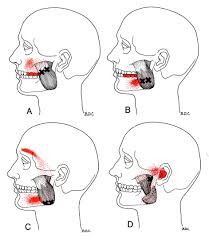
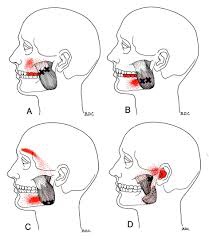
Trigger points in the masseter muscle

The masseter is the main muscle that moves your jaw. It originates on the zygomatic arch and maxilla, and inserts on the coronoid process and Ramus of the mandible. It’s actions are to elevate the mandible and close the jaw. The deep fibres of this muscle also retrude the mandible. This muscle commonly harbours trigger points as a result of teeth grinding. Trigger points in this muscle are often also associated with tmj dysfunction. Trigger points in the upper part of this muscle will refer pain to the upper molars and maxilla often felt as sinusitis. Trigger points in the lower portion of this muscle refer to the lower molars and temple. All trigger points can cause tooth sensitivity

Food Myth #2

Meal Prep

Mixing Carbs, Fats & Proteins is hard on digestion

I’ve heard this myth from people for years and I have no clue where it came form. The idea is that by combining foods you will overwhelm your digestive system and minimize proper absorption of nutrients.

In reality, there is zero science to back this up. Your body is more than capable of dealing with multiple food type as soon as they enter your system. The acids in your stomach will start working on every ounce of food you ingest without fail regardless of the make up of your meal.

Trying to separate carbs, proteins and fats into individual meals over the course of the day while also trying to eat healthy is an unnecessary complication to an already complicated process. Enjoy balanced, healthy meals without worrying about the processes your body uses to get the nutrients into your system.

How Do We Choose A Mattress?

In-bed-after-no-sleep
The age and quality of your mattress have a major impact on how you feel. A worn-out mattress can certainly contribute to back and neck problems. Most experts agree that traditional mattresses should be replaced every 5-8 years. Since you spend about one third of your life in bed, choosing the right mattress is critical. Unfortunately, mattress selection is a highly individual process as there is no single “best” mattress. The following tips will help you make an informed decision:

* Choose a medium-firm model. Mattresses that are either too soft or excessively firm can aggravate back pain.

* Keep the pillow-top relatively thin. An excessively plush topper is the equivalent of placing a cheap mattress on top of a good one.

* Always replace the box spring foundation when you replace the mattress.

* Don’t choose the most expensive mattress in the store- but don’t set your budget unreasonably low. Bargain mattresses are not a good option. Your savings should be focused on avoiding unnecessary add-ons (mattress covers, custom sheets, pillows, etc).

* Look for vendors that provide an in-home warranty that allows you to exchange the mattress if it does not meet your expectations.

* Your chiropractor may be able to provide additional suggestions to help you choose between, coil spring, memory foam, water and air beds.

Exercise Of The Month: Pike On A Ball

Pike on a Ball

Begin in a push-up position with your knees resting on an exercise ball. Maintain a neutral spine, and do not allow your back to arch down towards the floor. Roll the ball from your thighs to your ankles by bending your knees and bringing them towards your chest. Slowly return to the start position. Perform three sets of 10 repetitions daily or as directed.

Hamstring Problems?

Glute Ham Raise.gif

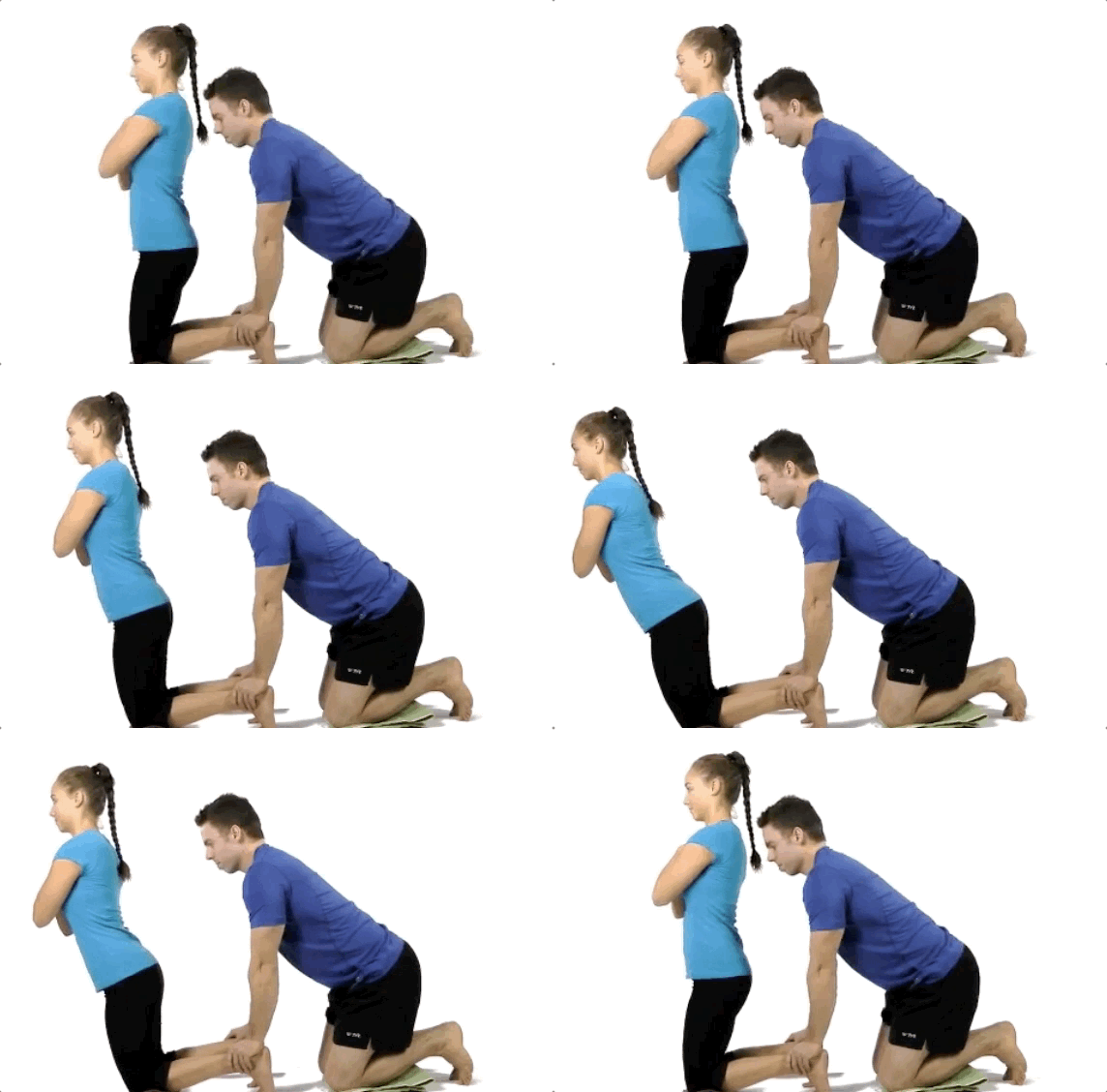
A great injury prevention movement is the glute-ham raise. Done after a warm up and prior to competition it will significantly reduce the odds of hamstring strains in running athletes in sports like Soccer, Football and Sprinting.

To perform the movement:

Begin in a tall kneeling position on a cushion or pillow.

Partner grabs and holds ankles to ground or hook your feet under a stable surface.

Keeping your torso neutral and your thighs in line with your body, bend forward at the knees, using your hamstrings to control the speed of your forward bend.

Go as far as you can without cramping, pain or falling to the ground.