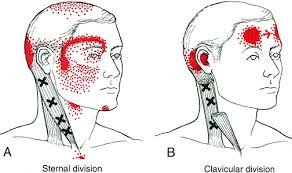
How trigger points form

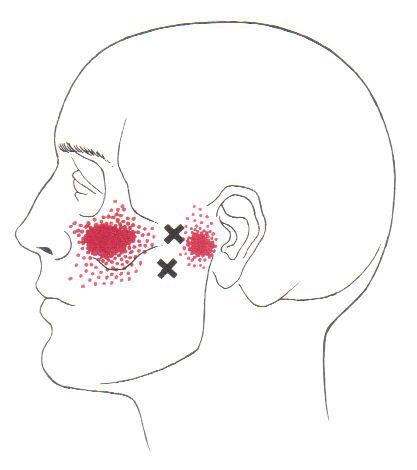
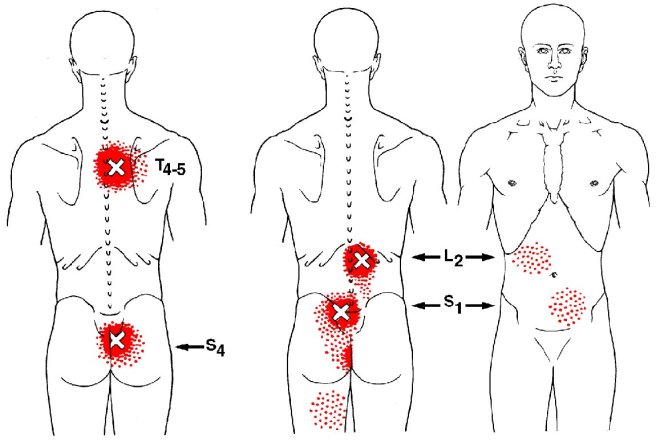
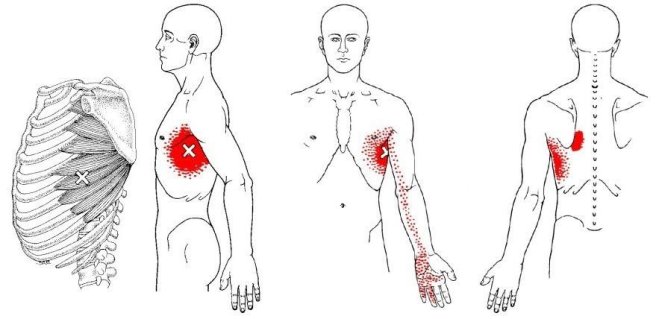
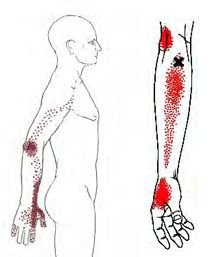
Trigger points form only in muscles. They form as a local contraction in a small number of muscle fibers in a larger muscle or muscle bundle. These in turn can pull on tendons and ligaments associated with the muscle and can cause pain deep within a joint where there are no muscles. The integrated hypothesis theory states that trigger points form from excessive release of acetylcholine which produces sustained depolarization of muscle fibers. Indeed, the trigger point has an abnormal biochemical composition with elevated concentrations of acetylcholine, noradrenaline and serotonin and a lower pH.[5] These sustained contractions of muscle sarcomeres compresses local blood supply restricting the energy needs of the local region. This crisis of energy produces sensitizing substances that interact with some nociceptive (pain) nerves traversing in the local region which in turn can produce localized pain within the muscle at the neuromuscular junction (Travell and Simons 1999). When trigger points are present in muscles there is often pain and weakness in the associated structures. These pain patterns in muscles follow specific nerve pathways and have been readily mapped to allow for identification of the causative pain factor. Many trigger points have pain patterns that overlap, and some create reciprocal cyclic relationships that need to be treated extensively to remove them.

How trigger points form.

Activation of trigger points may be caused by a number of factors, including acute or chronic muscle overload, activation by other trigger points (key/satellite, primary/secondary), disease, psychological distress (via systemic inflammation), homeostatic imbalances, direct trauma to the region, collision trauma (such as a car crash which stresses many muscles and causes instant trigger points) radiculopathy, infections and health issues such as smoking.

Trigger point signs and symptoms

Pain related to a discrete, irritable point in skeletal muscle or fascia, not caused by acute local trauma, inflammation, degeneration, neoplasm or infection.
The painful point can be felt as a nodule or band in the muscle, and a twitch response can be elicited on stimulation of the trigger point.
Palpation of the trigger point reproduces the patient’s complaint of pain, and the pain radiates in a distribution typical of the specific muscle harboring the trigger point.

Trigger points in the suboccitpitals

the suboccipital muscles are a group of small muscles located at the base of the skull. These muscles are responsible for small movements of the head and the first two vertebrae. They also play a roll in postural stability of the skull. Trigger points are common in people with poor neck posture. these points will refer pain deep into the skull and behind the eye. They are a common source of headache pain.

Fascial planes.

fascial connective tissue runs throughout all the bodies layers. It gives the body shape and function. Fascial litterally connects every part of your together. During movement when one part of the body moves, the body as a whole responds. Functionally the only tissue that can facilitate such responsiveness is the connective tissue. When one area of the body gets restricted or damaged, the body as a whole can become dysfunctional by setting up compensation patterns.

How Does Laser Work? 

Over 2000 published research studies demonstrate:

• Laser therapy improves blood flow and lymphatic drainage
• Laser therapy has a strengthening effect on tissue repair
• It is an effective means of relief for many pain syndromes
• It can improve immune response
• Enhanced nerve regeneration & function
• Increased microcirculation & vasodilation
• Increased lymphatic flow
• Increased collagen production
• Increases the speed, quality and tensile strength of tissue repair
• Reduced inflammation
• Enhanced angiogenesis (creation of new blood vessels)


Call us today for more information about Class IV laser therapy and how it can help you!


knee-apollo-image-716


Te Top 5 Researched Benefits of Chiropractic Care!

1. PAIN REDUCTION

The first benefit of chiropractic care may be the most impactful- reducing your pain. Before you are living your optimal life, you have to be free of pain.

Multiple research studies have shown that chiropractic is considered one of the most safe and effective treatments to reduce pain from your neck, low back, and more. Even if you are suffering from spinal stenosis, disc herniations, or foraminal encroachment- chiropractic may be able to help.


2. REDUCE THE FREQUENCY, SEVERITY, AND INTENSITY OF HEADACHES

The second health benefit of chiropractic care, especially important if you have struggled with chronic headaches. Researchers have discovered that chiropractic care can reduce the frequency and intensity of headaches.

With over 20 million people suffering from headaches every day, this is a massive development in healthcare! The most common type of headaches includes; tension headaches and migraines. Tension headaches often include neck pain, muscle pain, and facial pain. Migraines are usually throbbing, can cause nausea and light sensitivity, and some even include an aura.


3. IMPROVED FUNCTION AND QUALITY OF LIFE

Many people don’t go to the doctor when they have pain. They go to the doctor when that pain interferes with their quality of life!

If you have a healthcare issue that is keeping you for enjoying your hobbies, hanging out with friends and family, and limit your ability to perform well at work- then you are likely going to start researching on Google and eventually call a doctor to get answers.

Fortunately, getting back to your active lifestyle, and improving your quality of life (or in science-speak, “functional ability”) is one proven benefits of chiropractic care.


4. REDUCED MEDICATION USAGE

Reducing medication use, and specifically opioids are one of the primary focuses of our healthcare world today.

Each day over 100 people die due to an opioid overdose. And it’s not only affecting addicts and junkies. A majority of opioid deaths come from people who were taking medications prescribed by their doctor.

Not only are these medications addictive and deadly, but in many cases, they are ineffective at helping people recover from spine pain, which is why most people start taking them. This vicious cycle leads people to take MORE medication an attempt to find relief, which only increases the likelihood of an adverse event or addiction.

There is a better way. Researchers have discovered that people who receive chiropractic care are 49% less likely to fill an opioid prescription. And, in my opinion, if we were able to reduce opioid use by nearly 50% just be helping people get well with chiropractic care- this world would be a different place!

Even what many people consider to be “safe” medications like NSAID’s contribute to over 100,000 hospitalizations, and over 3,000 deaths each year. Drugs should rarely be viewed as a first line treatment for spinal pain. Your body is designed to move and recover- so going to a doctor focused on movement and recovery seems like a good idea to not only reduce your medication use but to get the best results possible.


5. SPORTS PERFORMANCE IMPROVEMENTS

Did you know that every major sports team has a chiropractor available to their athletes to help with injury prevention and sports performance?

That’s right, teams in the NFL, MLB, NBA, and NHL all have chiropractors integrated into their healthcare team to keep their athletes performing at their top level all season long.

No one can perform their best when in pain, so chiropractors are used to keeping the athletes feeling good, but with a focus and eye towards sport-specific performance.

Working with the athletes on flexibility, biomechanics, and range of motion, and sport-focused training is critical to raising the bar of performance.

Quite frankly, whether you are working at an office or whether you are on the professional sports field, a balance of strength and flexibility is one of the top keys to stay well long term.

So those are the five significant benefits of chiropractic care. If you’ve experienced any of those, please let us know, or if you have any questions, I’m happy to answer those as well.