Can I Stop My Migraines?

Migraine Headaches

Migraines can be life-altering! They can stop us from being able to enjoy a child’s piano recital, participate in family events, go to work, or simply do household chores! Wouldn’t it be nice to have ways to self-manage these miserable, often disabling headaches? Here are some options!

1. RELAXATION THERAPY: Search for a calm environment, turn off the lights (photophobia, or light sensitivity, is a common migraine complaint), minimize sound/noise (due to “hyperacusis”), and sleep if possible. Monitor the room temperature and/or use hot/cold compresses to the head and/or neck regions to relax tight muscles (heat) and reduce pain and swelling (cold). Similarly, a warm shower or bath can have similar beneficial effects.

2. SLEEP WELL: Migraines can interfere with falling asleep, they can wake you up during the night, and they are often triggered by NOT getting a good night’s sleep. To improve your sleep quality: a) Establish regular sleeping hours. Wake up and go to bed at consistent times every day, including weekends. b) Keep daytime naps short (20-30 min. max). c) “Unwind” at the end of the day – try soothing music, a warm bath, or reading a favorite book (avoid suspenseful movies). d) Don’t eat/drink too much before bedtime as heavy meals, caffeine, nicotine, and alcohol can interfere with sleep. e) Don’t exercise intensely before bedtime (stretching is fine). f) Eliminate distractions in the bedroom, including TV and bringing work to bed. Close the bedroom door and use a fan to muffle out distracting noises. g) If you take any medications, check for known side effects, as many contain caffeine or other stimulants that can interfere with sleep – including some meds that treat migraines! Talk to your doctor and pharmacist!

3. EAT WELL: Be consistent about when you eat and don’t skip meals (fasting increases the risk for migraine). Keep a food journal to figure out your migraine triggers and avoid foods that commonly trigger migraines like chocolate, aged cheeses, caffeine, and alcohol. Try eliminating these and see how you feel!

4. EXERCISE REGULARLY:  This is MOST IMPORTANT for migraine management as it facilitates sleep cycles and stimulates the release of endorphins and enkephlins that help block pain. It also helps fight obesity, which is another risk factor for headaches.

We realize you have a choice in whom you consider for your health care provision and we sincerely appreciate your trust in choosing our service for those needs.  If you, a friend, or family member requires care for neck pain or headaches, we would be honored to render our services.

Diet Strategies For Fibromyalgia

Fibromyalgia (FM) is a common condition that affects about five million Americans, often between ages 20 and 45 years old. FM is very difficult to diagnose primarily because there is no definitive test like there is for heart, liver, or kidney disease. Equally challenging is the ability to effectively treat FM as there are frequently other conditions that co-exist with FM that require special treatment considerations. Typically, each FM case is unique with a different group of symptoms and therefore, each person requires individualized care.

Fibromyalgia symptoms can include generalized pain throughout the body that can vary from mild to severely disabling, extreme fatigue, nausea/flu-like symptoms, brain “fog” (“fibro-fog”), depression and/or anxiety, sleeping problems and feeling un-refreshed in the mornings, headaches, irritable bowel syndrome, morning stiffness, painful menstrual cramps, numbness or tingling (arms/hands, legs/feet), tender points, urinary pain or burning, and more!

So, let’s talk about ways to improve your FM-related symptoms through dietary approaches. When the FM symptom group includes gut trouble (bad/painful gas, bloating, and/or constipation), it’s not uncommon to have an imbalance between the “good” vs. the “bad” bacteria, yeast, and problems with digestion or absorption. Think of management as a “Four Step” process for the digestive system:

1.  REMOVE HARMFUL TOXINS: Consider food allergy testing to determine any foods the FM patient has a sensitivity for. Frequently, removing gluten, dairy, eggs, bananas, potatoes, corn, and red meat can benefit the FM patient. The use of anti-fungal and / or anti-bacterial botanicals (as opposed to drug approaches such as antibiotics) can be highly effective. A low allergy-potential diet consisting of fish, poultry, certain vegetables, legumes, fruits, rice, and olive and coconut oil is usually a good choice.

2.  IMPROVE DIGESTIVE FUNCTION: The presence of bloating and gas is usually indicative of poor digestion, and the use of a digestive enzyme with every meal can be highly effective!

3.  RESTORE THE “GOOD” BACTERIA: Probiotics (with at least 20-30 billion live organisms) at each meal are often necessary to improve the “good” gut bacteria population, which will likely also improve immune function.

4.  REPAIR THE GUT: If the gut wall is damaged, nutrients like l-glutamine, fish oils, and n-acetyl-d-glucosamine may help repair it.

This process will take several months, and some of these approaches may have to be continued over the long term. Doctors of chiropractic are trained in nutritional counseling and can help you in this process. As an added benefit, many FM sufferers find the inclusion of chiropractic adjustments to be both symptomatically relieving and energy producing.

If you, a friend or family member requires care for Fibromyalgia, we sincerely appreciate the trust and confidence shown by choosing our services!

Chiropractic and Headaches

According to the World Health Organization, headaches are among the most common disorders of the nervous system affecting an estimated 47% of adults during the past year. Headaches place a significant burden on both quality of life (personal, social, and occupational) and financial health. They are usually misdiagnosed by healthcare practitioners, and in general, are underestimated, under-recognized, and under-treated around the world. So, what about chiropractic and headaches… Does it help?

Suffice it to say, there are MANY studies showing chiropractic care helps headache sufferers. For instance, in a review of past research studies using an “evidence-based” approach, chiropractic treatment of adults with different types of headaches revealed very positive findings! Researchers note that chiropractic care helps those with episodic or chronic migraine headaches, cervicogenic headache (that is, headaches caused by neck problems), and tension-type headaches (chronic more than episodic). There appears to be additional benefit when chiropractic adjustments are combined with massage, mobilization, and/or adding certain types of exercises, although this was not consistently studied. In the studies that discussed adverse or negative effects of treatment, the researchers noted no serious adverse effects.

In patients suffering from athletic injuries, particularly post-concussion headache (PC-HA), chiropractic care can play a very important role in the patient’s recovery. With an estimated 1.6 to 3.8 million sports-related brain injuries occurring each year, approximately 136,000 involve young high school athletes (although some argue this is “grossly underestimated”).

Several published case studies report significant benefits for post-concussion patients after receiving chiropractic care, some of which included PC-HA from motor vehicle collisions, as well as from slips and falls. For example, one described an improvement in symptoms that included deficits in short-term memory as well as attention problems. In this particular study, a six-year-old boy fell from a slide in the playground, and after 18 months of continuous problems, underwent a course of chiropractic care. After just three weeks of care, his spelling test scores improved from 20% to 80% with even more benefits observed by the eighth week of care!

Another case study looked at a 16-year-old male teenager with a five-week-old football injury who had daily headaches and “a sense of fogginess” (concentration difficulties). He reported significant improvement after the second visit, with near-complete symptom resolution after the fifth visit (within two weeks of care). After seven weeks of care, he successfully returned to normal activities, including playing football.

Dizziness and vertigo are also common residuals from concussion and were present in a 30-year-old woman just three days following a motor vehicle accident. She also complained of headache, neck pain, back pain, and numbness in both arms. The case study noted significant improvement after nine visits within an 18-day time frame.

We realize you have a choice in whom you consider for your health care provision and we sincerely appreciate your trust in choosing our service for those needs.  If you, a friend, or family member requires care for neck pain or headaches, we would be honored to render our services.

Trigger points and headaches

Trigger points are contracted knots of muscle tissue that form in any muscle as a result of overload stress. Trigger points cause pain, referred pain, stiffness and weakness. Trigger points that form in the muscles of the neck and head often refer pain into the head and face. This is one of the most common causes of headache pain. Trigger point massage is an effective way to treat trigger points.

Myofascial pain syndrome.

Myofascial pain syndrome is a chronic pain disorder. In this condition, pressure on sensitive points in your muscles (trigger points) causes pain in the muscle and sometimes can cause pain spread to other  parts of your body. This is called referred pain. Trigger points can also cause stiffness and weakness. This syndrome typically occurs after a muscle has been contracted repetitively. This can be caused by repetitive motions used in jobs or hobbies or by stress-related muscle tension. While nearly everyone has experienced muscle tension pain, the discomfort associated with myofascial pain syndrome persists or worsens. Treatment options include massage therapy, dry needling, and physical therapy. relaxation techniques such as meditation also can help.

Got a stiff neck??

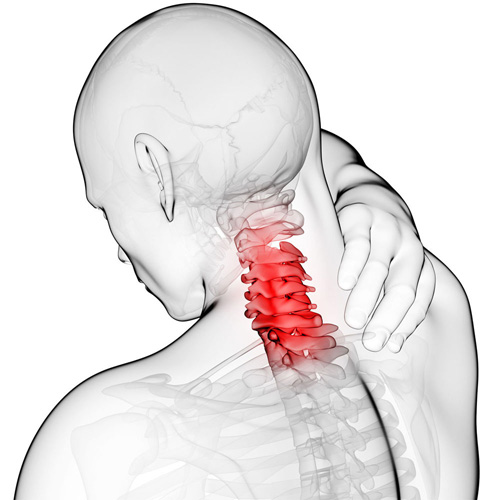
One of the most common causes of a stiff neck are trigger points in the levator scapulae muscle. This muscle runs up the side of the neck from the top of the shoulder blade. It helps to shrug the shoulders and move and stabilize the neck. When trigger points form in this muscle they will produce pain and stiffness in the neck. Deep tissue trigger point massage applied to these knots is an effective treatment method.

Trigger points in the abdominal muscles.

Myofascial trigger points in the abdominal muscles are very common. These muscles are responsible for trunk movement and stability, and are engaged in some way during most activities. As a result trigger points will easily form. These knots will often refer pain into the lower or mid back in a horizontal strip. Trigger points in the abdominal muscles are often overlooked as a source of back pain. Once developed, a trigger point won’t release on its own. A therapeutic modality such as trigger point massage is needed to release the tissue.