


Your spine is made up of 24 bones that stack on top of each other- normally in a straight line. “Scoliosis” means that your spine is curving from side to side, rather than being straight. Scoliosis affects between 1-3% of the population. Scoliosis may begin at any time between birth and adulthood but is most common during times that your skeleton is growing rapidly. Most cases of scoliosis begin between the ages of 13 and 18. Researchers are not completely certain why some people develop scoliosis, but they have found that the problem tends to run in families.
The curve of your scoliosis may be measured with an x-ray. Although some curves get worse, most do not. In fact, only ¼ of all adolescent idiopathic scoliosis curves will progress. Small curves in mature patients have a low risk of progression (2%), while large curves in younger patients progress more frequently. (70%) Curve progression is more common in girls, especially those with larger curves (greater than 20 degrees). Your doctor may need to monitor your scoliosis for progression by performing x-rays every 6-18 months.
Scoliosis may cause your shoulders, hips, or waist to be unlevel. Most curves are classified as “right thoracic”, which means that the peak of your curve protrudes toward the right. This is often accompanied by a forward rotation of your right shoulder and “winging” of your right shoulder blade. Many patients have a secondary curve in their lower spine that helps to balance their body. The majority of patients with mild to moderate scoliosis have no symptoms, but approximately ¼ report back pain. Unfortunately, scoliosis increases your risk of developing back pain later in life.
The primary goal of treatment is to stop curve progression. While many cases can be slowed or even reversed through appropriate management, it is important to recognize that others may progress in spite of the best care. Conservative care, including spinal manipulation (like the type provided in our office) has been shown to help some patients with scoliosis. Exercise is another effective treatment for scoliosis. It is important that you clearly understand your home exercise program and that you perform it consistently.
Patients with larger curves (30-40 degrees), or those who are at high risk for progression may benefit from wearing a brace. Braces have been shown to decrease the need for surgery in about three out of four patients. Fortunately, less than 0.3% of all scoliosis cases will ever require surgery.
You should avoid carrying heavy back packs and consider switching to a wheeled version, if necessary. Sports and exercise will not worsen most cases of scoliosis, and you should continue to participate in the things you enjoy unless directed otherwise by your doctor. The diagnosis of scoliosis is always discouraging, but you must focus on what it is really most important. Be confident in who you are! Don’t let something like a curved spine (or any other medical condition) define you as a person.
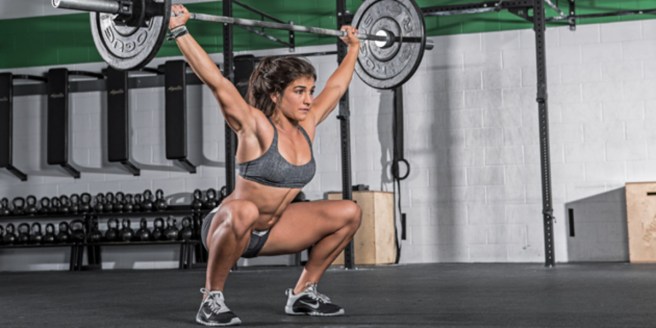
Women are often afraid to lift weights for fear they will look too “bulky”, but actually
that’s not what happens.
Women can and should do weight lifting exercises if they want to shed body fat and achieve a toned physique. Strength training 30 to 40 minutes twice a week for 4 months, could increase an average woman’s resting metabolism by 100 calories a day, meaning you’ll be burning calories even when you’re not exercising.

One very important job of your hip muscles is to maintain the alignment of your leg when you move. One of the primary hip muscles, the gluteus medius, plays an especially important stabilizing role when you walk, run, or squat. The gluteus medius attaches your thigh bone to the crest of your hip. When you lift your left leg, your right gluteus medius must contract in order to keep your body from tipping toward the left. And when you are standing on a bent leg, your gluteus medius prevents that knee from diving into a “knock knee” or “valgus” position.
Weakness of the gluteus medius allows your pelvis to drop and your knee to dive inward when you walk or run. This places tremendous strain on your hip and knee and may cause other problems too. When your knee dives inward, your kneecap is forced outward, causing it to rub harder against your thigh bone- creating a painful irritation and eventually arthritis. Walking and running with a relative “knock knee” position places tremendous stress on the ligaments around your knee and is a known cause of “sprains”. Downstream, a “knock knee” position puts additional stress on the arch of your foot, leading to other painful problems, like plantar fasciitis. Upstream, weak hips allow your pelvis to roll forward which forces your spine into a “sway back” posture. This is a known cause of lower back pain. Hip muscle weakness seems to be more common in females, especially athletes.
You should avoid activities that cause prolonged stretching of the hip abductors, like “hanging on one hip” while standing, sitting crossed legged, and sleeping in a side-lying position with your top knee flexed and touching the bed. Patients with fallen arches may benefit from arch supports or orthotics. Obesity causes more stress to the hip muscles, so overweight patients may benefit from a diet and exercise program. The most important treatment for hip abductor weakness is strength training. Hip strengthening is directly linked to symptom improvement. Moreover, people with stronger hip muscles are less likely to become injured in the first place.

In discussions with physicians, we are often asked: “What patients respond better to chiropractic manipulation versus physical therapy?”. This is an excellent question as the emerging healthcare model demands that PCP’s select the most cost-efficient and clinically effective management for every case. Almost all musculoskeletal conditions have a defined “best practice” recipe and different conditions require a toolbox of different specialists.
Some neuromusculoskeletal conditions like a spinal cord injury or post-surgical rehab, are nearly always better managed by a therapist. Other conditions like uncomplicated ankle or knee sprains can typically be managed equivocally by either. But when dealing with mechanical LBP, neck pain, and cervicogenic headache, the research is clear – chiropractic spinal manipulation is the most effective option.
In fact, earlier this year the American College of Physicians published a clinical practice guideline (the ultimate synthesis of research) recommending that for acute or chronic LBP, physicians delay pharmacologic management and consider “spinal manipulation, heat, massage or acupuncture”- with no recommendation for therapy modalities. (1)
Furthermore, a new randomized clinical trial comparing outcomes for neck pain patients treated with manual joint mobilization vs. physical therapy demonstrated that the manual therapy group required significantly fewer treatment sessions (6.1 vs. 10.0 treatments at 52 weeks). (2)
Medical physicians, chiropractors, and physical therapists must work together to provide integrated “best practice” care. This means recognizing each other’s strengths and limitations while choosing the best possible option regardless of personal or professional bias.
Our providers understand who to treat and more importantly who not to treat. We strive to employ best practice management for every patient, every encounter. We are proud to co- manage our patients and will work hard to maintain your trust.
The tricep muscle is named for its three heads long, medial, and lateral. The long head originates on the infraglenoid tubercle, the medial head on the posterior humerus, and the lateral head on the posterior humerus as well. They join together to insert on the Olecranon process of the ulna. The triceps function to extend the elbow. Strong extension under resistance can cause trigger points to form. Pain referred from triceps trigger points can be felt in the posterior shoulder and down the posterior forearm, as well as in in the olecranon process and the lateral epicondyle which can cause “tennis elbow” pain.
Due to bipedal locomotion (walking around on two legs), foot and ankle problems have the potential to affect EVERYTHING above the feet—even the knees!
When analyzing the way we walk (also known as our gait), we find when the heel strike takes place, the heel and foot motion causes “supination” or the rolling OUT of the ankle. As the unloaded leg begins to swing forwards, there is a quick transition to pronation where the heel and ankle roll inwards and the medial longitudinal arch (MLA) of the foot flattens and pronates NORMALLY!
During the transition from supination to pronation, the flattening of the MLA acts like a spring to propel us forwards followed by the “toe off”, the last phase, as we push off with our big toe and the cycle starts with the other leg. However, if you watch people walk from behind, you will see MANY ankles roll inwards too much. This is call “hyperpronation” and that is NOT NORMAL!
So at what point does this normal pronation become hyperpronation? The answer is NOT black and white, as there is no specific “cut-off” point but rather, a range of abnormal. Hence, we use the terms mild, moderate, and severe hyperpronation to describe the variance or the degrees of abnormality. Hyperpronation can lead to the development of bunions and foot/ankle instability that can cause and/or contribute to knee, hip, pelvis, and spinal problems—even neck and head complaints can result (the “domino effect”)!
One study looked at the incidence of hyperpronation in 50 subjects who had an anterior cruciate ligament (ACL) rupture vs. 50 without a history of knee / ACL injury. They found the ACL-injured subjects had greater pronation than the noninjured subjects suggesting that the presence of hyperpronation increases the risk of ACL injury.
Doctors of chiropractic are trained to evaluate and treat knee conditions of all kinds. Often this may include prescribing exercises or utilizing foot orthotics in an effort to restore the biomechanics of the foot, which can have positive effects not only on the knees but also further up the body.

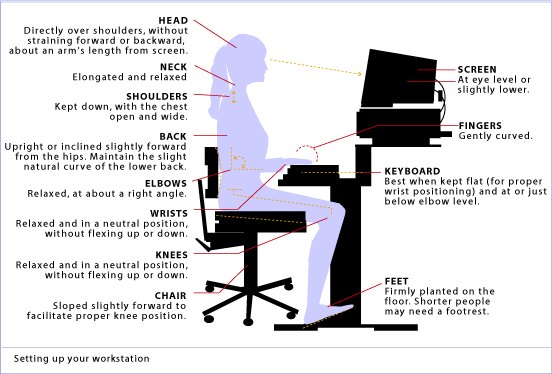
When dealing with Upper Crossed Syndrome the ergonomics of your workstation should be at the from of mind. Some workstation ergonomics advice is as follows:

Researchers recommend sleeping for 7-9 hours per night. Even small deficits can pose problems like decreased athleticism, diminished brain function, increased inflammation and a greater likelihood to get sick- sleeping only 6 hours per night makes you four times more likely to catch a cold when compared to sleeping 7 or more hours. Follow these additional tips for better sleep:
✓ Limit screen time before retiring- the blue light emitted from computer monitors, phones and TV’s can limit melatonin production and adversely affect sleep. Try reading from a book or magazine instead.
✓ Ideally, eat your last meal 3-4 hours before bedtime and especially limit heavy, spicy or high-fat foods. Ration how much you drink before bedtime to minimize bathroom breaks. Particularly limit caffeine in the afternoon and evening- caffeine has a half-life of 6-9 hours and can keep you awake long after the last sip.
✓ Stick to a sleep schedule, trying to retire and arise at the same time each day, including weekends.
✓ Sleep on a comfortable mattress and pillow. Choose 100% cotton sleep clothes and sheets over synthetic materials (i.e. polyester). Some research has suggested that your “deep” REM sleep improves when your mattress is oriented so that your body is aligned North and South as opposed to East and West.
✓ Most people sleep best in a cool room; ideally between 60-67 degrees F.


