
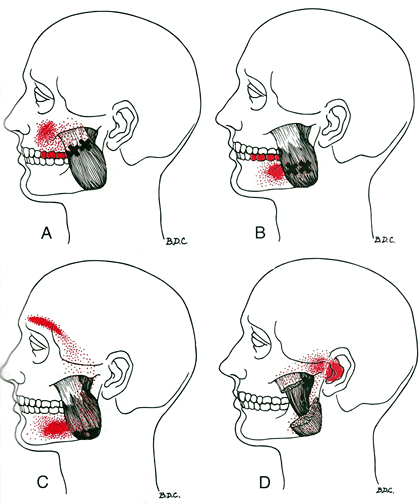
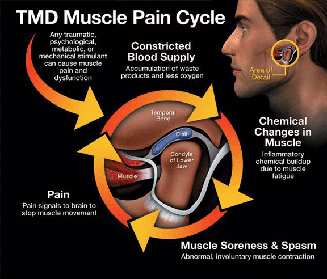
Temporomandibular joint dysfunction is a blanket term that refers to pain and dysfunction of the jaw muscles and the tempomandibular joints which connect the mandible to the skull. The most common symptoms are pain and restricted mandibular movement as well as grinding noises coming from the joint. This condition is more common in women then in men, and affects a large portion of patients suffering from fibromyalgia. Trigger points in the muscles of mastication are frequently involved in TMJ dysfunction. Trigger points in the pterygoid and masseter muscles for example will not only refer pain into the tempomandibular joints, but will also cause a dysfunctional movement pattern that can restrict range of motion. Trigger point therapy can be an effective modality to treat TMJ dysfunction.

stress
Trigger points and fibromyalgia
Myofascial pain syndrome (trigger points) and fibromyalgia are often confused to be the same condition and while there is a lot of interrelatedness between the two they are not quite identical. The clinical definition of a trigger point is “a hyper irritable spot associated within a taut band of skeletal muscle that is painful on compression or muscle contraction, and usually responds with a referred pain pattern distant from the spot”. Trigger points form from an overload trauma to the muscle tissue. This is contrasted with fibromyalgia which is defined as “a medical condition characterized by chronic widespread pain and a heightened pain response to pressure. Other symptoms include tiredness to a degree that normal activities are affected, sleep problems and troubles with memory. Some people also report restless leg syndrome, bowel and bladder problems, numbness and tingling and sensitivity to noise, lights and temperature. It is also associated with depression, anxiety, and post traumatic stress disorder”. Fibromyalgia will also present with localized tender points which are often mistaken for trigger points. Where these two conditions become somewhat interrelated is via the nervous system. Fibromyalgia patients suffer from a super-sensitization of the nervous system causing hyperirritability and pain. Myofascial trigger points can be caused by,or be the cause of, super sensitization. An active trigger point will irritate the sensory nerves around it eventually leading to super-sensitization. Trigger points have also been showed to form of become active due to super-sensitization. Both of these conditions can perpetuate the other, leading to layers of pain and symptoms. This being the case, trigger point therapy can have a very positive effect on decreasing the severity of pain and symptoms in patients suffering from fibromyalgia.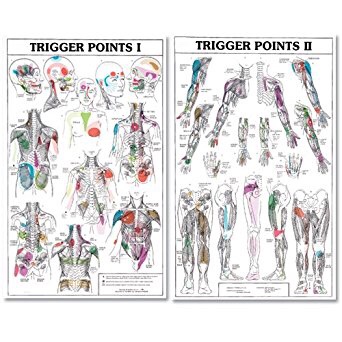

Avoiding Back Pain At Sedentary Jobs
Some great tips on how to prevent back pain when working a sedentary job from our friends at Silicon Republic. Check out the article below.
1. Take regular breaks to stretch and walk around
Try to walk around for between three and five minutes every half hour.
2. Make sure not to hunch over while working
Everyone intuitively understands that hunching over the computer is bad for them, but it’s easy to fall into the most natural and comfortable – albeit unhealthy – sitting position while you’re in the flow of things.
3. Consider a standing desk
A standing desk offers you the opportunity to alternate your position throughout the day.
Trigger points in the temporalis muscle
The temporalis muscle is located in the temple area of the skull. It originates on the temporal lines on the parietal bone of the skull, and inserts on the coronoid process of the mandible. It’s main action is to close the jaw. The posterior and middle fibres bilaterally retrude the mandible. Acting individually, this muscle will deviate the mandible to the same side. Trigger points in this muscle refer into the teeth causing hypersensitivity, and into and above the eye and temple, causing headaches.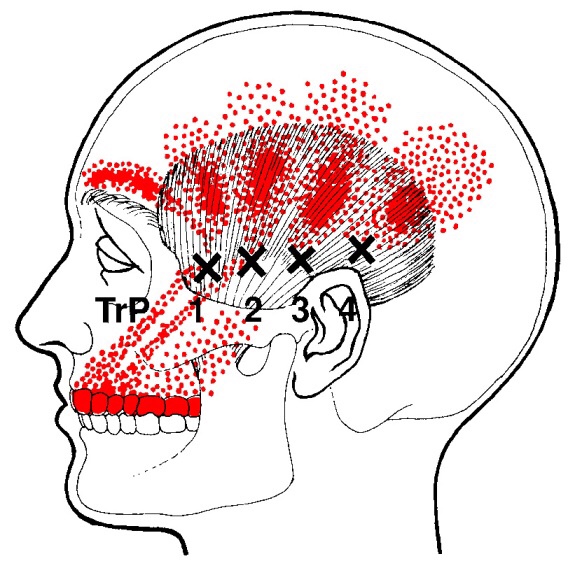
Do you wake up with numb fingers?
The term “thoracic outlet” describes an area at the base of your neck, just above your collarbone. Some important nerves and vessels pass through this outlet on their way into your arm. Compression of these tissues causes a condition called “thoracic outlet syndrome” which results in pain, numbness or tingling in your arm.
Several different factors can cause Thoracic Outlet Syndrome,

commonly referred to as TOS. Sometimes TOS is caused from tightness in the muscles of your neck and chest, other times the space between your first rib and collarbone is too small. People who have an extra rib (cervical rib) and people who have recently suffered a neck injury may have a greater chance of having this problem.
The condition is aggravated by poor posture and by occupations that promote “slouching,” i.e., computer users, assembly line workers, supermarket checkers and students. Swimmers, volleyball players, tennis players, baseball pitchers and occupations requiring prolonged overhead activity. i.e., electricians and painters are also prime candidates for TOS.
Symptoms of TOS include arm pain, numbness, tingling and possible weakness. Neck, arm and hand pain may begin slowly and are often aggravated by elevation of the arms or excessive head movement. Loss of grip strength is possible.
Conservative treatment, like the kind we provide, has been shown to be effective at treating TOS. Through our careful exam we have identified your specific sites of compression and will use some of the following treatment to help:
You should avoid carrying heavy loads, especially on your shoulder i.e., carpet rolls. Briefcases, laptop cases or heavy shoulder bags should be lightened. Bra straps may need additional padding or consideration of replacement with a sports bra.
Trigger points in the lateral pterygoid
The lateral pterygoid muscle plays an important role in prober jaw function. It originates on the greater wing of the sphenoid bone and the lateral pterygoid plate, and inserts on the condyloid process of the mandible. It’s action is to pull the head of the mandibular condyle out of the mandibular fossa while opening the jaw. When trigger points develop they refer pain into the temporal mandibular joint and maxillary sinus. This referral is commonly mistaken for TM arthritis. In addition to the referral pain, trigger points in this muscle can also effect proper movement of the jaw.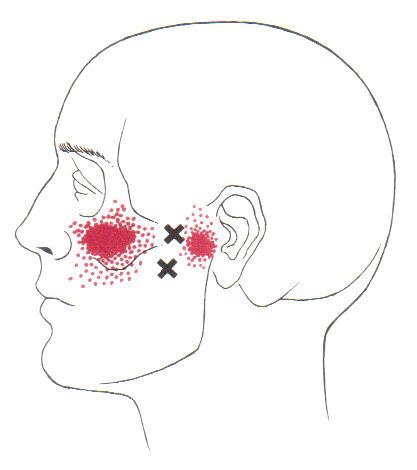

I have Plantar Fasciitis; now what?
The “Plantar fascia” is a fibrous band running from the under surface of your heel to the ball of your foot. “Plantar fasciitis” is a painful inflammation of this tissue caused by chronic over stretching and mild tearing.
Plantar fasciitis is commonly associated with fallen arches of the foot. To understand how this happens, cup your hand to make a “C” shape. This represents a foot with a high arch. Imagine a band running from your fingertips to your wrist. This represents the plantar fascia. Now, straighten your fingers to simulate what happens when the arch “falls.” When this happens in your foot, the plantar fascia is stretched and can begin to tear away from your heel.

Plantar fasciitis affects 10% of the population and is more common in women. Approximately one fourth of patients have the problem in both feet at the same time. People who place excessive stress on their feet by being overweight, standing for long periods, or participating in endurance sports are more likely to develop the condition as well. Shoes without adequate arch supports, including sandals or going barefoot, increase your chances of developing plantar fasciitis. Wearing high-heeled shoes or boots may contribute to the problem.
The most common symptom of plantar fasciitis is pain in the heel or arch when standing up after a period of inactivity, particularly first thing in the morning. When you are sleeping, the arch is in a relaxed or shortened state, and the plantar fascia is able to heal. When you stand up first thing in the morning, you stretch the fascia, once again tearing it away from its attachment on the heel. The condition may progress to the point that you experience pain throughout the day, even while resting. The pain often eases after you walk for a period of time, only to redevelop. You may notice some tenderness when you touch your heel, and you probably have tight calf and hamstring muscles as well.
Plantar fasciitis can be a frustrating condition, often lasting 18 months or more if left untreated. Fortunately, you may recover more quickly with proper treatment. One of the most important things that you can do is to make sure that you are wearing shoes with good arch supports on a consistent basis. A period of rest may be necessary to help you recover. Runners may need to temporarily decrease mileage or switch to less stressful activities like swimming, cycling, or using an elliptical machine. A splint or “Strassburg sock” worn at night will help to keep your plantar fascia in a stretched position while it is healing.
What is a “Mild” traumatic Brain Injury?
A concussion is a blow or jolt to the head that disrupts normal brain function. Concussions, also known as Mild Traumatic Brain Injuries, most often result from falls, sports injuries, and auto accidents.
 Concussion symptoms may begin immediately after an injury, but sometimes take hours or days to appear. The most common symptoms of a concussion include; headaches, light-headedness, dizziness, visual disturbances, ringing in the ears, confusion, fatigue, difficulty sleeping, irritability, and difficulty remembering or learning new things. Patients sometimes struggle to understand conversations or make simple calculations like determining a restaurant tip. Patients often feel as if they are “in a fog”. Symptoms can range from subtle to debilitating.
Patients and their attendants should be particularly alert for signs or symptoms that could indicate a more threatening injury like; worsening headache, growing irritability, repeated vomiting, difficulty speaking or swallowing, shortness of breath, unequal pupils, fever, visual disturbances, seizures, clear discharge from the nose or ears, loss of consciousness, or increasing light-headedness, numbness, or confusion. These symptoms warrant immediate emergency medical attention.
Recovery times are quite variable and are dependent upon a number of factors. It is critical that you allow your brain to recover completely before returning to physical activity. A concussion can be likened to dropping a computer – you will need to allow time to reboot before trying to use it. Suffering a second concussion before the first has completely resolved can lead to significantly worse symptoms and long-term impairments.
Athletes who have suffered a concussion must not return to activity before being evaluated by a healthcare professional that is very familiar with concussion management.
Meditation goes mainstream!

With growing evidence that meditation has significant health benefits, a 2016 study by a team of researchers from the United States, Spain, and France sought to explain how and why meditation actually works.
The study investigated the difference between “mindful meditation” in a group of experienced meditators vs. “quiet non-meditative activity” in a group of untrained control subjects. After eight hours of mindfulness practice, the meditation group showed a range of genetic and molecular differences, which in turn correlated with faster physical recovery from a stressful situation.
According to researchers, this is the first time a study has documented a rapid alteration in gene expression within meditating subjects. Interestingly, the researchers observed these changes in the SAME genes that anti-inflammatory and pain-killing drugs target! Thus, they speculate that mindful-based training may benefit patients with inflammatory conditions! This and prior studies have prompted the American Heart Association to endorse meditation as an effective cardiac preventative intervention.
Meditation has been found to be helpful for many conditions including stress management, lowering high blood pressure, heart disease, and depression. You can incorporate meditation into your life with three simple meditation exercises! The initial advice is “…go slow and be compassionate and gentle with yourself.” Your mind will try to wander (called our “default mode”) which consumes about half of our day, so try to focus (called “focus mode”)!
1) WALKING MEDITATION: At a slow to medium pace, focus on your feet. Notice how your heel hits the ground and then feel the roll of your foot followed by the big toe pushing off prior to the swing phase. Feel for stones under the foot and other interesting sensations. If your mind starts to wander (default mode), gently bring your attention back to your foot (focus mode). You WILL get better with practice, and you’ll soon find it much easier to “focus” during stressful situations!
2) NOVEL EXPERIENCES: It’s much easier to lose focus on the people you see everyday vs. those seen only one time a month. The next time you arrive home from work, pretend you haven’t seen your spouse/friend in 30 days. Give them your undivided attention. Then, try this on co-workers and other people you see every day. Believe me, they WILL notice a difference!
3) GRATITUDE EXERCISES: When you’re not in their presence, focus on a person’s face and send them a “silent gratitude” for being in your life. Try this on family members, friends, co-workers, and others!
Pathophysiology of trigger points.
A large number of factors have been identified as causes of trigger point activation. These include acute or chronic overload of muscle tissue, disease, psychological distress, systemic inflammation, homeostatic imbalances, direct trauma, radiculopathy, infections, and lifestyle choices such as smoking. Trigger points form as a local contraction of muscle fibres in a muscle or bundle of muscle fibres. These can pull on ligaments and tendons associated with the muscle which can cause pain to be felt deep inside a joint. It is theorized that trigger points form from excessive release of acetylcholine causing sustained depolarization of muscle fibres. Trigger points present an abnormal biochemical composition with elevated levels of acetylcholine, noradrenaline and serotonin and a lower ph. The contracted fibres in a trigger point constricts blood supply to the area creating an energy crisis in the tissue that results in the production of sensitizing substances that interact with pain receptors producing pain. When trigger points are present in a muscle there is often pain and weakness in the associated structures. These pain patterns follow specific nerve pathways that have been well mapped to allow for accurate diagnosis or the causative pain factor.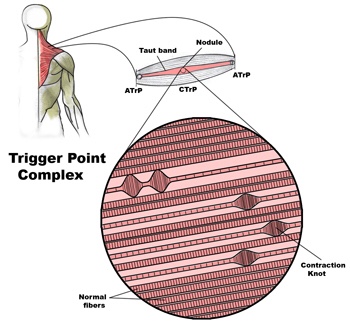
 Aberdeen Chiropractic