
The adductor pollicis is a muscle in the hand and acts on the thumb. It originates on the transverse head of the third metacarpal, the oblique head of the base of the second and third metacarpals, and the trapezoid and capitate bones. It inserts on the base of the proximal phalanx and ulnar sesamoid. This muscle acts to adduct and flex the thumb. Trigger points cause pain and aching along the outside of the thumb and hand, spillover pain may reach the thenar eminence.
Repetitive Stress Injury
Help For Those Stuck At A Desk All Day
Desk workers should periodically perform the “Brugger relief position” to help maintain good sitting posture.
Here’s how to do it:
- Position your body at the chair’s edge, feet pointed outward. Weight should be on your legs and your abdomen should be relaxed.
- Tilt your pelvis forward, lift your sternum, arch your back, drop your arms, and roll out your palms while squeezing your shoulders together.
- Take a few deep cleansing breaths.
Learn more about proper workstation ergonomics in this video.
Trigger points in the adductor longus.
The adductor longus is a muscle of the groin. It originates on the pubic body just below the pubic crest, and inserts on the middle third of the linea aspera of the femur. It acts on the hip joint to cause adduction and flexion. Distal Trigger points in this muscle refer pain to the upper medial knee and down the tibia. Proximal trigger points refer pain into the anterior hip. These trigger points are the most common muscular cause of groin pain. 
Mobility Myth #4

Myth: You only need to do mobility work if you’re an athlete or if something hurts.
Truth: “Whether you’re pro athlete, weekend warrior, or parent being active with their kids, the mobility requirement for fundamental movements (running, squatting, etc.) stays the same,” says Ardoin. “We always need adequate mobility in the same key areas, such as the ankles, hips, thoracic spine (upper back), shoulders.” He says everyone should be able to meet the following mobility baselines:
-
Touch your chin to your chest without opening your mouth.
-
Look up toward the ceiling with your face becoming parallel to the floor.
-
Rotate your head to each side until your chin reaches mid collarbone.
-
Touch your toes with straight legs.
-
Lower into a deep squat without your heels coming up or toes rotating out.
“If you don’t have access to the necessary mobility, your body will find a way to get it by compensating elsewhere, which could lead to injuries down the road,” he says.
But the injuries might be in unexpected places: Your first thought might be to deal with the area that hurts—but, often, that’s not the true source of the problem. “Often times the issue causing lower-back pain isn’t the lower back, but an issue with hip mobility,” says Esquer. An elbow issue might actually be due to a lack of wrist mobility, and upper-back pain might be due to tightness in the front of the chest and shoulders.
“A lot of times we don’t notice movement restrictions until we’re in pain,” says Esquer. Maintaining your natural mobility day in and day out (kind of like brushing your teeth to prevent cavities) will help prevent surprise injuries from popping up.
The Power Of Posture
How to use a simple posture trick to get rid of your back and neck pain!
Any posture held too long can be painful and potentially damaging; the article above is a quick way to help avoid the postural stresses that become ingrained in our daily lives now that technology has almost overcome us!
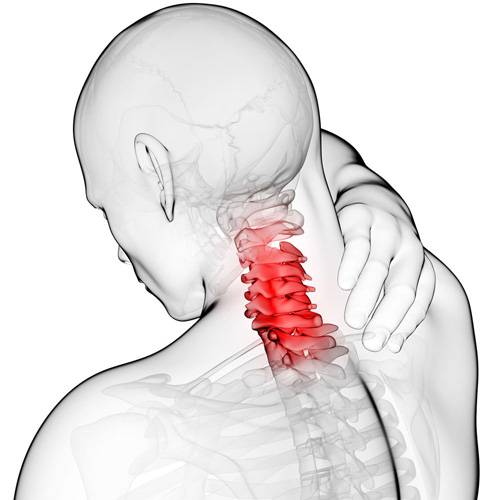
TMJ dysfunction
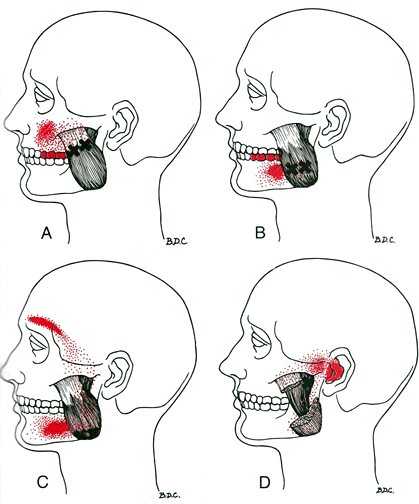
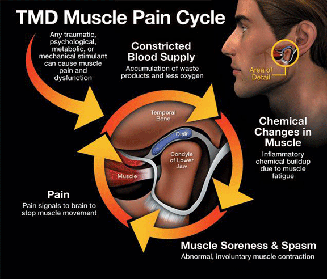
Temporomandibular joint dysfunction is a blanket term that refers to pain and dysfunction of the jaw muscles and the tempomandibular joints which connect the mandible to the skull. The most common symptoms are pain and restricted mandibular movement as well as grinding noises coming from the joint. This condition is more common in women then in men, and affects a large portion of patients suffering from fibromyalgia. Trigger points in the muscles of mastication are frequently involved in TMJ dysfunction. Trigger points in the pterygoid and masseter muscles for example will not only refer pain into the tempomandibular joints, but will also cause a dysfunctional movement pattern that can restrict range of motion. Trigger point therapy can be an effective modality to treat TMJ dysfunction.

Trigger points in the adductor longus and brevis.
These muscles are located in the groin. The longus originates on the pubic body just below the pubic crest and inserts on the middle third of the linea aspera.The brevis muscle originates on the inferior ramus and body of the pubis and has its attachment to the lesser trochanter and linea aspera of the femur. Trigger points in these muscles are the most common muscular cause of groin pain. Distal trigger points refer pain to the upper medial knee and down the tibia. Proximal trigger points refer into the anterior hip area.
Avoiding Back Pain At Sedentary Jobs
Some great tips on how to prevent back pain when working a sedentary job from our friends at Silicon Republic. Check out the article below.
1. Take regular breaks to stretch and walk around
Try to walk around for between three and five minutes every half hour.
2. Make sure not to hunch over while working
Everyone intuitively understands that hunching over the computer is bad for them, but it’s easy to fall into the most natural and comfortable – albeit unhealthy – sitting position while you’re in the flow of things.
3. Consider a standing desk
A standing desk offers you the opportunity to alternate your position throughout the day.
Trigger points in the Quadratus Lumborum muscle.
The quadratus lumborum muscle is a commonly overlooked source of low back pain and is often responsible for “pseudo disc syndrome”. This muscle originates on the inferior border of the 12th rib and lumbar transverse processes. It inserts on the iliac crest and iliolumbar ligament. The q.l.’s main actions are extension and lateral flexion of the spine. It also acts as a stabilizer of the lumbar spine. Trigger points in this muscle refer pain into the sacroiliac joint and the lower buttock. Pain can also spread anteriorly along the crest of the ilium into the lower abdomen and groin and to the greater trochanter. 
Why Posture Is So Important For Fitness
Why Posture Is So Important For Exercise & Fitness
Great article from http://www.brit.co on posture and fitness.
If you’ve ever rolled your eyes when your mom told you to “sit up straighter,” listen up! Turns out she was on to something. Good posture is important for more reasons than physical presentation. And for fitness fanatics, it’s actually critical. “Good posture impacts how you walk, jump, and lift,” says Aaptiv trainer Ackeem Emmons. “Proper alignment also eases strain or pain on your spinal cord.”

For runners and gym-goers, the impacts are even more specific. “When you’re running, having good posture allows you to breathe better,” Emmons says. “The more air in your diaphragm, the further you can go. The better your posture, the more fluid your form.” All of this translates to more efficient and successful running. In the gym, proper form and alignment help you isolate certain muscle groups and execute heavy compound movements, he adds.
Beyond the obvious physical gains, your posture can also impact you mentally as well. “Standing tall with proper posture gives the immediate impression of confidence and courage,” says Aaptiv trainer Ceasar F. Barajas. “You’re mentally setting the tone for success when you straighten up a bit.”
If you’re suddenly feeling hyper-aware of your spinal column, don’t worry. According to Aaptiv trainers Jaime McFaden and Benjamin Green, you can work every day to gradually correct limp posture. “Sit up straight and gently pull your shoulders back and down, stretching the neck. Press both feet firmly into the ground and lift your chest,” McFaden says.
“I’m on a bike anywhere from three to six days per week, hunched over with a rounded back,” explains Green. “Throughout the day, if I catch myself not standing up straight, I open up my shoulders.” If it helps, imagine a string attached to the top of your head, pulling you up, he adds.
For those looking for a more intense posture intervention, our Aaptiv trainers shared five exercises and poses that will help open up your chest, align your spine, and gradually correct poor posture. Keep reading for more moves and be sure to check out all of Aaptiv’s yoga and stretching classes in-app to support (pun intended) your good posture journey.

1. Planks — Aaptiv Trainer Kelly Chase: Lie on your stomach with your legs straight behind you. Bring your arms forward and rest your weight on your forearms. Your elbows should be directly below your shoulders. Your arms can rest straight and flat with your palms facing the ground or you can bring your hands together to form a triangular shape. Engage your core and keep your body as straight as possible, careful not to create any dip or arch in your lower back. Hold for 30 seconds. As you become stronger, you can increase your hold time.

2. Band Scapular Retraction Rows — Aaptiv Trainer Candice Cunningham: You’ll need a resistance band for this exercise. Sit upright on the floor with both feet extended in front of you. Keeping your legs straight together, wrap the band around the bottoms of your feet, holding the ends in your hands. Focus on holding your back completely straight as you gradually pull the ends of the band into your chest in a row-style movement. Your elbows should bend out to the sides at chest height. Straighten your arms and repeat.
Complete 10 reps.

3. Supermans — Aaptiv Trainer Benjamin Green: Lie straight and face down on your mat. Extend your arms in front of you with your biceps next to your ears. Exhale and simultaneously, raise your legs, arms, and chest off the mat, creating a U-shape in your body. Squeeze your lower back and hold for two deep breaths. Inhale and lower your limbs back to the mat.
Complete 10 reps.

4. Bird Dogs — Aaptiv trainer Ackeem Emmons: Start on your hands and knees with your palms directly below your shoulders and your knees below your hips. Put your weight on your left knee and left hand as you slowly lift your right leg and straighten it behind you, keeping it in line with your flat back. Lift your right arm and extend it forward in line with your back. Reach with your fingers, careful to maintain a straight line through your body from fingertips to toes. Flex your right foot so your toes are pointed toward the ground and hold for five deep breaths. Repeat on the other side.
Complete 10 reps on each side.

5. Tadasana (Mountain Pose) — Aaptiv trainer Ceasar Barajas: You can perform this pose standing or sitting (at your desk perhaps?). Take a deep breath in and roll your shoulders up towards your ears. Exhale and roll them back down. Continue consciously breathing deeply and engage your core. Imagine someone poured cold water down your back to further engage your core and move deeper in the stretch.
Perform this move as often as you need.
 Aberdeen Chiropractic