Preventing Compensation Patterns: Optimal Functionality and Performance | Office Approach

Athletes and the general public alike often develop compensation patterns when mild, non-debilitating injuries go untreated. These compensatory patterns can significantly impact performance, whether in sports or daily activities, often resulting in pain and difficulty in movement. Recognizing and addressing these issues is crucial for maintaining optimal functionality and quality of life.

Our office is dedicated to identifying, correcting, and preventing these dysfunctional patterns as part of our comprehensive care approach, especially for patients dealing with long-term pain. When it comes to acute injuries—those that are new or recent—our focus on preventing these patterns is paramount. Addressing them early can lead to a quicker and smoother return to sports, work, and daily life.

Untreated mild injuries can subtly alter the way we move, causing the body to adapt in ways that are not always beneficial. For example, an untreated sprained ankle might cause an individual to favor the uninjured foot, leading to imbalances and strain in other parts of the body. Over time, these imbalances can cause additional problems, such as knee, hip, or back pain. In athletes, even minor changes in movement patterns can lead to significant decreases in performance and an increased risk of further injury.

Our approach to care involves a thorough assessment of each patient’s movement patterns and injury history. This allows us to pinpoint areas where compensations may be occurring. By addressing these issues early, we can help prevent the development of chronic pain and dysfunction. For those already experiencing long-term pain, our goal is to correct these patterns to restore normal function and alleviate discomfort.

In acute injury cases, early intervention is key. When an injury is fresh, the body is in a heightened state of healing and adaptation. This is the ideal time to ensure that healing occurs correctly and that no maladaptive compensation patterns are established. Our treatment plans for acute injuries are designed to support the body’s natural healing processes while providing the guidance and interventions needed to maintain proper movement and function.

Preventing compensation patterns involves a combination of techniques tailored to each individual’s needs. This may include manual therapies to address soft tissue restrictions, joint mobilizations to restore proper alignment and movement, and corrective exercises to strengthen and retrain affected muscles. Education is also a critical component, as understanding how and why compensations occur can empower patients to make adjustments in their daily lives that support their recovery and long-term health.

For athletes, this approach not only helps in recovering from injuries but also enhances overall performance. By ensuring that movement patterns are efficient and free of compensations, athletes can move more effectively, reducing the risk of future injuries and optimizing their physical capabilities.

In conclusion, the development of compensation patterns following untreated mild injuries can lead to decreased performance and increased pain. Our office is committed to addressing these issues through a comprehensive approach that includes identifying, correcting, and preventing dysfunctional movement patterns. Whether dealing with chronic pain or recovering from a recent injury, our goal is to support our patients in achieving a quick and seamless return to their desired activities, free from pain and with improved functionality. Through early intervention and personalized care, we aim to enhance the quality of life and performance for all our patients.

What to do about your Stress Fracture

Stress Fracture

Continuing on from yesterday’s stress fracture information, today we look at what to do and what to avoid with a stress fracture.

Relative rest is a good way to protect your bone against further damage. Initially, limiting pain-provoking activities is necessary. Then, progressive return to weight-bearing during your activities of daily living, non-painful light cardiovascular exercises and therapeutic exercises will allow better recovery.

In the presence of a stress fracture, it’s important that physical activities, such as training, for example, are performed below the pain threshold.

Follow your practitioner’s advice. It will help you manage the different phases of the recovery process and will increase the likelihood of successful rehabilitation. Your practitioner will assist you during your rehabilitation program in order to regain your normal range of motion, strength and endurance, balance and pre-fracture functional status.

As per the principles of rehabilitation for stress fractures, reducing impacts is one of the main elements of functional recovery. In most cases, temporarily modifying training to focus on non-weight-bearing activities such as biking or swimming can help maintain your training level while allowing optimal bone recovery.

Avoid returning too quickly to running or activities that caused the fracture. A stress fracture can lead to a more important fracture if pain signals are ignored. People that reduce the volume of high-impact activities typically recover faster.

CranioSacral Technique Is Here!

CranioSacral Technique is especially good at treating headaches.

CranioSacral Technique is here and now available at Aberdeen Chiropractic!

Dr. Natalie Carriere has come on board offering CST, Karen Specific Technique (KST), Acupuncture, Chiropractic, Dry Needling and rehabilitation at Aberdeen Chiropractic.

What is CranioSacral Technique? What does it treat?

CranioSacral Technique (CST) is a light touch treatment method of relieving pain and dysfunction.

CST releases tension to allow the entire body to relax and self-correct. Using gentle, light touch you are evaluated and treated to reduce pain and physical stress.

Because it is such a gentle technique, not is considered an excellent treatment option for patients of all ages, especially newborn and elderly patients who are concerned with what is seen as traditional Chiropractic treatment.

For more information or to book an appointment with Dr. Carriere please call us at 204-586-8424 or email at info@aberdeenchiropractic.com

Shoulder Impingement Syndrome

Shoulder Impingement Syndrome
Impingement syndrome
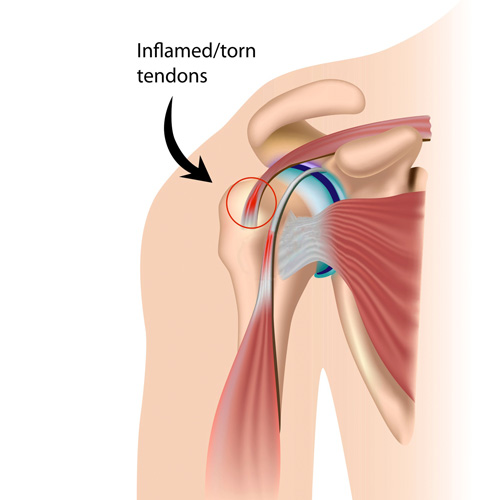
Impingement syndrome is an irritation of the structures between the upper portion of your arm and your shoulder blade mainly during overhead arm movements.The rotator cuff is comprised of four muscles that help position the humerus, your upper arm bone, into the shoulder socket during arm movement.The shoulder has great mobility but at the same time is prone to injury during falls or accident, or when there is a lack of motor control (altered biomechanics).Men over 40 performing manual labour are the most affected with this condition. It is also present in young athletes practicing sports involving repeated overhead motion such as swimming, baseball or tennis.

▬▬▬▬▬

Structures involved

The tendons of the rotator cuff, ligaments of your shoulder and subacromial bursa are the most commonly affected structures. The subacromial space gets smaller during overhead movements. This can cause, over time, irritation, inflammation and/or a lesion of the rotator cuff tendons.

page1image3462066528

▬▬▬▬▬

Signs & Symptoms that you may experience

Everyone will react differently after an injury and recovery will depend on the severity of it.

Impingement syndrome can cause but is not limited to, pain at the front of the shoulder and localized swelling. Pain or tightness is often felt when you lift your arm overhead or when you lower it from an elevated position. Pain can also be felt around your shoulder blade in your back.

Other early symptoms can include light pain with activities or during rest and in some cases, irradiating pain around your shoulder. In severe cases, you might feel pain at night and a loss of strength or range of motion. Impingement syndrome can lead to rotator cuff tendinitis or shoulder bursitis when left untreated.

▬▬▬▬▬

Recovery

Your rehabilitation plan, health, fitness & nutritional status will affect recovery speed. Most of the time, you can expect to recover fully from impingement syndrome. As a rule of thumb, this condition can take up to three months to fully recover.

▬▬▬▬▬▬▬▬▬▬▬▬▬▬▬▬▬▬▬▬▬▬▬▬▬▬▬▬▬▬▬▬▬▬▬▬▬▬▬▬▬▬▬▬▬▬▬▬▬
▬▬▬▬▬▬▬▬▬▬▬▬▬▬▬▬▬▬▬▬▬▬▬▬▬▬▬▬▬▬

▶ WHAT TO DO

Early Stage

Relative rest is a good way to protect your shoulder and prevent further damage, but it’s important to avoid overprotecting your injury. A few days rest where you avoid pain-inducing movement and activities might be necessary. A quick but progressive return to your activities of daily living, light cardiovascular exercise and specific range of motion and strengthening exercises will allow better recovery.

Rehabilitation

Follow your practitioner’s advice. It will help you manage the different phases of the recovery process and will increase the likelihood of successful rehabilitation. Your practitioner will assist you during your rehabilitation program in order to regain your normal range of motion, strength and endurance, optimal motor control and functional status.

As per the principles of rehabilitation for impingement syndrome, movement training through therapeutic exercises is an important part of functional recovery. A progressive exercise program performed over a few weeks period is pretty standard.

▶ WHAT TO AVOID

Don’t rely on passive treatment only. Each phase of the rehabilitation process is important. Patients that are actively involved in their treatment plan tend to recover faster. Keep in mind that pain is not always a good indicator of tissue damage. As soon as you feel better and the pain is well managed in collaboration with your therapist, you should reintroduce light strengthening exercises as tolerated.

Trigger points and headaches

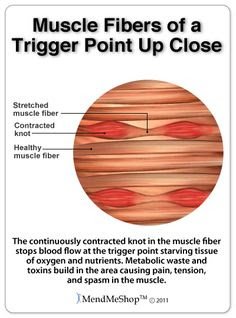
Trigger points are contracted knots of muscle tissue that form in any muscle as a result of overload stress. Trigger points cause pain, referred pain, stiffness and weakness. Trigger points that form in the muscles of the neck and head often refer pain into the head and face. This is one of the most common causes of headache pain. Trigger point massage is an effective way to treat trigger points.

Myofascial pain syndrome.

Myofascial pain syndrome is a chronic pain disorder. In this condition, pressure on sensitive points in your muscles (trigger points) causes pain in the muscle and sometimes can cause pain spread to other  parts of your body. This is called referred pain. Trigger points can also cause stiffness and weakness. This syndrome typically occurs after a muscle has been contracted repetitively. This can be caused by repetitive motions used in jobs or hobbies or by stress-related muscle tension. While nearly everyone has experienced muscle tension pain, the discomfort associated with myofascial pain syndrome persists or worsens. Treatment options include massage therapy, dry needling, and physical therapy. relaxation techniques such as meditation also can help.

Trigger points in the abdominal muscles.

Myofascial trigger points in the abdominal muscles are very common. These muscles are responsible for trunk movement and stability, and are engaged in some way during most activities. As a result trigger points will easily form. These knots will often refer pain into the lower or mid back in a horizontal strip. Trigger points in the abdominal muscles are often overlooked as a source of back pain. Once developed, a trigger point won’t release on its own. A therapeutic modality such as trigger point massage is needed to release the tissue.

Trigger point pain

Myofascial trigger points are contracted knots that form in muscle tissue. They form from overload stress placed on the muscle. Both chronic stress such as poor posture and acute stress such as an injury will cause trigger points to form. Once there a trigger point will produce pain, referred pain, weakness and stiffness. Trigger points don’t go away with rest or with time, some form of intervention such as trigger point massage is needed to treat the injured muscles. Trigger points can form in any muscle in the body and are one of the most common causes of pain.

Trigger points in the hamstrings.

With all the sitting going on these days, tight hamstrings are becoming increasingly common. When your hamstrings are tight they almost certainly have trigger points. These contracted knots in the muscle are a common cause of pain felt in the back of the leg, knee and lower buttocks. Trigger points don’t go away with rest or stretching, they need a therapeutic intervention such as massage to be released.