Why trigger point therapy?

People often think of a massage as a relaxing experience, something they might do occasionally, or give as a gift along with a trip to the spa. Trigger point massage therapy is another kind of massage used to treat pain and physical dysfunction. Trigger points can develop in people from all walks of life. They can affect people of all ages, office workers and labourers, elite and weekend athletes, post surgical patients, people with acute pain from injury and people with chronic pain. Trigger point massage therapy can treat a wide variety of physical conditions such as:

– Migraines

– back pain.

– sciatica

– Carple tunnel syndrome

– achy persistent pain

– pain from Fibromyalgia

– post surgical pain and scarring

– soft tissue injuries related to sports

– TMJ dysfunction

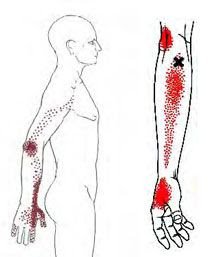
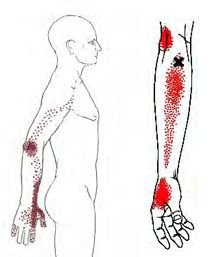
Brachioradialis trigger points.

The Brachioradialis muscle is a muscle located in your forearm. It helps to flex the elbow during semi pronation, such as when drinking a cup of coffee or holding a phone to your ear. When trigger points form in this muscle pain can be felt in the forearm, back of the elbow, and even into the hand.

What is myofascial pain syndrome?

Myofascial pain syndrome is a chronic pain disorder. In this condition, pressure on sensitive points in your muscles (trigger points) causes pain in the muscle and sometimes in seemingly unrelated parts of your body. This is called referred pain.

This syndrome typically occurs after a muscle has been contracted repetitively. This can be caused by repetitive motions used in jobs or hobbies or by stress-related muscle tension.

The brachioradialis muscle is located in your forearm, this muscle is responsible for helping to flex the elbow during semi pronation. Because of this it is sometimes called your drinking muscle. trigger points in this muscle will cause pain to refer into the elbow, down the forearm and into the hand. When severe enough trigger point pain can event travel up the arm.

Trigger point massage therapy.

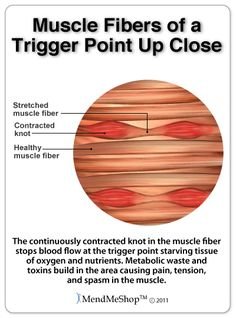
Trigger points are hyper irritable knots found in muscle tissue. These points form in a muscle due to overload stress. Trigger points can form anywhere, in any muscle. Once formed they irritate sensory nerves and produce pain, refered pain, weakness, and stiffness. Trigger points will also mimic symptoms of other conditions such as “sciatica” or Carple tunnel syndrome. Trigger points will not go away on there own, they must be manually released with hands on techniques like trigger point massage.

Fascial planes.

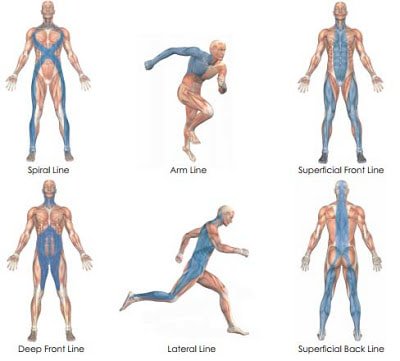
fascial connective tissue runs throughout all the bodies layers. It gives the body shape and function. Fascial litterally connects every part of your together. During movement when one part of the body moves, the body as a whole responds. Functionally the only tissue that can facilitate such responsiveness is the connective tissue. When one area of the body gets restricted or damaged, the body as a whole can become dysfunctional by setting up compensation patterns.

How Does Laser Work? 

Over 2000 published research studies demonstrate:

• Laser therapy improves blood flow and lymphatic drainage
• Laser therapy has a strengthening effect on tissue repair
• It is an effective means of relief for many pain syndromes
• It can improve immune response
• Enhanced nerve regeneration & function
• Increased microcirculation & vasodilation
• Increased lymphatic flow
• Increased collagen production
• Increases the speed, quality and tensile strength of tissue repair
• Reduced inflammation
• Enhanced angiogenesis (creation of new blood vessels)


Call us today for more information about Class IV laser therapy and how it can help you!


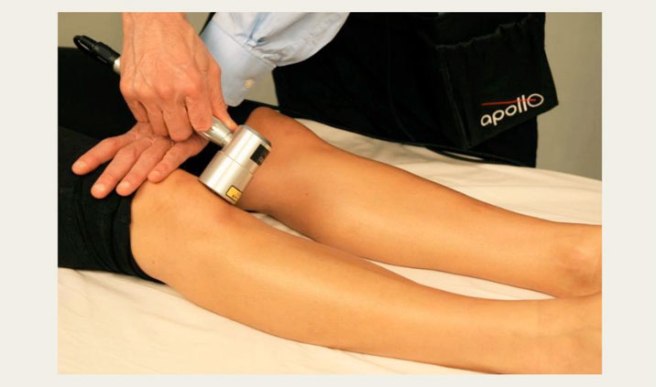
knee-apollo-image-716


Trigger point referral patterns.

Myofascial trigger points form in a muscle due to overload stress. A portion of muscle fibers lock up into a knot. Once formed these points will irritate sensory nerves that are in proximity to the knot. When this happens,

trigger points have the capacity to refer pain along specific distributions or patterns that are well mapped out. sometimes pain may be felt at a great distance away from the actual point itself.

Trigger points.

Trigger points are knots of contracted muscle or connective tissue that form as a result of overload stress. Once formed these points will produce pain, refered pain, weakness, and stiffness. Trigger points can also mimic other conditions such as Carple tunnel syndrome and sciatica. Trigger points will on go away on their own, they must be manually released.