
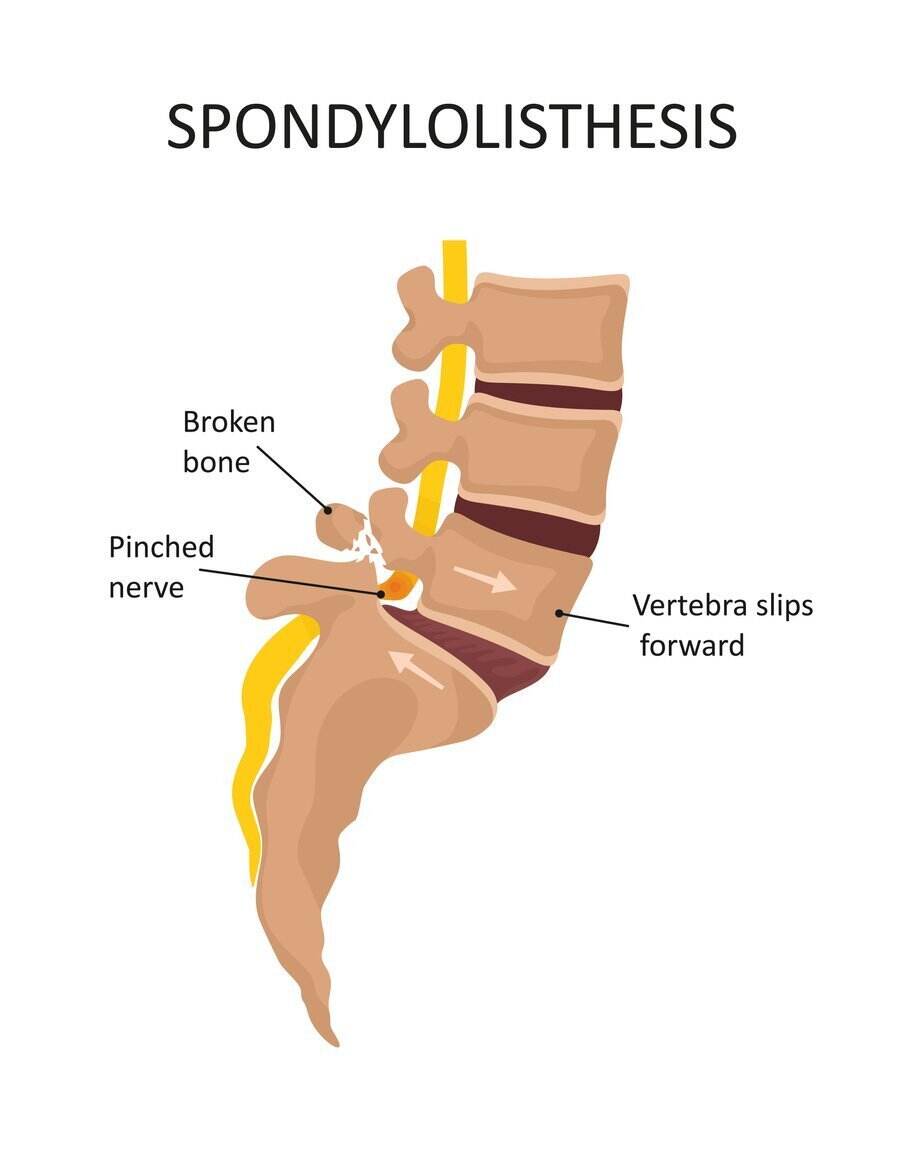
Spondylolisthesis occurs when one vertebra slips out of place. This slight slippage can sometimes cause compression of the nerves and, in some cases, cause tingling, numbness, pain, and even weakness in the legs.
Spondylolisthesis can be the result of a trauma to the spine, a congenital defect or simply be a progression of osteoarthritis. Spondylolisthesis can occur, without apparent cause, as people age. In younger individuals, spondylolisthesis usually occurs as a result of trauma during sports such as gymnastics or football and can cause a fracture in the vertebra.
Each person will react differently to the presence of spondylolisthesis and symptoms can vary considerably. Initially, spondylolisthesis may be present without any noticeable symptoms.
When pain is present, it is often felt in the lower back or the buttocks. It can range from mild to severe and can affect daily activities such as walking. Burning and tingling sensations may be felt in the area of the buttocks and legs.
Sitting or leaning forward is often less painful than standing or walking because of the positioning of the spine.
#Chiropractic #PainRelief #Healthyliving #LaserTherapy #Winnipeg #BackPain #NeckPain #Headache #Fitness #Athlete #Wellness
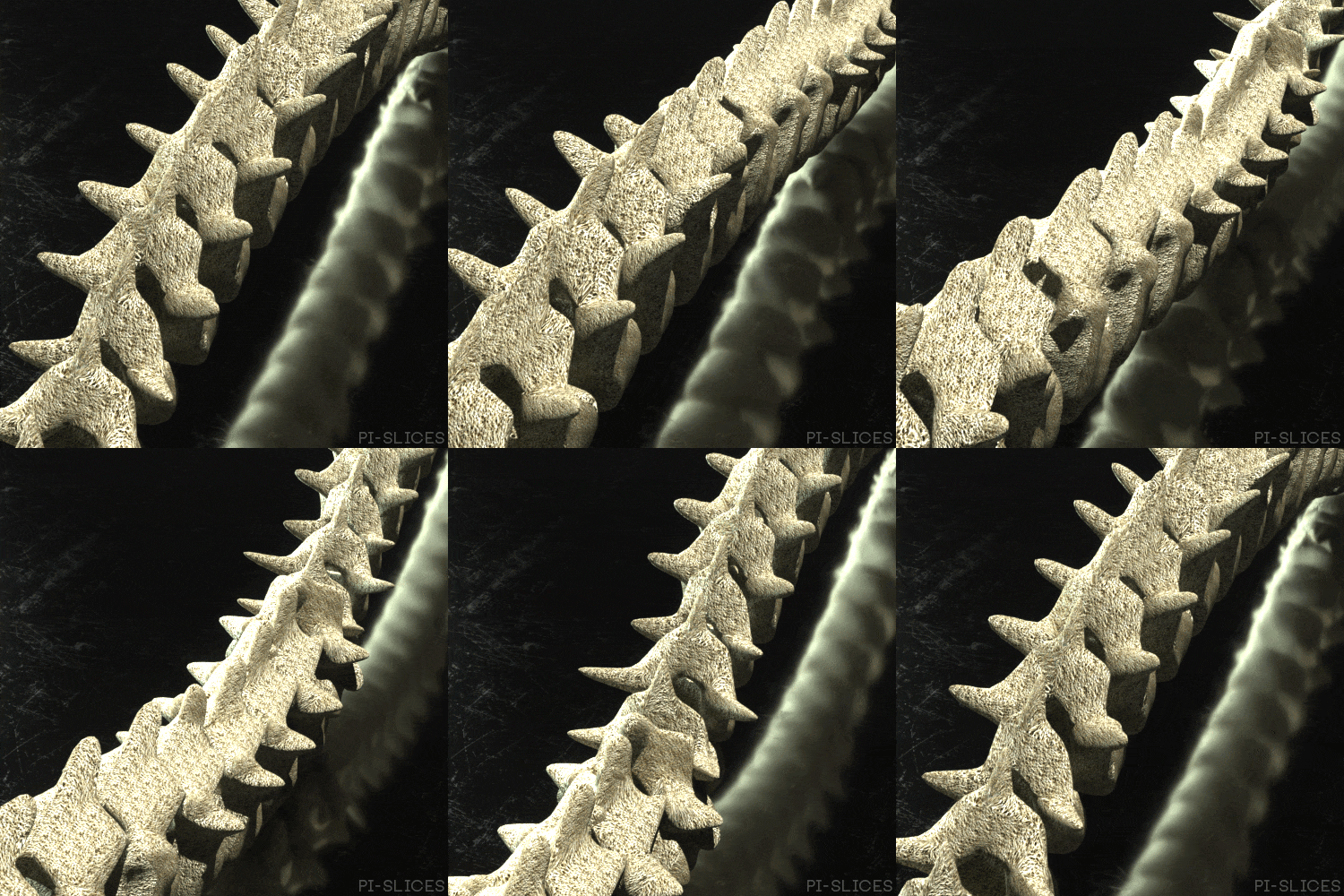



 Spinal stenosis means that the tube surrounding your spinal cord and nerve roots is too small, and your nerves are being compressed. Stenosis can arise in different ways. Sometimes, people are born with a spinal canal that is too small. Other times, the canal may have been narrowed by surgery or conditions like disc bulges. Most commonly, spinal stenosis arises from chronic arthritic changes that narrow the canal. This type of stenosis usually develops slowly over a long period of time, and symptoms show up later in life.
The natural progression of stenosis is generally a slow, steady increase, although some patients’ symptoms remain the same or even improve over time. Symptoms grow in relation to the amount of nerve compression. Initially, most patients notice neck pain, headaches, and possible referral of discomfort into their shoulders and upper back. If the nerves that exit your spine become compressed, you will notice radiating pain, numbness, or tingling traveling into your arm. If the condition grows to the point that your spinal cord is compressed, you may notice loss of the fine motor skills of your hands, which translates to clumsiness, difficulty buttoning shirts, trouble using zippers, and changes in handwriting. Sometimes, pain, numbness, or tingling can radiate into your legs. Be sure to tell your doctor if you: notice leg complaints, have difficulty walking, notice balance problems, or have experienced loss of bowel or bladder control. Likewise, tell us if you notice a fever, unexplained weight loss, flu-like symptoms, or numbness & tingling on your face.
Although there is no non-surgical cure for cervical stenosis, treatments are available that may help ease your symptoms. Traction has been shown to help patients with cervical stenosis. If home traction is needed, our office will provide instructions on how this should be performed. You will be taught some stretching exercises to reduce muscle tightness and free up “trapped” nerves. You may also be given exercises to help build strength, flexibility, coordination, balance, and conditioning. You should avoid activities that increase pain, especially looking too far up or down. You may find relief of your symptoms by using ice, heat, or visiting a massage therapist. In severe cases only, surgery may be required to relieve pressure on the spinal cord and nerve roots.
Spinal stenosis means that the tube surrounding your spinal cord and nerve roots is too small, and your nerves are being compressed. Stenosis can arise in different ways. Sometimes, people are born with a spinal canal that is too small. Other times, the canal may have been narrowed by surgery or conditions like disc bulges. Most commonly, spinal stenosis arises from chronic arthritic changes that narrow the canal. This type of stenosis usually develops slowly over a long period of time, and symptoms show up later in life.
The natural progression of stenosis is generally a slow, steady increase, although some patients’ symptoms remain the same or even improve over time. Symptoms grow in relation to the amount of nerve compression. Initially, most patients notice neck pain, headaches, and possible referral of discomfort into their shoulders and upper back. If the nerves that exit your spine become compressed, you will notice radiating pain, numbness, or tingling traveling into your arm. If the condition grows to the point that your spinal cord is compressed, you may notice loss of the fine motor skills of your hands, which translates to clumsiness, difficulty buttoning shirts, trouble using zippers, and changes in handwriting. Sometimes, pain, numbness, or tingling can radiate into your legs. Be sure to tell your doctor if you: notice leg complaints, have difficulty walking, notice balance problems, or have experienced loss of bowel or bladder control. Likewise, tell us if you notice a fever, unexplained weight loss, flu-like symptoms, or numbness & tingling on your face.
Although there is no non-surgical cure for cervical stenosis, treatments are available that may help ease your symptoms. Traction has been shown to help patients with cervical stenosis. If home traction is needed, our office will provide instructions on how this should be performed. You will be taught some stretching exercises to reduce muscle tightness and free up “trapped” nerves. You may also be given exercises to help build strength, flexibility, coordination, balance, and conditioning. You should avoid activities that increase pain, especially looking too far up or down. You may find relief of your symptoms by using ice, heat, or visiting a massage therapist. In severe cases only, surgery may be required to relieve pressure on the spinal cord and nerve roots.


