Why Add Squats?

Squats are a compound exercise that targets the muscles in the legs, hips, and core. They are an effective exercise for building strength and power, and they can be modified to suit different fitness levels. Here are some of the benefits of adding squats to your workouts:

  1. Improved muscle strength and power: Squats are an excellent exercise for building muscle strength and power in the legs, hips, and core. By performing squats regularly, you can increase your muscle strength and improve your overall athletic performance.
  2. Enhanced mobility and flexibility: Squats can help to improve mobility and flexibility in the hips, legs, and lower back. This can be especially beneficial for people who sit for long periods of time and have limited mobility as a result.
  3. Improved balance and coordination: Squats can also help to improve balance and coordination, which can be beneficial for people who participate in sports or other physical activities.
  4. Increased bone density: Squats can help to increase bone density in the legs, which can reduce the risk of osteoporosis and other bone-related conditions.
  5. Improved overall physical fitness: Squats are a great exercise for improving overall physical fitness. They can help to increase cardiovascular endurance, improve muscle endurance, and enhance overall strength and power.
  6. Enhanced functional movements: Squats are a functional exercise that can help to improve everyday movements, such as lifting and carrying objects.
  7. Versatility: Squats can be modified to suit different fitness levels and goals. They can be performed with body weight, with dumbbells or a barbell, or with other types of equipment, such as a Smith machine or a TRX suspension trainer.

It is important to use proper technique when performing squats to avoid injury and get the most out of the exercise. Here are some additional tips to keep in mind:

  1. Use a weight that is appropriate for your fitness level: It is important to start with a weight that is appropriate for your fitness level and gradually increase the weight as you become stronger. Using too much weight can lead to poor technique and increase the risk of injury.
  2. Keep your form consistent: Maintain proper form throughout the exercise to ensure that you are targeting the correct muscles and reducing the risk of injury.
  3. Focus on good posture: Good posture is essential for proper squat technique. Keep your chest up and your shoulders back and down, and avoid rounding your back or leaning too far forward or backward.
  4. Don’t rush the movement: Take your time with the squat and focus on good technique rather than trying to lift the weight as quickly as possible.
  5. Warm up properly: It is important to warm up properly before performing squats to help prevent injury. This can include dynamic stretches and a few warm-up sets with lighter weights.

By adding squats to your workouts and practicing proper technique, you can enjoy the numerous benefits of this effective exercise. Remember to consult with a trained professional, such as a personal trainer or physical therapist, if you have any concerns about your form or if you are new to the exercise. They can help you develop a safe and effective training program that includes squats and other exercises that are suitable for your fitness level and goals.

Deadlifting

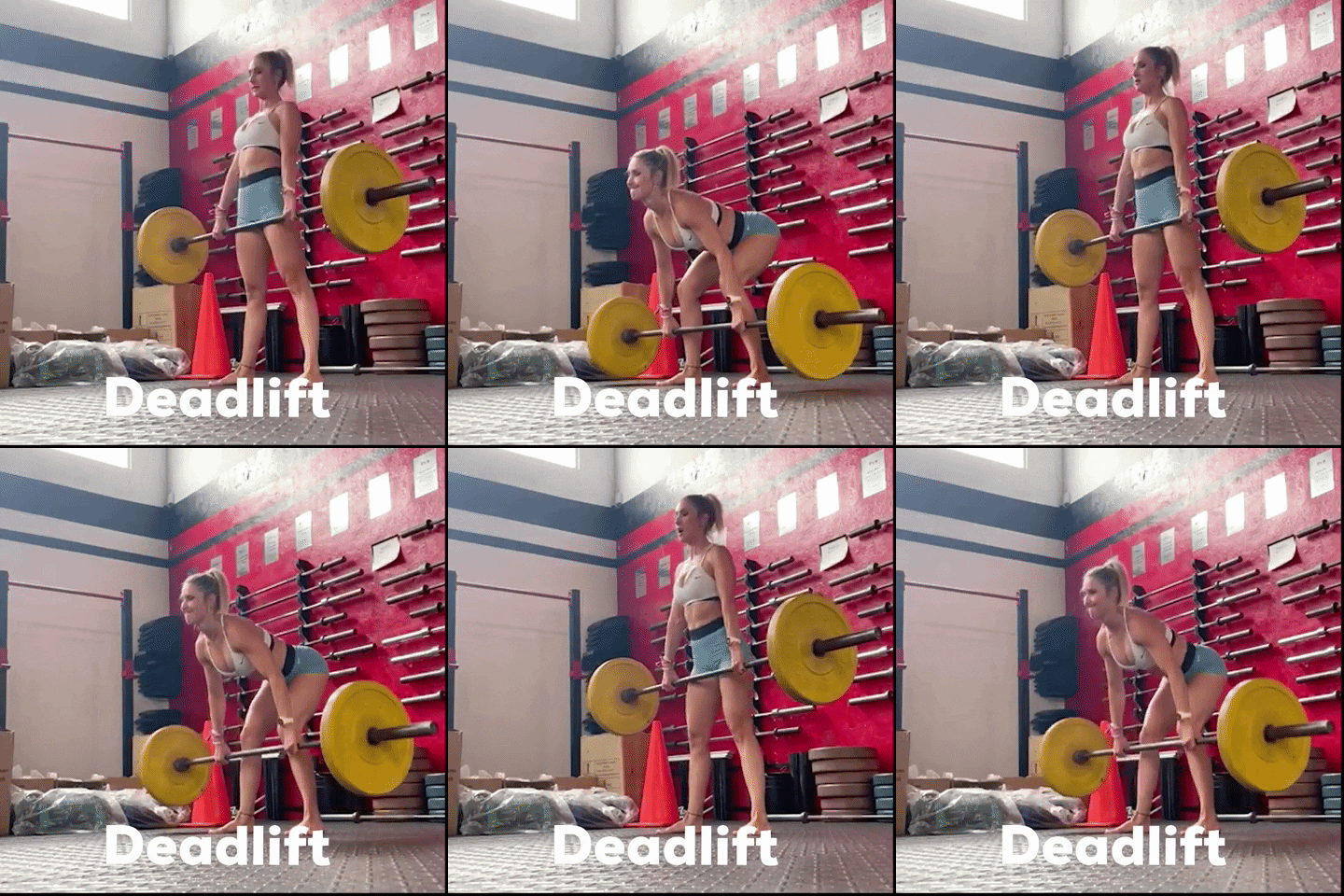
The deadlift is a compound exercise that targets the muscles in the legs, hips, and back. It is an effective exercise for building strength and power, and it can be modified to suit different fitness levels. Here is a step-by-step guide on how to properly perform a deadlift:

  1. Stand with your feet shoulder-width apart and point your toes slightly outward. Position your hands on the barbell just outside of your legs.
  2. Engage your core by contracting your abdominal muscles and pulling your shoulder blades down and back. This will help to stabilize your spine and protect it from injury.
  3. Take a deep breath in and brace your core. As you exhale, push through your heels and lift the bar off the ground. Keep the bar close to your body as you lift, and avoid leaning too far forward or backward.
  4. As you lift the bar, keep your elbows close to your body and focus on squeezing your glutes and driving your hips forward. This will help to engage the muscles in your legs and hips and help you lift the bar more efficiently.
  5. Once the bar is at mid-thigh level, pause for a moment and then push your hips forward to complete the lift. At the top of the lift, your hips and knees should be fully extended, and your shoulders should be back and down.
  6. To lower the bar back down, reverse the movement by hinging at the hips and pushing your butt back. Keep the bar close to your body as you lower it back down to the ground, and avoid rounding your back.
  7. Once the bar is back on the ground, take a moment to reset your posture and take a deep breath in before beginning the next rep.

It is important to use proper technique when performing the deadlift to avoid injury and get the most out of the exercise. Here are some additional tips to keep in mind:

  1. Use a weight that is appropriate for your fitness level: It is important to start with a weight that is appropriate for your fitness level and gradually increase the weight as you become stronger. Using too much weight can lead to poor technique and increase the risk of injury.
  2. Keep your form consistent: Maintain proper form throughout the exercise to ensure that you are targeting the correct muscles and reducing the risk of injury.
  3. Focus on good posture: Good posture is essential for proper deadlift technique. Keep your shoulders back and down and avoid rounding your back to protect your spine and improve the effectiveness of the exercise.
  4. Don’t rush the movement: Take your time with the deadlift and focus on good technique rather than trying to lift the weight as quickly as possible.
  5. Warm up properly: It is important to warm up properly before performing the deadlift to help prevent injury. This can include dynamic stretches and a few warm-up sets with lighter weights.

By following these tips and practicing proper technique, you can properly perform the deadlift and get the most out of this effective exercise. Remember to consult with a trained professional, such as a personal trainer or physical therapist, if you have any concerns about your form or if you are new to the exercise. They can help you develop a safe and effective training program that includes

Mobility Training

Mobility training is an important aspect of any athlete’s training regimen. It helps to improve flexibility, range of motion, and movement efficiency, which can enhance performance and reduce the risk of injury.

Mobility training can help athletes to move more freely and with less restriction, which can help to improve speed, power, and endurance. It can also help to improve balance and coordination, which can be beneficial for athletes in all types of sports. Additionally, mobility training can help to reduce muscle imbalances and improve posture, which can help to prevent common injuries such as muscle strains and sprains.

By incorporating mobility training into their training regimen, athletes can improve their overall performance and reduce the risk of injury.

Should my teen hockey player lift weights?

Strength training is an important component of any athlete’s training regimen, and it is especially important for teen hockey players. Strength training can help improve performance on the ice, reduce the risk of injury, and promote overall physical and mental well-being. Here are some reasons why strength training is so important for teen hockey players:

  1. Improved performance: Strength training can help improve a player’s power, speed, and endurance on the ice. It can also help improve their ability to handle the puck and make quicker, more agile movements.
  2. Reduced risk of injury: Strong muscles and bones are better able to withstand the demands of high-intensity sports like hockey. Strength training can help to prevent common injuries such as muscle strains, sprains, and fractures, as well as more serious injuries like concussions.
  3. Enhanced physical and mental well-being: Strength training can help to improve a player’s overall physical health and well-being. It can also help to boost their confidence and mental toughness, which can be beneficial both on and off the ice.
  4. Increased bone density: Teenagers are still growing and developing, and strength training can help to increase bone density and strength during this critical period. This can help to reduce the risk of osteoporosis and other bone-related conditions later in life.

It is important to note that strength training is not just about lifting heavy weights. There are many different types of strength training exercises that can be done to target specific muscle groups and improve performance on the ice. Some examples of strength training exercises for teen hockey players might include:

  1. Squats: Squats are a great exercise for building lower body strength and power. They can be done with or without weights, and there are many variations to choose from.
  2. Lunges: Lunges are another excellent exercise for building lower body strength, as well as improving balance and stability.
  3. Push-ups: Push-ups are a classic strength training exercise that targets the chest, shoulders, and triceps. They can be modified for different levels of fitness.
  4. Pull-ups: Pull-ups are a great exercise for building upper body strength, particularly in the back and biceps.
  5. Planks: Planks are a great exercise for building core strength and stability. They can be modified for different levels of fitness.

It is important for teen hockey players to work with a trained professional, such as a strength and conditioning coach or a physical therapist, to develop a safe and effective strength training program. This can help ensure that they are using proper technique and avoiding injury.

In conclusion, strength training is an important component of any athlete’s training regimen, and it is especially important for teen hockey players. It can help improve performance on the ice, reduce the risk of injury, and promote overall physical and mental well-being. By incorporating strength training exercises into their training regimen, teen hockey players can take their game to the next level and set themselves up for success both on and off the ice.


Weight Training and Hockey

Hockey players need to weight train in order to improve their performance on the ice. Weight training can help improve a player’s strength, speed, and agility. It can also help reduce the risk of injuries.

Weight training can help improve a player’s strength. When a player is stronger, they can generate more power and speed on the ice. This can help them make better plays and take control of the game. Weight training can also help improve a player’s speed. When a player is faster, they can move around the ice more easily and get to the puck faster. This can help them create more scoring opportunities.

Weight training can also help improve a player’s agility. When a player is more agile, they can move around the ice more easily and avoid being hit by the other team. This can help them stay in the game longer. Weight training can also help reduce the risk of injuries. When a player is stronger, they are less likely to get injured. This can help them stay on the ice longer and help the team win more games.

Weight Training For Young Athletes

Weight training is an important part of any young athlete’s training program. It can help improve strength, speed, and power. Weight training can also help prevent injuries.

Weight training can help improve the strength of young athletes. Strength is important for athletes because it allows them to generate more power and run faster. Weight training can also help improve the athletes’ endurance, which is important for long distance events.

Weight training can help improve the speed of young athletes. Speed is important for athletes because it allows them to run faster and cover more ground. Weight training can help improve the athletes’ stride length and frequency, both of which are important factors in running speed. Weight training can help improve the power of young athletes. Power is important for athletes because it allows them to run faster and jump higher.

Weight training can help improve the athletes’ explosive power, which is important for athletes who compete in sports that require speed and power. Weight training can also help prevent injuries in young athletes. Weight training can help improve the strength and flexibility of the muscles and tendons. This can help prevent injuries caused by overuse or sudden movements. Weight training is an important part of any young athlete’s training program. It can help improve strength, speed, and power. Weight training can also help prevent injuries.

Contact us for treatment in Winnipeg

Find and Follow us on Twitter and Instagram!

Sprinting

The key to getting a higher top speed

Sprinting is one of the most important exercises an athlete can do to develop a higher top speed. It is a plyometric exercise that uses the athlete’s own body weight to create resistance and improve explosiveness.

Sprinting also helps improve an athlete’s stride length and frequency, both of which are important factors in running speed. Sprinting is a great way to improve an athlete’s overall speed. It is a very explosive exercise that uses many of the same muscles used in running. Sprinting also helps improve the athlete’s stride length and frequency, both of which are important factors in running speed.

Sprinting is a plyometric exercise, which means that it uses the athlete’s own body weight to create resistance and improve explosiveness. Plyometric exercises are important for athletes because they help improve the explosive power of the muscles. This is important for athletes because it allows them to run faster and jump higher.

Sprinting also helps improve the athlete’s overall conditioning. It is a very demanding exercise that requires the athlete to use many of the same muscles used in running. This helps improve the athlete’s overall running speed and endurance. Sprinting is a great exercise for athletes of all levels. It is a very demanding exercise, but it can be modified to fit the athlete’s level of conditioning. Sprinting is a great way for athletes to improve their top speed and overall conditioning.

The Deadlift

Want to be an athlete? Better deadlift….

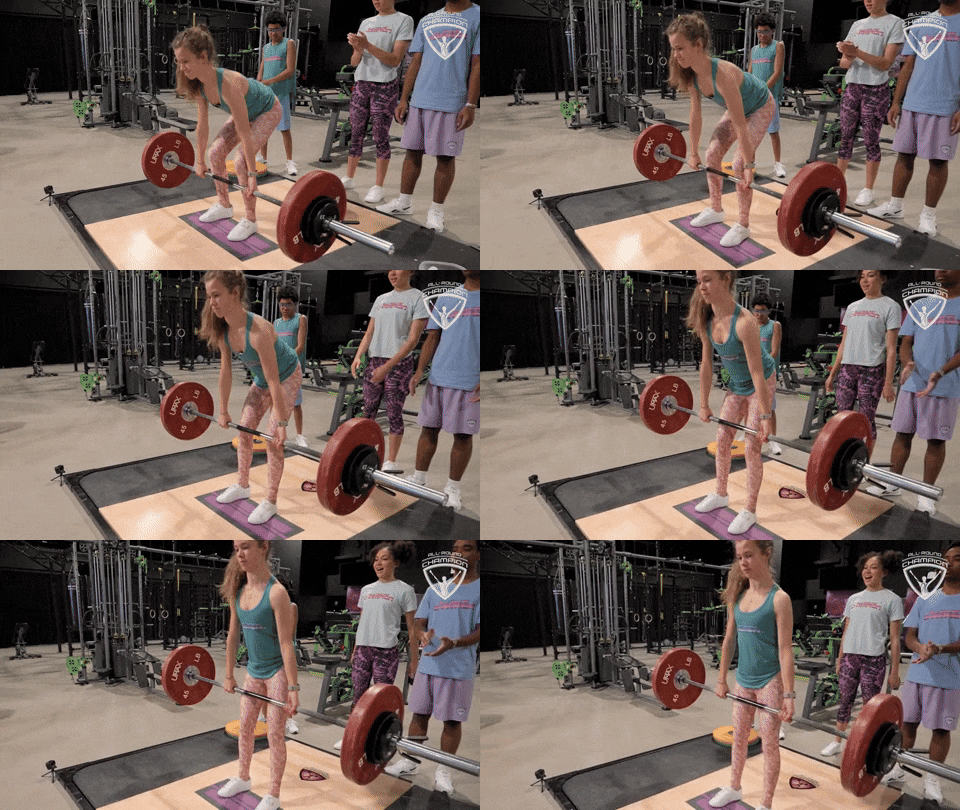
Deadlifting is a weightlifting exercise that involves lifting a weight off the ground from a bent-over position. It is a common exercise in weightlifting and bodybuilding. Deadlifting can be safely performed if proper form is followed.

The most important part of deadlifting is maintaining a neutral spine. This means keeping the spine in a natural position, not rounding or hyperextending. When the spine is in a neutral position, the weight is distributed more evenly, which reduces the risk of injury.

To maintain a neutral spine, keep the shoulders back and the chest up. Tighten the abdominal muscles to keep the spine stable. When lifting the weight, use the legs and hips to lift the weight, not the back.

If the weight is too heavy, it can cause the back to round. This can cause injuries such as disk herniation and spinal cord compression. If the weight is too light, the muscles will not be challenged and the exercise will not be effective.

The best weight to use for deadlifting depends on the person’s strength and experience. Start with a weight that is challenging but not too heavy. As the person becomes stronger, they can increase the weight.

Deadlifting can be safely performed if proper form is followed. To maintain a neutral spine, keep the shoulders back and the chest up. Use the legs and hips to lift the weight, not the back. If the weight is too heavy, it can cause injuries. If the weight is too light, the muscles will not be challenged.

Why should athletes see Chiropractors?

What benefits do Chiropractors offer athletes?

Athletes need to see chiropractors for a variety of reasons. One of the most important reasons is that chiropractors can help prevent injuries. They can do this by realigning the spine and helping to keep the body in balance.

This is important because when the body is in balance, it is less likely to be injured.

Another reason that athletes need to see chiropractors is because they can help to speed up the healing process after an injury. This is important because it can help an athlete to get back to playing their sport as quickly as possible.

Finally, chiropractors can help athletes to perform at their best. This is because they can help to keep the body in balance and alignment. When the body is in balance, it is able to function at its best.

Athletes and Nutrition

You are what you eat, so eat elite.

As an elite athlete, you know that proper nutrition and diet are essential for success. But what you may not know is just how important they are. Eating the right foods can help you achieve peak performance, while eating the wrong foods can lead to fatigue and poor performance.

The first step to proper nutrition is understanding your own body. Everyone is different, and what works for one person may not work for another. You need to experiment to find out what foods give you the energy you need to perform your best. In general, athletes need to eat plenty of fruits and vegetables, lean protein, whole grains, and healthy fats. It’s also important to drink plenty of water and avoid sugary drinks.

When it comes to eating for performance, timing is everything. You need to eat a balanced meal several hours before your event, and then have a light snack about an hour before. During the event, you should focus on drinking fluids and consuming energy gels or bars. After the event, it’s important to refuel with a balanced meal that includes protein and carbohydrates. You may also need to take supplements to help you recover.

Proper nutrition and diet are essential for elite athletes. By eating the right foods, you can achieve peak performance, while eating the wrong foods can lead to fatigue and poor performance.