What is myofascial pain syndrome?

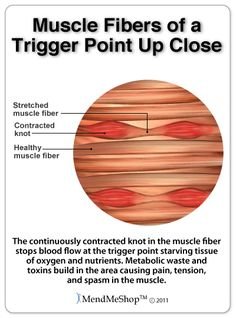
Myofascial pain syndrome is a chronic pain disorder. In this condition, pressure on sensitive points in your muscles (trigger points) causes pain in the muscle and sometimes in seemingly unrelated parts of your body. This is called referred pain.

This syndrome typically occurs after a muscle has been contracted repetitively. This can be caused by repetitive motions used in jobs or hobbies or by stress-related muscle tension.
Trigger points in the gluteus medius muscle.

The gluteus medius muscle is a mover and stabilizer of the hip. As a result this muscle is commonly overloaded and harbors trigger points. These trigger points can refer pain deep into the s.i. joint as well as into the low back and hip. Once developed, trigger points will not release on their own. A manual intervention such as trigger point massage therapy is needed to treat the area.

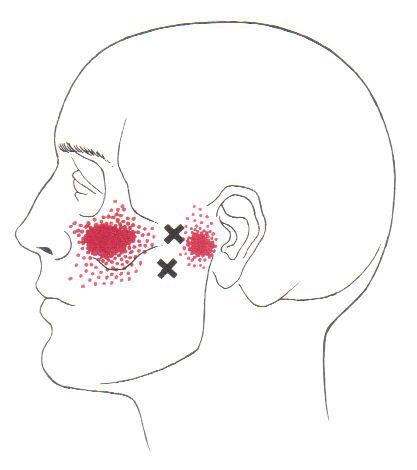
Trigger points in the lateral pterygoid.

The lateral pterygoid muscle is involved in movement of the jaw. It can become become strained from chronic clenching of the jaw and grinding of the teeth. When this happened trigger points can form. This leads not only to pain and refered pain, but also dysfunctional joint mechanics. This muscle is a major player in TMJ dysfunction syndrome.

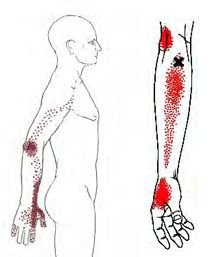
The brachioradialis muscle is located in your forearm, this muscle is responsible for helping to flex the elbow during semi pronation. Because of this it is sometimes called your drinking muscle. trigger points in this muscle will cause pain to refer into the elbow, down the forearm and into the hand. When severe enough trigger point pain can event travel up the arm.

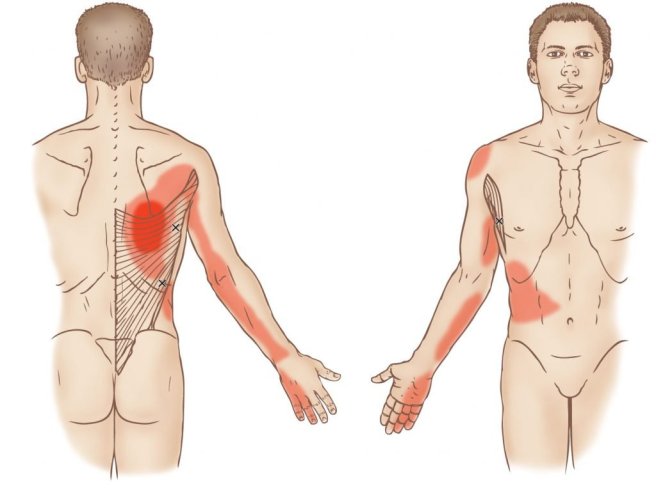
Trigger points in your “Lats”

Your lats, or your latissimus dorsi muscles are the largest muscles of the back. They are responsible for adducting and medially rotating the arm. This muscle also produces extension at the shoulder joint. When trigger points for In this muscle, they can refer pain into the back, down the inside of the arm into the hand. These trigger points can also cause pain to be felt into the front of the shoulder. Once formed trigger points will not release on there own. They require a manual release technique like trigger point massage.

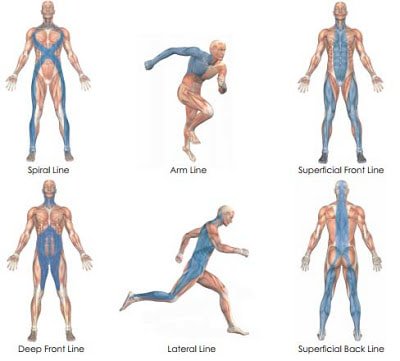
Fascial planes.

fascial connective tissue runs throughout all the bodies layers. It gives the body shape and function. Fascial litterally connects every part of your together. During movement when one part of the body moves, the body as a whole responds. Functionally the only tissue that can facilitate such responsiveness is the connective tissue. When one area of the body gets restricted or damaged, the body as a whole can become dysfunctional by setting up compensation patterns.

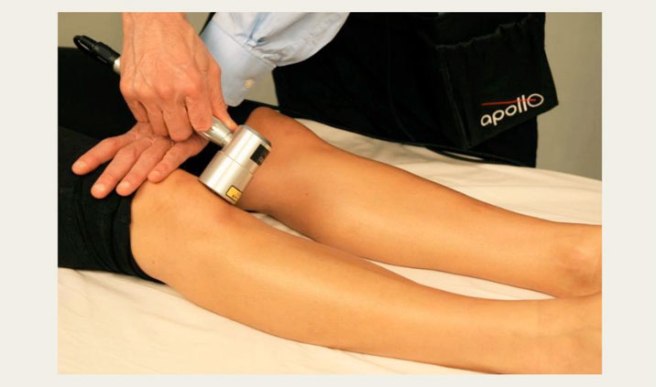
How Does Laser Work? 

Over 2000 published research studies demonstrate:

• Laser therapy improves blood flow and lymphatic drainage
• Laser therapy has a strengthening effect on tissue repair
• It is an effective means of relief for many pain syndromes
• It can improve immune response
• Enhanced nerve regeneration & function
• Increased microcirculation & vasodilation
• Increased lymphatic flow
• Increased collagen production
• Increases the speed, quality and tensile strength of tissue repair
• Reduced inflammation
• Enhanced angiogenesis (creation of new blood vessels)


Call us today for more information about Class IV laser therapy and how it can help you!


knee-apollo-image-716


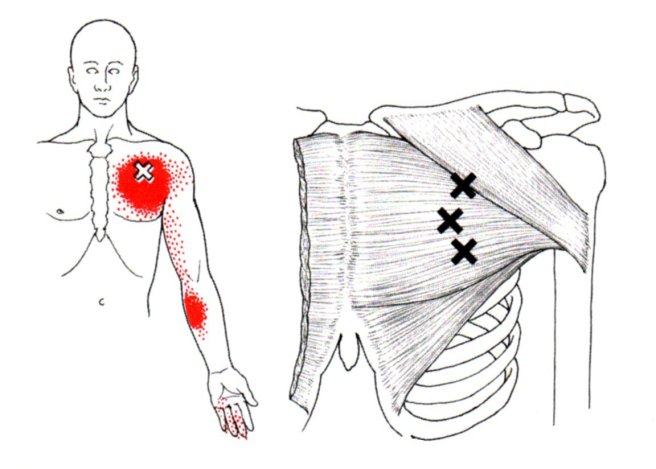
Trigger points in the pectoralis major muscle.

the pectoralis major is the main muscle of the chest. It is a powerful adductor of the arm. This muscle often is tight and shortened from poor shoulder posture. Trigger points in this muscle will cause pain to refer into the chest, shoulder, and down the arm. Trigger points in the left pec can mimic heart attack and angina symptoms.

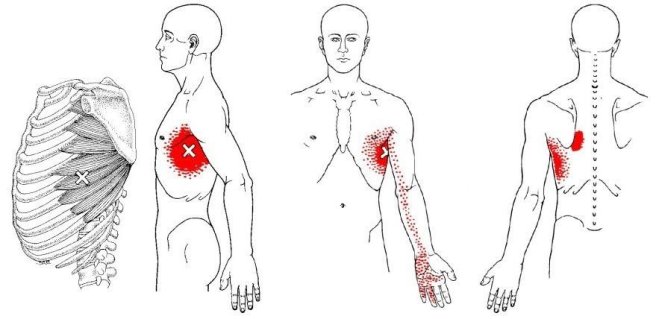
Trigger points in the serratus anterior.

The serratus anterior muscle is responsible for scapular and rib movement and stability. This muscle can become overloaded from poor posture of the shoulders, as well as heavy breathing from exertion. Trigger points in this muscle will cause pain to be felt under the armpit into the shoulder blade area, and down the arm into the fingers.