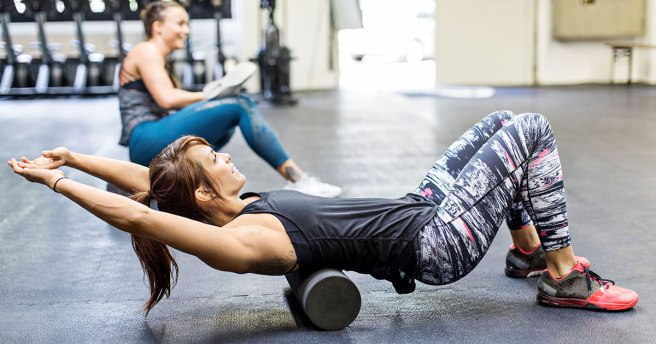
Mobility Myth #1

what-is-mobility-mobility-myths-foam-rolling

Great stuff from our friends at Shape.com:

Myth: Stretching and foam rolling will address all of my mobility problems.

Truth: Stretching and soft tissue work (like foam rolling and massage) may seem like the bread and butter of mobility, but there’s more to know. “If you have a true mechanical mobility problem, soft tissue work and different stretching techniques are definitely great options,” says Ardoin. But you might experience tightness or a loss of motion that doesn’t have anything to do with tissue restrictions like tight muscles or joint stiffness.

“In these particular people, they actually have the mobility needed, but their brain doesn’t know how to access it,” says Ardoin. This sort of muscle-brain disconnect could be because of current pain, previous injuries, or, “sometimes people just forget how to move,” he says.

In this case, your muscles are working against each other instead of synergistically—and it’s not something stretching or foam rolling will fix. The good news is that there’s not actually anything physically wrong. The bad news: This is tough to diagnose on your own. “If you have a loss of motion while you perform the motion yourself but have full ROM when performed passively, then it’s safe to assume that you have the ROM available but your brain doesn’t know how to access it,” says Ardoin.

For example, let’s say you have a “tight” shoulder. Make a large, slow circle with your right arm. Then totally relax your arm while someone else rotates your arm in a circle for you. Did it go farther while you let the motion happen passively? Ding, ding! Could be a brain problem, not a muscle problem. Think this might be you? Seeing a trainer or physical therapist to confirm it (and help you work on the issue) can’t hurt.

The Thoracic Disc Lesion

Your spine consists of 24 individual vertebrae stacked on top of each other. Flexible cushions called “discs” live between each set of vertebra. A disc is made up of two basic parts. The inner disc, called the “nucleus” is like a ball of jelly about the size of a marble. This jelly is held in place by the outer part of the disc called the “annulus,” which is wrapped around the inner nucleus,

much like a ribbon wrapping around your finger. The term “thoracic disc lesion” means that one or more of the 12 discs in the center section of your spine has been damaged.

Disc problems start when the outer fibers of the disc become strained or frayed. If enough fibers become frayed, the disc weakens and when compressed, may “bulge” like a weak spot on an inner tube. If more fibers are damaged, the nucleus of the disc may “herniate” out of the disc.

Surprisingly, thoracic disc bulges are present without any symptoms in almost half of the adult population. Disc bulges that cause pain commonly occur in the neck or lower back but are relatively infrequent in the thoracic spine – accounting for less than 1% of all symptomatic disc problems. The condition is most common between the ages of 40 and 60. Certain occupations or activities place you at greater risk, especially physically demanding activities that involve repetitive twisting, awkward postures.

Pain can range from dull, localized discomfort to sharp, radiating pain. Your symptoms may change unpredictably. If the disc bulge is bad enough to compress your nerve, you could experience sharp, burning, or shooting pain in a band-like distribution around your rib cage. Thoracic disc herniations commonly mimick other conditions like heart or lung problems. Be sure to let our office know if you notice chest pressure; shortness of breath; pain radiating into your arm, face, or jaw; pain with deep breathing; clumsiness; loss of bowel or bladder control; unexplained weight loss; night sweats; pain that awakens you at night; fever; indigestion; nausea; flu-like symptoms or if you notice a rash following the margin of one of your ribs.

You should avoid excessive bed rest while recovering. Researchers have shown that disc bulges may be successfully managed with exercise and conservative care, like the type we will provide.

Trigger points in the adductor longus and brevis.

These muscles are located in the groin. The longus originates on the pubic body just below the pubic crest and inserts on the middle third of the linea aspera.The brevis muscle originates on the inferior ramus and body of the pubis and has its attachment to the lesser trochanter and linea aspera of the femur. Trigger points in these muscles are the most common muscular cause of groin pain. Distal trigger points refer pain to the upper medial knee and down the tibia. Proximal trigger points refer into the anterior hip area.

The Most Common Work Injury We See? This Might Be It…..

Your “lumbar spine”, or low back, is made up of five bones stacked on top of each other with a shock-absorbing disc between each level. Your low back relies on muscles and ligaments for support. “Sprains” and “strains” are the result of these tissues being stretched too hard or too far, much like a rope that frays when it is stretched beyond its normal capacity. The term “sprain” means that the

tough, durable ligaments that hold your bones together have been damaged, while “strain” means that your muscles or tendons that move your trunk have been partially torn.

Most people experience low back pain at some point in their lifetime, and 70% of those patients can attribute their symptoms to sprain/strain injuries. Lumbar sprains and strains may result from sudden or forceful movements like a fall, twist, lift, push, pull, direct blow, or quickly straightening up from a seated, crouched, or bent position. Most commonly, sprains and strains are not the result of any single event, but rather from repeated overloading. The spine can generally manage small isolated stressors quite well, but repetitive challenges lead to injury in much the same way that constantly bending a piece of copper wire will cause it to break. Examples of these stressors include: bad postures, sedentary lifestyles, poor fitting workstations, repetitive movements, improper lifting, or being overweight.

Symptoms from a sprain/strain may begin abruptly but more commonly develop gradually. Symptoms may range from dull discomfort to surprisingly debilitating pain that becomes sharper when you move. Rest may relieve your symptoms but often leads to stiffness. The pain is generally centered in your lower back but can spread towards your hips or thighs. Be sure to tell your doctor if your pain extends beyond your knee, or if you have weakness in your lower extremities or a fever.

Sprain/strain injuries cause your normal healthy elastic tissue to be replaced with less elastic “scar tissue.” This process can lead to ongoing pain and even arthritis. Patients who elect to forego treatment and “just deal with it” develop chronic low back pain more than 60% of the time. Seeking early and appropriate treatment like the type provided in our office is critical.

Depending on the severity of your injury, you may need to limit your activity for a while, especially bending, twisting, and lifting, or movements that cause pain. Bed rest is not in your best interest. You should remain active and return to normal activities as your symptoms allow. The short-term use of a lumbar support belt may be helpful. Sitting makes your back temporarily more vulnerable to sprains and strains from sudden or unexpected movements. Be sure to take “micro breaks” from workstations for 10 seconds every 20 minutes. Following acute injuries, you can apply ice for 15-20 minutes each hour. Heat may be helpful after several days or for more chronic origins of pain. Ask your doctor for specific ice/heat recommendations. Some patients report partial relief from sports creams.

A weak lateral chain will stop you in your tracks.

One very important job of your hip muscles is to maintain the alignment of your leg when you move. One of the primary hip muscles, the gluteus medius, plays an especially important stabilizing role when you walk, run, or squat. The gluteus medius attaches your thigh bone to the crest of your hip. When you lift your left leg, your right gluteus medius must contract in order to keep your body from tipping toward the left. And when you are standing on a bent leg, your gluteus medius prevents that knee from diving into a “knock knee” or “valgus” position.
Weakness of the gluteus medius allows your pelvis to drop and your knee to dive inward when you walk or run. This places tremendous strain on your hip and knee and may cause other problems too. When your knee dives inward, your kneecap is forced outward, causing it to rub harder against your thigh bone- creating a painful irritation and eventually arthritis. Walking and running with a relative “knock knee” position places tremendous stress on the ligaments around your knee and is a known cause of “sprains”. Downstream, a “knock knee” position puts additional stress on the arch of your foot, leading to other painful problems, like plantar fasciitis. Upstream, weak hips allow your pelvis to roll forward which forces your spine into a “sway back” posture. This is a known cause of lower back pain. Hip muscle weakness seems to be more common in females, especially athletes.

You should avoid activities that cause prolonged stretching of the hip abductors, like “hanging on one hip” while standing, sitting crossed legged, and sleeping in a side-lying position with your top knee flexed and touching the bed. Patients with fallen arches may benefit from arch supports or orthotics. Obesity causes more stress to the hip muscles, so overweight patients may benefit from a diet and exercise program. The most important treatment for hip abductor weakness is strength training. Hip strengthening is directly linked to symptom improvement. Moreover, people with stronger hip muscles are less likely to become injured in the first place. The exercises listed below are critical for your recovery.

“I Popped A Rib”

You have 12 pair of ribs that attach to the “thoracic” region of your spine. The ribs serve to protect your heart, lungs, and other vital organs. Each rib is shaped much like a “bucket handle” arching from your spine to your breastbone (sternum) in front. Your ribs must move freely when you breathe, bend, twist, and reach. The term “costovertebral dysfunction” means that one or more of your ribs has become restricted or slightly malpositioned from it’s attachment to the spine.

You can visualize this as imagining one of your bucket handles is misaligned and not moving in sync with the others.

Rib problems can develop in many ways. Sometimes they are brought on by an accident or injury; other times, they develop from repetitive strains or poor posture. Rib malpositions are common during pregnancy or after a whiplash injury.

Symptoms sometimes begin following a sudden or explosive movement, like coughing or sneezing, reaching, pushing, or pulling. Other times, a specific cause cannot be recalled. Rib dysfunction may cause pain near or slightly to the side of your spine with possible radiation of symptoms along your rib, sometimes all the way to the front. Some patients feel as though they were “shot by an arrow.” Rib problems are a frequently overlooked source of chest and abdominal pain.

Be sure to tell your chiropractor if your symptoms include any unusual cough, indigestion, nausea, vomiting, fever, flu-like complaints or if you notice a rash developing along the border of your rib. Seek immediate medical treatment if you notice chest “pressure” or “squeezing”, symptoms that radiate into your arm and jaw, or if you have chest pain or shortness of breath with exertion, as these are possible symptoms of heart problems and must be addressed immediately.

Most patients report rapid relief following chiropractic care. Our office can provide several tools to help ease your pain. To speed your recovery, you should avoid activities that increase your pain. Initially, you may need to limit reaching, pushing, and pulling. Women may benefit by temporarily switching to a sports bra to help better diffuse pressure over irritated ribs. Some patients report relief by using sports creams, NSAIDs, or applying ice for 15-20 minutes directly over the painful area.

Bryan Cobb RMT.

Since 2005, Bryan has been dedicated to helping all people with chronic and acute pain caused by soft-tissue damage.

His training and experience make him uniquely qualified to treat a wide variety of pain and dysfunction and to give instruction on prevention and self-care.

Bryan is the only Massage Therapist in Manitoba — and one of the few in Canada — to be certified by the Certification Board for Myofascial Trigger Point Therapists (CBMTPT).

Bryan holds a degree as an Advanced Remedial Massage Therapist (ARMT) from the Massage Therapy College of Manitoba.  Course work at MTCM includes
• over 2,000 hours of practice, as well as
• intensive course work,
• a supervised clinical practicum, and
• community outreach placements.

MTCM has a credit transfer affiliation with the University of Winnipeg, ensuring that its courses are held to the highest level.  When Bryan studied at MTCM, the college was the only massage therapy college in western Canada accredited by the Commission on Massage Therapy Accreditation.  Today, the college is a member of the Canadian Council of Massage Therapy Schools.

Bryan is a member in good standing of the Natural Health Practitioners of Canada.

Bryan also has a background in Anatomy, Exercise Physiology, and Sport Sciences from the University of Manitoba, and he has worked as a personal trainer and fitness leader.

He is an avid natural bodybuilder and fitness enthusiast, and has a blue belt in Brazilian jiu-jitsu.

Meralgia paresthetica? Yeah, we know all about it.

Meralgia paresthetica is an often missed diagnosis for tingling, numbness, and burning pain on the front and outside of your thigh. The condition is caused by a pinching or irritation to the “lateral femoral cutaneous nerve” that supplies sensation to your thigh.
This nerve can be compressed beneath a ligament, tendon or tight muscle in your hip and pelvis. Pregnancy or being even slightly overweight makes this condition more likely. Tight clothing including girdles, compressive shorts, or tight belts may aggravate or cause this condition. Carpenters’ tool belts or police duty belts may compress this nerve. Prolonged sitting or lying in a fetal position may aggravate this problem. Diabetics are at greater risk.

In the early stages of this condition, your symptoms are usually mild and intermittent. Walking or standing may aggravate the symptoms, and sitting tends to relieve them. In more advanced stages, numbness and tingling changes to shooting pain that is unaffected by your position.

The central goal of treatment is to decrease any cause of compression. In some cases, simply wearing looser clothing or belts may help relieve your symptoms. Some men find relief by switching from a belt to suspenders. Avoid wearing a tool belt or duty belt that places pressure over the area. If you are overweight, begin a sensible weight loss program to avoid compression from excessive tissue.

Right between my shoulder blades, Doc…..

Your spine is made up of 24 bones stacked on top of each other with a soft “disc” between each segment to allow for flexibility. Normally, each joint in your spine should move freely and independently. Our examination of your spine has shown that one or more of your spinal vertebra is slightly misaligned and restricted. We call this condition “spinal segmental joint restriction”.

To help visualize this, imagine a normal spine functioning like a big spring moving freely in every direction. A spine with a joint restriction is like having a section of that spring welded together. The spring may still move as a whole, but a portion of it is no longer functioning.

Joint restrictions can develop in many ways. Sometimes they are brought on by an accident or an injury. Other times, they develop from repetitive strains or poor posture. Being overweight, smoking, strenuous work, and emotional stress can make you more susceptible to problems.

Restricted joints give rise to a self-perpetuating cycle of discomfort. Joint restriction causes swelling and inflammation, which triggers muscular guarding leading to more restriction. Since your spine functions as a unit, rather than as isolated pieces, a joint restriction in one area of your spine often causes “compensatory” problems in another. Think of this as a rowboat with multiple oarsmen on each side. When one rower quits, the others are placed under additional stress and can become overworked.

Joint restrictions most commonly cause local tenderness and discomfort. You may notice that your range of motion is limited. Movement may increase your discomfort. Pain from a restricted joint often trickles around your rib cage or up & down your spine. Be sure to tell your chiropractor if your symptoms include any chest pain, shortness of breath, unusual cough, indigestion or flu-like complaints.

Long-standing restrictions are thought to result in arthritis – much like the way a slightly misaligned wheel on your car causes premature wearing of your tire.

You should recognize that your problem is common and generally treatable. Chiropractic care has been shown to be the safest and most effective treatment for joint restrictions. Our office offers several tools to help ease your pain. To speed your recovery, you should avoid activities that increase your pain. Be sure to take frequent breaks from sedentary activity. Yoga has been shown to help back pain sufferers so consider joining a class or picking up a DVD.

Chondromalacia Patellae; sounds dramatic, usually isn’t.

The term “Chondromalacia Patellae” (CMP) describes painful damage to the cartilage behind your kneecap. CMP may begin at any age and is commonly found in teenagers. The likelihood of developing CMP increases with age, and the condition is more common in females. You are more likely to develop CMP if you are overweight or have had a prior knee injury.
One of the most common causes of CMP is an imbalance between the muscles that help to guide your kneecap and its “V-shaped” groove at the end of your thigh bone. Repeatedly flexing and extending a misaligned kneecap leads to pain, swelling, and eventually cartilage damage. Misalignment of the kneecap (patella) is often secondary to problems in your hip and foot, especially weakness of your gluteal muscles or flat feet.

CMP causes a dull pain behind your kneecap that is aggravated by prolonged walking, running, squatting, jumping, kneeling, stair climbing, or arising from a seated position. The pain is often worse when walking down hill or down stairs. Popping, grinding, or giving way may occur from long-standing misalignments.

Conservative care, like the type provided in this office, is generally successful at relieving your symptoms. It is important for you to minimize activities that provoke your pain, especially running, jumping, and activities that stress you into a “knock-knee” position. Do not allow your knees to cross in front of your toes when squatting. Some athletes may need to modify their activity to include swimming or bicycling instead of running. Performing your home exercises is one of the most important things that you can do to help recover. The use of home ice or ice massage applied around your kneecap for 10-15 minutes, several times per day, may be helpful.