Fibromyalgia and Exercise

295

Are there differences in lifestyle between people with vs. without fibromyalgia (FM)?

A recent study found women with FM found spend more time engaged in sedentary behaviors and less time in physical activity. In the study, researchers followed 413 female patients with FM and 188 age-matched healthy female controls. Researchers used three different approaches to access physical activity: a triaxial accelerometer to examine sedentary time, time spent in physical activity, and step counts.

They discovered those who suffered from FM spent an average of 39 more minutes per day in sedentary activity and 21 fewer minutes per day in light physical activity, 17 fewer minutes per day in moderate physical activity, and 19 fewer minutes per day in moderate-to-vigorous physical activity. In addition, those with FM took a mean of 1,881 fewer steps that those without FM.

Now, this isn’t really a surprise given the fact that people with FM are in pain and more likely to have difficulties sleeping and tolerating prolonged activities. After comparing the sufferers to the non-sufferers, the researchers found only 21% of FM patients vs. 46% of non-FM controls achieved the recommended 150 minutes/week (a little over 20 min. / day) of “moderate-to-vigorous” physical activity. They also found that only 16% vs. 45%, respectively, walked the recommended ≥10,000 steps per day.

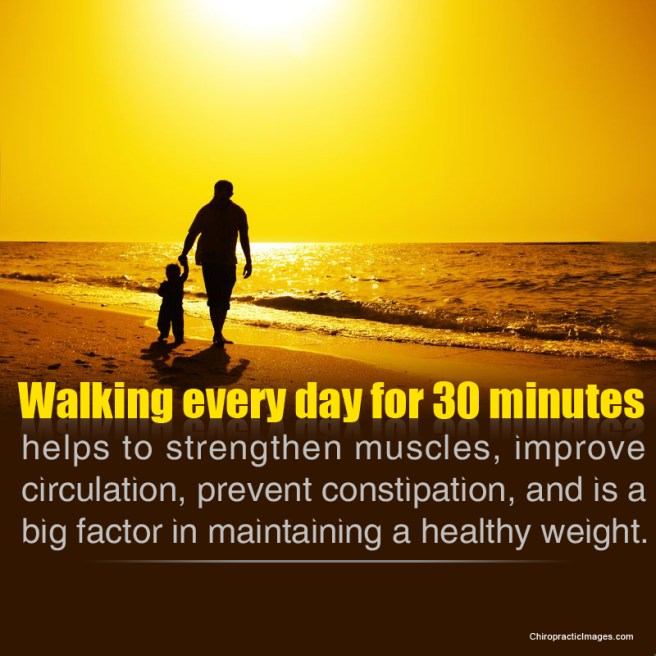
One of the BEST forms of exercise for most people is walking. A walking program should be a staple exercise. It’s important to note that this should be GRADUALLY introduced so as to avoid an overuse injury—strain or sprain of the muscles and joints. This gradual introduction into activity is ESPECIALLY important for the FM sufferer as overuse injuries can make them afraid to do something that can REALLY help when done correctly!

Headache & Dizzy. When To Be Concerned.

Last week, we discussed some startling new research that found that lightheadedness upon standing up (orthostatic hypotension) may be more serious than previously thought. This month, we’ll look specifically at headache AND dizziness and if we should we be concerned about this combination of complaints and if so, when?

A team of researchers from Johns Hopkins University reviewed past medical records of 187,188 patients presenting to over 1,000 emergency departments (EDs) between 2008 and 2009. They found the combination of headache and dizziness—especially in women, minorities, and young patients—was a potential signal of an impending stroke!

Specifically, they reported that 12.7% of people complaining of headache and dizziness were later admitted for stroke and had been misdiagnosed and inappropriately sent home from the ED within the previous 30 days. Patients were told they had a “benign condition” such as inner ear infection or migraine, and in some cases, they weren’t given a diagnosis at all. Slightly less than half of this population had a stroke within seven days and over half had a stoke within the first 48 hours of the initial pre-stroke ED presentation!

The study reported that women were 33% and minorities 20-30% more likely to be misdiagnosed, suggesting gender and racial disparities may play a role. The researchers estimate that doctors miss 15,000 to 165,000 strokes that result in harm to the patient each year.

Studies have found that the early diagnosis and quick treatment of strokes is critical in reducing serious residuals in patients having a transient ischemic attach (TIA), sometimes referred to as a “mini-stroke” or “pre-stroke.” TIAs are often pre-cursors to a more catastrophic stroke leading to death or permanent disability without appropriate treatment.

Again, to put this in perspective, MANY people present to healthcare providers with headaches and dizziness with NO relationship to stroke—about 87%—though it is sometimes not possible to know whether a potentially dangerous problem may arise in the near future. The good news is that it usually does not!

The importance of this study is to alert both healthcare providers AND patients of the potential risk. When in doubt, it’s ALWAYS best to seek out multiple opinions. An MRI may be the best way to confirm the most common type of stroke (according the study reviewed above), as a CT scan may not show the brain changes early on and could lead to false reassurance.

Doctors of chiropractic commonly see patients presenting with headaches and dizziness. When this occurs suddenly, out of the ordinary, and/or at a relatively young age (women > men), it’s better to be safe than sorry and obtain multiple opinions, especially WHEN IN DOUBT!

Our Exercise Of The Month: ITB Foam Roller

ITB – Foam Roller
  • Lie on your side with your affected thigh over a foam roll.
  • Lift your shoulders off of the floor with your arm and roll the fleshy part your mid & lower thigh back and forth over the foam roller.
  • Avoid rolling over the bony point of your hip unless specifically directed.
  • Perform this exercise for one minute twice per day or as directed.

Carpal Tunnel Basics

Here it is: carpal tunnel syndrome (CTS) in a nutshell!

WHAT: CTS is caused by an injury to the median nerve (MN) as it travels through the wrist.

WHERE: The eight small carpal bones and a ligament form a tunnel in which tendons and nerves pass through to reach the hand.

HOW: The MN gets pinched/irritated from repetitive stress.

WHY: The tunnel is tight as it includes the MN and nine rapidly moving muscle tendons!

PROGRESS: CTS usually starts slow and often progresses over weeks, months, even years.

SYMPTOMS: Pain, numbness, tingling, and/or weakness of the hand, sparing the little finger.

PROGNOSIS: CTS is easier to treat shortly after it starts, and waiting too long to seek care may lead to worse outcomes.

RISK FACTORS: 1) family history (genetics); 2) women are more likely to suffer from CTS than men; 3) age over 50; 4) manual jobs; 5) pregnancy; 6) conditions like diabetes, hypothyroid, rheumatoid arthritis (RA), osteoarthritis, autoimmune diseases (includes RA, certain types of thyroid disease), gout, kidney disease (especially dialysis patients), Down syndrome, amyloidosis, acromegaly, tumors on the median nerve; 7) medications (those that affect the immune system such as interleukin-2, possibly corticosteroids), anti-clotting drugs such as warfarin, hormone replacement, BCPs; 8) obesity; 9) smoking; 10) alcohol abuse; and 11) trauma/injuries (fractures, tendonitis).

TREATMENT: Ideally, treatment should begin as soon as possible after symptoms first start, but this RARELY occurs due its slow and gradual onset. Non-surgical care includes anti-inflammatory care (ice, anti-inflammatory nutrients—ginger, turmeric, bioflavonoids; NSAIDs like ibuprofen), wrist splinting (primarily at night), corticosteroid injections, job/ergonomic modifications, exercises (yoga, stretching, strengthening, and aerobic fitness), low level laser therapy, ice, acupuncture, and chiropractic care. Chiropractic care includes MANY of the above PLUS manual therapies applied to the neck, shoulder, arm, wrist, and hand.

Nutshell

Hip or Low Back?

Lumbar and Pelvis

Technically, the hip is the ball-and-socket joint between the long bone of the thigh and the pelvis; but more often than not, many people will point to a number of different places on their back or pelvis and say, “My hip is killing me” when it’s not really “the hip” at all!
Hip pain can be located in the front (groin area), the side, the back, or in the buttocks. The “classic sign” of hip pain is reproduced most consistently when you try to cross your legs—put your ankle on the far end of the thigh and then push down on your knee. This may feel tight and cause pain in the groin area. For many people, hip pain is also reproduced when they cross their legs and then pull their knee towards the opposite shoulder.
The hip is a VERY strong joint due to the deep receiving cup of the pelvis and the round ball that fits nicely into it. Because it’s a freely moving joint, there is a joint capsule. The capsule is lined with tissue that produces an oily substance that lubricates the joint (called synovial fluid), and when hip pain occurs, this can be caused by a capsulitis (inflammation of the capsule) with a buildup of synovial fluid (called synovitis).
When the smooth, shiny surface of the ball starts to wear thin (which can eventually wear away down to the bone), that’s a condition called “osteoarthritis.” This occurs over time for many and may eventually result in the need for a hip replacement. This usually isn’t needed until an individual is in their late 60s or older (if at all), but for those who injure a hip earlier in life, the “wearing out” process may accelerate and a hip replacement may be needed well before old age.
There are many studies that report low back and hip arthritis often occur together, and differentiating between the two can sometimes be a challenge. For example, pain can radiate from the hip to the knee, which many doctors will diagnose as “sciatic nerve.” But hip pain can present exactly the same, making it hard to determine if it’s low back-generated pain or hip-generated pain.
This is why it’s SO IMPORTANT that your doctor of chiropractic conduct a careful history and examination. There are specific tests that he or she will perform that help determine which of the two is causing the pain. There are times when they may find BOTH problems co-existing together, making it necessary to manage two problems, rather than just one.
There are many mobilization, manipulation, soft tissue therapies, modalities, and exercises available to patients with both hip and low back pain. So if you’re not sure what is bothering you and you don’t know what to do, visit your doctor of chiropractic and he or she will help you through this.

5 ways to cure that hangover

5 Ways To Cure Your Hangover – worldhab.com

5-Ways-to-Cure-a-New-Year-Hangover-Used-and-Proven-Tips

New Year Hangover and How to Come over it: You might have enjoyed a lot this New Year with Partying, Roaming with Craziness and of course, Drinking to the peaks. How can a Party finish without a Drink? That’s the best part of the evening. But with Drinking, Hangover joins you in the morning for many people. We at WORLDHAB, are sharing the best and proved tips to Hangover. Hangover caused by New Year easily from the homemade recipe and daily used materials. Follow the steps mentioned below and get back to your original state. Here is 5 Ways to Cure a New Year Hangover.

5 Proven Tips/Ways to Cure a New Year Hangover

You might have gone convince to go beyond your limits as a part of celebration yesterday evening for which you to pay now. Is your Head is aching? Or you are struggling to get over from Hangover? Here we have collected some of the expert suggestions and ways which can help you a lot with the nasty symptoms such as a severe headache, diarrhea, fatigue, nausea, and shakiness. Mixing your drinks with water or any another non-alcoholic beverage can help you stay regular and being hydrated. If you are still in a hangover, you should try one of the below-mentioned tried-and-true ways.

  1. Take Milk and Potatoes Together: Consuming Alcohol may reduce the potassium(K) and calcium(Ca) levels in the body. Eating Potatoes with milk will give rich minerals more than Banana or any tablets.
  2. Skip Regular Coffee.: People will be habitual of drinking bed coffee or regular coffee which you might be common across non-drinkers. But for People especially during Hangover should skip drinking coffee until they are back to normal.
  3. Refill your Body with Water: Hangover is mainy because of Dehydration. The best and most important way to get away from Hangover is by rehydrating yourself. It is very very important to refill yourselfs with fluids if you are vomiting. Hence, first and foremost thing which you can do to get rid of Hangover is to drink alot of water. Which rehydrates your body. Most common rehydrating methods inclues Drinking Water, Coconut water which are rich in electrolytes. Most headaches secondary to alcohol consumption are caused by both dehydration and also because of an imbalance of electrolytes. Avoid taking Coffee or Tea which have caffeine content which in turn make your Hangover a little more.
  4. Drink Boiled Water with Lemon and Honey: Lemons refills the vitamins you need for you body and honey helps balance your blood sugar levels which might have fluctuated due to alcohol consumption.
  5. Tablet like Pain Killer.: It is often suggested to take a pain killer pills when you have a hangover or you are not stable. If you have head ache which you think you can not withstand then you should take a painkiller. Aspirin or ibuprofen are both good if you have a headache. Be sure to read the instructions and take only the recommended dose.