The Anti-Inflammatory Diet

Don’t fuel the inflammatory fire with diet.

The anti-inflammatory diet is a diet that is designed to help reduce inflammation throughout the body. The diet is based on the idea that by eating certain foods, you can help to reduce inflammation that may be causing health problems. The anti-inflammatory diet is based on the Mediterranean diet, which is known to be healthy and anti-inflammatory.

The anti-inflammatory diet focuses on eating plenty of fruits, vegetables, whole grains, and healthy fats. It also recommends avoiding processed foods, sugar, and unhealthy fats.

Some of the best foods to eat on the anti-inflammatory diet include:

-Fruits: Berries, citrus fruits, apples, pears

-Vegetables: Dark leafy greens, cruciferous vegetables, tomatoes, onions, garlic

-Whole grains: Brown rice, quinoa, oats

-Healthy fats: Olive oil, avocado, nuts, seeds

The anti-inflammatory diet can help to improve overall health and reduce the risk of diseases that are caused by inflammation. It is a healthy and sustainable way to eat, and it can be tailored to fit any individual’s needs and preferences.

Running Injuries

There are many different types of injuries that can occur in runners, but some of the most common ones are runner’s knee, Achilles tendonitis, and iliotibial band syndrome.

Runner’s knee is a condition that affects the kneecap and is caused by overuse or incorrect movement. The most common symptoms are pain and swelling around the kneecap, difficulty bending the knee, and a popping or grinding sensation. Treatment usually involves rest, ice, and compression, and in some cases surgery may be necessary.

Achilles tendonitis is a condition that affects the Achilles tendon, which is the tendon that connects the calf muscles to the heel. It is caused by overuse or incorrect movement, and the most common symptoms are pain and swelling around the Achilles tendon, difficulty flexing the ankle, and a popping or grinding sensation. Treatment usually involves rest, ice, and compression, and in some cases surgery may be necessary.

Iliotibial band syndrome is a condition that affects the iliotibial band, which is a band of tissue that runs down the outside of the thigh. It is caused by overuse or incorrect movement, and the most common symptoms are pain and swelling on the outside of the thigh, difficulty flexing the knee, and a popping or grinding sensation. Treatment usually involves rest, ice, and compression, and in some cases surgery may be necessary.

IT Band Syndrome

Photo by Andrea Piacquadio on Pexels.com

IT Band Syndrome occurs when a band of connective tissues on the outside of your thigh, called the iliotibial band, becomes irritated as a result of repeated rubbing against the side of your knee during flexion and extension movements.

People who engage in activities or sports that involve jumping, biking or running are at higher risk. This injury is quite frequent among runners.

Normally, this injury occurs during a period when the training intensity and/or volume has been increased too quickly with inadequate recovery.

Treatment of IT Band injuries consists of Class IV Laser Therapy, management of any biomechanical stresses in the area and exercise rehabilitation to address any weaknesses that can be putting undue stress on the area. 

#LaserTherapy
#HipInjuries
#Winnipeg
#Chiropractic
#LegInjury
#HipPain

Suffering with IT Band Syndrome? Contact us for treatment in Winnipeg

Find and Follow us on Twitter and Instagram!

Sprinting

The key to getting a higher top speed

Sprinting is one of the most important exercises an athlete can do to develop a higher top speed. It is a plyometric exercise that uses the athlete’s own body weight to create resistance and improve explosiveness.

Sprinting also helps improve an athlete’s stride length and frequency, both of which are important factors in running speed. Sprinting is a great way to improve an athlete’s overall speed. It is a very explosive exercise that uses many of the same muscles used in running. Sprinting also helps improve the athlete’s stride length and frequency, both of which are important factors in running speed.

Sprinting is a plyometric exercise, which means that it uses the athlete’s own body weight to create resistance and improve explosiveness. Plyometric exercises are important for athletes because they help improve the explosive power of the muscles. This is important for athletes because it allows them to run faster and jump higher.

Sprinting also helps improve the athlete’s overall conditioning. It is a very demanding exercise that requires the athlete to use many of the same muscles used in running. This helps improve the athlete’s overall running speed and endurance. Sprinting is a great exercise for athletes of all levels. It is a very demanding exercise, but it can be modified to fit the athlete’s level of conditioning. Sprinting is a great way for athletes to improve their top speed and overall conditioning.

The Deadlift

Want to be an athlete? Better deadlift….

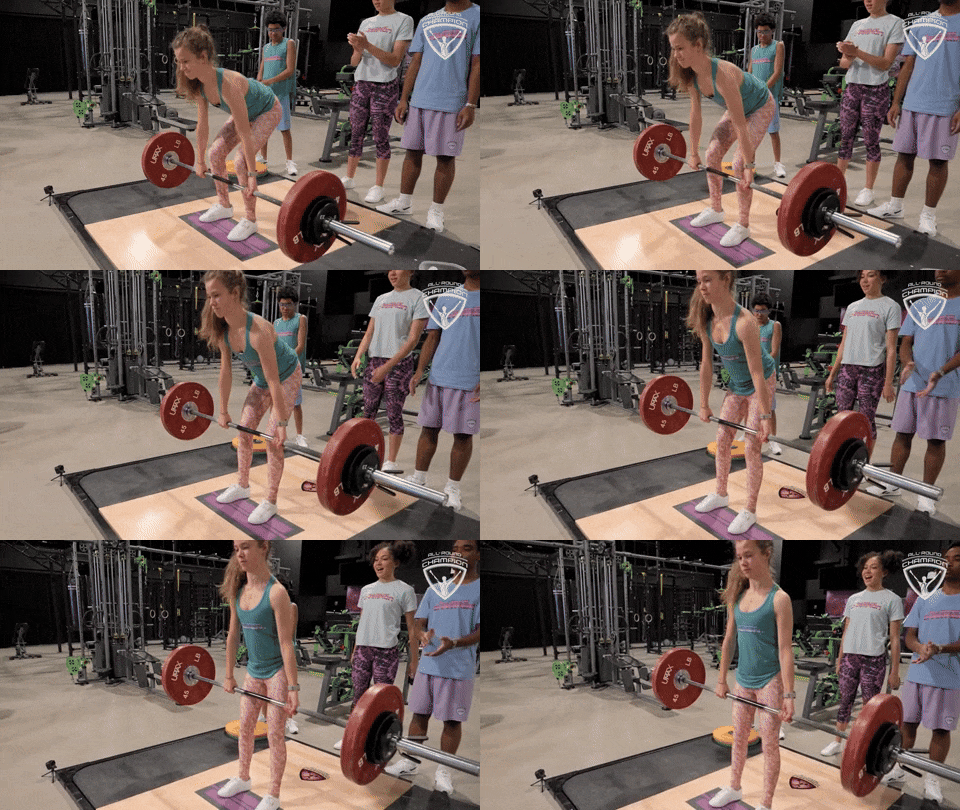
Deadlifting is a weightlifting exercise that involves lifting a weight off the ground from a bent-over position. It is a common exercise in weightlifting and bodybuilding. Deadlifting can be safely performed if proper form is followed.

The most important part of deadlifting is maintaining a neutral spine. This means keeping the spine in a natural position, not rounding or hyperextending. When the spine is in a neutral position, the weight is distributed more evenly, which reduces the risk of injury.

To maintain a neutral spine, keep the shoulders back and the chest up. Tighten the abdominal muscles to keep the spine stable. When lifting the weight, use the legs and hips to lift the weight, not the back.

If the weight is too heavy, it can cause the back to round. This can cause injuries such as disk herniation and spinal cord compression. If the weight is too light, the muscles will not be challenged and the exercise will not be effective.

The best weight to use for deadlifting depends on the person’s strength and experience. Start with a weight that is challenging but not too heavy. As the person becomes stronger, they can increase the weight.

Deadlifting can be safely performed if proper form is followed. To maintain a neutral spine, keep the shoulders back and the chest up. Use the legs and hips to lift the weight, not the back. If the weight is too heavy, it can cause injuries. If the weight is too light, the muscles will not be challenged.

Hip Arthritis

Photo by Miriam Alonso on Pexels.com

Hip osteoarthritis is a condition that can cause pain and alteration of normal biomechanics. The exact causes of osteoarthritis have not yet been fully identified. It is completely normal to have a mild level of osteoarthritis as you age. However, more advanced stages of osteoarthritis can affect the ability to perform physical activities, which may include activities of daily living.

An exacerbation of symptoms usually occurs during a period when the level of physical activity has increased drastically. Direct trauma to the hip can increase symptoms of osteoarthritis.

Treatment of hip arthritis consists of Class IV Laser Therapy, management of any biomechanics stresses in the area and exercise rehabilitation to address any weaknesses that can be putting undue stress on the area. 

#LaserTherapy
#BackInjuries
#Winnipeg
#Chiropractic
#HipPain
#Arthritis

Contact Us

Unstructured Play

Unstructured play is important for children because it allows them to explore their surroundings and learn new things in a natural way.

Without structure, they can create their own games and rules, and use their imagination to come up with new stories and characters.

This type of play is also important for developing social skills, as children learn how to cooperate and negotiate with each other. It can also help them to better understand their own emotions and those of others.

Proper Lifting Technique

Some simple tips

Lifting Technique

Lifting technique is important for preventing injuries when lifting heavy objects.

There are a few basic principles that should be followed when lifting:

1. Keep the object close to your body.

2. Use your legs to lift the object, not your back.

3. Keep your back straight.

4. Hold the object close to your body as you move it.

Following these principles will help you to lift objects safely and prevent back injuries.

Winter Is Coming…..

Or at least tons of snow is…..

Shovelling snow can be a dangerous activity if not done properly. Here are a few tips to help you stay safe while shovelling:

-Warm up your body before shovelling by doing some light stretching exercises.

-Take frequent breaks to rest and drink fluids.

-Avoid shovelling snow if you are pregnant or have heart problems.

-Use a shovel that is the correct size for you. A shovel that is too large or too small will make the task more difficult and increase your risk of injury.

-Push the snow instead of lifting it. Lifting snow can put a lot of strain on your back and neck.

-If possible, try to shovelling snow when it is light. Heavy snow can be more difficult to move and increases your risk of injury.

-Make sure the path you are shovelling is clear of ice and other obstacles.

-Be careful when walking on ice or snow.

Hip Labral Tear

Photo by Yan Krukov on Pexels.com

A labral tear is a common injury in case of mechanical pain at the hip.
It is a tear in the connective tissue which helps stabilize the head of the femur (thigh bone) in the cavity of the pelvis.

Mechanisms of labral tear injury can be trauma during pivot sports or falls, repetitive strain injuries related to poor running technique, abnormal hip or acetabulum morphology contributing to pinching in the joint. These activities can create excessive compression in the hip.

People between the ages of 20 and 40 are more susceptible to it and it is relatively more common in women. 

#Chiropractic #PainRelief #Healthyliving #LaserTherapy #Winnipeg #BackPain #NeckPain #Headache #Fitness #Athlete #Wellness