Trigger points and headaches

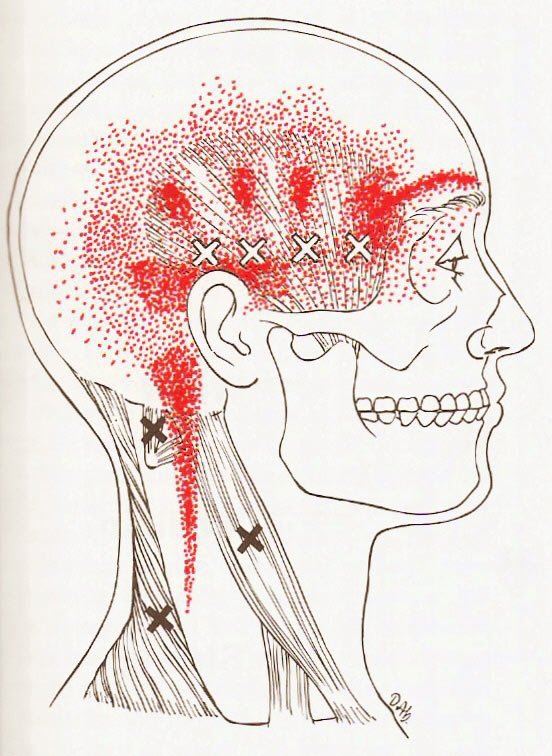
One of the most common sources of headache pain is trigger points in the neck muscles. These muscles are often overloaded from poor posture such as sitting in front of a computer or looking down at you phone for long periods of time. Trigger points that form in the upper traps are the most common trigger points in the body. They refer pain up the neck, behind the ear into the temple. The suboccipital muscles refer pain deep into the skull behind the eye. Sternocleidomastoid trigger points will refer pain to the top of the head and around the orbit of the eye. Trigger points need to be manually released to be resolved.
Myofascial pain syndrome

Myofascial pain syndrome is caused by a stimulus, such as muscle tightness, that sets off trigger points in your muscles. Factors that may increase your risk of muscle

trigger points include:

  • Muscle injury. An acute muscle injury or continual muscle stress may lead to the development of trigger points. For example, a spot within or near a strained muscle may become a trigger point. Repetitive motions and poor posture also may increase your risk.
  • Stress and anxiety. People who frequently experience stress and anxiety may be more likely to develop trigger points in their muscles. One theory holds that these people may be more likely to clench their muscles, a form of repeated strain that leaves muscles susceptible to trigger point

Trigger points can be found in all soft tissue.

Trigger points don’t just form in muscles. Any soft tissue or connective tissue can become damaged and develop trigger points. Once a trigger point has formed it will produce a large variety of painful symptoms. Visit http://www.aberdeenchiropractic.com for more information on trigger points and trigger point massage therapy.

Trigger points and headaches

Trigger points in a number of muscles can refer pain into the head causing headaches. One of the most common muscles is the trapezius. This is a large diamond shaped muscle in the upper back and neck. Trigger points in the upper portion of this muscle are the most common trigger points in the body. These points will refer pain into the head, behind the ear and into the temple. Trigger points usually won’t resolve on their own, a therapeutic intervention is required to release the point.

Trigger points in the lateral pterygoid.

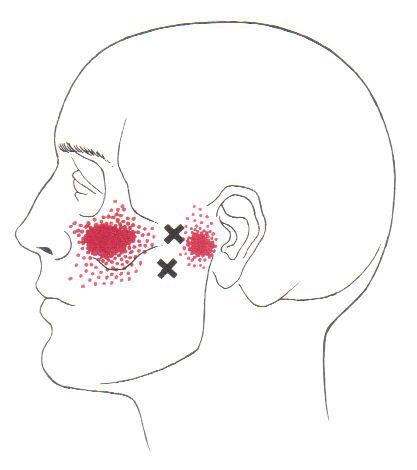
The lateral pterygoid muscle is involved in movement of the jaw. It can become become strained from chronic clenching of the jaw and grinding of the teeth. When this happened trigger points can form. This leads not only to pain and refered pain, but also dysfunctional joint mechanics. This muscle is a major player in TMJ dysfunction syndrome.

Trigger points in the medial pteragoyd muscle

The medial pteragoyd muscle is located on the inside of the jaw. It is responsible for jaw movements during talking and chewing. This muscle becomes over loaded from poor neck posture as well as stress resulting in grinding the teeth or excessive clenching of the jaw. Trigger points in this muscle will refer deep into the jaw and the tempomandibular joint producing “tmj dysfunction syndrome.

Trigger points in the multifidus muscle.

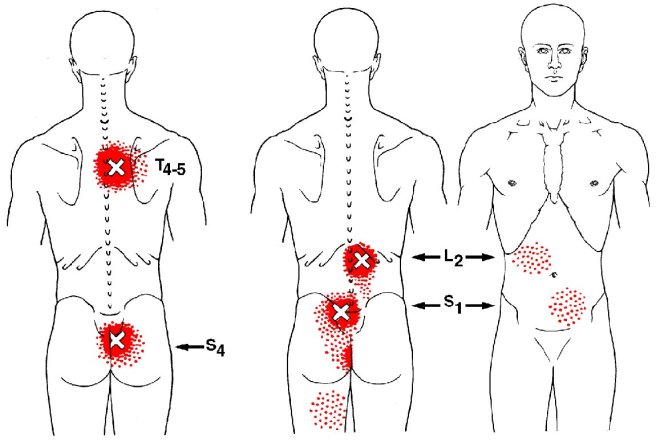
The multifidus muscle is a long muscle that travels the length of the spine. It has different actions on different parts of the spine. It extends and laterally flexes the cervical and lumbar spine, and rotates the thoracic spine. Trigger points in this muscle are common due to poor posture and bad movement mechanics. Trigger points in the lumbar area area are a common cause of low back pain. These lower points can also refer into the abdomen. Points that form in the cervical region will refer pain down the neck into the shoulder blade area.

The rectus femoris muscle is one of your quad muscles. It acts primarily to extend the knee but it also helps to flex the hip. This muscle is often overloaded from athletic activity, but it also can become chronically shortened from prolonged sitting. Trigger points will refer pain deep into the knee producing a deep ache felt into the joint.

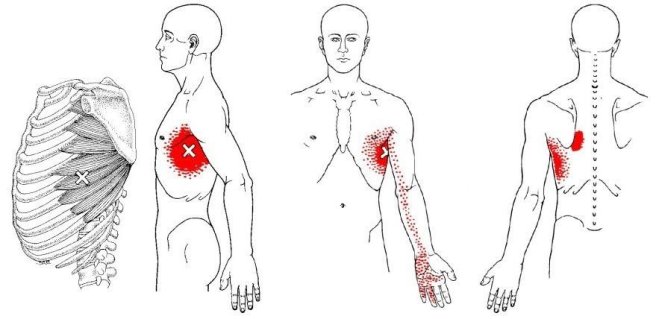
the serratus anterior muscle is located on the side of the trunk. It attaches onto the ribs and the scapulae. This muscle assists in scapular motion and stability as well as assisting the movement of the ribs. Trigger points can form in this muscle due to poor shoulder posture. Once formed, these points will cause pain to be felt in the side, under the armpit, and down the inside of the arm. Once formed trigger points will not release on their own, they require a manual technique such as trigger point massage.