Trigger points in the infraspinatus and shoulder and arm pain.

The infraspinatus muscle is one of the muscles that makes up the rotator cuff. It functions to laterally rotate the shoulder and to stabilize the shoulder joint. Rotator cuff problems are common and can be caused by both acute injuries, or chronic repeditive movements, and poor posture. When this happens trigger points will form causing pain, refered pain, as well as stiffness and weakness. Refered pain from trigger points in the infraspinatus can be felt into the front of the shoulder and down the arm. Trigger points can also produce a sensation the the shoulder joint isn’t “sitting right”. Trigger points must be released to relieve these symptoms.

Myofascial trigger points and pain.

TP’s were first brought to the attention of the medical world by Dr. Janet G. Travell. Dr. Travell, physician to President John F. Kennedy, is the acknowledged Mother of Myofascial Trigger Points. In fact, “Trigger Point massage, the most effective modality used by massage therapists for the relief of pain, is based almost entirely on Dr. Travell’s insights.”2 Dr. Travell’s partner in her research was Dr. David G. Simons, a research scientist and aerospace physician.

Trigger Points are very common. In fact, Travell and Simons state that TP’s are responsible for, or associated with, 75% of pain complaints or conditions.1 With this kind of prevalence, it’s no wonder that TP’s are often referred to as the “scourge of mankind”.

Trigger Points can produce a wide variety of pain complaints. Some of the most common are migraine headaches, back pain, and pain and tingling into the extremities. They are usually responsible for most cases of achy deep pain that is hard to localize.

A TP will refer pain in a predictable pattern, based on its location in a given muscle. Also, since these spots are bundles of contracted muscle fibres, they can cause stiffness and a decreased range of motion. Chronic conditions with many TP’s can also cause general fatigue and malaise, as well as muscle weakness.

Gluteus medius trigger points.

The Gluteus medius is located in your hip. It is important for hip stability, and functions to abduct the hip. When trigger points form in this muscle pain can be felt deep into the sacrum and the hip, as well as down the lateral thigh. Trigger points in this muscle are an often overlooked source of low back and sacral pain.

Trigger point massage.

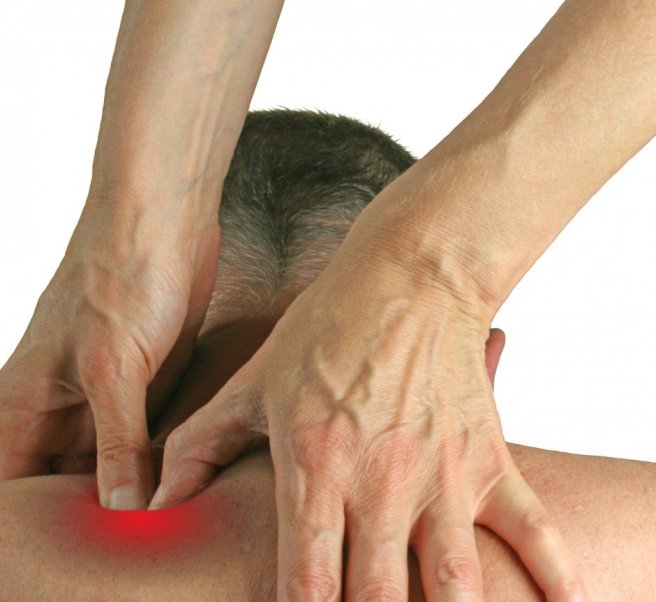
Myofascial trigger points are contracted knots in muscle tissue. They are one of the most common causes of pain in the body. Most people will experience pain from trigger points at some point in there lives. Trigger point pain is usually felt as a deep achey pain. This pain may be refered In a specific pattern to other areas of the body. For example, trigger points in your hip can refer pain all the way down the leg into the foot. Trigger points will also mimick joint pain leading to misdiagnosis of arthritis. Trigger point massage therapy targets the knots specifically with focused deep work to release the area and allow the muscle to heal. Visit http://www.triggerpointmassagetherapy.info or http://www.aberdeenchiropractic.com for more information.

What are trigger points.

What is a Trigger Point?

Trigger Points (TP’s) are defined as a “hyper-irritable spot within a taut band of skeletal muscle. The spot is painful on compression and can evoke characteristic referred pain and autonomic phenomena.”1

Put into plain language, a TP is a painful knot in muscle tissue that can refer pain to other areas of the body. You have probably felt the characteristic achy pain and stiffness that TP’s produce at some time in your life.

Causes of a stiff neck.

The levator scapulae muscle is located in your neck. It is responsible for raising your shoulder blade up to your ear, as well as side flexion of the neck. Trigger points develop in this muscle commonly due to poor posture, and stress holding patterns. Once developed these trigger points will cause a deep achy pain and stiffness in the neck.

Brachioradialis trigger points.

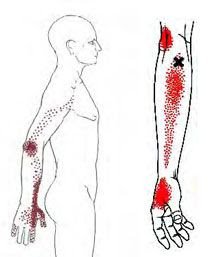
The Brachioradialis muscle is a muscle located in your forearm. It helps to flex the elbow during semi pronation, such as when drinking a cup of coffee or holding a phone to your ear. When trigger points form in this muscle pain can be felt in the forearm, back of the elbow, and even into the hand.

Trigger points and headaches

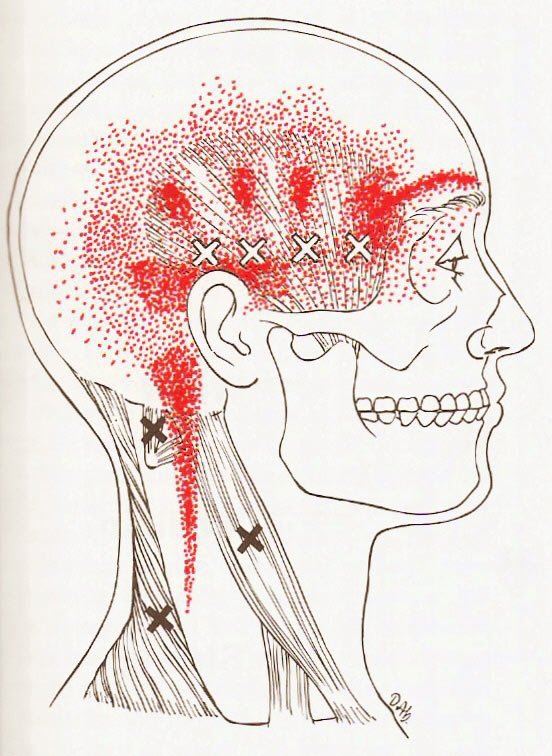
One of the most common sources of headache pain is trigger points in the neck muscles. These muscles are often overloaded from poor posture such as sitting in front of a computer or looking down at you phone for long periods of time. Trigger points that form in the upper traps are the most common trigger points in the body. They refer pain up the neck, behind the ear into the temple. The suboccipital muscles refer pain deep into the skull behind the eye. Sternocleidomastoid trigger points will refer pain to the top of the head and around the orbit of the eye. Trigger points need to be manually released to be resolved.

Planter fascitis and trigger points

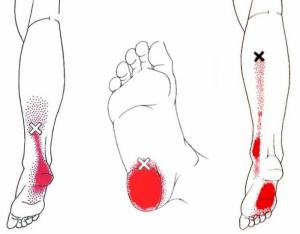
Planter fascitis is a painful condition affecting the bottoms of the feet. It involves inflammation and tightness of the planter fascia, which is a tough layer of connective tissue on the bottoms of the feet. Trigger points in the calf and foot muscles are a leading cause of planter fascitis. These points not only cause the muscle to become tight which in turn causes the fascia to be tight, but the trigger point pain referral patterns of these muscle will cause pain to be felt in the bottoms of the feet and heal. These causes are often overlooked leading to ineffective treatment and prolonged suffering.