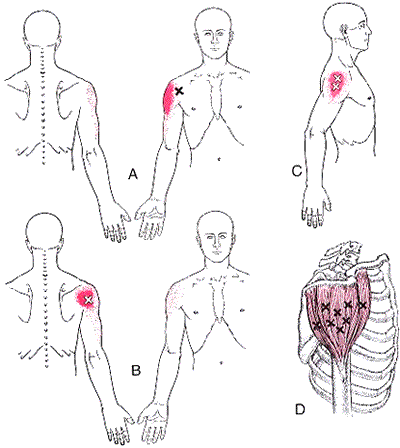
Deltoid trigger points and shoulder pain.

The referred pain from the deltoid trigger points is rather unique among myofascial pain patterns in that it “stays close to home” and is not projected to an adjacent region of the body. The pain is typically experienced only during movement of the shoulder joint, and when there is trigger point activity in all three deltoid sections the client may not be able to raise the arm up to 90 degrees. Because the trigger point in the anterior deltoid projects pain to both the anterior and lateral aspects of the shoulder, it will often activate trigger points in the lateral deltoid.
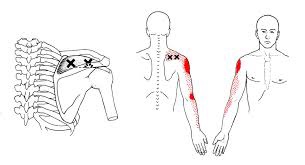
Trigger points in the supraspinatus muscle.

The supraspinatus muscle is a small muscle that helps make up the rotator cuff. It is responsible for shoulder stability as well as lateral rotation of the arm, and help initiate abduction of the shoulder. This muscle can become injured from overhead movements of the shoulder such as painting a ceiling or throwing movements. When this happens trigger points will form producing pain felt in the shoulder, and down the arm. These points will also cause weakness and stiffness. Trigger points must be released for the area to heal.

Trigger points in the infraspinatus and shoulder and arm pain.

The infraspinatus muscle is one of the muscles that makes up the rotator cuff. It functions to laterally rotate the shoulder and to stabilize the shoulder joint. Rotator cuff problems are common and can be caused by both acute injuries, or chronic repeditive movements, and poor posture. When this happens trigger points will form causing pain, refered pain, as well as stiffness and weakness. Refered pain from trigger points in the infraspinatus can be felt into the front of the shoulder and down the arm. Trigger points can also produce a sensation the the shoulder joint isn’t “sitting right”. Trigger points must be released to relieve these symptoms.

Trigger point massage

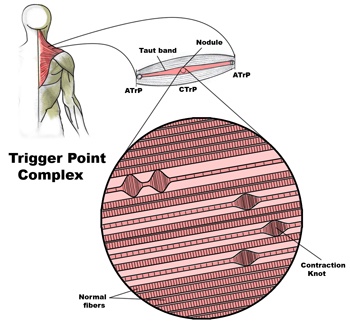
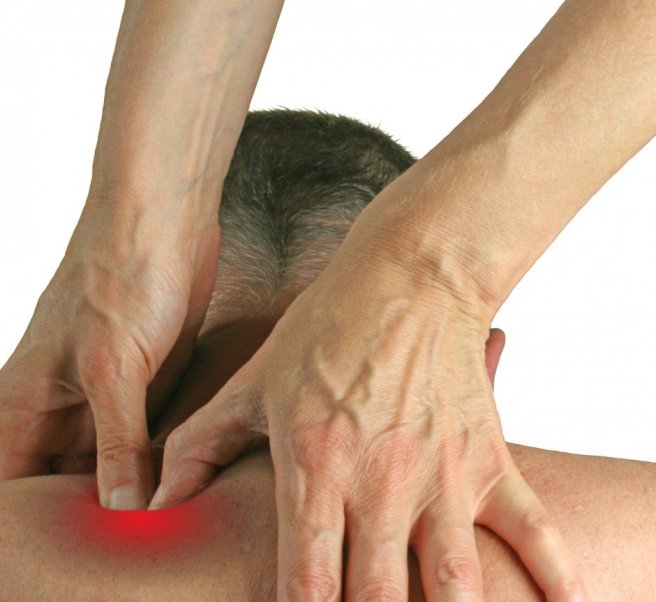
Trigger points are contracted knots in muscles. They form from overload stress causing muscle fibers to become locked together in a self perpetuateing spasm. Trigger points will then produce pain, usually deep achy pain, as well as refered pain. Because of the contraction of the tissue trigger points will also produce stiffness and weakness. Trigger points are also known to mimick other symptoms such as Carple tunnel, and sciatica symptoms. Trigger points are one of, if not the most common cause of pain in the body. Regular massage therapy is not specific or deep enough to release trigger points, a specific technique of applying deep focused pressure to the heart of the knot is required for the point to release. This is called trigger point massage.

Trigger point massage.

Myofascial trigger points are contracted knots in muscle tissue. They are one of the most common causes of pain in the body. Most people will experience pain from trigger points at some point in there lives. Trigger point pain is usually felt as a deep achey pain. This pain may be refered In a specific pattern to other areas of the body. For example, trigger points in your hip can refer pain all the way down the leg into the foot. Trigger points will also mimick joint pain leading to misdiagnosis of arthritis. Trigger point massage therapy targets the knots specifically with focused deep work to release the area and allow the muscle to heal. Visit http://www.triggerpointmassagetherapy.info or http://www.aberdeenchiropractic.com for more information.

What are trigger points.

What is a Trigger Point?

Trigger Points (TP’s) are defined as a “hyper-irritable spot within a taut band of skeletal muscle. The spot is painful on compression and can evoke characteristic referred pain and autonomic phenomena.”1

Put into plain language, a TP is a painful knot in muscle tissue that can refer pain to other areas of the body. You have probably felt the characteristic achy pain and stiffness that TP’s produce at some time in your life.

Causes of a stiff neck.

The levator scapulae muscle is located in your neck. It is responsible for raising your shoulder blade up to your ear, as well as side flexion of the neck. Trigger points develop in this muscle commonly due to poor posture, and stress holding patterns. Once developed these trigger points will cause a deep achy pain and stiffness in the neck.

Myofascial pain syndrome

Myofascial pain syndrome is caused by a stimulus, such as muscle tightness, that sets off trigger points in your muscles. Factors that may increase your risk of muscle

trigger points include:

  • Muscle injury. An acute muscle injury or continual muscle stress may lead to the development of trigger points. For example, a spot within or near a strained muscle may become a trigger point. Repetitive motions and poor posture also may increase your risk.
  • Stress and anxiety. People who frequently experience stress and anxiety may be more likely to develop trigger points in their muscles. One theory holds that these people may be more likely to clench their muscles, a form of repeated strain that leaves muscles susceptible to trigger point

Trigger points can be found in all soft tissue.

Trigger points don’t just form in muscles. Any soft tissue or connective tissue can become damaged and develop trigger points. Once a trigger point has formed it will produce a large variety of painful symptoms. Visit http://www.aberdeenchiropractic.com for more information on trigger points and trigger point massage therapy.