Trigger points in the multifidus muscle.

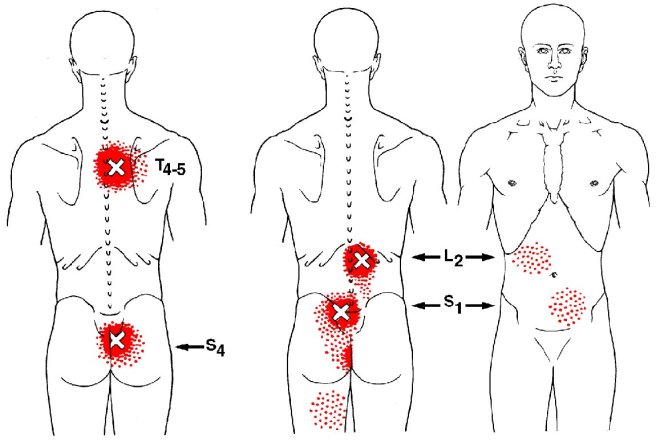
The multifidus muscle is a long muscle that travels the length of the spine. It has different actions on different parts of the spine. It extends and laterally flexes the cervical and lumbar spine, and rotates the thoracic spine. Trigger points in this muscle are common due to poor posture and bad movement mechanics. Trigger points in the lumbar area area are a common cause of low back pain. These lower points can also refer into the abdomen. Points that form in the cervical region will refer pain down the neck into the shoulder blade area.
Trigger points in the sternocleidomastoid muscles

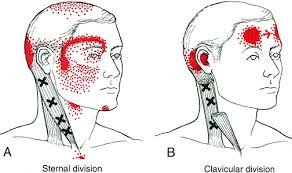
The sternocleidomastoid muscles are two strap like muscles located in the front of the neck. They are responsible for producing head movements like flexion, as well as rotating the head to the opposite side. These muscles often become chronically shortened due to poor posture such as sitting in front of a computer screen for to long. When this happens trigger points can form. These points will refer pain into the head, face, and skull producing headaches. Trigger points won’t resolve by themselves, a manual intervention like trigger point massage is required to cause a release.

Trigger points in your “Lats”

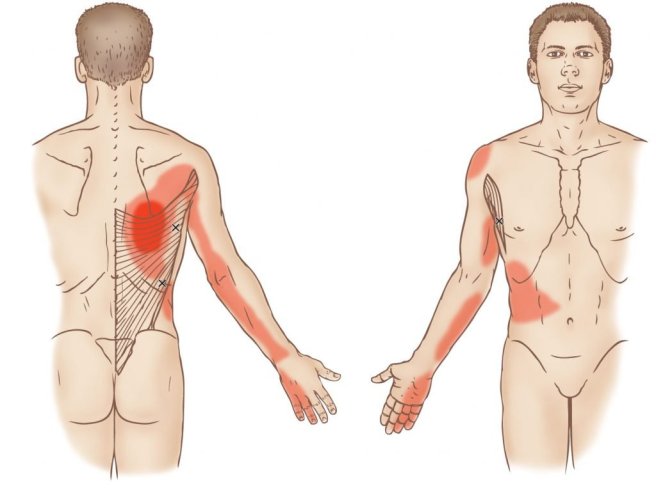
Your lats, or your latissimus dorsi muscles are the largest muscles of the back. They are responsible for adducting and medially rotating the arm. This muscle also produces extension at the shoulder joint. When trigger points for In this muscle, they can refer pain into the back, down the inside of the arm into the hand. These trigger points can also cause pain to be felt into the front of the shoulder. Once formed trigger points will not release on there own. They require a manual release technique like trigger point massage.

Trigger point massage therapy.

Trigger points are hyper irritable knots found in muscle tissue. These points form in a muscle due to overload stress. Trigger points can form anywhere, in any muscle. Once formed they irritate sensory nerves and produce pain, refered pain, weakness, and stiffness. Trigger points will also mimic symptoms of other conditions such as “sciatica” or Carple tunnel syndrome. Trigger points will not go away on there own, they must be manually released with hands on techniques like trigger point massage.

Trigger point massage therapy is specifically designed to alleviate the source of the pain through cycles of isolated pressure and release. In this type of massage for trigger point therapy, the recipient actively participates through deep breathing as well as identifying the exact location and intensity of the discomfort.

The results and benefits of trigger point massage are releasing constricted areas in the muscles thus alleviating pain. You can experience a significant decrease in pain after just one treatment. Receiving massage with trigger point therapy on a regular basis can help naturally manage pain and stress from chronic injuries.

How trigger points form.

Activation of trigger points may be caused by a number of factors, including acute or chronic muscle overload, activation by other trigger points (key/satellite, primary/secondary), disease, psychological distress (via systemic inflammation), homeostatic imbalances, direct trauma to the region, collision trauma (such as a car crash which stresses many muscles and causes instant trigger points) radiculopathy, infections and health issues such as smoking.

Trigger point signs and symptoms

Pain related to a discrete, irritable point in skeletal muscle or fascia, not caused by acute local trauma, inflammation, degeneration, neoplasm or infection.
The painful point can be felt as a nodule or band in the muscle, and a twitch response can be elicited on stimulation of the trigger point.
Palpation of the trigger point reproduces the patient’s complaint of pain, and the pain radiates in a distribution typical of the specific muscle harboring the trigger point.

Trigger points in the suboccitpitals

the suboccipital muscles are a group of small muscles located at the base of the skull. These muscles are responsible for small movements of the head and the first two vertebrae. They also play a roll in postural stability of the skull. Trigger points are common in people with poor neck posture. these points will refer pain deep into the skull and behind the eye. They are a common source of headache pain.