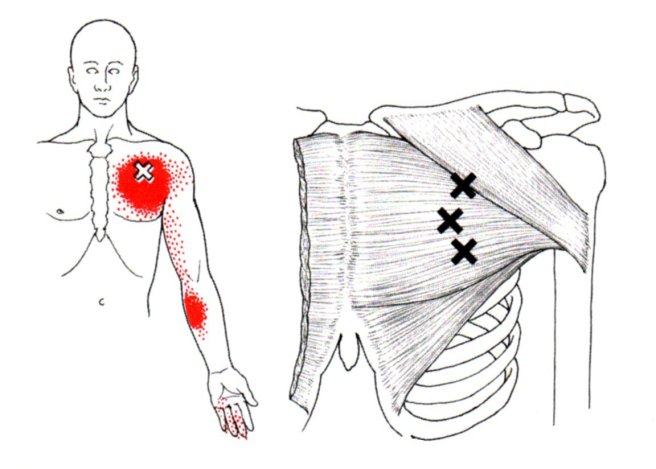
Trigger points in the pectoralis major muscle.

the pectoralis major is the main muscle of the chest. It is a powerful adductor of the arm. This muscle often is tight and shortened from poor shoulder posture. Trigger points in this muscle will cause pain to refer into the chest, shoulder, and down the arm. Trigger points in the left pec can mimic heart attack and angina symptoms.
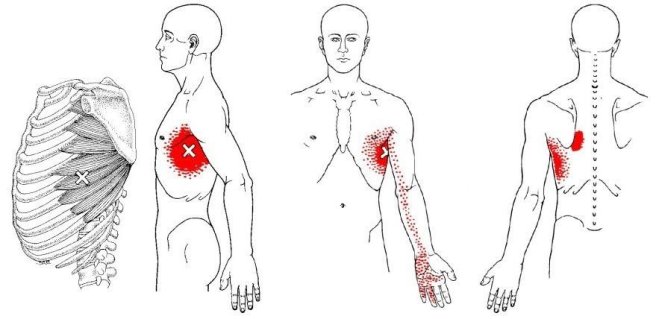
Trigger points in the serratus anterior.

The serratus anterior muscle is responsible for scapular and rib movement and stability. This muscle can become overloaded from poor posture of the shoulders, as well as heavy breathing from exertion. Trigger points in this muscle will cause pain to be felt under the armpit into the shoulder blade area, and down the arm into the fingers.

Trigger point referral patterns.

Myofascial trigger points form in a muscle due to overload stress. A portion of muscle fibers lock up into a knot. Once formed these points will irritate sensory nerves that are in proximity to the knot. When this happens,

trigger points have the capacity to refer pain along specific distributions or patterns that are well mapped out. sometimes pain may be felt at a great distance away from the actual point itself.

Trigger points.

Trigger points are knots of contracted muscle or connective tissue that form as a result of overload stress. Once formed these points will produce pain, refered pain, weakness, and stiffness. Trigger points can also mimic other conditions such as Carple tunnel syndrome and sciatica. Trigger points will on go away on their own, they must be manually released.

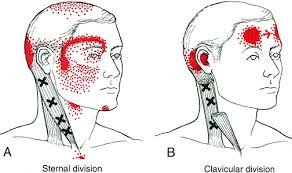
Trigger points in the trapezius muscle.

The trapezius muscle is a large diamond shaped muscle located in your back. This muscle is often overloaded due to poor sitting posture or excessive exercise. When this occurs trigger points will form. These points can cause back, neck, and shoulder pain. Trigger points in the upper traps are a leading cause of headache.

Trigger points in the gluteus Maximus muscle.

The gluteus Maximus muscle makes up your buttock. It’s is a powerful hip extensor and thus used heavily during activities such as walking, running, and climbing up stairs. Most atheletes abuse this muscle. When overworked trigger points will form, and these points will cause pain to be felt in the hip, sacrum and the as well as deep in the gluteal area. Litterally a pain in the butt!! Trigger points won’t release on their own and require interventions like trigger point massage.