Plantar Fasciitis and Laser Therapy

What is it?

Plantar fasciitis is inflammation of the thick tissue on the bottom of the foot that connects the heel to the toes and creates the arch of the foot.

Symptoms

The most common complaint is pain in the bottom of the heel. The heel pain may be dull or sharp. The bottom of the foot may also ache or burn. This can be painful and make walking more difficult.
The pain is usually worse:

  • In the morning when you take your first steps
  • After standing or sitting for a while
  • When climbing stairs
  • After intense activity

The pain may develop slowly over time, or suddenly after intense activity.

What Causes Plantar Fasciitis?

Plantar fasciitis develops because of repeated small tears to the flat band of ligamentous tissue that connects your heel to the bones of your toes. These tears weaken the arch that supports the foot. As the arch of the foot weakens, increasing strain is placed on the deeper ligaments and tendons of the foot and lower leg. Over time, Plantar Fasciitis can result in Chronic Pain, Heel Spurs and Degenerative Joint Disease (Arthritis).
You are more likely to get plantar fasciitis if you have:
• Foot arch problems (both flat feet and high arches)
• Long-distance running, especially running downhill or on uneven surfaces
• Sudden weight gain or obesity
• Tight Achilles tendon (the tendon connecting the calf muscles to the heel)
• Shoes with poor arch support or soft soles
Plantar fasciitis is seen in both men and women. However, it most often affects active men ages 40 – 70. It is one of the most common orthopedic complaints relating to the foot.
Plantar fasciitis is commonly thought of as being caused by a heel spur, but research has found that this is not the case. On x-ray, heel spurs are seen in people with and without plantar fasciitis.

Signs and tests

The health care provider will perform a physical exam. This may show:
• Tenderness on the bottom of your foot
• Flat feet or high arches
• Mild foot swelling or redness
• Stiffness or tightness of the arch in the bottom of your foot.

Physicians typically treat Plantar Fasciitis with anti-inflammatory drugs and steroid injections. These medications temporarily reduce the pain associated with Plantar Fasciitis but do not treat the cause of the problem. Traditional methods can usually take between 9 months to two years to resolve this condition.

Class IV Laser Plantar Fasciitis Program 

Our program utilizes the latest class IV Lasers, and combines them with other therapies to help reduce the pain, strengthen the muscles around the foot and ankle joints, and increase range of motion. The Class IV Laser is at the heart of our treatment program. It provides a safe, effective, non-invasive, painless solution for plantar fasciitis. Patients generally respond exceptionally well to treatments and usually notice significant pain relief after just a few treatments.

Permanent correction of Plantar Fasciitis requires two procedures.

1. Heal the Damaged Fascia

Ending the pain caused by Plantar Fasciitis requires stopping the cycle of inflammation. This is critical because chronically inflamed tissues block the flow of needed nutrients and oxygen to surrounding muscles and joints. The advanced CLASS IV LASER restores the flow of nutrients and oxygen to the inflamed tissue allowing the cells to repair themselves at an accelerated rate.

2. Correct the Foot and Gait Mechanics

Most cases of plantar fasciitis are resolved very easily with Class IV Laser Therapy alone; however, if the condition has become chronic this can lead to alterations in the gait that will have to be addressed. This could involve stabilizing the arch with orthotics  or implementing a simple series of specific strengthening and stretching exercises.
Plantar fasciitis when treated early has an exceptionally good prognosis with our protocol. We encourage those with Plantar Fasciitis to seek our help right away. The longer one suffers with this painful condition the more likely it will cause other conditions in the knee, hip and spine.


Relieve Tension Headaches with Chiropractic Care: A Natural Solution


Photo by Sergey Makashin on Pexels.com

Tension headaches are a common ailment that many people experience at some point in their lives. Characterized by a dull, aching pain and a feeling of tightness or pressure across the forehead, sides, or back of the head, tension headaches can significantly impact daily life. While over-the-counter medications can provide temporary relief, chiropractic care offers a natural, non-invasive solution to address the root causes of tension headaches and provide lasting relief.

Understanding Tension Headaches

Tension headaches, also known as stress headaches, are typically caused by muscle contractions in the head and neck regions. These contractions can be triggered by various factors, including:

  • Stress: Emotional stress can cause muscle tension, leading to headaches.
  • Poor Posture: Sitting or standing for long periods with improper posture can strain neck and shoulder muscles.
  • Muscle Strain: Overuse of the muscles in the neck and shoulders, often due to repetitive activities, can lead to tension headaches.
  • Eye Strain: Extended screen time or reading without breaks can cause eye and muscle strain.
  • Fatigue: Lack of sleep and general fatigue can contribute to muscle tension and headaches.

How Chiropractic Care Can Help

Chiropractic care focuses on diagnosing and treating musculoskeletal disorders, particularly those involving the spine. Chiropractors use a variety of techniques to help relieve tension headaches by addressing their underlying causes. Here are some ways chiropractic care can benefit those suffering from tension headaches:

  1. Spinal Adjustments:
    • Spinal adjustments, or manipulations, help correct misalignments in the spine. These misalignments can cause muscle tension and nerve irritation, contributing to headaches. By realigning the spine, chiropractors can reduce tension and improve overall spinal health.
  2. Muscle Relaxation:
    • Chiropractors use various techniques, such as massage, trigger point therapy, and myofascial release, to relax tight muscles in the neck and shoulders. These treatments help reduce muscle tension and improve blood flow, alleviating headache symptoms.
  3. Posture Correction:
    • Poor posture is a common cause of tension headaches. Chiropractors assess your posture and provide guidance on how to maintain proper alignment throughout the day. They may recommend ergonomic changes at work or home to reduce strain on your muscles.
  4. Stress Management:
    • Stress is a significant trigger for tension headaches. Chiropractors often provide advice on stress management techniques, such as relaxation exercises, mindfulness, and breathing exercises, to help reduce overall stress levels and prevent headaches.
  5. Exercise and Stretching:
    • Regular exercise and stretching can help maintain muscle flexibility and strength, reducing the likelihood of tension headaches. Chiropractors can develop personalized exercise and stretching routines to address your specific needs.
  6. Lifestyle and Nutritional Advice:
    • Chiropractors offer holistic care, which includes advice on lifestyle and nutrition. They may suggest dietary changes or supplements to support overall health and reduce headache frequency.

Benefits of Chiropractic Care for Tension Headaches

Opting for chiropractic care to manage tension headaches comes with several benefits:

  • Natural and Non-Invasive: Chiropractic care provides a drug-free, non-surgical approach to headache relief.
  • Addresses Root Causes: Instead of just masking symptoms, chiropractic treatments aim to address the underlying causes of tension headaches.
  • Improves Overall Health: Chiropractic care not only helps with headaches but also promotes overall spinal health and well-being.
  • Reduces Reliance on Medication: Regular chiropractic treatments can reduce the need for over-the-counter or prescription pain medications.
  • Enhances Quality of Life: With reduced headache frequency and severity, you can enjoy a better quality of life and improved daily functioning.

River East Chiropractic: Your Partner in Headache Relief

At River East Chiropractic, we understand how debilitating tension headaches can be. Our experienced chiropractors are dedicated to helping you find relief through personalized, comprehensive care. Our facility offers a range of services, including chiropractic care, acupuncture, massage, occupational therapy, Pilates, and a full gym. Our holistic approach ensures that all aspects of your health are addressed to provide lasting relief from tension headaches.

Don’t let tension headaches control your life. Visit River East Chiropractic today and discover how our natural, effective treatments can help you achieve a headache-free life. Our team is here to support you every step of the way, ensuring you stay healthy, active, and pain-free.

What is Whiplash?

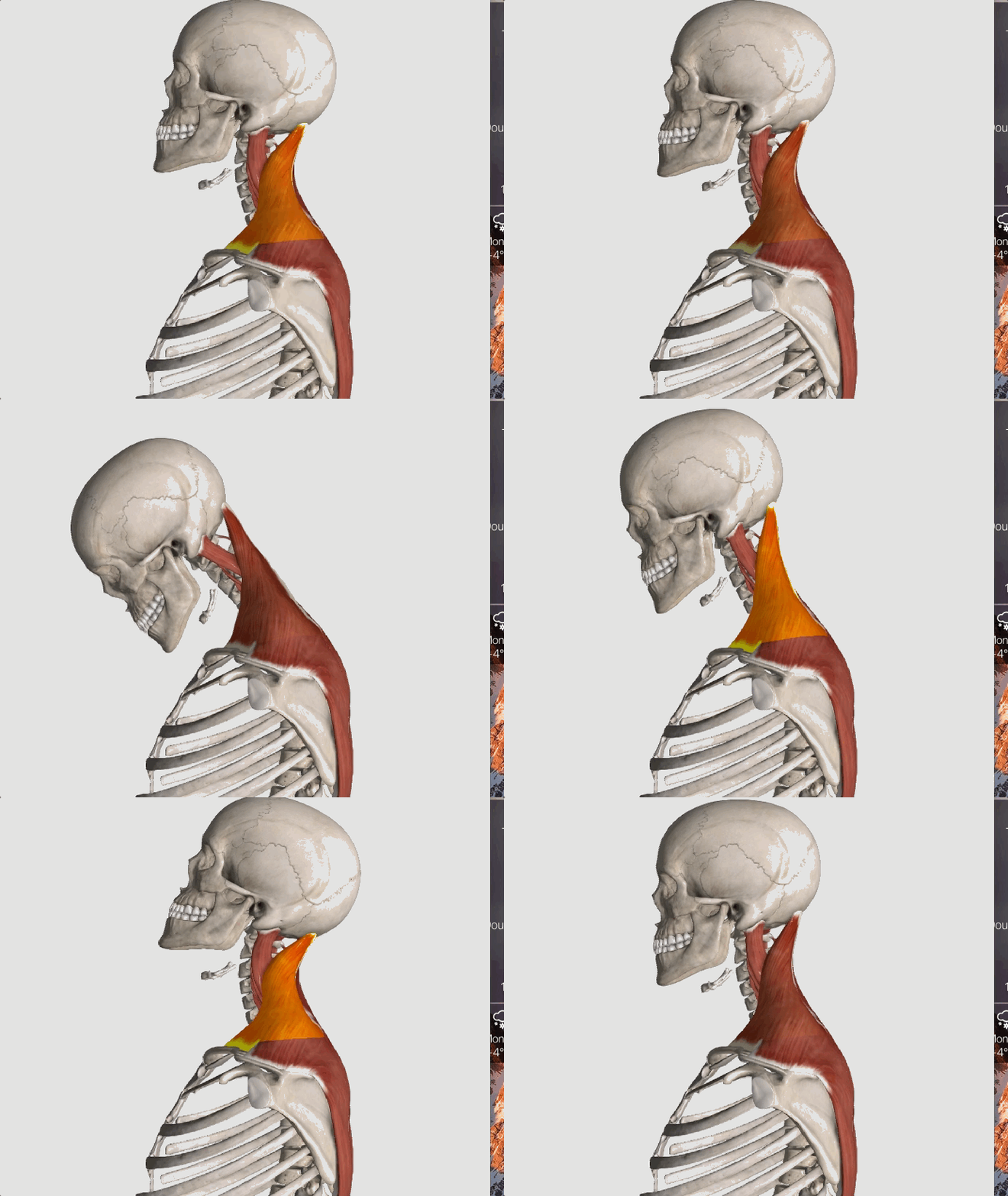
Up Trap Ext

Whiplash is an injury to the soft-tissues of the neck often referred to as a sprain or strain. Because there are a unique set of symptoms associated with whiplash, doctors and researchers commonly use the term “whiplash associated disorders” or WAD to describe the condition.

WAD commonly occurs as a result of a car crash, but it can also result from a slip and fall, sports injury, a personal injury (such as an assault), and other traumatic causes. The tissues commonly involved include muscle tendons (“strain”), ligaments and joint capsules (“sprains”), disk injuries (tears, herniation), as well as brain injury or concussion—even without hitting the head!

Symptoms vary widely but often include neck pain, stiffness, tender muscles and connective tissue (myofascial pain), headache, dizziness, sensations such as burning, prickly, tingling, numbness, muscle weakness, and referred pain to the shoulder blade, mid-back, arm, head, or face. If concussion occurs, additional symptoms include cognitive problems, concentration loss, poor memory, anxiety/depression, nervousness/irritability, sleep disturbance, fatigue, and more!

Whiplash associated disorders can be broken down into three categories: WAD I includes symptoms without any significant examination findings; WAD II includes loss of cervical range of motion and evidence of soft-tissue damage; and WAD III includes WAD II elements with neurological loss—altered motor and/or sensory functions. There is a WAD IV which includes fracture, but this is less common and often excluded.

Treatment for WAD includes everything from doing nothing to intensive management from multiple disciplines—chiropractic, primary care, physical therapy, clinical psychology, pain management, and specialty services such as neurology, orthopedics, and more. The goal of treatment is to restore normal function and activity participation, as well as symptom management.

The prognosis of WAD is generally good as many will recover without residual problems within days to weeks, with most people recovering around three months after the injury. Unfortunately, some are not so lucky and have continued neck pain, stiffness, headache, and some develop post-concussive syndrome. The latter can affect cognition, memory, vision, and other brain functions. Generally speaking, the higher the WAD category, the worse the prognosis, although each case MUST be managed by its own unique characteristics. If the injury includes neurological loss (muscle strength and/or sensory dysfunction like numbness, tingling, burning, pressure), the prognosis is often worse.

Chiropractic care for the WAD patient can include manipulation, mobilization, and home-based exercises, as well as the use of anti-inflammatory herbs (ginger, turmeric, proteolysis enzymes (bromelain, papain), devil’s claw, boswellia extract, rutin, bioflavonoid, vitamin D, coenzyme Q10, etc.) and dietary modifications aimed at reducing inflammation and promoting healing.

* 83% of those patients involved in an MVA will suffer whiplash injury and 50% will be symptomatic at 1 year.
* 90% of patients with neurologic signs at onset may be symptomatic at 1 year.
* 25- 80% of patients who suffer a whiplash injury will experience late-onset dizziness
* Clinicians should be observant for radiographic signs of instability, including interspinous widening, vertebral subluxation, vertebral compression fracture, and loss of cervical lordosis.
* Horizontal displacement of greater than 3.5 mm or angular displacement of more than 11 degrees on flexion/extension views suggests instability

Whiplash and Your Posture

WRD 2.gif

Posture assessment is a key component of the chiropractic examination, and the posture of the head and neck is especially important for a patient recovering from a whiplash injury. Forward head carriage describes a state in which the head sits more forward on the shoulders than it should. In order for the muscles in the neck and shoulders to keep the head upright, they must work harder. This added strain can increase one’s risk for neck pain and headaches, which is why retraining posture is a key component to the management of neck pain and headaches in patients with or without a history of whiplash.

Forward head carriage also increases the distance between the back of the head and the headrest in the seated position, especially when the seat is reclined. In a rear-end collision, a gap greater than a half an inch between the head rest and the back of the head increases the probability of injury due to the greater distance the head can hyperextend as it rebounds backwards into the headrest.  This makes posture correction of forward head carriage an important aspect of treatment from both a preventative and curative perspective.

So this begs the question, can forward head carriage be corrected?  The simple answer is “yes!” One study evaluated the effects of a 16-week resistance and stretching program designed to address forward head posture and protracted shoulder positioning.

Researchers conducted the study in two separate secondary schools with 130 adolescents aged 15–17 years with forward head and protracted shoulder posture. The control group participated in a regular physical education (PE) program while the experimental group attended the same PE classes with the addition of specific exercises for posture correction. The research ream measured the teens’ shoulder head posture from the side using two different validated methods and tracked symptoms using a questionnaire. The results revealed a significant improvement in the shoulder and cervical angle in the experimental group that did not occur in the control group.

The conclusion of the study strongly supports that a 16-week resistance and stretching program is effective in decreasing forward head and protracted shoulder posture in adolescents.  This would suggest that a program such as this should be strongly considered in the regular curriculum of PE courses since this is such a common problem.

Doctors of chiropractic are trained to evaluate and manage forward head posture with shoulder protraction. This can prove beneficial in both the prevention as well as management of signs and symptoms associated with a whiplash injury.

What Causes Low Back Pain?

236

Low back pain (LBP) can arise from disks, nerves, joints, and the surrounding soft tissues.
To simplify the task of determining “What is causing my LBP?” the Quebec Task Force recommends that LBP be divided into three main categories: 1) Mechanical LBP; 2) Nerve root related back pain; and 3) Pathology or fracture. We will address the first two, as they are most commonly managed by chiropractors.
Making the proper diagnosis points your doctor in the right direction regarding treatment. It avoids time wasted by treating an unrelated condition, which runs the risk of increased chances of a poor and/or prolonged recovery. Low back pain is no exception! The “correct” diagnosis allows treatment to be focused and specific so that it will yield the best results.
Mechanical low back pain is the most commonly seen type of back pain, and it encompasses pain that arises from sprains, strains, facet and sacroiliac (SI) syndromes, and more. The main difference between this and nerve root-related LBP is the ABSENCE of a pinched nerve. Hence, pain typically does NOT radiate, and if it does, it rarely goes beyond the knee and normally does not cause weakness in the leg.
The mechanism of injury for both types of LBP can occur when a person does too much, maintains an awkward position for too long, or over bends, lifts, and/or twists. However, LBP can also occur “insidiously” or for seemingly no reason at all. However, in most cases, if one thinks hard enough, they can identify an event or a series of “micro-traumas” extending back in time that may be the “cause” of their current low back pain issues.
Nerve root-related LBP is less common but it is often more severe—as the pain associated with a pinched nerve is often very sharp, can radiate down a leg often to the foot, and cause numbness, tingling, and muscle weakness. The location of the weakness depends on which nerve is pinched. Think of the nerve as a wire to a light and the switch of the nerve is located in the back where it exits the spine. When the switch is turned on (the nerve is pinched), and the “light” turns on—possibly in the outer foot, middle foot, inner foot, or front, back or side of the thigh. In fact, there are seven nerves that innervate or “run” into our leg, so usually, a very specific location “lights up” in the limb.
Determining the cause of your low back pain helps your doctor of chiropractic determine which treatments may work best to alleviate your pain as well as where such treatments can be focused.

What Exercises Should I Do For Fibro?

outdoor-685417_960_720

Fibromyalgia (FM) is a very common, chronic condition where the patient describes “widespread pain” not limited to one area of the body. Hence, when addressing exercises for FM, one must consider the whole body. Perhaps one of the most important to consider is the squat.

If you think about it, we must squat every time we sit down, stand up, get in/out of our car, and in/out of bed. Even climbing and descending steps results in a squat-lunge type of movement.

The problem with squatting is that we frequently lose (or misuse) the proper way to do this when we’re in pain as the pain forces us to compensate, which can cause us to develop faulty movement patterns that can irritate our ankles, knees, hips, and spine (particularly the low back). In fact, performing a squatting exercise properly will strengthen the hips, which will help protect the spine, and also strengthens the glutel muscles, which can help you perform all the daily activities mentioned above.

The “BEST” type of squat is the free-standing squat. This is done by bending the ankles, knees, and hips while keeping a curve in the low back. The latter is accomplished by “…sticking the butt out” during the squat.

Do NOT allow the knees to drift beyond your toes! If you notice sounds coming from your knees they can be ignored IF they are not accompanied by pain. If you do have pain, try moving the foot of the painful knee about six inches (~15 cm) ahead of the other and don’t squat as far down. Move within “reasonable boundaries of pain” by staying away from positions that reproduce sharp, lancinating pain that lingers upon completion.

There are MANY exercises that help FM, but this one is particularly important!

River East Chiropractic: Your Local Wellness Hub

Photo by Andrea Piacquadio on Pexels.com

Welcome to River East Chiropractic at 1187 Rothesay St!

We’re thrilled to introduce our new health and wellness clinic at 1187 Rothesay Street, right here in your neighbourhood. Whether you’re seeking pain relief, stress reduction, or a customized fitness plan, we’ve got you covered with a wide range of services designed to enhance your well-being.

Our Services

Here’s what you can expect when you visit us:

  • Chiropractic Care: Our skilled chiropractors provide effective treatments for back pain, headaches, sports injuries, and more. Let us help you get back to feeling your best.
  • Acupuncture: Whether you’re looking to relieve pain, reduce stress, or improve your overall health, our acupuncture services offer a natural and time-tested solution.
  • Laser Therapy: Using advanced technology, our low-level laser therapy speeds up healing and reduces pain, particularly for conditions like arthritis, soft tissue injuries, and chronic pain.
  • Gym & Personal Training: Our on-site gym offers top-notch equipment and personalized fitness plans from our experienced trainers to help you reach your health and fitness goals.
  • Free Child Care During Treatment: We understand how challenging it can be to focus on your health with little ones in tow, so we offer free child care while you receive treatment.
  • Massage Therapy: Soothe your aching muscles with our RMT

Convenient Hours for Your Busy Schedule

We know that life can be hectic, which is why we offer evening appointments until 8pm on Mondays and Thursdays to fit your schedule. Plus, we’re open from 9 AM to 1 PM on Saturdays to make it easier for you to prioritize your health.

Get in Touch

We’d love to welcome you to River East Chiropractic! For more information or to book an appointment, visit us online at rivereastchiropractic.ca or give us a call at (204) 334-3334. Your journey to better health starts here.

What is CTS?

480px-Carpal_Tunnel_Syndrome

Carpal tunnel syndrome (CTS) is a very common condition. According to a report by the Bureau of Labor Statistics (BLS), CTS ranks SECOND among the major disabling diseases and illnesses in ALL private industries. The BLS states that workers with CTS may eventually have to give up their livelihood. They cite one study in which almost half of all CTS patients changed their jobs within 30 months following their diagnosis. Due to the controversy surrounding the issue of CTS and worker’s compensation, workers do not always receive compensation benefits.
The KEY to long-term cost containment associated with CTS is EARLY DIAGNOSIS and PREVENTION! The challenge is getting the worker to identify early symptoms and NOT feel intimidated to report them, which could then lead to prompt care and possibly job modifications, resulting in the best chance of preventing a more complicated and far more costly problem.
Because of the many factors that contribute to and/or cause CTS, there is similarly no one way to prevent it from happening. Treating any/all underlying medical condition(s) is important. Using simple common sense can go a long way to help minimize some of the risk factors that predispose a person to work-related CTS and other cumulative trauma disorders (CTDs).
For example, watching and mimicking veteran workers can be a great guide as to how to maximize efficient work methods while minimizing unnecessary stresses and strains. Other preventative “tricks” include learning how to adjust the work area, handle tools, or perform tasks that minimize hand/wrist strain. Maintaining proper posture and exercise programs to strengthen the fingers, hands, wrists, forearms, shoulders, and neck may also help prevent CTS.
Many companies have taken action to help prevent repetitive stress injuries. In one study, 84% of the companies surveyed reported that they were modifying equipment, tasks, and processes as part of a prevention effort; nearly 85% analyzed their workstations and jobs; and 79% purchased more ergonomic equipment. Unfortunately, there is NO EVIDENCE that any of these methods can completely protect a worker against CTS. Often, the best approach is to relocate the worker to a less repetitive job, but this is not always an option.
Doctors of chiropractic can observe the worker through a video or during a factory tour/visit and often identify ergonomic problems that can result in a low-cost, easy modification. Simple modifications coupled with quality care, patient education, and cooperation from BOTH the worker and the employer can typically help yield the best outcome for the CTS patient.

What is Whiplash? 

WRD 2

Whiplash is an injury to the soft-tissues of the neck often referred to as a sprain or strain. Because there are a unique set of symptoms associated with whiplash, doctors and researchers commonly use the term “whiplash associated disorders” or WAD to describe the condition.

WAD commonly occurs as a result of a car crash, but it can also result from a slip and fall, sports injury, a personal injury (such as an assault), and other traumatic causes. The tissues commonly involved include muscle tendons (“strain”), ligaments and joint capsules (“sprains”), disk injuries (tears, herniation), as well as brain injury or concussion—even without hitting the head!

Symptoms vary widely but often include neck pain, stiffness, tender muscles and connective tissue (myofascial pain), headache, dizziness, sensations such as burning, prickly, tingling, numbness, muscle weakness, and referred pain to the shoulder blade, mid-back, arm, head, or face. If concussion occurs, additional symptoms include cognitive problems, concentration loss, poor memory, anxiety/depression, nervousness/irritability, sleep disturbance, fatigue, and more!

Whiplash associated disorders can be broken down into three categories: WAD I includes symptoms without any significant examination findings; WAD II includes loss of cervical range of motion and evidence of soft-tissue damage; and WAD III includes WAD II elements with neurological loss—altered motor and/or sensory functions. There is a WAD IV which includes fracture, but this is less common and often excluded.

Treatment for WAD includes everything from doing nothing to intensive management from multiple disciplines—chiropractic, primary care, physical therapy, clinical psychology, pain management, and specialty services such as neurology, orthopedics, and more. The goal of treatment is to restore normal function and activity participation, as well as symptom management.

The prognosis of WAD is generally good as many will recover without residual problems within days to weeks, with most people recovering around three months after the injury. Unfortunately, some are not so lucky and have continued neck pain, stiffness, headache, and some develop post-concussive syndrome. The latter can affect cognition, memory, vision, and other brain functions. Generally speaking, the higher the WAD category, the worse the prognosis, although each case MUST be managed by its own unique characteristics. If the injury includes neurological loss (muscle strength and/or sensory dysfunction like numbness, tingling, burning, pressure), the prognosis is often worse.

Chiropractic care for the WAD patient can include manipulation, mobilization, and home-based exercises, as well as the use of anti-inflammatory herbs (ginger, turmeric, proteolysis enzymes (bromelain, papain), devil’s claw, boswellia extract, rutin, bioflavonoid, vitamin D, coenzyme Q10, etc.) and dietary modifications aimed at reducing inflammation and promoting healing.

* 83% of those patients involved in an MVA will suffer whiplash injury and 50% will be symptomatic at 1 year.
* 90% of patients with neurologic signs at onset may be symptomatic at 1 year.
* 25- 80% of patients who suffer a whiplash injury will experience late-onset dizziness
* Clinicians should be observant for radiographic signs of instability, including interspinous widening, vertebral subluxation, vertebral compression fracture, and loss of cervical lordosis.
* Horizontal displacement of greater than 3.5 mm or angular displacement of more than 11 degrees on flexion/extension views suggests instability.