PFPS Cont. You want details?

Screen Shot 2017-10-31 at 11.15.32 AM.png

The muscles of the hip provide not only local stability, but also play an important role in spinal and lower extremity functional alignment. (1-4) While weakness in some hip muscles (hip extensors and knee extensors) is well tolerated, weakness or imbalance in others can have a profound effect on gait and biomechanical function throughout the lower half of the body. (5) Weakness of the hip abductors, particularly those that assist with external rotation, has the most significant impact on hip and lower extremity stability. (5,6)
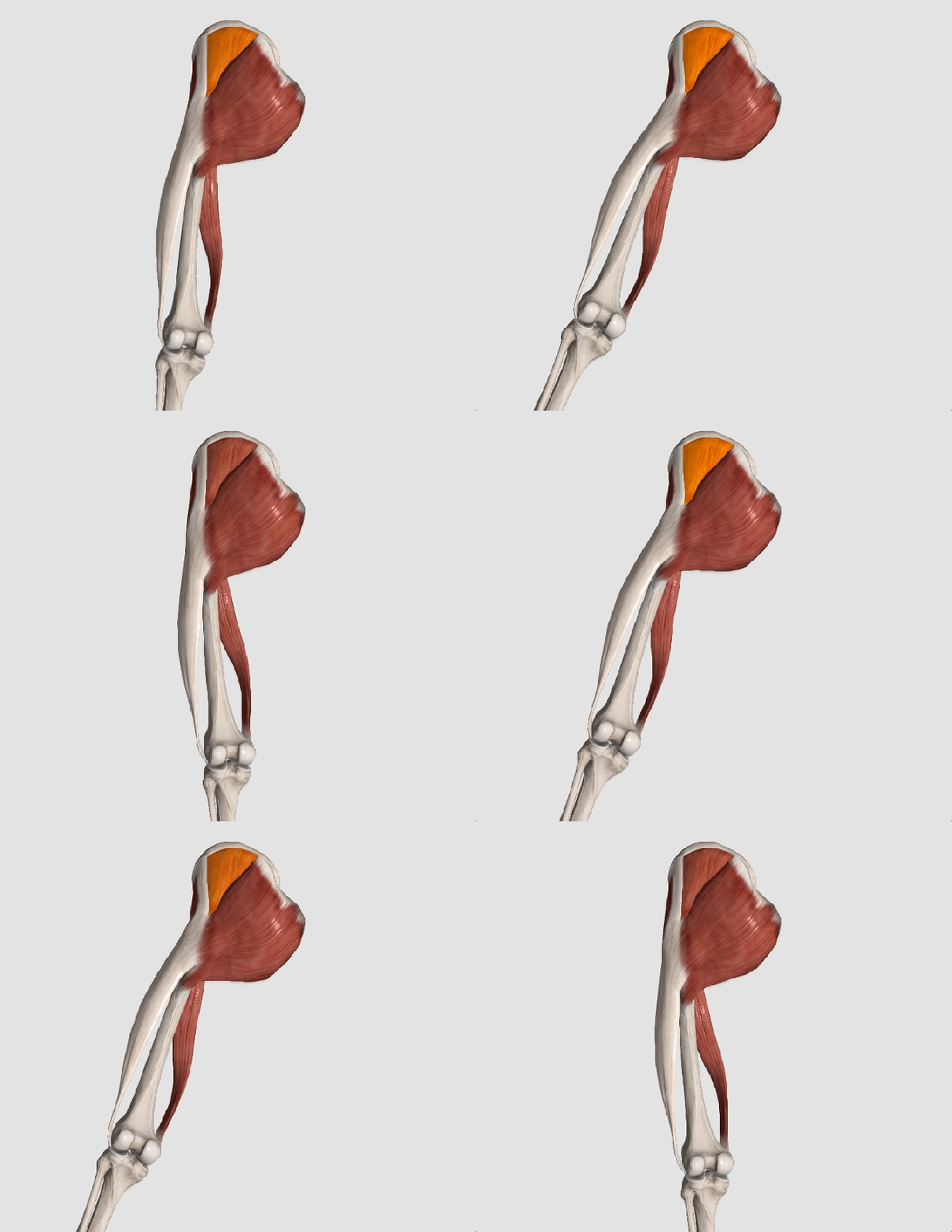
Hip Abduction.gif

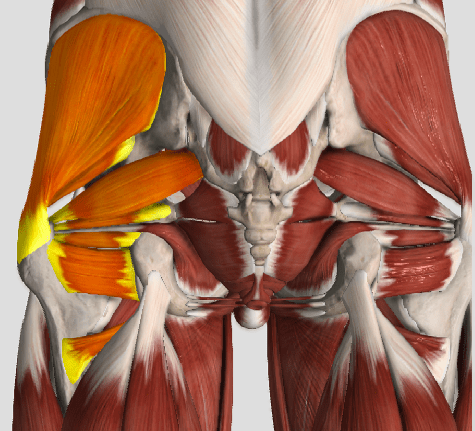
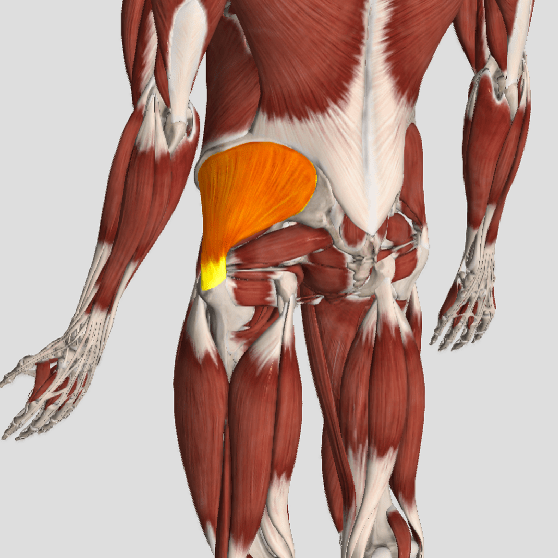
The gluteus medius is the principal hip abductor. When the hip is flexed, the muscle also assists the six deep hip external rotators (piriformis, gemelli, obturators, and quadratus femoris). The gluteus medius originates on the ilium just inferior to the iliac crest and inserts on the lateral and superior aspects of the greater trochanter. While the principal declared action of the gluteus medius is hip abduction, clinicians will appreciate its more valuable contribution as a dynamic stabilizer of the hip and pelvis- particularly during single leg stance activities like walking, running, and squatting. The gluteus medius contributes approximately 70% of the abduction force required to maintain pelvic leveling during single leg stance. The remainder comes predominantly from 2 muscles that insert onto the iliotibial band: the tensor fascia lata and upper gluteus maximus.  Hip abductor strength is the single greatest contributor to lower extremity frontal plain alignment during activity. (6)
Screen Shot 2017-10-31 at 11.12.00 AM

Incompetent hip abductors and/or external rotators allows for excessive adduction and internal rotation of the thigh during single leg stance activities. This leads to a cascade of biomechanical problems, including pelvic drop, excessive hip adduction, excessive femoral internal rotation, valgus knee stress, and internal tibial rotation. (1,7-12)

 

References
1. Szu-Ping Lee, Powers C. Description of a Weight-Bearing Method to Assess Hip Abductor and External Rotator Muscle Performance. JOSPT. Volume 43, Issue 6
2. Crossley KM, Zhang WJ, Schache AG, Bryant A, Cowan SM. Performance on the single-leg squat task indicates hip abductor muscle function. Am J Sports Med. 2011;39:866-873.
3. Presswood L, Cronin J, Keogh JWL, Whatman C. Gluteus medius: applied anatomy, dysfunction, assessment, and progressive strengthening. Strength Cond J. 2008;30:41-53.
4. Sled EA, Khoja L, Deluzio KJ, Olney SJ, Culham EG. Effect of a home program of hip abductor ex- ercises on knee joint loading, strength, function, and pain in people with knee osteoarthritis: a clinical trial. Phys Ther. 2010;90:895-904.
5. van der Krogt MM, Delp SL, Schwartz MH How robust is human gait to muscle weakness? Gait Posture. 2012 Feb 29.
6. Laurie Stickler, Margaret Finley, Heather Gulgin Relationship between hip and core strength and frontal plane alignment during a single leg squat Physical Therapy in Sport Available online 2 June 2014
7. Ireland ML, Willson JD, Ballantyne BT, Davis
IM. Hip strength in females with and without patellofemoral pain. J Orthop Sports Phys Ther. 2003;33:671-676.
8. Noehren B, Davis I, Hamill J. ASB clinical biome- chanics award winner 2006: prospective study of the biomechanical factors associated with iliotib- ial band syndrome. Clin Biomech (Bristol, Avon). 2007;22:951-956.
9. Powers CM. The influence of abnormal hip me- chanics on knee injury: a biomechanical perspec- tive. J Orthop Sports Phys Ther. 2010;40:42-51.
10. Powers CM. The influence of altered lower- extremity kinematics on patellofemoral joint dysfunction: a theoretical perspective. J Orthop Sports Phys Ther. 2003;33:639-646.
11. Sigward SM, Powers CM. Loading characteristics of females exhibiting excessive valgus moments during cutting. Clin Biomech (Bristol, Avon). 2007;22:827-833
12. Souza RB, Powers CM. Differences in hip kine- matics, muscle strength, and muscle activation between subjects with and without patellofemo- ral pain. J Orthop Sports Phys Ther. 2009;39:12- 19.

Why trigger point therapy?

People often think of a massage as a relaxing experience, something they might do occasionally, or give as a gift along with a trip to the spa. Trigger point massage therapy is another kind of massage used to treat pain and physical dysfunction. Trigger points can develop in people from all walks of life. They can affect people of all ages, office workers and labourers, elite and weekend athletes, post surgical patients, people with acute pain from injury and people with chronic pain. Trigger point massage therapy can treat a wide variety of physical conditions such as:

– Migraines

– back pain.

– sciatica

– Carple tunnel syndrome

– achy persistent pain

– pain from Fibromyalgia

– post surgical pain and scarring

– soft tissue injuries related to sports

– TMJ dysfunction

Myofascial trigger points and pain.

TP’s were first brought to the attention of the medical world by Dr. Janet G. Travell. Dr. Travell, physician to President John F. Kennedy, is the acknowledged Mother of Myofascial Trigger Points. In fact, “Trigger Point massage, the most effective modality used by massage therapists for the relief of pain, is based almost entirely on Dr. Travell’s insights.”2 Dr. Travell’s partner in her research was Dr. David G. Simons, a research scientist and aerospace physician.

Trigger Points are very common. In fact, Travell and Simons state that TP’s are responsible for, or associated with, 75% of pain complaints or conditions.1 With this kind of prevalence, it’s no wonder that TP’s are often referred to as the “scourge of mankind”.

Trigger Points can produce a wide variety of pain complaints. Some of the most common are migraine headaches, back pain, and pain and tingling into the extremities. They are usually responsible for most cases of achy deep pain that is hard to localize.

A TP will refer pain in a predictable pattern, based on its location in a given muscle. Also, since these spots are bundles of contracted muscle fibres, they can cause stiffness and a decreased range of motion. Chronic conditions with many TP’s can also cause general fatigue and malaise, as well as muscle weakness.

Trigger point massage

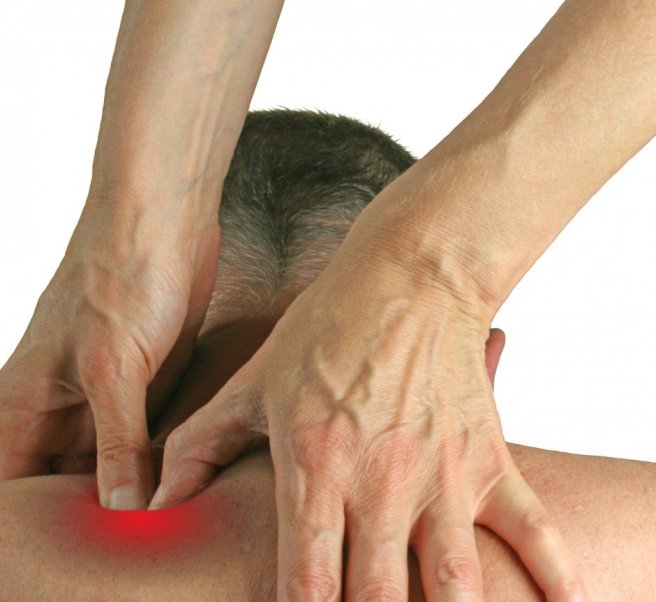
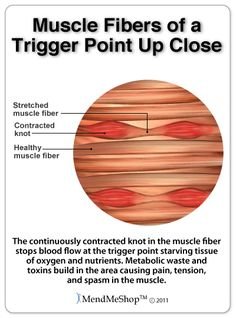
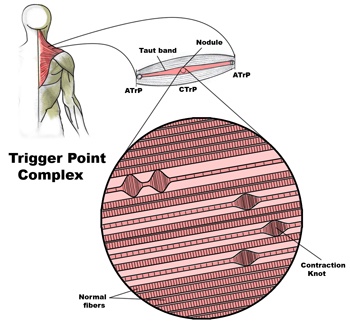
Trigger points are contracted knots in muscles. They form from overload stress causing muscle fibers to become locked together in a self perpetuateing spasm. Trigger points will then produce pain, usually deep achy pain, as well as refered pain. Because of the contraction of the tissue trigger points will also produce stiffness and weakness. Trigger points are also known to mimick other symptoms such as Carple tunnel, and sciatica symptoms. Trigger points are one of, if not the most common cause of pain in the body. Regular massage therapy is not specific or deep enough to release trigger points, a specific technique of applying deep focused pressure to the heart of the knot is required for the point to release. This is called trigger point massage.

Trigger point massage.

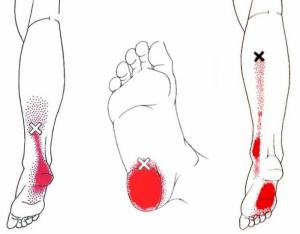
Myofascial trigger points are contracted knots in muscle tissue. They are one of the most common causes of pain in the body. Most people will experience pain from trigger points at some point in there lives. Trigger point pain is usually felt as a deep achey pain. This pain may be refered In a specific pattern to other areas of the body. For example, trigger points in your hip can refer pain all the way down the leg into the foot. Trigger points will also mimick joint pain leading to misdiagnosis of arthritis. Trigger point massage therapy targets the knots specifically with focused deep work to release the area and allow the muscle to heal. Visit http://www.triggerpointmassagetherapy.info or http://www.aberdeenchiropractic.com for more information.

Planter fascitis and trigger points

Planter fascitis is a painful condition affecting the bottoms of the feet. It involves inflammation and tightness of the planter fascia, which is a tough layer of connective tissue on the bottoms of the feet. Trigger points in the calf and foot muscles are a leading cause of planter fascitis. These points not only cause the muscle to become tight which in turn causes the fascia to be tight, but the trigger point pain referral patterns of these muscle will cause pain to be felt in the bottoms of the feet and heal. These causes are often overlooked leading to ineffective treatment and prolonged suffering.

Myofascial pain syndrome

Myofascial pain syndrome is caused by a stimulus, such as muscle tightness, that sets off trigger points in your muscles. Factors that may increase your risk of muscle

trigger points include:

  • Muscle injury. An acute muscle injury or continual muscle stress may lead to the development of trigger points. For example, a spot within or near a strained muscle may become a trigger point. Repetitive motions and poor posture also may increase your risk.
  • Stress and anxiety. People who frequently experience stress and anxiety may be more likely to develop trigger points in their muscles. One theory holds that these people may be more likely to clench their muscles, a form of repeated strain that leaves muscles susceptible to trigger point

What is myofascial pain syndrome?

Myofascial pain syndrome is a chronic pain disorder. In this condition, pressure on sensitive points in your muscles (trigger points) causes pain in the muscle and sometimes in seemingly unrelated parts of your body. This is called referred pain.

This syndrome typically occurs after a muscle has been contracted repetitively. This can be caused by repetitive motions used in jobs or hobbies or by stress-related muscle tension.

Trigger points can be found in all soft tissue.

Trigger points don’t just form in muscles. Any soft tissue or connective tissue can become damaged and develop trigger points. Once a trigger point has formed it will produce a large variety of painful symptoms. Visit http://www.aberdeenchiropractic.com for more information on trigger points and trigger point massage therapy.

Trigger point massage therapy.

Trigger points are hyper irritable knots found in muscle tissue. These points form in a muscle due to overload stress. Trigger points can form anywhere, in any muscle. Once formed they irritate sensory nerves and produce pain, refered pain, weakness, and stiffness. Trigger points will also mimic symptoms of other conditions such as “sciatica” or Carple tunnel syndrome. Trigger points will not go away on there own, they must be manually released with hands on techniques like trigger point massage.