
The sternalis muscle is a little known muscle located at the sternum. This muscle seems to be vestigial in that it doesn’t have a known function. In originates on the superior portion of the sternum and the upper part of the pectoralis muscle. It’s insertion is the cartilage of ribs 3-7, or sometimes the sheath of the rectus abdominis, or the lower part of pectoralis major. Even though this muscle doesn’t seem to have a purpose anymore it can still harbour trigger points. These points will cause pain to be felt intensely deep in the sternum, with spillover pain radiating down the inside of the arm.
Chiropractic
Trigger points in the trapezius muscle
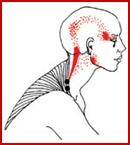
The trapezius muscle is a large diamond shaped muscle in your upper and middle back and neck. It it responsible for both shoulder and neck movements. Trigger points in the upper portion of this muscle are the most common points to develop in the body. These trigger points most often occur due to poor posture, such as a slumped sitting posture. Trigger points in the upper portion of the traps will cause pain to refer into the neck, head, and into the temple. These points are one of the most common causes of headaches.
Why trigger point therapy?
People often think of a massage as a relaxing experience, something they might do occasionally, or give as a gift along with a trip to the spa. Trigger point massage therapy is another kind of massage used to treat pain and physical dysfunction. Trigger points can develop in people from all walks of life. They can affect people of all ages, office workers and labourers, elite and weekend athletes, post surgical patients, people with acute pain from injury and people with chronic pain. Trigger point massage therapy can treat a wide variety of physical conditions such as:
– Migraines
– back pain.
– sciatica
– Carple tunnel syndrome
– achy persistent pain
– pain from Fibromyalgia
– post surgical pain and scarring
– soft tissue injuries related to sports
– TMJ dysfunction

Achy pain in the shoulder blade??
One of the most common causes of achy restless shoulder blades is trigger points in the rhomboid muscles. these muscles are responsible for pulling your shoulder blades back, and are often overloaded from poor shoulder posture. These muscles are very common areas to develop trigger points. Once there they will produce a persistent deep achy pain along the inside of the shoulder blade.

Trigger points in the supraspinatus muscle.
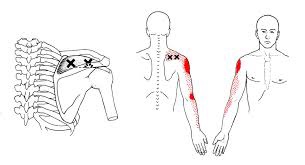
The supraspinatus muscle is a small muscle that helps make up the rotator cuff. It is responsible for shoulder stability as well as lateral rotation of the arm, and help initiate abduction of the shoulder. This muscle can become injured from overhead movements of the shoulder such as painting a ceiling or throwing movements. When this happens trigger points will form producing pain felt in the shoulder, and down the arm. These points will also cause weakness and stiffness. Trigger points must be released for the area to heal.
Planter fascitis and trigger points
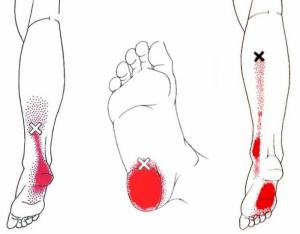
Planter fascitis is a painful condition affecting the bottoms of the feet. It involves inflammation and tightness of the planter fascia, which is a tough layer of connective tissue on the bottoms of the feet. Trigger points in the calf and foot muscles are a leading cause of planter fascitis. These points not only cause the muscle to become tight which in turn causes the fascia to be tight, but the trigger point pain referral patterns of these muscle will cause pain to be felt in the bottoms of the feet and heal. These causes are often overlooked leading to ineffective treatment and prolonged suffering.
Myofascial pain syndrome
Myofascial pain syndrome is caused by a stimulus, such as muscle tightness, that sets off trigger points in your muscles. Factors that may increase your risk of muscle

trigger points include:
- Muscle injury. An acute muscle injury or continual muscle stress may lead to the development of trigger points. For example, a spot within or near a strained muscle may become a trigger point. Repetitive motions and poor posture also may increase your risk.
- Stress and anxiety. People who frequently experience stress and anxiety may be more likely to develop trigger points in their muscles. One theory holds that these people may be more likely to clench their muscles, a form of repeated strain that leaves muscles susceptible to trigger point
What is myofascial pain syndrome?
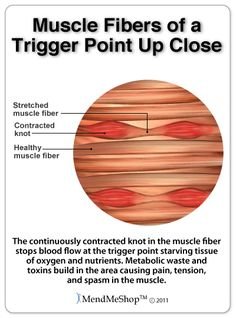
Myofascial pain syndrome is a chronic pain disorder. In this condition, pressure on sensitive points in your muscles (trigger points) causes pain in the muscle and sometimes in seemingly unrelated parts of your body. This is called referred pain.
This syndrome typically occurs after a muscle has been contracted repetitively. This can be caused by repetitive motions used in jobs or hobbies or by stress-related muscle tension.
Trigger points in the temporalis muscle
The temporalis muscle is located on the sides of the skull at the temple. This muscle assists in jaw movements for chewing and talking etc. This muscle can become overworked from excessive clenching of the jaw and grinding of the teeth from stress. Poor neck posture can also stress the muscles of the jaw. When this happens trigger points can form. These points can refer pain into the temple, skull, and face. These trigger points can also cause tooth sensitivity and pain.

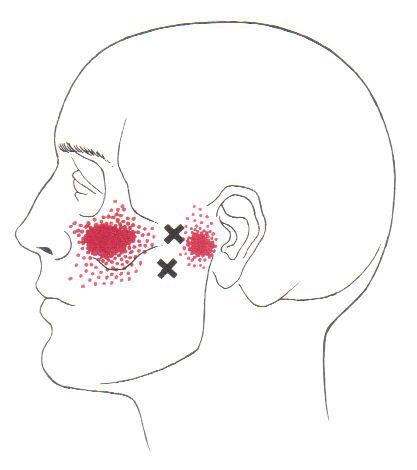
Trigger points in the lateral pterygoid.
The lateral pterygoid muscle is involved in movement of the jaw. It can become become strained from chronic clenching of the jaw and grinding of the teeth. When this happened trigger points can form. This leads not only to pain and refered pain, but also dysfunctional joint mechanics. This muscle is a major player in TMJ dysfunction syndrome.
 Aberdeen Chiropractic