

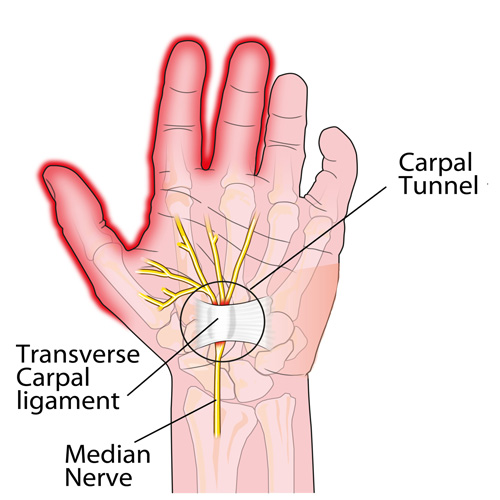
Carpal Tunnel Syndrome (CTS) is the leading cause of numbness to the middle three fingers and thumb and affects millions of Americans each year. There are MANY potential causes of CTS, and these causes can be unclear or multi-factorial. We have discussed the importance of night splints and what chiropractic can do for CTS in the recent past. This month, let’s look at what YOU can do for CTS.
“Self-help” concepts are VERY important as they empower YOU to gain control of your condition’s signs and symptoms, thus placing less reliance on those of us who manage (in this case) CTS. There is a time for “PRICE” or, Protect, Rest, Ice, Compress, Elevate, such as when most activities make symptoms worse. This is the time for splinting, reducing activities of daily living (which sometimes includes work restrictions), and the use of ice cupping or massage. Patients should initiate movement or exercise-based approaches as soon as such activities can be tolerated. Here are four different exercises you can do:
1. Fist / “Bear Claw” / Open Wide Hand: This is a three-step exercise, and you can start or stop on any of the three “steps.” A. FIST: Make a fist and squeeze as tightly as tolerated; B. BEAR CLAW: Starting from the fist position (A), open only the palm of the hand (keep your thumb and fingers bent but straighten the big knuckle joints at the base of the fingers); C. OPEN WIDE: Straighten and spread ALL your finger joints by opening up your hand as much as possible and feel for a good stretch in the palm. HOLD each position for one to five seconds (vary the “speed” of moving between the three positions – fast, medium, and slow; emphasize what feels best if you have a preference). Repeat five to ten times or until your hands feel looser.
2. “Church Steeple”: Place your hands together in front of you (“prayer position”) touching the pads of the thumbs and all four fingertips together and spread your fingers as wide as possible. Next, separate your palms as far as you can while applying pressure against your finger/thumb tips and repeat. Alter the speed and number of repetitions until your hands feel stretched out.
3. “Shake and Flick”: Simply shake your hands as if you just washed them and you’re shaking the water off to “air dry” them. Again, alter the speed and reps until they feel loosened up.
4. Forearm Stretches: Place one arm out in front, elbow straight, and fingers pointed straight, palm up (first set). Reach with the opposite hand and pull the fingers, hand, and wrist down and back towards you until you feel a strong “pull” in your forearm muscles. Hold until the forearm muscles feels stretched (5-10 seconds). Repeat this with the palm facing down for the second set to stretch the opposite (extensor) forearm muscles.
Do these on each side two to three times each (even the “good” side) EVERY HOUR (or as often as possible). Think about what you do on a daily basis and if you work in a repetitive manner (on the job or a hobby at home), try to do these exercises DURING THE REPETITIVE ACTIVITY to help keep your symptoms from getting out of control. If you can alter the position or speed of a work or avocational activity, do so for long-term prevention purposes!
If you cannot gain control of your CTS condition, you may need additional treatment options of which chiropractic offers a safe, non-surgical approach.
We realize you have a choice in whom you consider for your health care provision and we sincerely appreciate your trust in choosing our service for those needs. If you, a friend, or family member requires care for Carpal Tunnel Syndrome, we would be honored to render our services.




 Aberdeen Chiropractic