What Causes Low Back Pain?

236

Low back pain (LBP) can arise from disks, nerves, joints, and the surrounding soft tissues.
To simplify the task of determining “What is causing my LBP?” the Quebec Task Force recommends that LBP be divided into three main categories: 1) Mechanical LBP; 2) Nerve root related back pain; and 3) Pathology or fracture. We will address the first two, as they are most commonly managed by chiropractors.
Making the proper diagnosis points your doctor in the right direction regarding treatment. It avoids time wasted by treating an unrelated condition, which runs the risk of increased chances of a poor and/or prolonged recovery. Low back pain is no exception! The “correct” diagnosis allows treatment to be focused and specific so that it will yield the best results.
Mechanical low back pain is the most commonly seen type of back pain, and it encompasses pain that arises from sprains, strains, facet and sacroiliac (SI) syndromes, and more. The main difference between this and nerve root-related LBP is the ABSENCE of a pinched nerve. Hence, pain typically does NOT radiate, and if it does, it rarely goes beyond the knee and normally does not cause weakness in the leg.
The mechanism of injury for both types of LBP can occur when a person does too much, maintains an awkward position for too long, or over bends, lifts, and/or twists. However, LBP can also occur “insidiously” or for seemingly no reason at all. However, in most cases, if one thinks hard enough, they can identify an event or a series of “micro-traumas” extending back in time that may be the “cause” of their current low back pain issues.
Nerve root-related LBP is less common but it is often more severe—as the pain associated with a pinched nerve is often very sharp, can radiate down a leg often to the foot, and cause numbness, tingling, and muscle weakness. The location of the weakness depends on which nerve is pinched. Think of the nerve as a wire to a light and the switch of the nerve is located in the back where it exits the spine. When the switch is turned on (the nerve is pinched), and the “light” turns on—possibly in the outer foot, middle foot, inner foot, or front, back or side of the thigh. In fact, there are seven nerves that innervate or “run” into our leg, so usually, a very specific location “lights up” in the limb.
Determining the cause of your low back pain helps your doctor of chiropractic determine which treatments may work best to alleviate your pain as well as where such treatments can be focused.
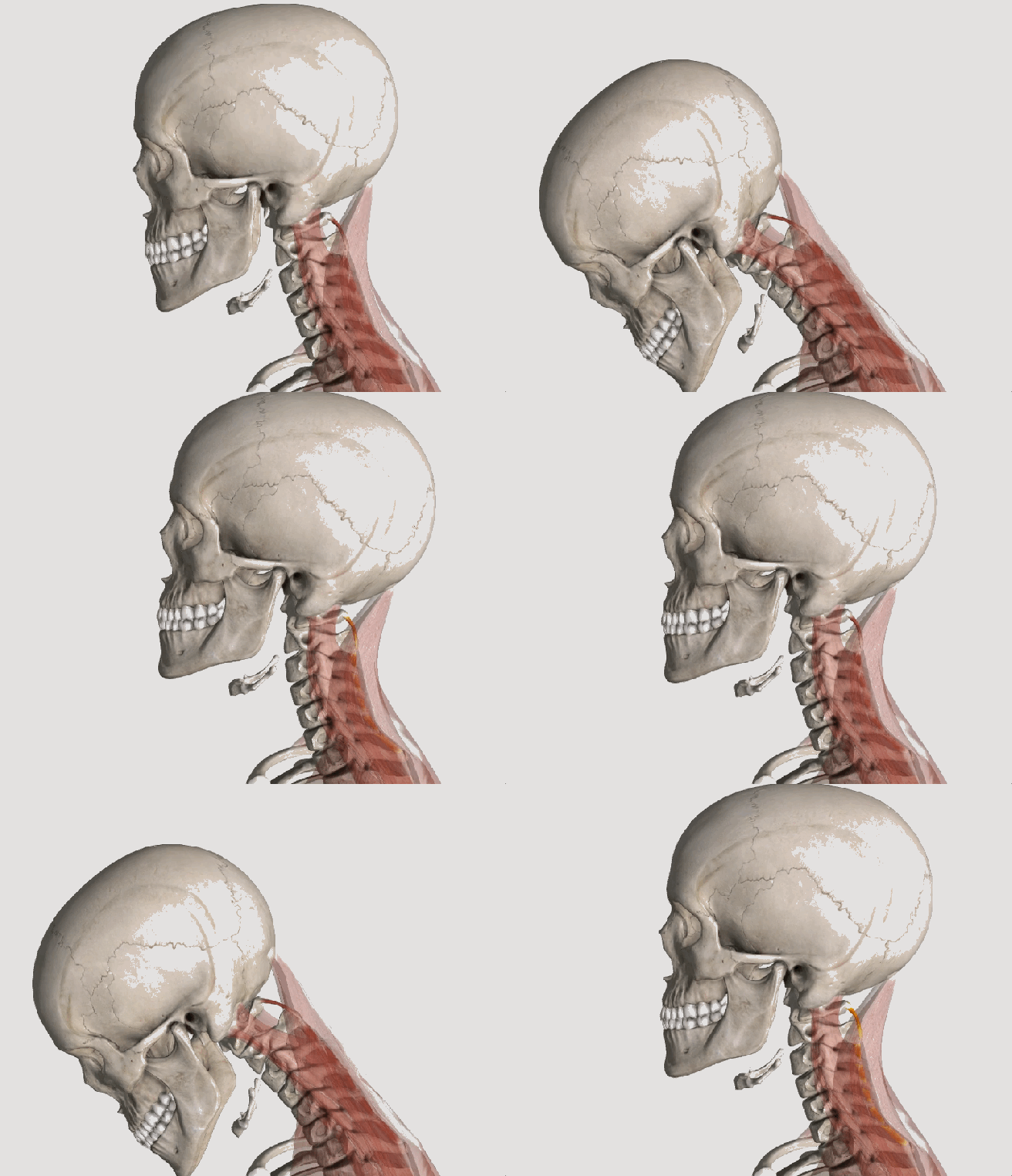
Whiplash and Your Posture

WRD 2.gif

Posture assessment is a key component of the chiropractic examination, and the posture of the head and neck is especially important for a patient recovering from a whiplash injury. Forward head carriage describes a state in which the head sits more forward on the shoulders than it should. In order for the muscles in the neck and shoulders to keep the head upright, they must work harder. This added strain can increase one’s risk for neck pain and headaches, which is why retraining posture is a key component to the management of neck pain and headaches in patients with or without a history of whiplash.

Forward head carriage also increases the distance between the back of the head and the headrest in the seated position, especially when the seat is reclined. In a rear-end collision, a gap greater than a half an inch between the head rest and the back of the head increases the probability of injury due to the greater distance the head can hyperextend as it rebounds backwards into the headrest.  This makes posture correction of forward head carriage an important aspect of treatment from both a preventative and curative perspective.

So this begs the question, can forward head carriage be corrected?  The simple answer is “yes!” One study evaluated the effects of a 16-week resistance and stretching program designed to address forward head posture and protracted shoulder positioning.

Researchers conducted the study in two separate secondary schools with 130 adolescents aged 15–17 years with forward head and protracted shoulder posture. The control group participated in a regular physical education (PE) program while the experimental group attended the same PE classes with the addition of specific exercises for posture correction. The research ream measured the teens’ shoulder head posture from the side using two different validated methods and tracked symptoms using a questionnaire. The results revealed a significant improvement in the shoulder and cervical angle in the experimental group that did not occur in the control group.

The conclusion of the study strongly supports that a 16-week resistance and stretching program is effective in decreasing forward head and protracted shoulder posture in adolescents.  This would suggest that a program such as this should be strongly considered in the regular curriculum of PE courses since this is such a common problem.

Doctors of chiropractic are trained to evaluate and manage forward head posture with shoulder protraction. This can prove beneficial in both the prevention as well as management of signs and symptoms associated with a whiplash injury.

What is Whiplash?

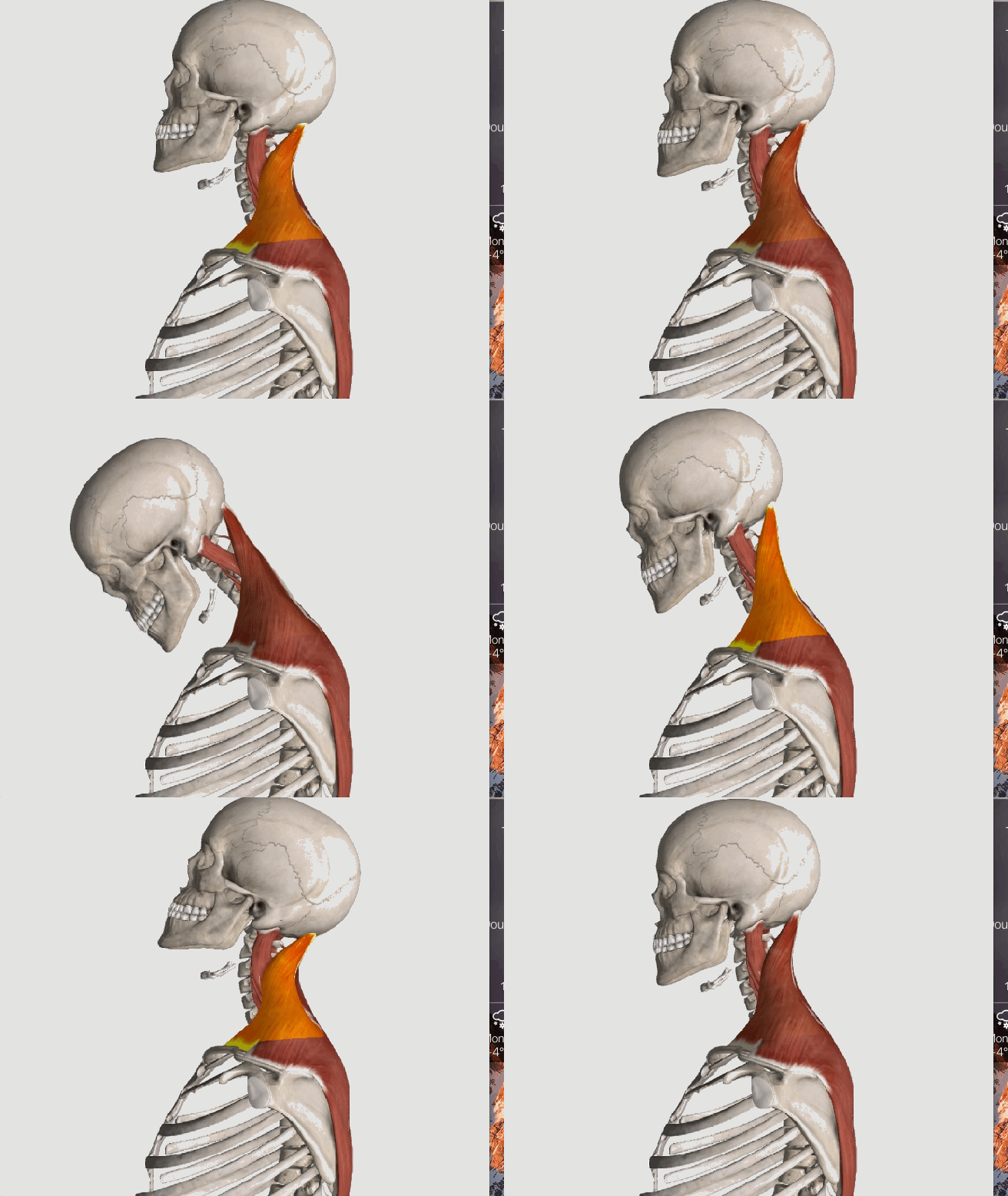
Up Trap Ext

Whiplash is an injury to the soft-tissues of the neck often referred to as a sprain or strain. Because there are a unique set of symptoms associated with whiplash, doctors and researchers commonly use the term “whiplash associated disorders” or WAD to describe the condition.

WAD commonly occurs as a result of a car crash, but it can also result from a slip and fall, sports injury, a personal injury (such as an assault), and other traumatic causes. The tissues commonly involved include muscle tendons (“strain”), ligaments and joint capsules (“sprains”), disk injuries (tears, herniation), as well as brain injury or concussion—even without hitting the head!

Symptoms vary widely but often include neck pain, stiffness, tender muscles and connective tissue (myofascial pain), headache, dizziness, sensations such as burning, prickly, tingling, numbness, muscle weakness, and referred pain to the shoulder blade, mid-back, arm, head, or face. If concussion occurs, additional symptoms include cognitive problems, concentration loss, poor memory, anxiety/depression, nervousness/irritability, sleep disturbance, fatigue, and more!

Whiplash associated disorders can be broken down into three categories: WAD I includes symptoms without any significant examination findings; WAD II includes loss of cervical range of motion and evidence of soft-tissue damage; and WAD III includes WAD II elements with neurological loss—altered motor and/or sensory functions. There is a WAD IV which includes fracture, but this is less common and often excluded.

Treatment for WAD includes everything from doing nothing to intensive management from multiple disciplines—chiropractic, primary care, physical therapy, clinical psychology, pain management, and specialty services such as neurology, orthopedics, and more. The goal of treatment is to restore normal function and activity participation, as well as symptom management.

The prognosis of WAD is generally good as many will recover without residual problems within days to weeks, with most people recovering around three months after the injury. Unfortunately, some are not so lucky and have continued neck pain, stiffness, headache, and some develop post-concussive syndrome. The latter can affect cognition, memory, vision, and other brain functions. Generally speaking, the higher the WAD category, the worse the prognosis, although each case MUST be managed by its own unique characteristics. If the injury includes neurological loss (muscle strength and/or sensory dysfunction like numbness, tingling, burning, pressure), the prognosis is often worse.

Chiropractic care for the WAD patient can include manipulation, mobilization, and home-based exercises, as well as the use of anti-inflammatory herbs (ginger, turmeric, proteolysis enzymes (bromelain, papain), devil’s claw, boswellia extract, rutin, bioflavonoid, vitamin D, coenzyme Q10, etc.) and dietary modifications aimed at reducing inflammation and promoting healing.

* 83% of those patients involved in an MVA will suffer whiplash injury and 50% will be symptomatic at 1 year.
* 90% of patients with neurologic signs at onset may be symptomatic at 1 year.
* 25- 80% of patients who suffer a whiplash injury will experience late-onset dizziness
* Clinicians should be observant for radiographic signs of instability, including interspinous widening, vertebral subluxation, vertebral compression fracture, and loss of cervical lordosis.
* Horizontal displacement of greater than 3.5 mm or angular displacement of more than 11 degrees on flexion/extension views suggests instability

I have Low Back Pain. Why?

265

Low back pain (LBP) can arise from disks, nerves, joints, and the surrounding soft tissues. To simplify the task of determining “What is causing my LBP?” the Quebec Task Force recommends that LBP be divided into three main categories: 1) Mechanical LBP; 2) Nerve root related back pain; and 3) Pathology or fracture. We will address the first two, as they are most commonly managed by chiropractors.
Making the proper diagnosis points your doctor in the right direction regarding treatment. It avoids time wasted by treating an unrelated condition, which runs the risk of increased chances of a poor and/or prolonged recovery. Low back pain is no exception! The “correct” diagnosis allows treatment to be focused and specific so that it will yield the best results.
Mechanical low back pain is the most commonly seen type of back pain, and it encompasses pain that arises from sprains, strains, facet and sacroiliac (SI) syndromes, and more. The main difference between this and nerve root-related LBP is the ABSENCE of a pinched nerve. Hence, pain typically does NOT radiate, and if it does, it rarely goes beyond the knee and normally does not cause weakness in the leg.
The mechanism of injury for both types of LBP can occur when a person does too much, maintains an awkward position for too long, or over bends, lifts, and/or twists. However, LBP can also occur “insidiously” or for seemingly no reason at all. However, in most cases, if one thinks hard enough, they can identify an event or a series of “micro-traumas” extending back in time that may be the “cause” of their current low back pain issues.
Nerve root-related LBP is less common but it is often more severe—as the pain associated with a pinched nerve is often very sharp, can radiate down a leg often to the foot, and cause numbness, tingling, and muscle weakness. The location of the weakness depends on which nerve is pinched. Think of the nerve as a wire to a light and the switch of the nerve is located in the back where it exits the spine. When the switch is turned on (the nerve is pinched), and the “light” turns on—possibly in the outer foot, middle foot, inner foot, or front, back or side of the thigh. In fact, there are seven nerves that innervate or “run” into our leg, so usually, a very specific location “lights up” in the limb.
Determining the cause of your low back pain helps your doctor of chiropractic determine which treatments may work best to alleviate your pain as well as where such treatments can be focused.
Fibromyalgia and Sleep

Is there a connection between fibromyalgia (FM) and sleep disturbance? Let’s take a look!

FM is a condition that causes widespread pain and stiffness in muscles and joints. Patients with FM often experience chronic daytime fatigue and some type of sleep problems like getting to sleep, staying asleep, and/or feeling restored in the morning upon waking. The National Institutes of Health estimates between 80-90% of those diagnosed with FM are middle-aged women, although it can affect men and happen at any age. As little as 10-20 years ago, it was hard to find a doctor who “believed” in FM, and it was common for the patient to be told that their pain “was all in their head.” FM has now been studied to the point that we know it is a real condition, and it affects between 2-6% of the general population around the world.

It is well established that sleep disturbance frequently occurs after surgery, which usually normalizes as time passes. One study used a group of healthy women who were deprived of sleep (particularly slow wave sleep) for three days to see if there was a link between sleep disturbance and pain. Results confirmed that the women experienced a decrease in pain tolerance and increased levels of discomfort and fatigue after three days—the same symptoms found among FM sufferers!

Fibromyalgia may have NO known cause, or it can be triggered by other conditions such as repetitive stress injuries, car crash injuries, and other forms of trauma. FM also appears to run in families though it’s still NOT clear if this is a true genetic link or caused by shared environmental factors. Some feel FM is a rheumatoid condition, and though FM is NOT a true form of arthritis, it has been found that people with arthritis are more likely to have FM.

FM sufferers frequently suffer from conditions such as irritable bowel syndrome, chronic fatigue syndrome, migraine headaches, arthritis, lupus, and major depressive disorders. Approximately 20% of FM patients have depression and/or anxiety disorders, and a link between chronic pain and depression exists and seems to play a role in people’s perception of pain.

Because conditions such as sleep apnea can result in symptoms similar to FM, it’s recommended that patients suspected of FM keep a sleep/sleepiness diary in order to rule out sleep apnea as a cause for their condition.

There are many “tips” for improving sleep quality, which we will dive into next month, as these may prove VERY HELPFUL in the management of FM!

If you, a friend or family member requires care for Fibromyalgia, we sincerely appreciate the trust and confidence shown by choosing our services!

Non-surgical Options

CTS SUrgery

Continuing with our information on Carpal Tunnel Syndrome, today we will look at non-surgical treatment approaches for carpal tunnel syndrome (CTS) aim to remove pressure on the median nerve where it’s pinched. In a recent review of the literature published on “passive modalities” (non-surgical treatment approaches) for CTS, researchers reviewed studies published between 1990 and 2015 for information on which non-surgical treatment approaches work best. Topping the list is the use of various types of night splints – wrist braces worn at night to prevent bending of the wrist during sleep. The evidence found that night splints were less effective than surgery in the short-term (up to six months) but more effective over the long-term (at 12 and 18 months)!
They did not find studies with a “low risk of bias” (no randomized controlled trial-types of studies) regarding other passive modalities such as ultrasound and electrical stim and hence, they conclude that better quality studies must be conducted before conclusions can be made regarding most of the passive modalities frequently utilized in the management of CTS.
A 2010 study found mobilization treatments and exercises (tendon gliding & nerve gliding) were helpful WHEN patients complied with the treatments and the recommended exercises. Manual therapies, or “hands-on” treatments, are a feature of chiropractic care. Chiropractic treatment for patients with CTS also includes night bracing in addition to manipulation, mobilization, exercise training, nutrition, and ergonomic / workstation modifications, and whole body health awareness.
Doctors of chiropractic understand these non-surgical approaches have limitations. This is why they work with allied healthcare providers when pharmaceutical and/or surgical intervention is appropriate. They may also frequently consult with neurologists for tests such as EMG/NCV (an electrical test that measures the degree of nerve damage) to better understand the patient’s condition. In short, chiropractic offers a multi-modal approach of care, and chiropractors will work with others in the patient’s best interest.
We realize you have a choice in whom you consider for your health care provision and we sincerely appreciate your trust in choosing our service for those needs.  If you, a friend, or family member requires care for Carpal Tunnel Syndrome, we would be honored to render our services.

8 Safety Tips to Prevent Falls

8 tips

When the rain and snow starts to fall, so do people. In fact, falls are the leading cause of nonfatal injuries in adults 45 and older. Protect yourself from a life-changing injury this winter with these 8 safety tips.

1. Choose the right shoe. Shoes and boots need to fit properly and have soles with good traction. Snow boots or hiking boots will provide the best protection for the worst type of weather.

2. Leave early. Falls are more likely to happen when you’re in a rush. Allow yourself plenty of time to get to where you’re going.

3. Walk like a penguin. Take short steps and walk as flat-footed as possible on icy or slippery ground.

4. Keep your hands free. You’ll need them to help you balance, so avoid carrying heavy loads and keep those hands out of your pockets.

5. Remove snow and ice from walkways frequently. Don’t wait for it to melt. That could take awhile. Apply ice melt and ask for help if you need it.

6. Keep the lights on. If you have exterior lights on your home, use them to help see where you’re walking at night.

7. Advocate for your safety. If the entrances or sidewalks do not look safe outside of a business or a local venue, speak up and let someone know.

8. Keep your cell phone with you. Even if it’s just on a trip to the mailbox, bring it. In the event that a fall does occur, you may need it to call someone for help.


Stay vigilant and remember these tips during this winter season. If you are injured from a fall, count on our office to help get you back on your feet quickly.