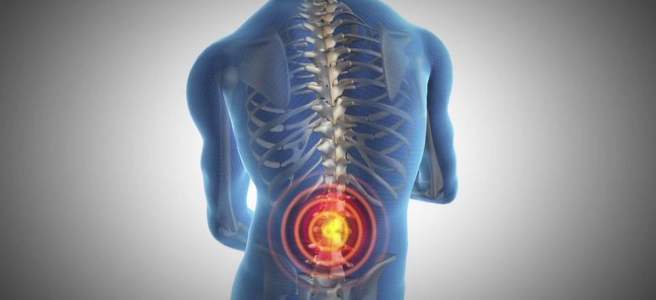
Which Low Back Pain Treatment Is Best?

316046269_1280x720


For patients with chronic low back pain (cLBP), treatment guidelines recommend a non-surgical approach as the FIRST-LINE treatment. Ideally, the goal would be to avoid an initial surgery unless it’s absolutely indicated. That means, unless there is loss of bowel or bladder control or retention (which represents a medical emergency) or if there is progressive neurological motor and sensory loss, one can safely avoid surgery and conservatively manage the condition.
Interestingly enough, a systematic review of the results from three randomized controlled studies carried out in Norway and the United Kingdom found the outcomes or results between the surgical fusion vs. non-surgical treatment of patients with cLBP showed NO DIFFERENCE at an 11-year follow-up!
Studies have shown chiropractic to be highly beneficial for acute and chronic low back pain cases.


In one study, researchers reviewed data on 72,326 cLBP patients in the Medicare system who received one of four possible treatment combinations between 2006 and 2012: 1) chiropractic only; 2) chiropractic followed by conventional medical care (CMC); 3) CMC followed by chiropractic; 4) CMC alone.
The research team found that chiropractic care alone (group 1) resulted in the lowest costs, and these patients had lower rates of back surgery and shorter episodes of care.
The group receiving CMC alone (group 4) had the highest costs, with the second and third groups being similar—both costing less and being more effective than CMC alone.
The conclusion of the study reads, “These findings support initial CMT [chiropractic manipulative therapy] use in the treatment of, and possibly broader chiropractic management of, older multiply-comorbid cLBP patients.”
Collisions and Concussions


230


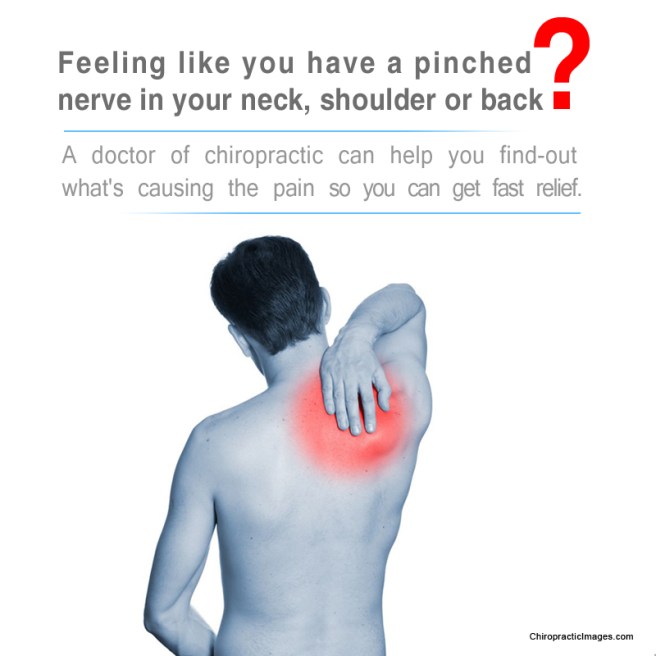
Similar to back pain, neck pain affects almost all of us at some point in life, and the severity can range from a mild stiffness to complete incapacitation. Chiropractic care offers a non-drug, non-surgical method of #treatment that MANY neck pain sufferers utilize and benefit from. The following is a description of what you can expect when treated with an evidence-based chiropractic approach.
Let’s first discuss the different types of #neckpain. One classification system divides neck pain into two main groups: acute and chronic. In the acute group, there is an onset of pain that comes on quickly and resolves in less than three months. Chronic neck pain represents the patients who continue to have neck pain longer than three months.
Studies show that patients experience immediate benefits—including pain reduction and mobility/range of motion (ROM) improvement—following cervical spinal manipulation, especially when administered on the same side as the neck pain. Short and medium-term benefits include pain reduction and ROM improvement when administered bilaterally (on both sides).
Multiple #manipulations may be better than unsupervised stretching alone. However, studies show that stretching the neck muscles both before and after manipulation can improve a patient’s outcome. The combination of three-point traction and multiple manipulations can improve pain in the medium and long-term as well.
Other approaches commonly used by chiropractors that immediately improve pain include mobilization, traction, trigger-point therapy (applying pressure over myofascial trigger points for 90 seconds), cervical pillows, and some modalities that include electric stimulation, ultrasound, low-powered #laser, and pulsed electromagnetic field.
Active care or care that can be taught to patients includes exercise intended to improve #pain and ROM in the medium and long-term. Exercises that emphasize strength and endurance can also be beneficial. Ongoing light and intensive exercise improves pain in the long-term and intensive #exercise is favored in the medium-term.


Hurt At Work?

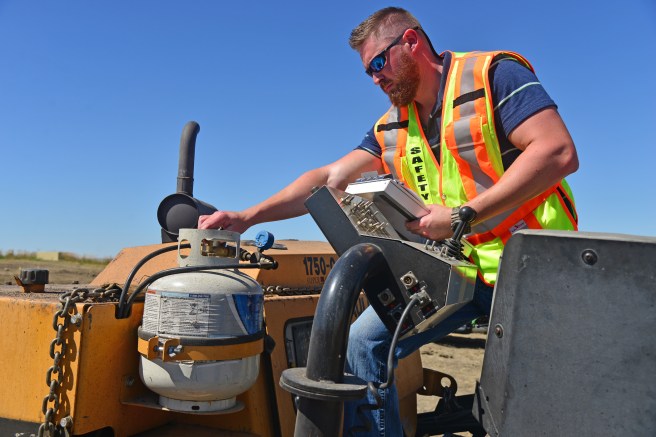
160801-F-DB969-034In Manitoba (Where we are located….. Different regions may have different requirements for reporting) the Worker’s Compensation Board is the body that insures workers when they are hurt on the job.

That being said, WCB has strict guidelines that need to be flowed in order to make the claim’s process simple, effective and stress free.

  1. Notify your employer! I can’t stress how important and how simple this is; if you get hurt (even if you think it’ll just go away) tell someone in charge. That can be your supervisor, your HR Department or the CEO. Just be sure to report it as close to the incident as possible…. No good comes from waiting it out for a few days.
  2. Notify WCB. Once your employer is aware, call WCB (In Winnipeg, call 204-786-8175. Outside Winnipeg, call toll free, 1-800-719-3809) and let them know what happened. The claim’s representative will walk you through the reporting process from there.
  3. Notify us! Contact us at 204-586-8424 for an initial WCB visit. We will go through the history of the incident and perform a full exam, diagnosis, report and treatment.
  4. Keep everyone in the loop. When you’re feeling better or if things change for the worse, let us all know so we can see our plan moving and get you back as quick as we can!

When followed in a timely and honest manner this process is an easy, stress free way to get you back to work in a safe, effective and timely manner.