

Don’t be afraid to look foolish.
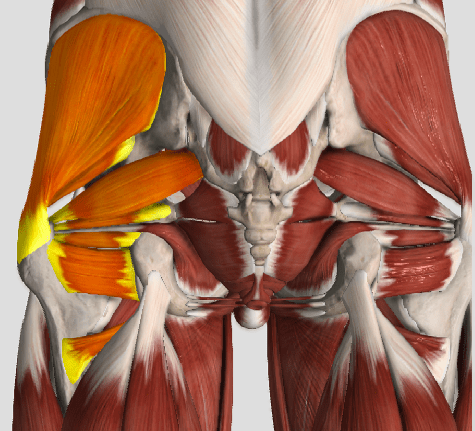
The muscles of the hip provide not only local stability, but also play an important role in spinal and lower extremity functional alignment. (1-4) While weakness in some hip muscles (hip extensors and knee extensors) is well tolerated, weakness or imbalance in others can have a profound effect on gait and biomechanical function throughout the lower half of the body. (5) Weakness of the hip abductors, particularly those that assist with external rotation, has the most significant impact on hip and lower extremity stability. (5,6)
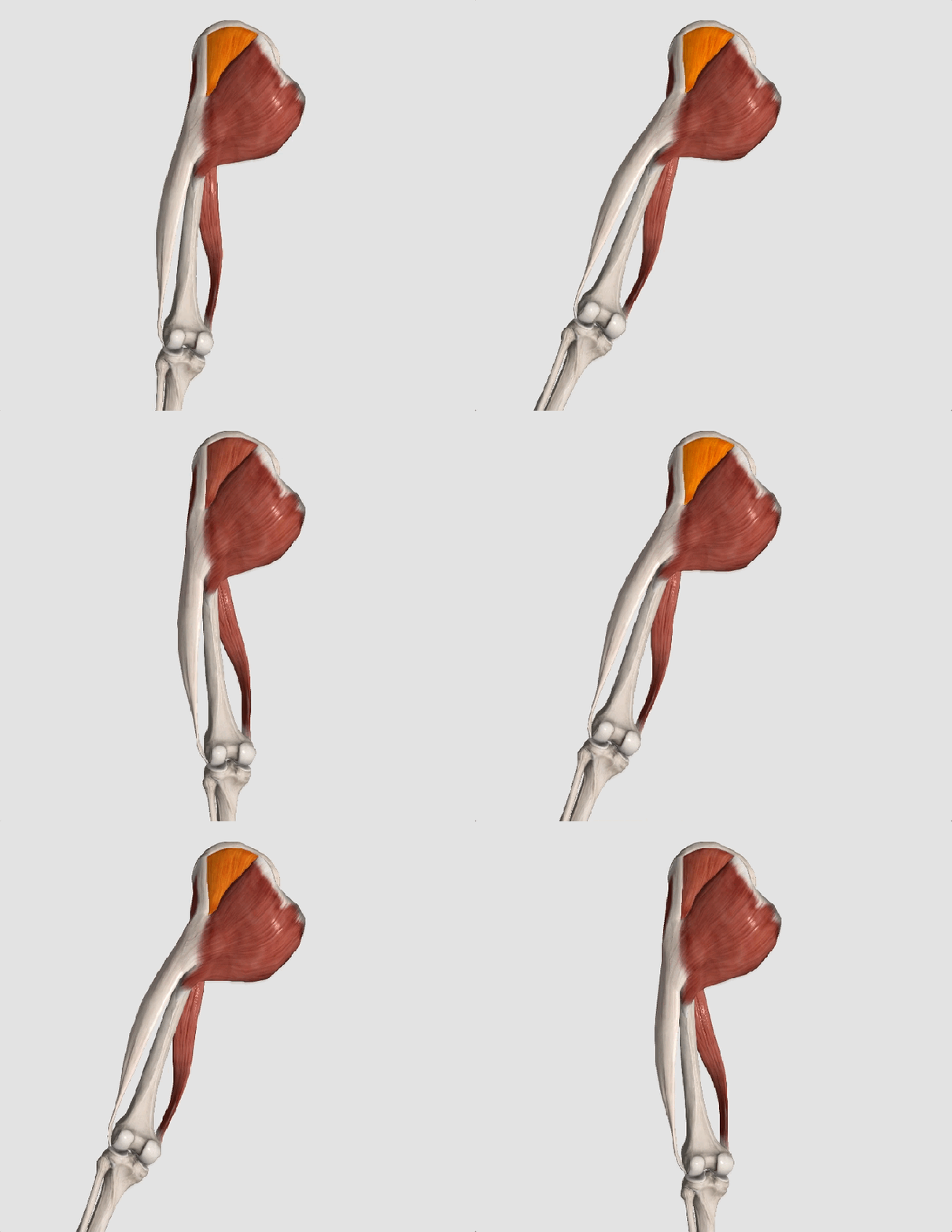
The gluteus medius is the principal hip abductor. When the hip is flexed, the muscle also assists the six deep hip external rotators (piriformis, gemelli, obturators, and quadratus femoris). The gluteus medius originates on the ilium just inferior to the iliac crest and inserts on the lateral and superior aspects of the greater trochanter. While the principal declared action of the gluteus medius is hip abduction, clinicians will appreciate its more valuable contribution as a dynamic stabilizer of the hip and pelvis- particularly during single leg stance activities like walking, running, and squatting. The gluteus medius contributes approximately 70% of the abduction force required to maintain pelvic leveling during single leg stance. The remainder comes predominantly from 2 muscles that insert onto the iliotibial band: the tensor fascia lata and upper gluteus maximus. Hip abductor strength is the single greatest contributor to lower extremity frontal plain alignment during activity. (6)
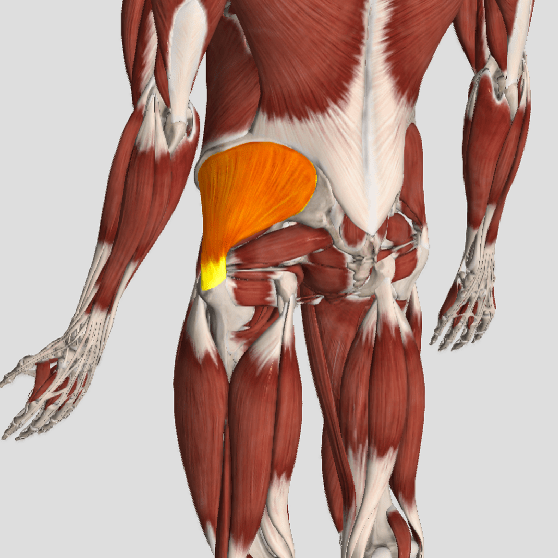
Incompetent hip abductors and/or external rotators allows for excessive adduction and internal rotation of the thigh during single leg stance activities. This leads to a cascade of biomechanical problems, including pelvic drop, excessive hip adduction, excessive femoral internal rotation, valgus knee stress, and internal tibial rotation. (1,7-12)

Becoming healthy and staying healthy is hard, challenging work but worth every second of persistence.

Athletes and the general public alike often develop compensation patterns when mild, non-debilitating injuries go untreated. These compensatory patterns can significantly impact performance, whether in sports or daily activities, often resulting in pain and difficulty in movement. Recognizing and addressing these issues is crucial for maintaining optimal functionality and quality of life.
Our office is dedicated to identifying, correcting, and preventing these dysfunctional patterns as part of our comprehensive care approach, especially for patients dealing with long-term pain. When it comes to acute injuries—those that are new or recent—our focus on preventing these patterns is paramount. Addressing them early can lead to a quicker and smoother return to sports, work, and daily life.
Untreated mild injuries can subtly alter the way we move, causing the body to adapt in ways that are not always beneficial. For example, an untreated sprained ankle might cause an individual to favor the uninjured foot, leading to imbalances and strain in other parts of the body. Over time, these imbalances can cause additional problems, such as knee, hip, or back pain. In athletes, even minor changes in movement patterns can lead to significant decreases in performance and an increased risk of further injury.
Our approach to care involves a thorough assessment of each patient’s movement patterns and injury history. This allows us to pinpoint areas where compensations may be occurring. By addressing these issues early, we can help prevent the development of chronic pain and dysfunction. For those already experiencing long-term pain, our goal is to correct these patterns to restore normal function and alleviate discomfort.
In acute injury cases, early intervention is key. When an injury is fresh, the body is in a heightened state of healing and adaptation. This is the ideal time to ensure that healing occurs correctly and that no maladaptive compensation patterns are established. Our treatment plans for acute injuries are designed to support the body’s natural healing processes while providing the guidance and interventions needed to maintain proper movement and function.
Preventing compensation patterns involves a combination of techniques tailored to each individual’s needs. This may include manual therapies to address soft tissue restrictions, joint mobilizations to restore proper alignment and movement, and corrective exercises to strengthen and retrain affected muscles. Education is also a critical component, as understanding how and why compensations occur can empower patients to make adjustments in their daily lives that support their recovery and long-term health.
For athletes, this approach not only helps in recovering from injuries but also enhances overall performance. By ensuring that movement patterns are efficient and free of compensations, athletes can move more effectively, reducing the risk of future injuries and optimizing their physical capabilities.
In conclusion, the development of compensation patterns following untreated mild injuries can lead to decreased performance and increased pain. Our office is committed to addressing these issues through a comprehensive approach that includes identifying, correcting, and preventing dysfunctional movement patterns. Whether dealing with chronic pain or recovering from a recent injury, our goal is to support our patients in achieving a quick and seamless return to their desired activities, free from pain and with improved functionality. Through early intervention and personalized care, we aim to enhance the quality of life and performance for all our patients.

Diet: Green Tea & Exercise = Weight Loss.
Green tea extract may aid in weight loss, according to a new study published in the Journal of the International Society of Sports Nutrition. Researchers found that recreationally active participants who took a green tea extract capsule every day for four weeks experienced a body fat reduction of 1.63% compared with a placebo group. They also noted a 10.9% increase in exercise performance among those taking the green tea extract during the four-week study. Lead researcher Dr. Dustin Roberts writes, “In essence, our study showed that the use of a green tea extract could potentially help people to lose weight, if combined with exercise. However, we recognize that a larger scale study is now required.”
Journal of the International Society of Sports Nutrition, January 2015

Chiropractic: Musculoskeletal Pain Affects School Teachers.
An assessment of 486 self-evaluation surveys from female school teachers in Saudi Arabia reveals that musculoskeletal pain is surprisingly prevalent in the profession. Their most common complaint was low back pain, followed by knee pain, heel pain, shoulder pain, upper back pain, hip joint pain, ankle pain, and neck pain. Furthermore, nearly half (46.1%) of the teachers surveyed claimed that their pain affected their teaching performance. Pakistan Journal of Medical Sciences, November 2014

Mental Attitude: Childhood Neglect May Affect Brain Development.
A new study finds that severe childhood neglect may cause structural changes to the brain, but early intervention may reverse such alterations. Researchers found that children who remained in institutional care exhibited structural changes in certain areas of the brain’s white matter which facilitate communication between different areas of the brain. However, they found that children who had been moved from institutional care to foster care had white matter similar to that of children who had never been in institutional care, suggesting that the movement to foster care reversed the white matter abnormalities. The researchers write, “Our findings have important implications for public health related to early prevention and intervention for children reared in conditions of severe neglect or adverse contexts more generally.” JAMA Pediatrics, January 2015

Women are often afraid to lift weights for fear they will look too “bulky”, but actually that’s not what happens.
Women can and should do weight lifting exercises if they want to shed body fat and achieve a toned physique. Strength training 30 to 40 minutes twice a week for 4 months, could increase an average woman’s resting metabolism by 100 calories a day, meaning you’ll be burning calories even when you’re not exercising.


 Aberdeen Chiropractic