
Mental Attitude: A Sense of Purpose Is Important for Heart Health. A review of past research involving more than 137,000 individuals found that living a life with a strong sense of purpose may lower a person’s risk of early death, heart attack, and stroke. Compared with those lacking a sense of meaning and direction in life, researchers found that study participants possessing a strong sense of purpose had a 23% reduced risk of premature death from any cause and a 19% lower risk for cardiovascular-related events such as heart attack or stroke. Study author Dr. Randy Cohen writes, “Purpose in life is considered a basic psychological need, and has been defined as a sense of meaning and direction in one’s life, which gives the feeling that life is worth living.” American Heart Association, March 2015
Health Alert: Air Pollution May Increase Stroke Risk. A new study has discovered that high levels of small-particle air pollution can increase an individual’s risk for narrowing of the carotid arteries in the neck, a risk factor for stroke. The findings come from screening tests of more than 300,000 people living in New York. Investigators found that those who live in areas with high levels of air pollution were 24% more likely to have narrowing of the arteries that deliver blood to the brain. Lead author Dr. Jonathan Newman adds, “If you’re in good health, the level of air pollution we see in most parts of the United States probably doesn’t pose a significant health risk to you. But for people who are very young, very old, or have other medical problems, air pollution could be a significant source of cardiovascular disease risk.” American College of Cardiology, March 2015
Diet: Lycopene May Reduce Risk of Kidney Cancer in Older Women. Lycopene is an antioxidant compound commonly advertised as a component of tomatoes and tomato products. An analysis of data from over 96,000 postmenopausal women revealed that a higher intake of lycopene is associated with up to a 39% reduced risk for developing renal cell carcinoma. Cancer, February 2015
Exercise: Can Interactive Cycling Games Provide an Alternative to Conventional Exercise? Scientists recently compared the physiological and enjoyment responses between conventional cycling and interactive video game cycling. They found that interactive video game cycling was more enjoyable for study participants and led to a higher overall energy expenditure. Based on these findings, the researchers concluded that interactive cycling games could be a suitable alternative to conventional exercise. PLOS ONE, March 2015
Chiropractic: Back Pain Prevalence and Obesity Around the World. Using data collected from 42,116 individuals from nine countries across five continents, researchers have found that obesity can increase an individual’s risk for back pain 1.4 to 3.3 times when compared with their countrymen whose body mass index scores fall in the normal range. While further studies are needed to identify what factors lead to greater back pain risk for obese adults in some countries, it’s clear that maintaining a healthy weight should be an important part of everyone’s back pain prevention strategy. BMC Public Health, February 2015
Wellness/Prevention: This May Slow Cardiovascular Disease in Patients with Kidney Disease. For kidney disease patients, cardiovascular disease is the main cause of morbidity and mortality. An animal-based study looked at the effect of daily exercise on mice with compromised kidney function. Compared with sedentary mice, researchers observed considerably less aortic plaque buildup in the mice that exercised. Further research is necessary to verify these findings and eventually determine if such benefits translate to human kidney disease patients. PLOS ONE, March 2015
Quote: “There is no trap so deadly as the trap you set for yourself.” ~ Raymond Chandler
Mental Attitude: Is COPD Linked to Dementia? For those needing more reasons to avoid cigarette smoke and other forms of air pollution, a new study notes an association between chronic obstructive pulmonary disease (COPD) and mild cognitive impairment, a risk factor for dementia. Alzheimer’s Research & Therapy, March 2015
Health Alert: New CPR Devices Approved by FDA. The ResQCPR system involves two new devices that can be used together to aid people who require cardiopulmonary resuscitation (CPR). The first device is called the ResQPump, which attaches to a person’s chest with a suction cup, making it easier for the rescuer to compress and decompress the chest during CPR. The second device, the ResQPod, fits onto a rescue mask or breathing tube to help reduce pressure inside the victim’s chest, which helps draw more blood to the heart. The Food and Drug Administration (FDA) says that when used together, the devices help increase the amount of oxygenated blood that circulates through the patient’s body during CPR and thus increases their chance of survival. Food and Drug Administration, March 2015
Diet: Vegetarian Diet May Reduce Risk of Colon Cancer. A new study involving more than 77,000 adults has found that a vegetarian diet may cut an individual’s risk of colorectal cancer by 20%. The researchers believe the benefit is mainly the result of eating less red and processed meat (both of which have been associated with a high risk for colorectal cancer) and eating more fiberrich foods in the form of fruits and vegetables (which have been linked to a reduced risk for the disease). JAMA Internal Medicine, March 2015 Exercise: How to Shop for Athletic Shoes. It is essential to wear a properly fitted and supportive pair of shoes when exercising. The American Orthopaedic Foot and Ankle Society offers the following tips: shop at a specialty store to take advantage of their expertise, try on shoes at the end of the day when your feet are largest, wear the socks you usually wear when exercising, make sure you can easily move your toes after lacing them up, walk or run a few steps to test that the shoes firmly grip your heels, and look for a sportspecific shoe if you plan to play a particular sport. The American Orthopaedic Foot and Ankle Society, March 2015
Chiropractic: How Whole Body Vibrations Increase Back Injury Risk… While exposure to whole body vibrations (WBV) has been identified as a risk factor for a work-related back injury, previous research hasn’t determined why this is the case. In a recent study, volunteers lifted a box in front of them from ground level to a waist height platform to the left of their bodies repeatedly during two hour-long sessions. Before one of the sessions, participants sat for an hour on a vibrating platform. An analysis of body movements from both sessions showed that WBV exposure resulted in faster and more exaggerated twisting motions by participants. Over time, such behavioral changes during repeated lifting tasks following WBV exposure may increase an individual’s risk for an injury to the lower back. Journal of Occupational and Environmental Hygiene, March 2015
Wellness/Prevention: Focusing on Sleep Quality and Stress Reduction Helps Reduce Diabetes Risk! For those at risk for developing type 2 diabetes, a new study recommends focusing on reducing stress and getting quality sleep in addition to increasing physical activity and eating better. Researcher Dr. Mariam Kashani explains, “By taking sleep and stress into account, we factor in important hormonal processes to better manage glucose. When we are stressed, our bodies release extra glucose and when we are tired, we tend to make poor food choices. In this context, people often regain weight, and in doing so, they may revert back to worsening blood glucose levels.” American College of Cardiology’s 64th Annual Scientific Session in San Diego, March 2015
Quote: “The pain of parting is nothing to the joy of meeting again.” ~ Charles Dickens
Chiropractic: Stretching Can Help Office Workers with Neck and Shoulder Pain.
For office workers with chronic neck and shoulder pain, a recent study found that performing neck and shoulder stretching exercises at least three days a week led to significant improvements in both pain and function. Clinical Rehabilitation, March 2015
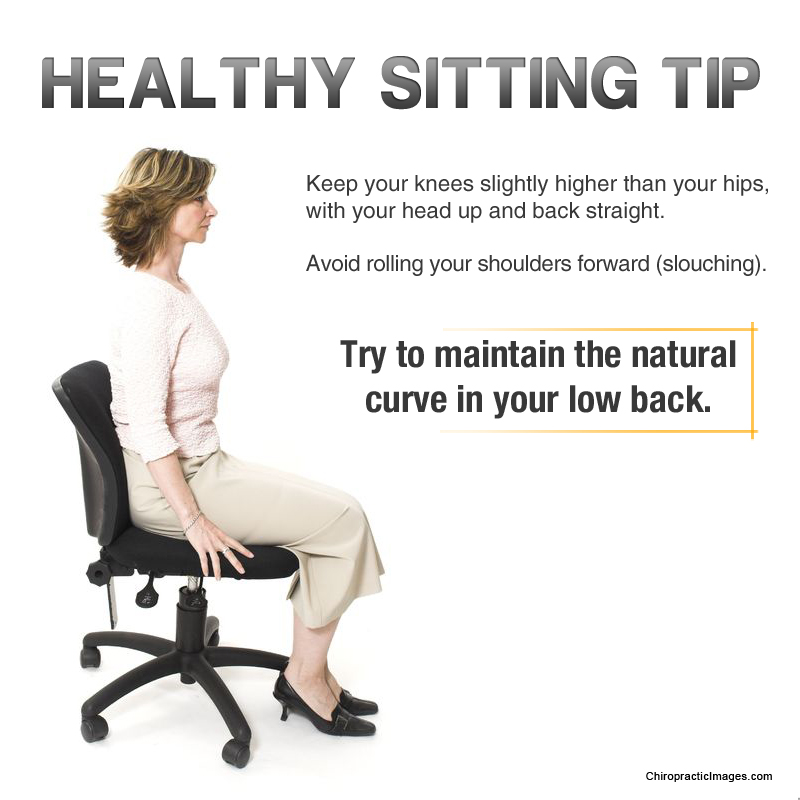
Wellness/Prevention: Benefits From Diet & Exercise.
A healthy diet combined with exercise can lead to many benefits. The Weight-Control Information Network lists the following benefits of exercise: keeps your body energized for work and play, improves ability to manage stress, promotes a positive self-image, improves the fit and look of clothing, tones muscles, and creates a positive example for family and friends. The Weight-Control Information Network, March 2015
Exercise: Exercise’s Effect on the Brain Could Improve Mobility as We Age.
A small study conducted at Rush University Medical Center in Chicago indicates that staying physically active in adulthood may ward off mobility problems later in life. In a study involving 167 seniors, those with a history of physical exercise had higher mobility scores than their peers who were mostly sedentary during their working years, even in the presence of brain deterioration typically associated with movement difficulty among the elderly. Neurology, March 2015
Diet: Could This Olive Oil Compound One Day Fight Cancer?
Oleocanthal, a compound in extra virgin olive oil, has been observed to cause cell death in cancer cells; however, scientists have been unable to determine how it worked. Now, researchers claim that oleocanthal acts by rupturing the lysosomes found in cancer cells, causing cell death within 30 minutes while leaving noncancerous cells untouched. Study co-author Dr. Paul Breslin notes, “The mechanism of killing cancer cells and sparing healthy cells, lysosomal membrane permeabilization, has been hypothesized as a possible mechanism of effectively killing cancer cells and sparing healthy tissues but has never been realized before. Our realization of this makes this paper of particular therapeutic interest for cancer treatment.” Molecular & Cellular Oncology, January 2015
Health Alert: Family History of Prostate Cancer May Be Linked to Breast Cancer Risk.
A family history of prostate cancer may be tied to a woman’s risk of breast cancer. Researchers found that women whose father, brother, or son have had prostate cancer may have a 14% greater risk of developing breast cancer when compared with women whose male family members have not had prostate cancer. They also found that women with a family history of both prostate and breast cancer have a 78% greater risk of developing breast cancer when compared with women whose family histories have neither. The findings call attention to the need for women to know their complete family medical history, particularly cancer diagnosed among first-degree relatives, including fathers, brothers, and sons. Cancer, March 2015
Mental Attitude: Does IQ Determine How Much Alcohol a Young Man Drinks?
Swedish researchers have found that lower male IQ scores are linked to greater risks for heavy and binge drinking behaviors. The research team separated the nearly 50,000 male study participants into nine groups based on IQ scores from highest to lowest. They found that the risk of heavy drinking increased 20% and the risk of binge drinking increased 9% as they moved each level downwards towards the group with the lowest IQ scores. While it’s believed that many factors may influence an individual’s alcohol consumption, those with higher IQ scores may be more likely to make lifestyle choices that would steer them clear of situations that encourage heavy drinking. Alcoholism: Clinical & Experimental Research, March 2015
 Aberdeen Chiropractic