
#BackInAction
Happy #WorldSpineDay !!!
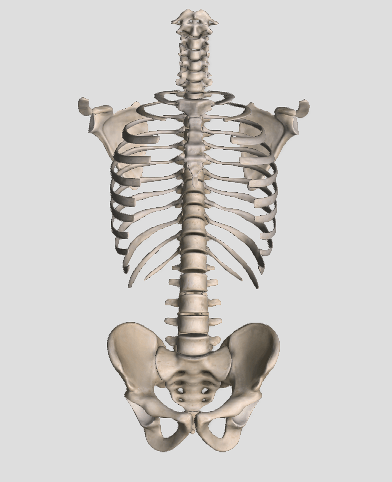
The spine is made up of 24 bones, called vertebrae. Ligaments and muscles connect these bones together to form the spinal column. The spinal column gives the body form and function. The spinal column holds and protects the spinal cord, which is a bundle of nerves that sends signals to other parts of the body.
.
.
.
.
.
.
.
.
#Chiropractic
#Spine
#Health
#fitness
#chiropractor


Shoulder pain is a REALLY common problem that can arise from many causes. There are actually several joints that make up the shoulder, so shoulder injuries can be quite complex!
Probably the most common source of shoulder pain arises from the muscle tendons and the bursa—the fluid-filled sacs that lubricate, cushion, and protect the sliding tendons near their attachment to bone. The rotator cuff is made up from a group of four muscles and their connecting tendons. Typically, when the tendons tear, the bursa swells and “impingement” occurs. When this happens, it’s very painful to raise the arm up from the side.
The term “strain” applies to injuries of the muscles and tendons and are classified as mild, moderate, or severe (some refer to this as first, second, and third degree tears), depending on the amount of tissue that has torn. Overexertion, overuse, sports injuries, dislocation, fracture, frozen shoulder, joint instability, and pinched nerves can all give rise to shoulder pain.
The diagnosis of what’s actually causing a patient’s shoulder pain is often determined by the history of how the injury occurred, or the “mechanism of injury.” This is followed up by measuring the range of motion and performing provocative tests to see which positions bother the shoulder the most. A doctor may use X-rays to assess for fracture/dislocation and an MRI to assess muscle tendon tears, labral tears (a rim of cartilage surrounding the glenoid fossa or cup of the ball & socket joint), and other soft tissue injuries.
People with jobs that require heavy lifting or repetitive pounding (carpenters and jack-hammer operators, for example), who play sports such as football and rugby, and those who smoke, have diabetes, and/or an overactive thyroid are at higher risk of injury. Because the shoulder joint is normally not very stable, MANY people tear their rotator cuff or injure their shoulder during their lifetime. One study found 17% of participants had full thickness rotator cuff tears (as opposed to partial tears). The researchers reported that age was an important determinant, as the incidence of full tears was only 6% in those less than 60 years old vs. 30% in those over 60! So obviously, this IS NOT an injury limited to the younger active person!
Outside of a medical emergency, patients should always try non-surgical treatment options first. Doctors of chiropractic offer the shoulder injury patient a non-surgical option that emphasizes exercise and self-management strategies in addition to manual manipulation, mobilization, and more. The most important message is BE PATIENT as these usually take time to manage, often up to a year.


Should I seek treatment for whiplash right away?
Even though whiplash or whiplash associated disorders (WAD) is very common, it remains poorly understood. Recent studies report that up to 60% of people may still have pain six months after their injury. Why is that?
Investigations have shown there are changes in the muscle and muscle function in the neck and shoulder regions in chronic WAD patients. Symptoms often include balance problems as well as increased sensitivity to a variety of stimuli including pressure, light vibration, and temperature.
Interestingly, this hypersensitivity not only occurs in the injured area, but also in areas away from the neck such as the front of the lower leg or the shin bone. This can only be explained by some type of neurobiological processing of pain within the central nervous system, which includes the spinal cord and brain.
It’s not surprising that when pain continues for lengthy time frames, people with these symptoms may also experience psychological distress. The confusing thing is that not every WAD injury case has this “central sensitization” and when it’s present—its intensity is highly variable.
Current research into WAD is focused on the following: 1) developing better treatments in the early or acute whiplash injury stage with the goal to PREVENT development of these chronic symptoms; 2) determining what factors can PREDICT slower recovery following a WAD injury; 3) investigation into how the stress response associated with motor vehicle crashes influence pain, other symptoms and recovery, and how to best address and MANAGE the stress response; 4) research into the effect a WAD injury has on daily life function; and 5) developing improved assessment methods for healthcare providers so that EARLY treatments can be more targeted and effective.
A Swedish study is currently looking at the importance of reducing the acceleration of the occupant during an automobile collision by redesigning the body of the vehicle and its safety systems. In rear-end crashes, the main issue is to design a seat and head restraint that absorbs energy in a controlled way and gives support to the whole spine. In frontal crashes, the air bag, seat belt pretensioner, and load limiter must work together in a coordinated way to reduce the acceleration between the vertebrae of the spine and occupant.
What is known is that a “wait and watch” approach may NOT be appropriate in a lot of cases. It appears there is a relatively short window of time, the first three months, when treatment seems to be most effective. Doctors of chiropractic are trained to identify and treat these types of injuries, so PLEASE, don’t delay your initial visit—time is truly of the essence. Don’t waste it!
Happy Thanksgiving everyone! Have a safe and happy holiday Monday and we will see you tomorrow at 9am!
.
.
.
.
.
.
.
.
.
.
.
.
.
.
#Thanksgiving
#Canada
#Winnipeg
#Fall
#Dinner http://ow.ly/i/zdjTr
Stay safe while keeping your house in order! Here are a few housekeeping safety tips! http://ow.ly/i/zdjsG
 Aberdeen Chiropractic