Teens & Headaches? What?

Migrane

In 2016, researchers at Curtin University in Perth examined the seated posture and health data of 1,108 17-year olds in an effort to determine if any particular posture increased the risk of headaches/neck pain among late adolescents.

Among four posture subgroups—upright, intermediate, slumped thorax, and forward head—the researchers observed the following: participants who were slumped in their thoracic spine (mid-back region) and had their head forward when they sat were at higher odds of having mild, moderate, or severe depression; participants classified as having a more upright posture exercised more frequently, females were more likely to sit more upright than males; those who were overweight were more likely to sit with a forward neck posture; and taller people were more likely to sit upright.

While they found biopsychosocial factors like exercise frequency, depression, and body mass index (BMI) ARE associated with headaches and neck pain, their data did not suggest any one particular posture increased the risk of neck pain or headaches more than any other posture among the teenagers involved in the study.

This is noteworthy as studies with adults do indicate the risk for neck pain and headaches is greater in individuals with poor neck posture. In particular, postures such as forward head carriage, pinching a phone between the ear and shoulder, and prolonged neck/head rotation outside of neutral can all increase the risk of cervical disorders. This suggests that in younger bodies, the cause of neck pain and headaches may be multifactoral and not limited to just poor posture and that treatment must address all issues that may increase one’s risk for neck pain/headaches in order to reach a desired outcome.

The good news is that chiropractic has long embraced the biopsychosocial model of healthcare, looking at ALL factors that affect back and neck pain and quality of life. Through patient education, spinal manipulation, mobilization, exercise training, the use of modalities, and more, chiropractors can greatly help those struggling with neck pain and headaches!

Where is my Low Back Pain coming from?

Most of us have suffered from back pain at one time or another. It often occurs after over-doing a physical task, like fall yard work, winter snow shovelling, working on the car, cleaning the house, and so on. But there are times when identifying the cause of back pain can be difficult or impossible. Let’s take a deeper look at where back pain can come from…
Though activity-related back pain is common, many times a direct link to over-use is not clear. Micro-traumatic events can accumulate and become painful when a certain threshold is exceeded. (Think of the old adage “The straw that broke the camel’s back.”)
There are other less well-identified causes of back pain. One is called referred pain. This can be caused by an irritated joint or soft tissue not necessarily located in the immediate area of the perceived pain. For example, pain in the leg can result from an injured facet joint, sacroiliac joint, and/or a disk tear (without nerve root pinch). This is called “sclertogenous pain.”
Internal organs can also cause back pain. This is called a “viscerosomatic response” (VSR). A classic example of this is when the right shoulder blade seems to be the source of pain when the gall bladder is inflamed. This pain can be located at or below the scapula next to the spine and the muscles in the area are in spasm and sensitive or painful to the touch. Also, VSR is often not worsened or changed by bending in different directions (unlike musculoskeletal / MSK pain). Without further testing, it’s easy to confuse this with a MSK or a “typical” back ache. Ultimately, a final diagnosis may require an abdominal ultrasound (CT, MRI scan, and other diagnostics are less frequently used).
Visceral pathology in the back pain patient presenting to chiropractors is reportedly rare, and according to one survey, only 5.3% of patients present with non-musculoskeletal complaints. Other common VSR pain patterns are as follows: Heart – left chest to left arm, mid-upper back, left jaw; Liver – right upper shoulder (front and back), right middle to low back, and just below the sternum; Appendix – right lower abdomen (may start as stomach pain); Small intestine – either side of the umbilicus and/or between it and the breast bone; Kidney – small of the back, upper tailbone, and/or groin area; Bladder – just above the pubic bone and/or bilateral buttocks; Ovaries – groin and/or umbilical area; and Colon – mid-abdominal and/or lower quadrants.
Another challenge to diagnosis is cancer in the spine, which can be primary or metastatic (from a different location). Thankfully, this is very rare. A history of unexplained weight loss, a past history of cancer, over age 50, nighttime sleep interruptions, and no response to usual back care may lead a doctor to recommend tests to determine if cancer is present in the spine.
Bottom line: When patients present with back pain, chiropractors have been trained to look for these less common but important causes of back pain. They get “suspicious” when the “usual” orthopedic tests do not convey the usual responses seen with mechanical back pain. In these cases, they work with primary care doctors to coordinate care to obtain prompt diagnostic testing and treatment.
We realize you have a choice in whom you consider for your health care provision and we sincerely appreciate your trust in choosing our service for those needs.  If you, a friend, or family member requires care for back pain, we would be honored to render our services.
361

5 Tips For Gym Newbies

3-Ways-to-Protect-Your-Joints-and-Avoid-Injuries-269x169

Michelle Blood has a great piece for new gym members over at LifeZette.com Check out the link at the end of the page for the whole article. Getting started can be a daunting task for many; these 5 tips will help you stay motivated, safe, on task and get you to your goals.

1.) Get checked. Before you set foot into the gym to begin any workout program, it is important you get clearance from your doctor. It is easy to overlook this step in the excitement over the idea of committing yourself to getting fit. However, failure to do so can be very costly. For the following groups of people, it is extremely important to hit the doctor’s office before you hit the gym:

  • You haven’t had a physical in the past year.
  • You’re planning a significant increase in the intensity of exercise.
  • You’re undertaking a new form of exercise.
  • You have a physical condition that may be exacerbated by exercise.
  • You have concerns about your physical capability for exercise.

2.) Get comfortable. Gyms can feel intimidating when you’re new because the layout and procedures at your gym are unfamiliar, as are the pieces of equipment and the group-exercise formats. The best way to combat these sorts of concerns is to take some time to tour the gym, to observe different group-based classes, and to receive some basic instruction on use of various pieces of equipment.

Consider approaching instructors and trainers. Most are friendly and personable, and more than willing to answer any questions you have about classes or equipment. Your fellow gym members can be an indispensable source of information as well. Ask them about their experiences in a class that interests you.

By getting as much information as you can prior to joining a class, you’ll feel more comfortable participating when you make the leap and sign up for your first group class.

3.) Get equipped. Fortunately, you don’t need to break the bank to gather up a few essentials you’ll want to have when you begin your gym-based fitness journey. Though you’re not going to need an entire new wardrobe, it would be a good idea to pick up a couple of sweat-wicking items (e.g., shorts, T-shirts) and an appropriate pair of shoes.

Other items on your shopping list might include: a filtered, refillable water bottle; showering necessities; a padlock (if your gym provides lockers); and some pre and post-workout healthy snacks. Store the essentials in a sturdy bag to throw in your trunk so you’ll always be ready to hit the gym for a quick workout whenever the mood may strike you.

4.) Get a partner. Building some accountability in to your new gym routine is a great way to bolster your chances of success. Bringing a friend or family member along to the gym has a number of advantages. When you commit to another person, you give yourself the gift of subtle, positive pressure to stick to your goals.

If you’re waffling about attending class on a given day, the fact that your partner will be there waiting for you can provide that extra bit of encouragement you need to power through your reluctance and show up for class anyway.

In addition, developing a fun competition with your partner can have some spectacular results. Science has shown us, time and again, that people lose more weight when they are involved with a team or are in a competition. Be sure to keep it positive, and you can spur one another to successes neither partner might have hoped to achieve on his or her own.

5.) Get pumped. You can beat the “I just don’t feel motivated” monster in a number of ways. Finding an effective strategy for motivating yourself is somewhat a matter of trial and error. Try some of the following to discover what works best for you.

  • Create a personalized music playlist of songs that get you moving.
  • Read books and articles about people who have achieved what you hope to achieve.
  • Set up a system of rewards for yourself for meeting small goals.
  • Spend time with people who inspire you.
  • Keep a journal of your feelings before and after working out — review it when you feel tempted to skip.

Regardless of your level of experience — you can confidently succeed at the gym.


http://www.lifezette.com/healthzette/success-at-the-gym-five-top-tips-for-exercise-newbies/

Fibromyalgia Diet?

10-Easy-Mediterranean-Diet-Swaps-01-722x406

Folks suffering with fibromyalgia (FM) commonly complain that certain foods can make their symptoms worse. How common is this? One study reported 42% of FM patients found that certain foods worsened their symptoms!

Because FM affects each person differently, there is no ONE FM diet or, “…one size fits all” when it comes to eating “right” for FM. Patients with FM usually find out by trial and error which foods work vs. those that consistently don’t. However, remembering which foods do what can be a challenge so FIRST, make a three column FOOD LOG with the following headings: BETTER, NO CHANGE, WORSE. This will allow you to QUICKLY review the list as a memory refresher.

According to Dr. Ginevra Liptan, medical director of the Frida Center for Fibromyalgia (Portland, OR) and author of Figuring Out Fibromyalgia: Current Science and the Most Effective Treatments, there are some common trends she’s observed through treating FM patients. Here are some of her recommendations:

PAY ATTENTION TO HOW FOOD MAKES YOU FEEL: It is quite common to have “sensitivities” to certain foods, but this is highly variable from person to person. Examples of problematic foods/ingredients include: MSG (commonly used in Chinese food), other preservatives, eggs, gluten, and dairy. Dr. Liptan HIGHLY recommends the food journal approach! She also recommends including a note about the type of symptoms noticed with each “WORSE” food, as symptoms can vary significantly.

ELIMINATE CERTAIN FOODS: If you suspect a certain food may be problematic, try an elimination challenge diet. That means STOP eating that food for six to eight weeks and then ADD it back into your diet and see how you feel. Remember, FM sufferers frequently have irritable bowel syndrome, also known as IBS, and this approach can be REALLY HELPFUL! Food allergies may be part of the problem, and your doctor may refer you for a consult with an allergist and/or a dietician. They will also discuss the “anti-inflammatory diet” with you.

EAT HEALTHY: In general, your diet should emphasize fruits and vegetables and lean protein. Pre-prepare food so you have something “healthy” to reach for rather than a less healthy snack when you’re hungry and tired. Consider “pre-washed” and pre-cut up vegetables; try quinoa rather than pasta. Consume anti-fatigue foods and eat multiple small meals daily vs. one to two large meals. Protein snacks (like a hardboiled egg or oatmeal – GLUTEN FREE) help a lot! Eat breakfast and include protein. Also, GET ENOUGH SLEEP (at least seven to eight hours and be consistent)!

SUPPLEMENTS: Consider a good general multi-vitamin, calcium and magnesium, omega-3 fatty acids, vitamin D3, and Co-Enzyme Q10. There are others, but this represents a great place to start. Remember to check any medication you may be taking with these/any suggestions before taking supplements!

If you, a friend or family member requires care for Fibromyalgia, we sincerely appreciate the trust and confidence shown by choosing our services!

What is CTS?

480px-Carpal_Tunnel_Syndrome

Carpal tunnel syndrome (CTS) is a very common condition. According to a report by the Bureau of Labor Statistics (BLS), CTS ranks SECOND among the major disabling diseases and illnesses in ALL private industries. The BLS states that workers with CTS may eventually have to give up their livelihood. They cite one study in which almost half of all CTS patients changed their jobs within 30 months following their diagnosis. Due to the controversy surrounding the issue of CTS and worker’s compensation, workers do not always receive compensation benefits.
The KEY to long-term cost containment associated with CTS is EARLY DIAGNOSIS and PREVENTION! The challenge is getting the worker to identify early symptoms and NOT feel intimidated to report them, which could then lead to prompt care and possibly job modifications, resulting in the best chance of preventing a more complicated and far more costly problem.
Because of the many factors that contribute to and/or cause CTS, there is similarly no one way to prevent it from happening. Treating any/all underlying medical condition(s) is important. Using simple common sense can go a long way to help minimize some of the risk factors that predispose a person to work-related CTS and other cumulative trauma disorders (CTDs).
For example, watching and mimicking veteran workers can be a great guide as to how to maximize efficient work methods while minimizing unnecessary stresses and strains. Other preventative “tricks” include learning how to adjust the work area, handle tools, or perform tasks that minimize hand/wrist strain. Maintaining proper posture and exercise programs to strengthen the fingers, hands, wrists, forearms, shoulders, and neck may also help prevent CTS.
Many companies have taken action to help prevent repetitive stress injuries. In one study, 84% of the companies surveyed reported that they were modifying equipment, tasks, and processes as part of a prevention effort; nearly 85% analyzed their workstations and jobs; and 79% purchased more ergonomic equipment. Unfortunately, there is NO EVIDENCE that any of these methods can completely protect a worker against CTS. Often, the best approach is to relocate the worker to a less repetitive job, but this is not always an option.
Doctors of chiropractic can observe the worker through a video or during a factory tour/visit and often identify ergonomic problems that can result in a low-cost, easy modification. Simple modifications coupled with quality care, patient education, and cooperation from BOTH the worker and the employer can typically help yield the best outcome for the CTS patient.

American Medical Association Endorses Chiropractic Care

Adjust

In 2013 The American Medical Association went on record endorsing chiropractic care in a patient information synopsis: “Many treatments are available for low back pain… people benefit from chiropractic therapy.”


And earlier this year the AMA published a new guideline for low back pain that recommends physicians delay pharmacologic management until the patient has tried spinal manipulation.

Denise M. Goodman, Alison E. Burke, Edaward H. Livingstone. Low Back Pain. JAMA. 2013;309(16):1738 Wenger HC, Cifu AS. Treatment of Low Back Pain. JAMA. 2017;318(8):743–744.

Pregnancy and Low Back Pain?

40

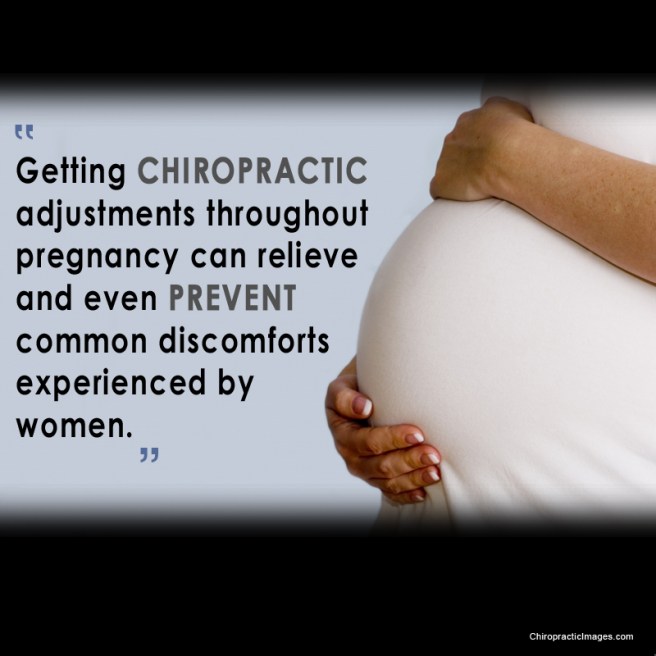
Did you know that 50-72% of women have low back pain (LBP) and/or pelvic pain during their pregnancy but only 32% do something about it? Let’s look closer!
Pregnancy-related low back pain (PLBP) can be a highly debilitating syndrome that accounts for the most common cause of sick leave for pregnant women. In 2004, Americans spent $26.1 billion dollars in an effort to find relief from back pain during pregnancy. Statistics show one out of ten women will experience daily DISABLING LBP for at least two years following delivery.
Because of the limited number of treatment options available for the pregnant woman due to mother and fetus safety, and given the high propensity of potentially disabling PLBP that can significantly limit function and quality of life, chiropractic care seems to be a natural choice for this patient population! Obviously, pharmaceuticals and surgery are NOT appropriate options for the expectant mother, even during the post-partum breast-feeding time period. Chiropractic offers a non-invasive and safe approach to managing lumbopelvic pain that uses many different approaches.
In a 2009 research paper, 78 women participated in a study that investigated disability, pain intensity, and percent improvement after receiving chiropractic care to treat pregnancy-related PLBP. Here, 73% reported their improvement as either “excellent” or “good.” For disability and pain, 51% and 67% (respectively) experienced clinically significant improvement! Researchers followed up with them eleven months later and found 85.5% reported their improvement as either “excellent” or “good!” For disability and pain, 73% and 82% (respectively) experienced clinically significant improvement!
So, what’s causing LBP in pregnant women? Because of the biomechanical changes that occur in the low back and pelvis over a relatively short amount of time during pregnancy, especially in the second and third trimesters, common pain generators include (but are not limited to): the sacroiliac joint, facet joints, shock-absorbing disks, and the many connecting muscles (strains) and ligaments (sprains). During the later stages of pregnancy, the hormone Relaxin prepares the pelvis for delivery by widening the pelvic girdle, which can also be problematic.
Treatment options within chiropractic often include spinal manipulation, lumbopelvic exercises, patient education, posture correction, massage, an SI belt, soft tissue mobilization, and more. Exercises that target the transverse abdominus, multifidus, and pelvic floor muscles help to stabilize the lumbopelvic region. The American College of Obstetricians & Gynaecologists recommends exercise at least three times a week during pregnancy, and studies report NO obstetric complications (pre-term labor, premature ruptured membranes, or changes to maternal or neonatal weight) with exercise.
So, the answer is clear! When PLBP strikes, seek chiropractic care to safely and effectively manage the pain and disability and so you can ENJOY YOUR PREGNANCY!!!
We realize you have a choice in whom you consider for your health care provision and we sincerely appreciate your trust in choosing our service for those needs.  If you, a friend, or family member requires care for back pain, we would be honoured to render our services.

11 Tips For A Healthy Holiday Season!

11 Tips

As exciting as the holidays can be, the added stress that comes along can really affect how your body functions. Whether you’ll be doing a lot of shopping, cooking, wrapping presents, or attending holiday parties, chances are you’ll be putting your body through a lot more than it’s normally accustomed to and all of this can trigger back and neck pain. Here are 11 tips to help you prepare for a happy and healthy holiday season.

Shopping Tips

• Dress appropriately before heading out for a day of shopping. Wear comfortable low-heeled shoes with arch supports and leave your heavy purse at home. Opt for a light backpack or a fanny pack to carry your personal belongings.

• Drink plenty of water to stay hydrated.

• A long day of shopping, i.e. walking, should be treated like an athletic event. Make sure you stretch before and after.

• Make extra trips to the car to drop off your goods so you don’t have to carry those heavy bags around all day.

• Take advantage of online shopping. Skip the long lines and crowded malls completely and shop from the comfort of your own home.

• Simplify your to-do list by picking up gift cards at the grocery store. You’ll get two errands done in one stop.

Wrapping Tips

• Use a table or a counter to wrap gifts. The floor is a less than ideal spot to do your wrapping. Standing or sitting in a chair will promote better posture and help you avoid back and neck pain.

• Don’t wait until the last minute to wrap all of your gifts. Wrapping a few at a time is best.

Wellness Tips

• Don’t neglect your fitness routine. Although you’ll be busier than normal, it’s important to keep those workouts on your daily to-do list. Even a quick 20-minute

workout is better than skipping it all together and you’ll be helping to manage your stress.

• Get enough sleep. The holidays won’t be as enjoyable if you aren’t catching enough z’s. Make sure you’re getting the recommended 7-9 hours of sleep every night.

• Try to stay on track with your healthy eating. Gaining extra weight will only contribute to back pain and health problems. Before attending a party, make sure you eat something healthy and drink plenty of water to avoid overeating while you’re there. It’s ok to indulge a little with holiday treats, just be sure to be sensible about it.

With some simple preparation, you can manage holiday stressors and ward off debilitating back and neck pain. If you do experience pain this season, please give our office a call. We’re experts at finding the root cause of your pain and can help you get back to a better quality of life.

Daily Living Advice

Cigarette smoking kills almost 6 million people annually. Up to half of all smokers will die from a smoking related illness like heart disease, lung cancer and COPD.

Smokers who quit can significantly reduce their risk of dying from these and many other diseases.


The combination of counseling and medication (nicotine replacement therapy) have proven to be the best way to quit smoking. Talk to your doctor about your options