Can Chiro Help My Headache?

​Migrane

Everyone, well at least almost everyone, has had headaches from time to time, and we all know how miserable they can make us feel. In fact, at some point in time, 9 out of 10 Americans suffer from headaches that range between mild and dull to throbbing, intense, and debilitating, sometimes to the point of requiring bed rest in a dark, quiet room.

The common reflex is to reach for that bottle of pills and pray the headache subsides so you don’t have to call in sick and lose another day of productivity when you have so much to do. Unfortunately, between the side effects of many medications designed to help headaches and the pain associated with the headache, this approach is frequently NOT the answer. So what is?

The good news is that many studies have identified spinal manipulation therapy (SMT), the main type of care utilized by chiropractors, as being very effective for popular types of headaches—in particular tension-type headaches that arise in the neck. An important 2001 study reported that SMT provided almost immediate relief for headaches that arose in the neck with SIGNIFICANTLY fewer side effects and longer-lasting results compared with commonly prescribed medications.

Another interesting study that found similar results included tracking the prevalence/frequency of headaches after treatment stopped. The authors of the study reported the patients receiving SMT had continued to experience sustained benefits throughout the following weeks, and even months, in contrast to those in a medication treatment group where headaches came back almost immediately after they discontinued treatment.

The most commonly prescribed medication for tension-type headaches are non-steroidal anti-inflammatory drugs (NSAIDs). Common over-the-counter options include ibuprofen (Advil, Nuprin, etc.) and Aleve (Naproxen). For those who can’t take NSAIDs because of blood thinning and/or stomach-liver-kidney problems, doctors commonly prescribe acetaminophen (Tylenol), but it can be hard on the liver and kidneys, especially when taken over time.

So, what can you expect from a visit to a chiropractor for your headaches? The typical approach begins with a thorough history and examination with an emphasis of evaluating the neck and its associated function. Your doctor of chiropractic may also perform tests designed to reduce pain and some that provoke a pain response to identify the “pain generator” or cause!

Because each patient is unique, the type of care provided will be individually determined based on the findings, the patient’s age, comfort, and preference of both the provider and patient.

So, the next time you find yourself reaching for pills because of headaches, remember that there are better options! Give chiropractic a try. You’ll be GLAD you did!!!

We realize you have a choice in whom you consider for your health care provision and we sincerely appreciate your trust in choosing our service for those needs.  If you, a friend, or family member requires care for neck pain or headaches, we would be honored to render our services.

Carpal Tunnel Syndrome #2

Healthcare providers tend to agree that in non-emergency situations, patients with conditions like Carpal Tunnel Syndrome (CTS) should try non-surgical treatments before consulting with a surgeon. The “PRICE” concept, that is Protect, Rest, Ice, Compress, & Elevate can be applied to most injuries, including CTS, especially in the acute/inflammatory stage. However, many of these principles also apply in the chronic stage (more than three months) of CTS.

PROTECT: For the CTS patient, many doctors commonly prescribe a wrist cock-up splint to be worn overnight, which may surprise some of you! During the day, depending on the type of work you do, a wrist splint can actually get in the way and result in increased symptoms, and at times, cause bruising at both ends of the splint (mid-forearm & mid-hand). The primary reason to use the splint at night is that one cannot control the position of their wrist during sleep, and it can often wind up bent. This increases the pressure inside the carpal tunnel up to six to eight times more than normal, potentially causing enough pain and tingling to disturb sleep. The splint guarantees a neutral wrist position, which significantly improves sleep quality and allows healing to occur.

REST: The use of a splint allows the swollen median nerve to heal. However, in order to allow the wrist to rest so inflammation can subside and the condition can fully heal, patients often need to modify their daily activities, at least for a short time. This may require job restrictions, especially if the occupation involves a fast repetitive motion type of tasks and/or forceful gripping.

ICE: The use of an “ice cup”—or an ice cube held with a washcloth to protect the fingertips from getting cold—is by far the most effective approach. Rub the ice directly on the skin over the carpal tunnel so that you experience the four stages of cooling: Cold, Burning, Aching, and Numb (C-BAN). This usually takes about four minutes, and it’s important to stop when numbness occurs, as the next stage of cooling is frostbite. This can be repeated multiple times a day and is often as effective as cortisone shots with fewer side effects (and less pain!).

COMPRESS: The wrist cock-up splint can offer some compression, but an elastic carpal tunnel wrist band will not usually interfere with most activities of daily living. Some versions include a thumb loop to keep the wrist band in place, but that may get in the way. A version without the thumb loop also works very well.

EXERCISE: Exercises performed at home and work can significantly help manage the condition. (Note: For injuries like a sprained ankle, E typically stands for ELEVATE, though it’s not practical for the CTS patient.)

Tune in next month for the unique techniques that chiropractic offers to the non-surgical care of CTS as well as the importance of preventative measures and research.

We realize you have a choice in whom you consider for your health care provision and we sincerely appreciate your trust in choosing our service for those needs.  If you, a friend, or family member requires care for Carpal Tunnel Syndrome, we would be honored to render our services.


480px-Carpal_Tunnel_Syndrome

What is Cervical Spondylosis?

CSpine

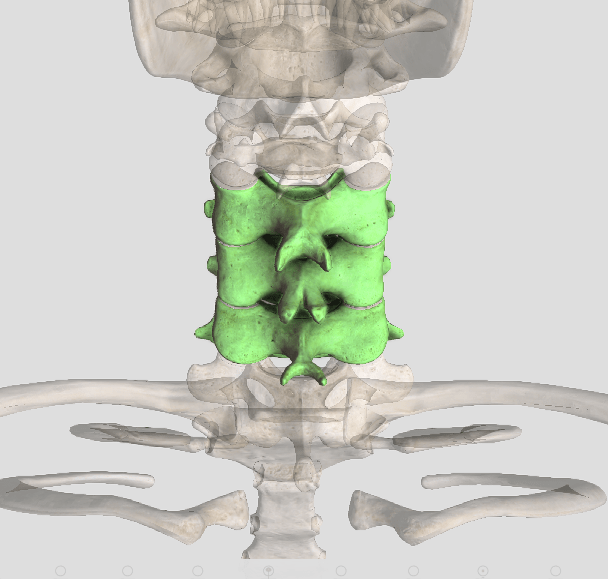
​Cervical spondylosis (CS) is another term for osteoarthritis (OA) of the neck. It is a common, age-related condition that you will probably develop if you live long enough. Or, if you suffered a neck injury as a youth, it can develop within five to ten years of the injury, depending on the severity. According to the Mayo Clinic, CS or OA affects more than 85% of people over 60 years old, and that is probably a conservative estimate!

Common symptoms associated with CS/OA vary widely from no symptoms whatsoever to debilitating pain and stiffness. For example, when CS crowds the holes through which the nerves and/or spinal cord travel, it creates a condition called spinal stenosis that can result in numbness, tingling, and/or weakness. In severe cases, this can even affect bowel or bladder control (which is an EMERGENCY)!

CS occurs when the normal slippery, shiny cartilage surfaces of the joint(s) gradually thin and eventually wear away. Bone spurs often form, which results from the body trying to stabilize an unstable joint. In some cases, the spurs can actually fuse a joint, which often helps reduce pain. (Bone spurs can also form if the intervertebral disks or shock-absorbing pads between the vertebrae are injured or become dehydrated due to arthritic conditions.)

Risk factors associated with CS include: aging, injury, years of heavy lift/carry job demands, and jobs and/or hobbies that require the neck to be outside of a neutral position (like years of pinching a phone between the ear and shoulder). Genetics and bad habits (like smoking) also play a role in CS. Obesity and inactivity also worsens the severity of CS symptoms.

The good news is that even though most of us will have CS, it is usually NOT a disabling condition. However, CS may interfere with our normal activities. Depending on its location, pain may feel worse in certain positions, like when sneezing or coughing or with movements like rotation or looking upwards.

Stiffness is a common symptom, which can vary with weather changes. Too little as well as too much activity can be a problem, but the BEST way to self-manage CS is to keep active! Range of motion exercises, strength training, and walking all help reduce the symptoms of CS.

Doctors of chiropractic are trained to identify CS/OA. Gentle manipulation, mobilization, nutritional counseling, exercise training, modalities (and more) can REALLY HELP!

I have Low Back Pain. Why?

265​

Low back pain (LBP) can arise from disks, nerves, joints, and the surrounding soft tissues. To simplify the task of determining “What is causing my LBP?” the Quebec Task Force recommends that LBP be divided into three main categories: 1) Mechanical LBP; 2) Nerve root related back pain; and 3) Pathology or fracture. We will address the first two, as they are most commonly managed by chiropractors.
Making the proper diagnosis points your doctor in the right direction regarding treatment. It avoids time wasted by treating an unrelated condition, which runs the risk of increased chances of a poor and/or prolonged recovery. Low back pain is no exception! The “correct” diagnosis allows treatment to be focused and specific so that it will yield the best results.
Mechanical low back pain is the most commonly seen type of back pain, and it encompasses pain that arises from sprains, strains, facet and sacroiliac (SI) syndromes, and more. The main difference between this and nerve root-related LBP is the ABSENCE of a pinched nerve. Hence, pain typically does NOT radiate, and if it does, it rarely goes beyond the knee and normally does not cause weakness in the leg.
The mechanism of injury for both types of LBP can occur when a person does too much, maintains an awkward position for too long, or over bends, lifts, and/or twists. However, LBP can also occur “insidiously” or for seemingly no reason at all. However, in most cases, if one thinks hard enough, they can identify an event or a series of “micro-traumas” extending back in time that may be the “cause” of their current low back pain issues.
Nerve root-related LBP is less common but it is often more severe—as the pain associated with a pinched nerve is often very sharp, can radiate down a leg often to the foot, and cause numbness, tingling, and muscle weakness. The location of the weakness depends on which nerve is pinched. Think of the nerve as a wire to a light and the switch of the nerve is located in the back where it exits the spine. When the switch is turned on (the nerve is pinched), and the “light” turns on—possibly in the outer foot, middle foot, inner foot, or front, back or side of the thigh. In fact, there are seven nerves that innervate or “run” into our leg, so usually, a very specific location “lights up” in the limb.
Determining the cause of your low back pain helps your doctor of chiropractic determine which treatments may work best to alleviate your pain as well as where such treatments can be focused.

My Hip Hurts….

hip FAI

​Is it a labral tear? 

One of the structures that is frequently blamed for hip pain is called the labrum—the rubbery tissue that surrounds the socket helping to stabilize the hip joint. This tissue often wears and tears with age, but it can also be torn as a result of a trauma or sports-related injury.

The clinical significance of a labral tear of the hip is controversial, as these can be found in people who don’t have any pain at all. We know from studies of the intervertebral disks located in the lower back that disk herniation is often found in pain-free subjects—between 20-50% of the normal population.  In other words, the presence of abnormalities on an MRI is often poorly associated with patient symptoms, and the presence of a labral tear of the hip appears to be quite similar.

For instance, in a study of 45 volunteers (average age 38, range: 15–66 years old; 60% males) with no history of hip pain, symptoms, injury, or prior surgery, MRIs reviewed by three board-certified radiologists revealed a total of 73% of the hips had abnormalities, of which more than two-thirds were labral tears.

Another interesting study found an equal number of labral tears in a group of professional ballet dancers (both with and without hip pain) and in non-dancer control subjects of similar age and gender.

Another study showed that diagnostic blocks—a pain killer injected into the hip for diagnostic purposes to determine if it’s a pain generator—failed to offer relief for those with labral tears.

Doctors of chiropractic are trained to identify the origins of pain arising from the low back, pelvis, hip, and knee, all of which can mimic or produce hip symptoms.  Utilizing information derived from a careful history, examination, imaging (when appropriate), and functional tests, chiropractors can offer a nonsurgical, noninvasive, safe method of managing hip pain.

“Other” Causes of Low Back Pain

316046269_1280x720​

Between 80% and 90% of the general population will experience an episode of lower back pain (LBP) at least once during their lives. When it affects the young to middle-aged, we often use the term “non-specific LBP” to describe the condition. The geriatric population suffers from the “aging effects” of the spine—things like degenerative joint disease, degenerative disk disease, and spinal stenosis. Fractures caused by osteoporosis can also result in back pain.

The “good news” is that there are rare times when your doctor must consider a serious cause of LBP. That’s why he or she will ask about or check the following during your initial consultation: 1) Have you had bowel or bladder control problems? (This is to make sure a patient doesn’t have “cauda equina syndrome”—a very severely pinched nerve.) 2) Take a patient’s temperature and ask about any recent urinary or respiratory tract infections to rule out spinal infections. 3) To rule out cancer, a doctor may ask about a family or personal history of cancer, recent unexplained weight loss, LBP that won’t go away with time, or sleep interruptions that are out of the ordinary. 4) To rule out fractures, a doctor may also take x-rays if a patient is over age 70 regardless of trauma due to osteoporosis, over age 50 with minor trauma, and at any age with major trauma.
Once a doctor of chiropractic can rule out the “dangerous” causes of LBP, the “KEY” form of treatment is giving reassurance that LBP is manageable and advise LBP sufferers of ALL ages (especially the elderly) to KEEP MOVING! Of course, the speed at which we move depends on many things—first is safety, but perhaps more importantly is to NOT BECOME AFRAID to do things! As we age, we gradually fall out of shape and end up blaming our age for the inability to do simple normal activities. Regardless of age, we must GRADUALLY increase our activities to avoid the trap of sedentary habits resulting in deconditioning followed “fear avoidant behavior!”
Here are a few “surprising” reasons your back may be “killing you”: 1) You’re feeling down – That’s right, having “the blues” and more serious mood disorders, like depression, can make it more difficult to cope with pain. Also, depression often reduces the drive to exercise, may disturb sleep, and can affect dietary decisions—all of which are LBP contributors. 2) Your phone – Poor posture caused by holding a phone between your bent head and shoulder (get a headset!) or prolonged mobile phone use can increase your risk for spinal pain. 3) Your feet hurt, which makes you walk with an altered gait pattern, forcing compensatory movements up the “kinetic chain” leading to LBP. 4) Core muscle weakness, especially if you add to that a “pendulous abdomen” from being overweight—this is a recipe for disaster for LBP. 5) Tight short muscles such as hamstrings, hip rotator muscles, and/or tight hip joint capsules are common problems that contribute to LBP. Stretching exercises can REALLY help!

Sleep Tips for Fibro 1-5

In-bed-after-no-sleep

​Last week, we discussed the connection between sleep disturbance and the presence of widespread pain found with fibromyalgia (FM). This month’s topic will center on how we can improve our sleep quality with the goal of feeling restored upon waking in the morning!

1)  NOISE & LIGHT: Block out noise with earplugs or a sound machine and light with window blinds, heavy curtains, and/or an eye mask. The light emanating from the LED or LCD from TVs, DVRs, or stereos has been found to suppress the pineal gland’s melatonin production (the “sleep hormone”) and thus can interfere with sleep, so try to keep them away from the bedroom. However, a small night light can assist for nighttime bathroom callings!

2) FOOD: Avoid large meals at least two hours before bedtime. Try a glass of milk, yogurt, or a small protein snack if hunger overcomes you. Milk is unique as it contains the amino acid L-tryptophan, which studies show, helps people sleep!

3)  EXERCISE: Aerobic exercise during the day is HIGHLY therapeutic. It reduces stress, reduces pain, reduces depression, and wakes us up! Avoid heavy exercise within three hours before bedtime. Exercise on a REGULAR basis to promote high-quality deep sleep.

4)  SLEEP HABITS: Develop good sleeping habits by going to bed at a regular time. Avoid napping in the late afternoon. A “POWER NAP” of no more than 10-15 minutes, ideally about eight hours after waking, is a GOOD THING as it can help you feel refreshed.

5)  MENTAL TASKS: Avoid mentally stimulating activity one hour before bedtime to calm the brain.


If you, a friend or family member requires care for Fibromyalgia, we sincerely appreciate the trust and confidence shown by choosing our services!

Migrane Control? How?

Migrane

​Migraines can be life-altering! They can stop us from being able to enjoy a child’s piano recital, participate in family events, go to work, or simply do household chores! Wouldn’t it be nice to have ways to self-manage these miserable, often disabling headaches? Here are some options!

1. RELAXATION THERAPY: Search for a calm environment, turn off the lights (photophobia, or light sensitivity, is a common migraine complaint), minimize sound/noise (due to “hyperacusis”), and sleep if possible. Monitor the room temperature and/or use hot/cold compresses to the head and/or neck regions to relax tight muscles (heat) and reduce pain and swelling (cold). Similarly, a warm shower or bath can have similar beneficial effects.

2. SLEEP WELL: Migraines can interfere with falling asleep, they can wake you up during the night, and they are often triggered by NOT getting a good night’s sleep. To improve your sleep quality: a) Establish regular sleeping hours. Wake up and go to bed at consistent times every day, including weekends. b) Keep daytime naps short (20-30 min. max). c) “Unwind” at the end of the day – try soothing music, a warm bath, or reading a favorite book (avoid suspenseful movies). d) Don’t eat/drink too much before bedtime as heavy meals, caffeine, nicotine, and alcohol can interfere with sleep. e) Don’t exercise intensely before bedtime (stretching is fine). f) Eliminate distractions in the bedroom, including TV and bringing work to bed. Close the bedroom door and use a fan to muffle out distracting noises. g) If you take any medications, check for known side effects, as many contain caffeine or other stimulants that can interfere with sleep – including some meds that treat migraines! Talk to your doctor and pharmacist!

3. EAT WELL: Be consistent about when you eat and don’t skip meals (fasting increases the risk for migraine). Keep a food journal to figure out your migraine triggers and avoid foods that commonly trigger migraines like chocolate, aged cheeses, caffeine, and alcohol. Try eliminating these and see how you feel!

4. EXERCISE REGULARLY:  This is MOST IMPORTANT for migraine management as it facilitates sleep cycles and stimulates the release of endorphins and enkephlins that help block pain. It also helps fight obesity, which is another risk factor for headaches.

We realize you have a choice in whom you consider for your health care provision and we sincerely appreciate your trust in choosing our service for those needs.  If you, a friend, or family member requires care for neck pain or headaches, we would be honored to render our services.