
The sternalis muscle is a little known muscle located at the sternum. This muscle seems to be vestigial in that it doesn’t have a known function. In originates on the superior portion of the sternum and the upper part of the pectoralis muscle. It’s insertion is the cartilage of ribs 3-7, or sometimes the sheath of the rectus abdominis, or the lower part of pectoralis major. Even though this muscle doesn’t seem to have a purpose anymore it can still harbour trigger points. These points will cause pain to be felt intensely deep in the sternum, with spillover pain radiating down the inside of the arm.
Sleep
Supraspinatus trigger points
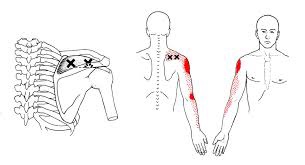
The supraspinatus muscle is one of the muscles that makes up your rotator cuff. It attaches from the scapula to the humerus. It functions mainly to laterally rotate the arm as well as stabilize the shoulder joint. It also assists in abduction of the arm. This muscle can often harbour stubborn trigger points. These points refer pain into the shoulder, down the arm, into the elbow, and even into the forearm if irritated enough. These points can be effectively treated with trigger point massage therapy.
Trigger points in the pectoralis major muscle.
A very common muscle to become overloaded and damaged, and thus develop trigger points, is the pectoralis major muscle. This is the muscle that makes up the chest. It’s main functions are adduction and internal rotation at the shoulder. Poor rounded shoulder posture is a common cause of pec tightness and trigger points. trigger points in this muscle will produce pain felt into the front of the shoulder, the chest, and down the medial arm. If these symptoms occur in the left pec it can mimick heart pain. In women, these points can be a cause of breast pain and nipple hypersensitivity.
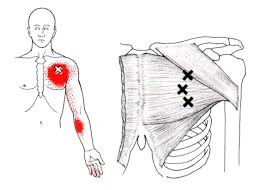
Shoulder and arm pain from the subscapularis muscle.
The subscapularis muscle is one of the rotator cuff muscles. It is located on the inside of the scapula, and can be difficult to access. This muscle functions to internally rotate the arm as well as to adduct the shoulder. It is also a stabilizer of the shoulder joint. When this muscle is overloaded or injured trigger points can form. These points will refer pain into the back of the shoulder and down the inside of the arm to the wrist. Trigger points in the subscapularis are often associated with a frozen shoulder.

Why trigger point therapy?
People often think of a massage as a relaxing experience, something they might do occasionally, or give as a gift along with a trip to the spa. Trigger point massage therapy is another kind of massage used to treat pain and physical dysfunction. Trigger points can develop in people from all walks of life. They can affect people of all ages, office workers and labourers, elite and weekend athletes, post surgical patients, people with acute pain from injury and people with chronic pain. Trigger point massage therapy can treat a wide variety of physical conditions such as:
– Migraines
– back pain.
– sciatica
– Carple tunnel syndrome
– achy persistent pain
– pain from Fibromyalgia
– post surgical pain and scarring
– soft tissue injuries related to sports
– TMJ dysfunction

Achy pain in the shoulder blade??
One of the most common causes of achy restless shoulder blades is trigger points in the rhomboid muscles. these muscles are responsible for pulling your shoulder blades back, and are often overloaded from poor shoulder posture. These muscles are very common areas to develop trigger points. Once there they will produce a persistent deep achy pain along the inside of the shoulder blade.

Trigger points in the trapezius muscle.
The trapezius muscle or traps is a large diamond shaped muscle located in your back and neck. It is responsible for both neck and shoulder movements as well as stabilizing these areas. Because of this the traps are a very common muscle to become overloaded and strained. When this happens trigger points form in the muscle and cause pain, refered pain, stiffness, and weakness. The upper portion of the muscle is the most common area in the body to develop trigger points. These points refer pain up the neck, behind the ear, and into the temple causing headaches. Trigger points in the lower parts of the muscle will cause shoulder and upper back pain. Trigger points need direct attention to be treated. Otherwise they can out live you!

Trigger points in the infraspinatus and shoulder and arm pain.
The infraspinatus muscle is one of the muscles that makes up the rotator cuff. It functions to laterally rotate the shoulder and to stabilize the shoulder joint. Rotator cuff problems are common and can be caused by both acute injuries, or chronic repeditive movements, and poor posture. When this happens trigger points will form causing pain, refered pain, as well as stiffness and weakness. Refered pain from trigger points in the infraspinatus can be felt into the front of the shoulder and down the arm. Trigger points can also produce a sensation the the shoulder joint isn’t “sitting right”. Trigger points must be released to relieve these symptoms.

Myofascial trigger points and pain.
TP’s were first brought to the attention of the medical world by Dr. Janet G. Travell. Dr. Travell, physician to President John F. Kennedy, is the acknowledged Mother of Myofascial Trigger Points. In fact, “Trigger Point massage, the most effective modality used by massage therapists for the relief of pain, is based almost entirely on Dr. Travell’s insights.”2 Dr. Travell’s partner in her research was Dr. David G. Simons, a research scientist and aerospace physician.
Trigger Points are very common. In fact, Travell and Simons state that TP’s are responsible for, or associated with, 75% of pain complaints or conditions.1 With this kind of prevalence, it’s no wonder that TP’s are often referred to as the “scourge of mankind”.
Trigger Points can produce a wide variety of pain complaints. Some of the most common are migraine headaches, back pain, and pain and tingling into the extremities. They are usually responsible for most cases of achy deep pain that is hard to localize.
A TP will refer pain in a predictable pattern, based on its location in a given muscle. Also, since these spots are bundles of contracted muscle fibres, they can cause stiffness and a decreased range of motion. Chronic conditions with many TP’s can also cause general fatigue and malaise, as well as muscle weakness.
Trigger points in the upper traps.
One of the most common issues that I treat on a daily basis is trigger points in the upper traps. The trapezius muscle or “traps” is a large diamond shaped muscle located in you back and neck. The upper portion of this muscle is one on the most common areas to become strained due to poor posture or emotional stress. When this
happens trigger points are sure to develop. These points will cause pain to be felt up the neck, behind the ear, and traveling to the temple. Trigger points in the upper traps are one of the most common causes of headache pain, as well as a stiff neck.
 Aberdeen Chiropractic