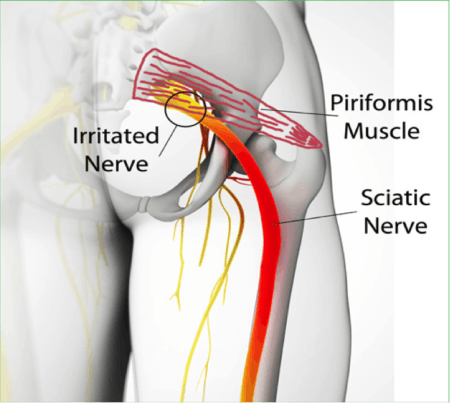
Piriformis syndrome

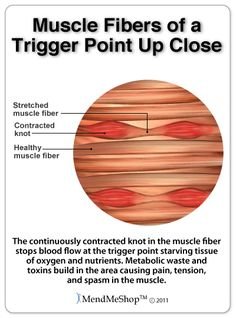
Piriformis syndrome is caused by a tight contracted piriformis muscle putting pressure on the sciatic nerve causing symptoms of tingling, numbness, and altered sensation. This muscle is often tight in people who sit for long periods of time. A common cause of this muscle being contracted and tight are trigger points. These trigger points are contracted knots within the belly of the muscle. These knots cause the muscle to become shortened. Trigger points will also cause pain on their own. This is usually felt as a deep achy pain in the glute and hip area, as well as in the back of the leg.
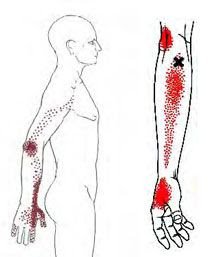
The Rectus Femoris muscle is a large muscle that makes up part of the quadriceps group. It functions to extend the knee and flex the hip. It originates on the anterior inferior iliac spine and part of the acetabulum. It’s insertion is the patella via the quadriceps tendon and tibial tuberosity via the patellar ligament. Trigger points in this muscle refer deep into the knee. This muscle is an often overlooked source of knee pain.
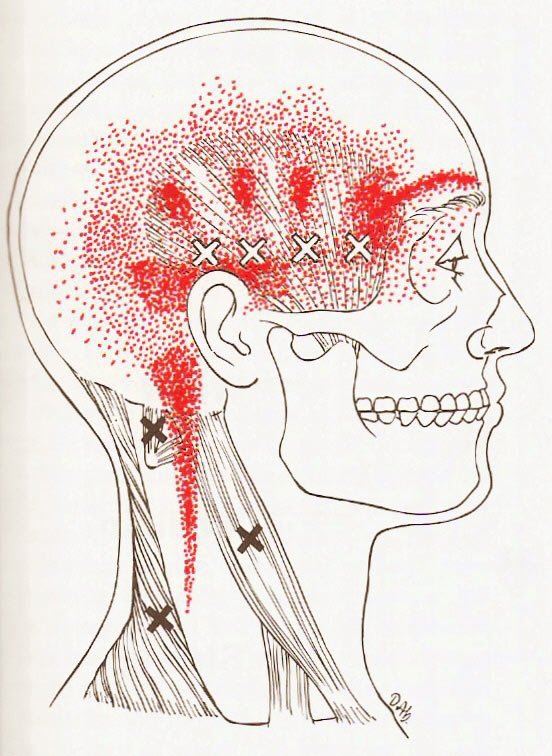
Trigger points and headaches

One of the most common sources of headache pain is trigger points in the neck muscles. These muscles are often overloaded from poor posture such as sitting in front of a computer or looking down at you phone for long periods of time. Trigger points that form in the upper traps are the most common trigger points in the body. They refer pain up the neck, behind the ear into the temple. The suboccipital muscles refer pain deep into the skull behind the eye. Sternocleidomastoid trigger points will refer pain to the top of the head and around the orbit of the eye. Trigger points need to be manually released to be resolved.

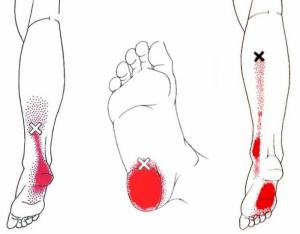
Planter fascitis and trigger points

Planter fascitis is a painful condition affecting the bottoms of the feet. It involves inflammation and tightness of the planter fascia, which is a tough layer of connective tissue on the bottoms of the feet. Trigger points in the calf and foot muscles are a leading cause of planter fascitis. These points not only cause the muscle to become tight which in turn causes the fascia to be tight, but the trigger point pain referral patterns of these muscle will cause pain to be felt in the bottoms of the feet and heal. These causes are often overlooked leading to ineffective treatment and prolonged suffering.

Trigger points in the gluteus medius.

The gluteus medius muscle is located in the hip. It is a major pelvic stabilizer during walking and running. It is also a main abductor of the hip. Trigger points in this muscle will refer pain deep into the sacrum and s.i. joints. Pain will also be refered into the buttock as well as into the low back along the belt line.

Myofascial pain syndrome

Myofascial pain syndrome is caused by a stimulus, such as muscle tightness, that sets off trigger points in your muscles. Factors that may increase your risk of muscle

trigger points include:

  • Muscle injury. An acute muscle injury or continual muscle stress may lead to the development of trigger points. For example, a spot within or near a strained muscle may become a trigger point. Repetitive motions and poor posture also may increase your risk.
  • Stress and anxiety. People who frequently experience stress and anxiety may be more likely to develop trigger points in their muscles. One theory holds that these people may be more likely to clench their muscles, a form of repeated strain that leaves muscles susceptible to trigger point

What is myofascial pain syndrome?

Myofascial pain syndrome is a chronic pain disorder. In this condition, pressure on sensitive points in your muscles (trigger points) causes pain in the muscle and sometimes in seemingly unrelated parts of your body. This is called referred pain.

This syndrome typically occurs after a muscle has been contracted repetitively. This can be caused by repetitive motions used in jobs or hobbies or by stress-related muscle tension.

Trigger points in the Q.L. Muscle

the quadratus lumborum muscle or “q.l.” Is a muscle located in your lower back. It originates on the iliac crest and iliolumbar ligament, and interns onto the last rib and transverse processes of the lumbar vertebrae. This muscle functions to stabilize the lumbar spine as well as laterally flex the spine. It will also hike the hip. Acting bilaterally it will extend the lumbar spine. Trigger points will often develop in this muscle. Trigger point referral will produce pain in the S.I. Joint and the lateral hip as well as the buttock. The pain referred into the S.I. Joint is often misdiagnosed as S.I. Joint dysfunction.