How to treat a stiff, sore neck.

One of the most common issues that I treat in my clinic on a regular basis is neck stiffness and pain. This is a prevelent problem in our society in large part due to poor posture. Sitting in front of a computer at work all day, or being on you phone will eventually cause the muscles in you neck to become strained and over worked. When this happens the muscles become tight and sore. At this point all the stretching in the world won’t make a difference. A manual intervention such as trigger point massage is needed to allow the muscles to heal and function normally again.

What are trigger points.

What is a Trigger Point?

Trigger Points (TP’s) are defined as a “hyper-irritable spot within a taut band of skeletal muscle. The spot is painful on compression and can evoke characteristic referred pain and autonomic phenomena.”1

Put into plain language, a TP is a painful knot in muscle tissue that can refer pain to other areas of the body. You have probably felt the characteristic achy pain and stiffness that TP’s produce at some time in your life.

Trigger points in the upper traps.

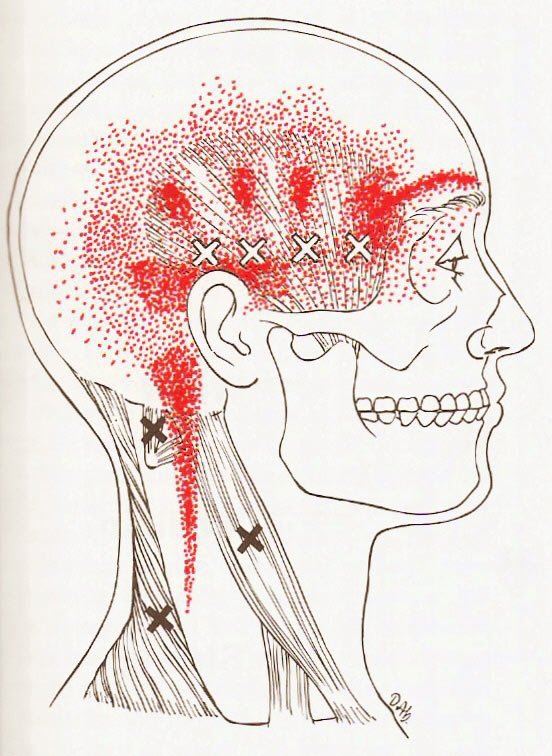
One of the most common issues that I treat on a daily basis is trigger points in the upper traps. The trapezius muscle or “traps” is a large diamond shaped muscle located in you back and neck. The upper portion of this muscle is one on the most common areas to become strained due to poor posture or emotional stress. When this

happens trigger points are sure to develop. These points will cause pain to be felt up the neck, behind the ear, and traveling to the temple. Trigger points in the upper traps are one of the most common causes of headache pain, as well as a stiff neck.

Trigger points in the diaphragm

The diaphragm is the major muscle of respiration. It’s main action is to increase the volume of the thoracic cavity during inhalation. Trigger points form in this muscle due to asthma, emotional overload, disk problems, weak abdominals, hyperventilating, smoking, and poor posture. When trigger points form they can cause a wide variety of symptoms including hyperventilation syndrome, heart and lung issues, as well as a “stitch” pain when running or exercising.

Stiff neck and trigger points.

Myofascial trigger points in the neck muscles are one of the most common causes of neck pain and stiffness. Poor posture and stress can cause muscles in the neck to become overworked and strained. When this happens trigger points will form. These points of contracted muscle will cause pain, referred pain (often into the head), as well as stiffness and weakness. Trigger points won’t resolve on there own, a manual release such as trigger point massage is required to treat the problem.

Gluteus minimus trigger points and sciatica.

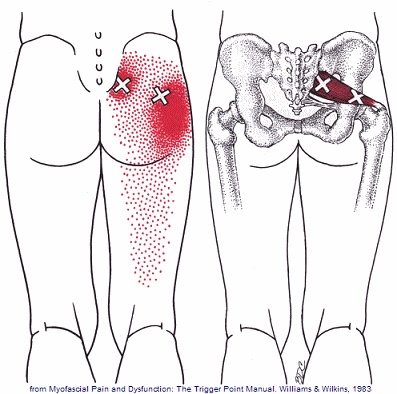
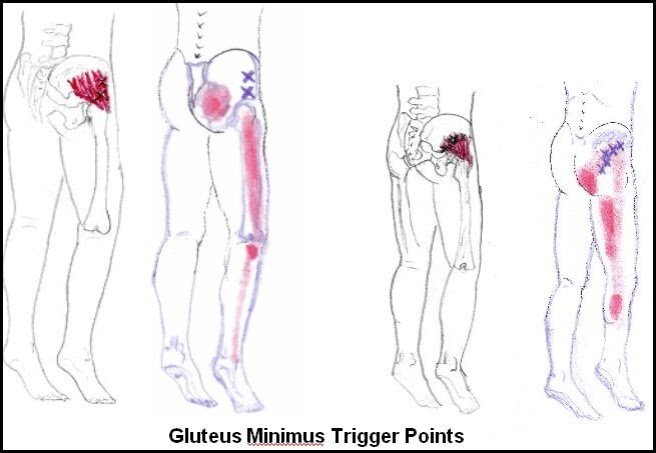
The gluteus minimus muscle is located at the hip. It functions to abduct the hip and stabilize the pelvis. Trigger points commonly develop in this muscle from overload stress. The referral pattern of these trigger points will refer pain down the side of the leg, as well as into the glute and hamstring. These symptoms are often mistaken for irritation of the sciatic nerve called ” sciatica” which produces very similar symptoms.

Causes of a stiff neck.

The levator scapulae muscle is located in your neck. It is responsible for raising your shoulder blade up to your ear, as well as side flexion of the neck. Trigger points develop in this muscle commonly due to poor posture, and stress holding patterns. Once developed these trigger points will cause a deep achy pain and stiffness in the neck.