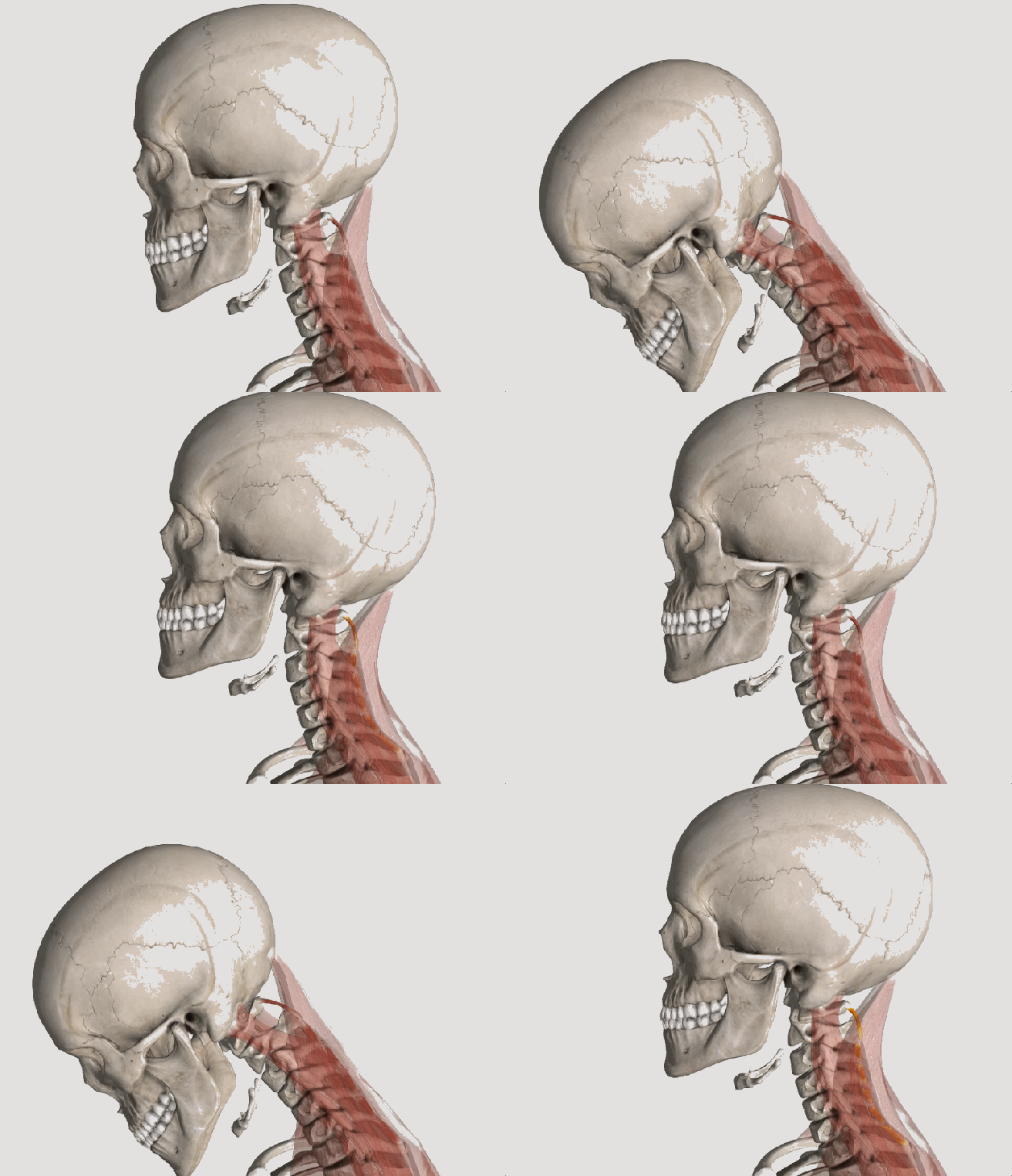
Headache & Dizzy. When To Be Concerned.

Last week, we discussed some startling new research that found that lightheadedness upon standing up (orthostatic hypotension) may be more serious than previously thought. This month, we’ll look specifically at headache AND dizziness and if we should we be concerned about this combination of complaints and if so, when?

A team of researchers from Johns Hopkins University reviewed past medical records of 187,188 patients presenting to over 1,000 emergency departments (EDs) between 2008 and 2009. They found the combination of headache and dizziness—especially in women, minorities, and young patients—was a potential signal of an impending stroke!

Specifically, they reported that 12.7% of people complaining of headache and dizziness were later admitted for stroke and had been misdiagnosed and inappropriately sent home from the ED within the previous 30 days. Patients were told they had a “benign condition” such as inner ear infection or migraine, and in some cases, they weren’t given a diagnosis at all. Slightly less than half of this population had a stroke within seven days and over half had a stoke within the first 48 hours of the initial pre-stroke ED presentation!

The study reported that women were 33% and minorities 20-30% more likely to be misdiagnosed, suggesting gender and racial disparities may play a role. The researchers estimate that doctors miss 15,000 to 165,000 strokes that result in harm to the patient each year.

Studies have found that the early diagnosis and quick treatment of strokes is critical in reducing serious residuals in patients having a transient ischemic attach (TIA), sometimes referred to as a “mini-stroke” or “pre-stroke.” TIAs are often pre-cursors to a more catastrophic stroke leading to death or permanent disability without appropriate treatment.

Again, to put this in perspective, MANY people present to healthcare providers with headaches and dizziness with NO relationship to stroke—about 87%—though it is sometimes not possible to know whether a potentially dangerous problem may arise in the near future. The good news is that it usually does not!

The importance of this study is to alert both healthcare providers AND patients of the potential risk. When in doubt, it’s ALWAYS best to seek out multiple opinions. An MRI may be the best way to confirm the most common type of stroke (according the study reviewed above), as a CT scan may not show the brain changes early on and could lead to false reassurance.


Doctors of chiropractic commonly see patients presenting with headaches and dizziness. When this occurs suddenly, out of the ordinary, and/or at a relatively young age (women > men), it’s better to be safe than sorry and obtain multiple opinions, especially WHEN IN DOUBT!

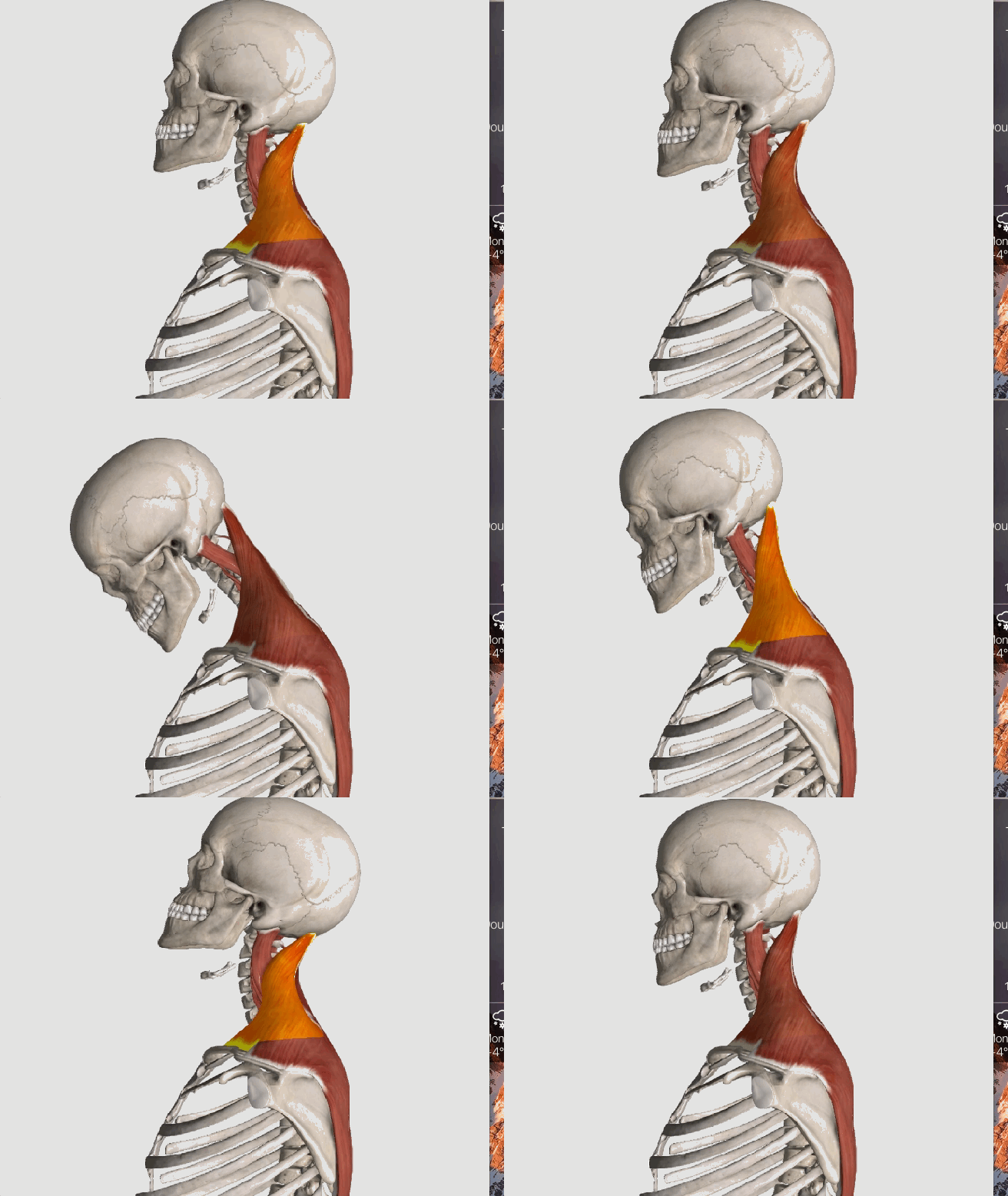
Trigger points in the sternocleidomastoid muscle. By Bryan Cobb RMT.

Screen Shot 2017-12-01 at 10.39.50 AM.png

The sternocleidomastoid muscle or “scm” is a strap like muscle located in the front of the neck. It originates on the manubrium of the sternum and the medial clavicle, and inserts on the mastoid process of the temporal bone( the lump or bone behind the ear). When working together the scm flexes the head and neck. The actions of one muscle working by itself is to rotate the face to the opposite side and lift it toward the ceiling.

Trigger points in this muscle usually form due to acute injury or to chronic postural stress. These trigger points can cause a wide variety of symptoms including pain felt in the cheek, temple, forehead, top of the head, and base of the skull. Trigger points in these muscles can also refer deep into the ear and cause postural dizziness.

I get dizzy when I have a headache. Should I worry?

Vertigo_view_03,_Andels_Hotel_Łódź.jpg

Dizziness, neck pain, and headaches are very common symptoms that may or may not occur at the same time. Though this interrelationship exists, this month’s article will focus primarily on dizziness, particularly related to dizziness that occurs after standing.

First, it is important to point out that it is VERY common to be light headed or dizzy when standing up too fast, which is typically referred to as orthostatic hypotension (OH). OH is frequently referred to as a benign symptom, but new information may challenge this thought.

Let’s review what happens. When we are lying down, our heart does not have to work as hard as when we are upright; therefore, our blood pressure (BP) is usually lower while we lay in bed. When standing up, blood initially pools in the legs until an increase in blood pressure brings oxygen to the brain. This either resolves or prevents dizziness.

Orthostatic hypotension is defined as a blood pressure drop of >20 mm Hg systolic (the upper number—heart at FULL contraction), 10 mm Hg diastolic (lower number—heart at FULL rest), or both. This typically occurs within seconds to a few minutes after rising to a standing position.

There are two types of OH—delayed OH (DOH) where the onset of symptoms are not immediate but occur within three minutes of standing and “full” OH, which is more serious and occurs immediately upon rising. According to a 2016 study published in the prestigious journal Neurology, researchers reviewed the medical records of 165 people who had undergone autonomic nervous system testing for dizziness. The subjects averaged 59 years of age, and 48 were diagnosed with DOH, 42 with full OH, and 75 subjects didn’t have either condition.

During a ten-year follow-up, 54% of the DOH group progressed to OH, of which 31% developed a degenerative brain condition such as Parkinson’s disease or dementia. Those with initial DOH who also had diabetes were more likely to develop full OH vs. those without diabetes.

The early death rate in this 165 patient group was 29% for those with DOH, 64% with full OH, vs. 9% for those with neither diagnosed condition. The authors point out that those initially diagnosed with DOH who did NOT progress into full OH were given treatment that may have improved their blood pressure.

The authors state that a premature death might be avoided by having DOH and OH diagnosed and properly managed as early as possible. They point out that a prospective study is needed since this study only looked back at medical records of subjects who had nervous system testing performed at a specialized center, and therefore, these findings may not apply to the general population.

The value of this study is that this is the FIRST time a study described OH (or DOH) as a potentially serious condition with recommendations NOT to take OH/DOH lightly or view it as a benign condition. Since doctors see this a lot, a closer evaluation of the patient is in order.

Exercise Of The Month: Pike On A Ball

Pike on a Ball

Begin in a push-up position with your knees resting on an exercise ball. Maintain a neutral spine, and do not allow your back to arch down towards the floor. Roll the ball from your thighs to your ankles by bending your knees and bringing them towards your chest. Slowly return to the start position. Perform three sets of 10 repetitions daily or as directed.

What is Facet Syndrome?

As stated in last week’s article, low back pain (LBP) can arise from many different structures. Lumbar facet syndrome is one that involves the facet joint and includes both acute (new) and chronic (old) varieties. The facet joint is synonymous with the zygapophyseal joint, so if you hear that word, don’t let it throw you off! Approximately 45% of patients with chronic low back pain suffer from “facet syndrome” (FS) in which the facets are the low back pain generator.
There are many conditions that give rise to FS. Some of these include the straining of the surrounding joint capsule (the capsule holds the joint securely together), joint hypomobility (reduced motion in the joint), a synovial cyst (similar to a ganglion on the back of the wrist but its located inside the joint), and degeneration (also called osteoarthritis—the wearing out type of arthritis).
Because facet syndrome can accompany other conditions, a doctor of chiropractic must evaluate each patient individually and manage each person appropriately. In “pure” facet syndrome, pain rarely ever passes the level of the knee and does not cause neurological loss (weakness, loss of reflex, etc.). It can create numbness but usually NOT beyond the knee. Pain is usually not worsened by hip movements such as straight leg raise or hip rotation.
The facet joint’s “job” (at least in part) is to limit or guard twisting movements in the upper lumbar/low back region, and the lower lumbar facets are shaped to limit motion when bending forwards and backwards. Facet joints are unique because they are innervated by specific nerves that can be blocked by injecting an anesthetic agent to determine if the facet (and its innervating nerve) is the main source of pain. The surrounding capsule around the facet joint contains mechanoreceptors (cells that detect movement) and nociceptors (cells that detect pain) that fire when the facet joint is compressed/jammed or over-stretched. These nociceptors can become “hypersensitized” (very irritable) when they remain inflamed over time.
In many patients, injury to a facet joint is the result of many microtraumas over a period of time and not one single isolated event. For example, repeatedly bending backwards, twisting, and leaning to one side can stretch the joint capsule and fatigue it until some capsular tissues finally “give” and it inflames which generates pain.
These joints commonly become arthritic with age, which is one reason people over 50-60 years old commonly present with FS. Osteoarthritis results in a narrowing of the joint space and causes a more permanently “jammed” joint. This is one reason many elderly people walk partially bent over—as bending forwards opens the facet joints and “feels good!”
facet joint
The good news is that chiropractic manipulation is a highly effective treatment for facet syndrome, and most patients feel much better within the first or second week of care (often within three to five visits).

Do I have a tension headache? Or Migranes?

Cervicogenic

Most likely, everyone reading this article has had a headache at one time or another. The American Headache Society reports that nearly 40% of the population suffers from episodic headaches each year while 3% have chronic tension-type headaches. The United States Department of Health and Human Services estimates that 29.5 million Americans experience migraines, but tension headaches are more common than migraines at a frequency of 5 to 1. Knowing the difference between the two is important, as the proper diagnosis can guide treatment in the right direction.

TENSION HEADACHES: These typically result in a steady ache and tightness located in the neck, particularly at the base of the skull, which can irritate the upper cervical nerve roots resulting in radiating pain and/or numbness into the head. At times, the pain can reach the eyes but often stops at the top of the head. Common triggers include stress, muscle strain, or anxiety.

MIGRAINE HEADACHES: Migraines are often much more intense, severe, and sometimes incapacitating. They usually remain on one side of the head and are associated with nausea and/or vomiting. An “aura”, or a pre-headache warning, often comes with symptoms such as a bright flashing light, ringing or noise in the ears, a visual floater, and more. For migraine headaches, there is often a strong family history, which indicates genetics may play a role in their origin.

There are many causes for headaches. Commonly, they include lack of sleep and/or stress and they can also result from a recent injury—such as a car accident, and/or a sports injury—especially when accompanied by a concussion.

Certain things can “trigger” a migraine including caffeine, chocolate, citrus fruits, cured meats, dehydration, depression, diet (skipping meals), dried fish, dried fruit, exercise (excessive), eyestrain, fatigue (extreme), food additives (nitrites, nitrates, MSG), lights (bright, flickering, glare), menstruation, some medications, noise, nuts, odors, onions, altered sleep, stress, watching TV, red wine/alcohol, weather, etc.

Posture is also a very important consideration. A forward head carriage is not only related to headaches, but also neck and back pain. We’ve previously pointed out that every inch (2.54 cm) the average 12 pound head (5.44 kg) shifts forwards adds an EXTRA ten pounds (4.5 kg) of load on the neck and upper back muscles to keep the head upright.

So, what can be done for people who suffer from headaches? First, research shows chiropractic care is highly effective for patients with both types of headaches. Spinal manipulation, deep tissue release techniques, and nutritional counseling are common approaches utilized by chiropractors. Patients are also advised to use some of these self-management strategies at home as part of their treatment plan: the use of ice, self-trigger point therapy, exercise (especially strengthening the deep neck flexors), and nutritional supplements.

Can Adjustments Help Relieve Neck Pain?

There have been MANY studies conducted on the benefits and efficacy of spinal manipulation to treat back pain—so much so that many medical doctors frequently refer patients with back pain to chiropractors for this service. But what about neck pain?

Although it’s taken a little longer to compile the evidence, there is now substantial research to support that spinal manipulation for neck pain is equally effective as it is for low back pain in regards to improving pain levels, function, and quality of life.

Multiple reviews and meta-analyses (studies that evaluate the research over a series of years) indicate that mobilization, manipulation, and exercise all work alone but appear to give the best long-term benefits when used in combination with each other.

In the acute and subacute stages of neck pain, studies show cervical manipulation is more effective than various combinations of analgesics, muscle relaxants, and nonsteroidal anti-inflammatory drugs (NSAIDs) for improving pain and function in both the short and intermediate term.

Studies show that thoracic or mid-back manipulation is also very helpful for patients with neck pain. Chiropractic approaches often include a combination of spinal manipulation, manual cervical traction, figure-8 mobilization, and deep tissue trigger point/active release forms of therapy.

As noted above, the inclusion of exercise yields the best long-term benefits, especially for chronic neck pain.

One such exercise is Cranio-cervical flexion (deep neck flexor strengthening): Tuck the chin inwards, pushing the mid part of the neck backward with or without resisting into your fingers/hands or a towel wrapped around the neck. A gradual crescendo of pressure followed by a gradual release (or decrescendo) works well!

Another great exercise is Fiber Stretching: Side-bend the head and neck while applying gentle over-pressure while simultaneously reaching downward with the opposite arm/hand, searching for tight muscle fibers. Try combining forward and backward rotations and chin glide head movements while applying the over-pressure/reach combinations, and work each tight fiber until it loosens up.

There are many other exercises your doctor of chiropractic can show you, but these are a great start!

Whiplash and Your Posture

WRD 2.gif

Posture assessment is a key component of the chiropractic examination, and the posture of the head and neck is especially important for a patient recovering from a whiplash injury. Forward head carriage describes a state in which the head sits more forward on the shoulders than it should. In order for the muscles in the neck and shoulders to keep the head upright, they must work harder. This added strain can increase one’s risk for neck pain and headaches, which is why retraining posture is a key component to the management of neck pain and headaches in patients with or without a history of whiplash.

Forward head carriage also increases the distance between the back of the head and the headrest in the seated position, especially when the seat is reclined. In a rear-end collision, a gap greater than a half an inch between the head rest and the back of the head increases the probability of injury due to the greater distance the head can hyperextend as it rebounds backwards into the headrest.  This makes posture correction of forward head carriage an important aspect of treatment from both a preventative and curative perspective.

So this begs the question, can forward head carriage be corrected?  The simple answer is “yes!” One study evaluated the effects of a 16-week resistance and stretching program designed to address forward head posture and protracted shoulder positioning.

Researchers conducted the study in two separate secondary schools with 130 adolescents aged 15–17 years with forward head and protracted shoulder posture. The control group participated in a regular physical education (PE) program while the experimental group attended the same PE classes with the addition of specific exercises for posture correction. The research ream measured the teens’ shoulder head posture from the side using two different validated methods and tracked symptoms using a questionnaire. The results revealed a significant improvement in the shoulder and cervical angle in the experimental group that did not occur in the control group.

The conclusion of the study strongly supports that a 16-week resistance and stretching program is effective in decreasing forward head and protracted shoulder posture in adolescents.  This would suggest that a program such as this should be strongly considered in the regular curriculum of PE courses since this is such a common problem.

Doctors of chiropractic are trained to evaluate and manage forward head posture with shoulder protraction. This can prove beneficial in both the prevention as well as management of signs and symptoms associated with a whiplash injury.

What is Whiplash?

Up Trap Ext

Whiplash is an injury to the soft-tissues of the neck often referred to as a sprain or strain. Because there are a unique set of symptoms associated with whiplash, doctors and researchers commonly use the term “whiplash associated disorders” or WAD to describe the condition.

WAD commonly occurs as a result of a car crash, but it can also result from a slip and fall, sports injury, a personal injury (such as an assault), and other traumatic causes. The tissues commonly involved include muscle tendons (“strain”), ligaments and joint capsules (“sprains”), disk injuries (tears, herniation), as well as brain injury or concussion—even without hitting the head!

Symptoms vary widely but often include neck pain, stiffness, tender muscles and connective tissue (myofascial pain), headache, dizziness, sensations such as burning, prickly, tingling, numbness, muscle weakness, and referred pain to the shoulder blade, mid-back, arm, head, or face. If concussion occurs, additional symptoms include cognitive problems, concentration loss, poor memory, anxiety/depression, nervousness/irritability, sleep disturbance, fatigue, and more!

Whiplash associated disorders can be broken down into three categories: WAD I includes symptoms without any significant examination findings; WAD II includes loss of cervical range of motion and evidence of soft-tissue damage; and WAD III includes WAD II elements with neurological loss—altered motor and/or sensory functions. There is a WAD IV which includes fracture, but this is less common and often excluded.

Treatment for WAD includes everything from doing nothing to intensive management from multiple disciplines—chiropractic, primary care, physical therapy, clinical psychology, pain management, and specialty services such as neurology, orthopedics, and more. The goal of treatment is to restore normal function and activity participation, as well as symptom management.

The prognosis of WAD is generally good as many will recover without residual problems within days to weeks, with most people recovering around three months after the injury. Unfortunately, some are not so lucky and have continued neck pain, stiffness, headache, and some develop post-concussive syndrome. The latter can affect cognition, memory, vision, and other brain functions. Generally speaking, the higher the WAD category, the worse the prognosis, although each case MUST be managed by its own unique characteristics. If the injury includes neurological loss (muscle strength and/or sensory dysfunction like numbness, tingling, burning, pressure), the prognosis is often worse.

Chiropractic care for the WAD patient can include manipulation, mobilization, and home-based exercises, as well as the use of anti-inflammatory herbs (ginger, turmeric, proteolysis enzymes (bromelain, papain), devil’s claw, boswellia extract, rutin, bioflavonoid, vitamin D, coenzyme Q10, etc.) and dietary modifications aimed at reducing inflammation and promoting healing.

* 83% of those patients involved in an MVA will suffer whiplash injury and 50% will be symptomatic at 1 year.
* 90% of patients with neurologic signs at onset may be symptomatic at 1 year.
* 25- 80% of patients who suffer a whiplash injury will experience late-onset dizziness
* Clinicians should be observant for radiographic signs of instability, including interspinous widening, vertebral subluxation, vertebral compression fracture, and loss of cervical lordosis.
* Horizontal displacement of greater than 3.5 mm or angular displacement of more than 11 degrees on flexion/extension views suggests instability

What to do about FM #pain?

Fibromyalgia (FM) is a very common condition affecting approximately ten million Americans (2-4% of the population)—with a ratio of about four women to each man with the disease. Part of the diagnosis and treatment challenge is that many of the complaints associated with FM occur in ALL of us at some point, such as fatigue, generalized whole body aches/pains, non-restorative sleep, depression, anxiety, etc. So what is the difference between the FM sufferer and those without it? Let’s take a look!

The primary distinction between patients with FM and the “rest of us” has to do with the word “chronic.” This term means “…persisting for a long time or constantly recurring; long-standing, long-term.” In fact, the term “fibromyalgia” is described as a complex chronic pain disorder that causes widespread pain and tenderness that may present body wide or migrate around the body. It is also known to “wax and wane over time,” meaning it flares up and down, off and on.

The diagnosis of FM is typically made by eliminating every other possible cause. Hence, after blood tests and x-ray or other imaging, the ABSENCE of other problems helps nail down the diagnosis of “primary fibromyalgia.” Then there is “secondary fibromyalgia,” which is DUE TO a known disorder or condition such as after trauma (like a car accident), rheumatoid arthritis, migraine headache, irritable bowel syndrome, “GERD” (which is heart burn due to reflux), pelvic pain, overactive bladder, tempromandibular joint dysfunction (jaw pain, with or without ringing in the ears), or stress. It’s also often accompanied by anxiety, depression, and/or some other mental health condition.

It should be clearly understood that there is no “cure” for FM. It has also been widely reported in many studies that the BEST management approach for FM is through a TEAM of healthcare providers. This team is frequently made up of primary care doctors, doctors of chiropractic, massage therapists, mental / behavioral specialists, physical therapists, and perhaps others (acupuncturist, nutritionist, stress management specialists, and more).

The “general” treatment approach is typically done with medications, cognitive behavioral therapies (CBT), gentle exercise, and manual therapies. Additionally, patients are encouraged to participate in the healing process via self-management strategies that focus on reducing stress and fatigue, optimizing diet, and developing a consistent sleep habit.

Think of the role of the chiropractor as a strong member of the team. A doctor of chiropractic can offer many of the known methods of managing FM described above, as their training includes diet and nutrition, stress management, exercise training, and ability to provide “whole person care.” Treatments delivered in the chiropractic setting like spinal manipulation, mobilization, and massage offer GREAT relief to FM patients! Again, coordinating care between various providers is the best approach, but you need someone willing and able to do that. A doctor of chiropractic is a great choice!

It is very difficult to manage FM on your own. Let a doctor of chiropractic tailor a treatment plan that is appealing to you and your specific interests. Managing FM is definitely NOT a “…one size fits all” approach like an inhaler is for asthma. Each individual’s situation is too highly unique!60+ Yoga