Between 80% and 90% of the general population will experience an episode of lower back pain (LBP) at least once during their lives. When it affects the young to middle-aged, we often use the term “non-specific LBP” to describe the condition. The geriatric population suffers from the “aging effects” of the spine—things like degenerative joint disease, degenerative disk disease, and spinal stenosis. Fractures caused by osteoporosis can also result in back pain.
Pain
My Hip Hurts….

One of the structures that is frequently blamed for hip pain is called the labrum—the rubbery tissue that surrounds the socket helping to stabilize the hip joint. This tissue often wears and tears with age, but it can also be torn as a result of a trauma or sports-related injury.
The clinical significance of a labral tear of the hip is controversial, as these can be found in people who don’t have any pain at all. We know from studies of the intervertebral disks located in the lower back that disk herniation is often found in pain-free subjects—between 20-50% of the normal population. In other words, the presence of abnormalities on an MRI is often poorly associated with patient symptoms, and the presence of a labral tear of the hip appears to be quite similar.
For instance, in a study of 45 volunteers (average age 38, range: 15–66 years old; 60% males) with no history of hip pain, symptoms, injury, or prior surgery, MRIs reviewed by three board-certified radiologists revealed a total of 73% of the hips had abnormalities, of which more than two-thirds were labral tears.
Another interesting study found an equal number of labral tears in a group of professional ballet dancers (both with and without hip pain) and in non-dancer control subjects of similar age and gender.
Another study showed that diagnostic blocks—a pain killer injected into the hip for diagnostic purposes to determine if it’s a pain generator—failed to offer relief for those with labral tears.
Doctors of chiropractic are trained to identify the origins of pain arising from the low back, pelvis, hip, and knee, all of which can mimic or produce hip symptoms. Utilizing information derived from a careful history, examination, imaging (when appropriate), and functional tests, chiropractors can offer a nonsurgical, noninvasive, safe method of managing hip pain.
Condition Of The Month: Thoracic Joint Restriction

Your spine is made up of 24 bones stacked on top of each other with a soft “disc” between each segment to allow for flexibility. Normally, each joint in your spine should move freely and independently. When one or more of your spinal vertebra is slightly misaligned and restricted, we call this condition a “spinal segmental joint restriction”. A “thoracic joint restriction” means that this misalignment or restriction is located in your upper or mid-back region.
To help visualize this, imagine a normal spine functioning like a big spring moving freely in every direction. A spine with a joint restriction is like having a section of that spring welded together. The spring may still move as a whole, but a portion of it is no longer functioning.
Joint restrictions can develop in many ways. Sometimes they are brought on by an accident or an injury. Other times, they develop from repetitive strains or poor posture. Being overweight, smoking, strenuous work, and emotional stress can make you more susceptible to problems.
Restricted joints give rise to a self-perpetuating cycle of discomfort. Joint restriction causes swelling and inflammation, which triggers muscular guarding leading to more restriction. Since your spine functions as a unit, rather than as isolated pieces, a joint restriction in one area of your spine often causes “compensatory” problems in another. Think of this as a rowboat with multiple oarsmen on each side. When one rower quits, the others are placed under additional stress and can become overworked.
Joint restrictions most commonly cause local tenderness and discomfort. You may notice that your range of motion is limited. Movement may increase your discomfort. Pain from a restricted joint often trickles around your rib cage or up & down your spine. Be sure to tell your chiropractor if your symptoms include any chest pain, shortness of breath, unusual cough, indigestion or flu- like complaints.
Long-standing restrictions are thought to result in arthritis – much like the way a slightly misaligned wheel on your car causes premature wearing of your tire.
You should recognize that your problem is common and generally treatable. Chiropractic care has been shown to be the safest and most effective treatment for joint restrictions. Our office offers several tools to help ease your pain. To speed your recovery, you should avoid activities that increase your pain. Be sure to take frequent breaks from sedentary activity. Yoga has been shown to help back pain sufferers so consider joining a class or picking up a DVD.
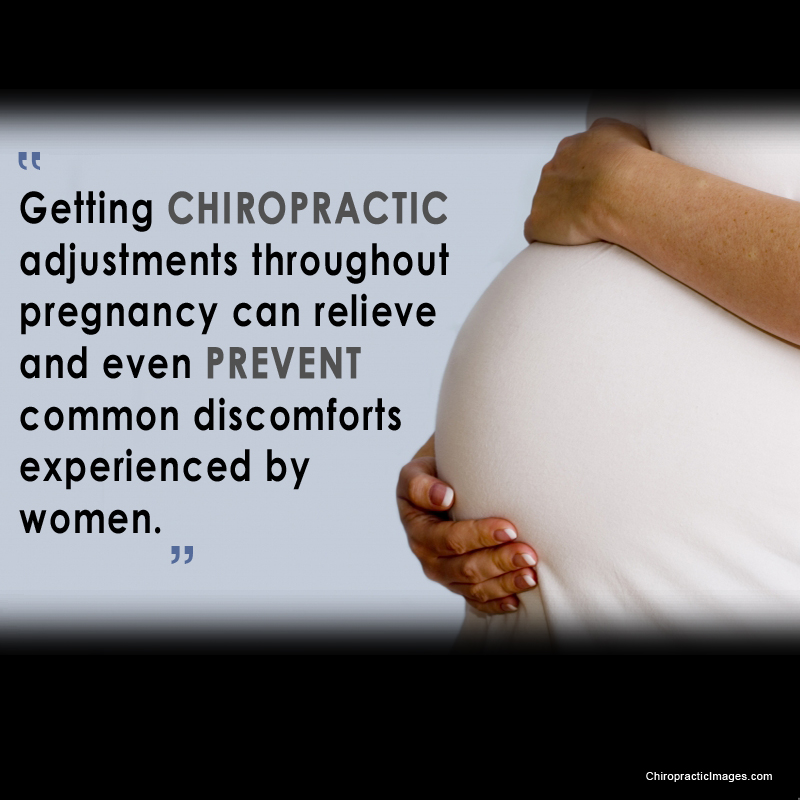
Pregnancy and Low Back Pain?
What is Whiplash?

Whiplash is an injury to the soft-tissues of the neck often referred to as a sprain or strain. Because there are a unique set of symptoms associated with whiplash, doctors and researchers commonly use the term “whiplash associated disorders” or WAD to describe the condition.
WAD commonly occurs as a result of a car crash, but it can also result from a slip and fall, sports injury, a personal injury (such as an assault), and other traumatic causes. The tissues commonly involved include muscle tendons (“strain”), ligaments and joint capsules (“sprains”), disk injuries (tears, herniation), as well as brain injury or concussion—even without hitting the head!
Symptoms vary widely but often include neck pain, stiffness, tender muscles and connective tissue (myofascial pain), headache, dizziness, sensations such as burning, prickly, tingling, numbness, muscle weakness, and referred pain to the shoulder blade, mid-back, arm, head, or face. If concussion occurs, additional symptoms include cognitive problems, concentration loss, poor memory, anxiety/depression, nervousness/irritability, sleep disturbance, fatigue, and more!
Whiplash associated disorders can be broken down into three categories: WAD I includes symptoms without any significant examination findings; WAD II includes loss of cervical range of motion and evidence of soft-tissue damage; and WAD III includes WAD II elements with neurological loss—altered motor and/or sensory functions. There is a WAD IV which includes fracture, but this is less common and often excluded.
Treatment for WAD includes everything from doing nothing to intensive management from multiple disciplines—chiropractic, primary care, physical therapy, clinical psychology, pain management, and specialty services such as neurology, orthopedics, and more. The goal of treatment is to restore normal function and activity participation, as well as symptom management.
The prognosis of WAD is generally good as many will recover without residual problems within days to weeks, with most people recovering around three months after the injury. Unfortunately, some are not so lucky and have continued neck pain, stiffness, headache, and some develop post-concussive syndrome. The latter can affect cognition, memory, vision, and other brain functions. Generally speaking, the higher the WAD category, the worse the prognosis, although each case MUST be managed by its own unique characteristics. If the injury includes neurological loss (muscle strength and/or sensory dysfunction like numbness, tingling, burning, pressure), the prognosis is often worse.
Chiropractic care for the WAD patient can include manipulation, mobilization, and home-based exercises, as well as the use of anti-inflammatory herbs (ginger, turmeric, proteolysis enzymes (bromelain, papain), devil’s claw, boswellia extract, rutin, bioflavonoid, vitamin D, coenzyme Q10, etc.) and dietary modifications aimed at reducing inflammation and promoting healing.
* 83% of those patients involved in an MVA will suffer whiplash injury and 50% will be symptomatic at 1 year.
* 90% of patients with neurologic signs at onset may be symptomatic at 1 year.
* 25- 80% of patients who suffer a whiplash injury will experience late-onset dizziness
* Clinicians should be observant for radiographic signs of instability, including interspinous widening, vertebral subluxation, vertebral compression fracture, and loss of cervical lordosis.
* Horizontal displacement of greater than 3.5 mm or angular displacement of more than 11 degrees on flexion/extension views suggests instability.
Why Does My Back Hurt?
What the heck is a trigger point?

What is a Trigger Point?
Trigger Points (TP’s) are defined as a “hyper-irritable spot within a taut band of skeletal muscle. The spot is painful on compression and can evoke characteristic referred pain and autonomic phenomena.”1
Put into plain language, a TP is a painful knot in muscle tissue that can refer pain to other areas of the body. You have probably felt the characteristic achy pain and stiffness that TP’s produce, at some time in your life.
TP’s were first brought to the attention of the medical world by Dr. Janet G. Travell. Dr. Travell, physician to President John F. Kennedy, is the acknowledged Mother of Myofascial Trigger Points. In fact, “Trigger Point massage, the most effective modality used by massage therapists for the relief of pain, is based almost entirely on Dr. Travell’s insights.”2 Dr. Travell’s partner in her research was Dr. David G. Simons, a research scientist and aerospace physician.
Trigger Points are very common. In fact, Travell and Simons state that TP’s are responsible for, or associated with, 75% of pain complaints or conditions.1 With this kind of prevalence, it’s no wonder that TP’s are often referred to as the “scourge of mankind”.
Trigger Points can produce a wide variety of pain complaints. Some of the most common are migraine headaches, back pain, and pain and tingling into the extremities. They are usually responsible for most cases of achy deep pain that is hard to localize.
A TP will refer pain in a predictable pattern, based on its location in a given muscle. Also, since these spots are bundles of contracted muscle fibres, they can cause stiffness and a decreased range of motion. Chronic conditions with many TP’s can also cause general fatigue and malaise, as well as muscle weakness.
Trigger Points are remarkably easy to get, but the most common causes are
TP’s (black X) can refer pain to other areas (red)
Sudden overload of a muscle
- Poor posture
- Chronic frozen posture (e.g., from a desk job), and
- Repetitive strain
Once in place, a TP can remain there for the remainder of your life unless an intervention takes place.
Trigger Points Not Well Known
With thousands of people dealing with chronic pain, and with TP’s being responsible for — or associated with — a high percentage of chronic pain, it is very disappointing to find that a large portion of doctors and other health care practitioners don’t know about TP’s and their symptoms.
Scientific research on TP’s dates back to the 1700’s. There are numerous medical texts and papers written on the subject.
But, it still has been largely overlooked by the health care field. This has led to needless frustration and suffering, as well as thousands of lost work hours and a poorer quality of life.
How Are Trigger Points Treated?
As nasty and troublesome as TP’s are, the treatment for them is surely straight-forward. A skilled practitioner will assess the individual’s pain complaint to determine the most likely location of the TP’s and then apply one of several therapeutic modalities, the most effective of which is a massage technique called “ischemic compression”.
Basically, the therapist will apply a firm, steady pressure to the TP, strong enough to reproduce the symptoms. The pressure will remain until the tissue softens and then the pressure will increase appropriately until the next barrier is felt. This pressure is continued until the referral pain has subsided and the TP is released. (Note: a full release of TP’s could take several sessions.)
Other effective modalities include dry needling (needle placed into the belly of the TP) or wet needling (injection into the TP). The use of moist heat and stretching prove effective, as well. The best practitioners for TP release are Massage Therapists, Physiotherapists, and Athletic Therapists. An educated individual can also apply ischemic compression to themselves, but should start out seeing one of the above therapists to become familiar with the modality and how to apply pressure safely.
1 Simons, D.G., Travell, D.G., & Simons, L.S. Travell and Simons’Myofascial Pain and Dysfunction: the Trigger Point Manual.
Vol. 1. 2nd ed. Lippincott, Williams, and Wilkins, 1999.
Patellofemoral Pain Syndrome

Patellofemoral pain syndrome (PFPS), also called “Runners Knee”, describes the symptom complex of knee discomfort, swelling, or crepitus that results from excessive or imbalanced forces acting on the joint. It is the most common cause of knee pain in the general population, affecting an estimated 25% of adults.
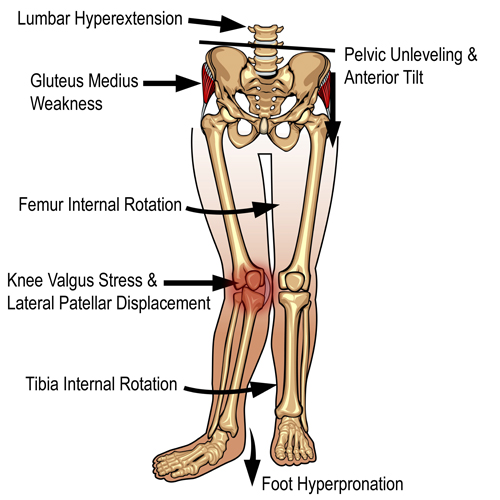
PFPS is most commonly related to lateral tracking of the patella. The patella has a natural tendency to migrate laterally due to the pull of the quadriceps and the slight natural valgus of the lower extremity. A new study in the Journal of Sports Medicine (1) provides additional confirmation that when managing patellofemoral pain syndrome, clinicians must address two critical yet often overlooked issues.
This study concludes that PFPS and dynamic knee valgus do not arise primarily from knee dysfunction, rather from hip abductor/ external rotator weakness and/or foot hyperpronation.
“The most effective intervention programs included exercises targeting the hip external rotator and abductor muscles and knee extensor muscles.” and “PFPS patients with foot abnormalities, such as those with increased rearfoot eversion or pes pronatus, may benefit the most from foot orthotics.”
Since gluteus medius and VMO weakness are key factors in the development of PFPS, strengthening exercises that target those muscles prove most effective. Stabilization exercises may include pillow push (push the back of your knee into a pillow for 5-6 seconds), supine heel slide, terminal knee (short-arc) extension, clam, glut bridge, semi-stiff deadlift, posterior lunge, and monster walk.
Myofascial release and stretching should be directed at hypertonic muscles, including the TFL, gastroc, soleus, hamstring, piriformis, hip rotators, and psoas. Myofascial release or IASTM may be appropriate for tightness in the iliotibial band, vastus lateralis, posterior hip capsule, and lateral knee retinaculum.
Manipulation may be necessary for restrictions in the lumbosacral and lower extremity joints. Hypermobility is common in the ipsilateral SI joint with restrictions present contralaterally. Evidence has shown that patellar tracking braces, i.e. BioSkin® or PatellaPro®, may lead to better outcomes.
Lifestyle modification may be necessary to reduce pain-provoking endeavors, especially running, jumping and other activities that induce a valgus stress. Athletes should avoid allowing their knee to cross in front of their toes while squatting. Arch supports or custom orthotics may be necessary to correct hyperpronation. Runners should avoid cross-over gaits and change shoes every 250 to 500 miles.
.
.
.
.
.
.
.
#pain
#kneepain
#chiropractic
#fitness
#sports
#wellness
#fitness
#healthyliving
#healthychoices
#Winnipeg
References
1. Petersen W, Rembitzki I, Liebau C. Patellofemoral pain in athletes. Open Access Journal of Sports Medicine. 2017;8:143-15
Exploring the Link Between Chiropractic Care and Pain Relief
Pain is a universal experience that can significantly impact our quality of life, mobility, and overall well-being. While pain management often involves medication or surgery, many people are turning to chiropractic care as a natural and holistic approach to pain relief. In this article, we’ll delve into the connection between chiropractic care and pain relief and explore how chiropractic treatments can help alleviate various types of pain.
Understanding Chiropractic Care
Chiropractic care is a branch of alternative medicine that focuses on the diagnosis, treatment, and prevention of musculoskeletal disorders, particularly those affecting the spine. Chiropractors use hands-on techniques, such as spinal adjustments, manipulations, and soft tissue therapies, to realign the spine, improve joint mobility, and restore proper function to the nervous system.
The Role of Chiropractic Care in Pain Relief
Chiropractic care is widely recognized for its effectiveness in relieving pain, particularly in the back, neck, and joints. Here’s how chiropractic treatments can help alleviate pain:
- Spinal Alignment: Misalignments or subluxations in the spine can put pressure on nerves, leading to pain and discomfort. Chiropractic adjustments aim to correct these misalignments, restore proper alignment to the spine, and alleviate nerve compression, resulting in pain relief and improved mobility.
- Reduction of Inflammation: Chiropractic adjustments can help reduce inflammation in the body by improving joint function, increasing blood flow, and promoting the release of anti-inflammatory substances. By addressing the underlying cause of inflammation, chiropractic care can help alleviate pain associated with conditions such as arthritis, bursitis, and tendonitis.
- Muscle Relaxation: Chiropractic treatments often involve soft tissue therapies, such as massage, myofascial release, and trigger point therapy, which help relax tense muscles, reduce muscle spasms, and improve circulation. By addressing muscular imbalances and tension, chiropractic care can alleviate pain and stiffness in the muscles and surrounding tissues.
- Prevention of Recurring Pain: In addition to providing immediate pain relief, chiropractic care focuses on addressing the underlying causes of pain and dysfunction to prevent future episodes of pain and discomfort. Through regular chiropractic adjustments, lifestyle modifications, and rehabilitative exercises, chiropractors help patients maintain optimal spinal health and function, reducing the risk of recurring pain.
Conditions Treated by Chiropractic Care
Chiropractic care can effectively treat a wide range of acute and chronic pain conditions, including:
- Back pain (lower back pain, upper back pain)
- Neck pain
- Headaches and migraines
- Joint pain (shoulder pain, hip pain, knee pain)
- Sciatica
- Herniated discs
- Fibromyalgia
- Sports injuries
- Carpal tunnel syndrome
Conclusion
Chiropractic care offers a safe, natural, and drug-free approach to pain relief that focuses on addressing the underlying causes of pain and dysfunction. By restoring proper alignment to the spine, optimizing nervous system function, and promoting overall musculoskeletal health, chiropractic treatments can help alleviate pain, improve mobility, and enhance quality of life. If you’re experiencing pain or discomfort, consider consulting with a qualified chiropractor to explore how chiropractic care can help you find relief and restore your health and vitality.
Laser Therapy: Safe, Effective, and Non-invasive Treatment

In recent years, laser therapy has emerged as a popular non-invasive treatment option for a variety of health conditions, ranging from pain management to skin rejuvenation. But what exactly is laser therapy, and how does it work? In this article, we’ll provide an overview of laser therapy and explore its therapeutic benefits.
What Is Laser Therapy?
Laser therapy, also known as low-level laser therapy (LLLT) or photobiomodulation, involves the use of low-intensity laser light to stimulate cellular activity and promote healing. Unlike surgical lasers that cut or vaporize tissue, therapeutic lasers emit low-level light energy that penetrates the skin without causing damage.
How Does Laser Therapy Work?
The exact mechanisms of action of laser therapy are not fully understood, but research suggests several ways in which it may exert its therapeutic effects:
1. Cellular Energy Production: Laser light is absorbed by chromophores (light-sensitive molecules) within cells, leading to an increase in cellular energy production. This boost in energy metabolism can enhance cell function and accelerate tissue repair processes.
2. Reduction of Inflammation: Laser therapy has been shown to reduce inflammation by inhibiting the production of pro-inflammatory molecules and promoting the release of anti-inflammatory cytokines. This anti-inflammatory effect can help alleviate pain and swelling associated with various conditions.
3. Stimulation of Blood Flow: Laser therapy can improve circulation by dilating blood vessels and increasing blood flow to the treated area. Improved blood flow delivers oxygen and nutrients to tissues, promotes the removal of metabolic waste products, and accelerates the healing process.
4. Pain Modulation: Laser therapy can modulate pain perception by affecting nerve conduction and transmission. It may stimulate the production of endorphins, which are natural pain-relieving compounds produced by the body, leading to pain relief and enhanced comfort.
5. Tissue Repair and Regeneration: Laser therapy has been shown to stimulate the proliferation of fibroblasts (cells involved in tissue repair) and promote the synthesis of collagen and other extracellular matrix components. This can help repair damaged tissues, promote wound healing, and reduce scar formation.
Benefits of Laser Therapy
Laser therapy offers several benefits as a non-invasive treatment option:
- Non-invasive: Laser therapy does not involve surgery or incisions, making it a safe and gentle treatment option with minimal risk of complications.
- Pain relief: Laser therapy can provide effective pain relief for acute and chronic conditions, including musculoskeletal injuries, arthritis, and neuropathic pain.
- Fast and convenient: Laser therapy sessions are typically short (often lasting only a few minutes) and require no downtime, allowing patients to resume their daily activities immediately afterward.
- Versatile: Laser therapy can be used to treat a wide range of conditions, including sports injuries, soft tissue injuries, wound healing, dermatological conditions, and more.
- Well-tolerated: Laser therapy is well-tolerated by most patients and does not typically cause discomfort or side effects.
In conclusion, laser therapy is a safe, effective, and versatile treatment option that harnesses the power of light to promote healing and alleviate pain. Whether you’re seeking relief from chronic pain, recovering from an injury, or looking to improve the appearance of your skin, laser therapy may offer a gentle and non-invasive solution to help you feel your best.