Choosing to walk the golf course is an excellent way to increase your cardiovascular activity during the summer. However, walking 18 holes equates to roughly four to five miles of continuous walking, often on uneven terrain, in variable weather conditions, and while carrying or pushing equipment. This physical load can quickly fatigue the structures of the feet and ankles.
Common Foot and Ankle Stressors
The repetitive stress of walking the course can lead to several acute, localized issues if the lower body is not properly supported or given adequate time to recover:
Plantar Fasciitis Flare-Ups: The thick band of tissue running across the bottom of your foot can become inflamed, causing sharp heel pain, especially during the first few steps of the morning.
Achilles Tendon Strain: Walking up steep tee boxes or out of deep bunkers places heavy eccentric loads on the Achilles, leading to micro-tearing and stiffness.
Ankle Sprains: Uneven lies, hidden sprinkler heads, and thick rough present constant tripping hazards that can easily roll an unprepared ankle.
Post-Round Recovery Tactics
To maintain your lower body health throughout the golf season, prioritize active recovery as soon as your round ends:
Active Stretching: Focus on stretching the calf muscles (both the gastrocnemius and soleus) to relieve tension on the Achilles tendon and the plantar fascia.
Ice Application: If you notice localized heat or swelling around the ankle joint after a round, apply ice for 15-20 minutes to manage the inflammatory response.
Footwear Assessment: Ensure your golf shoes provide adequate arch support and torsional stability. Shoes that are overly flexible can contribute to foot fatigue over 18 holes.
Keep your feet course-ready. If foot or ankle pain is altering your gait or keeping you off the course, our clinical team can help.
Booking: Same-day or next-day appointments are available.
For the dedicated golfer, maximizing performance means more than just hitting the range. The physical load of playing two to three rounds a week adds significant strain to the back, hips, and joints. Implementing structured recovery strategies is just as important as perfecting your swing mechanics.
Managing the Physical Load
Balancing frequent rounds of golf alongside a standard gym routine—such as a three-day lifting split—requires careful load management. The repetitive rotational force of the golf swing takes a toll, especially when utilizing heavier, stiff-flex steel shafts, like 120-gram X-flex models, which demand more physical exertion to load properly. Spacing out your heavy gym days from your tee times ensures your muscles have time to repair.
Tracking Performance as a Recovery Metric
Monitoring technical performance data is not just for improving your handicap; it is an excellent tool for tracking recovery. If you utilize a launch monitor for indoor practice, keep an eye on your baseline metrics. A sudden, unexplained drop in clubhead speed or ball speed often points to physical fatigue or inadequate muscle recovery rather than a sudden mechanical flaw.
Proactive Tissue Management
Walking 18 holes multiple times a week demands a lot from your lower body. Proactive recovery should include:
Hydration: Maintaining fluid levels to keep tissues pliable and reduce cramping.
Mobility Work: Focusing on hip internal and external rotation, as well as thoracic spine mobility, on your non-playing days.
Active Recovery: Engaging in light, low-impact movement (like walking or cycling) on off-days to promote blood flow without adding stress to the joints.
Ignoring early signs of stiffness can lead to compensatory swing habits, which often result in overuse injuries in the lower back or elbows.
Keep your body course-ready. If a nagging strain is impacting your game, River East Minor Injury Clinic can help you address it before it sidelines your season.
Booking: Same-day or next-day appointments are available.
If you have ever twisted an ankle or tweaked a muscle, you have likely been told to use the R.I.C.E. method. This classic first-aid acronym has been a staple in acute injury management for decades. While it is an excellent initial step, knowing when to transition from home care to professional assessment is critical for a full and safe recovery.
Breaking Down the R.I.C.E. Method
R.I.C.E. stands for Rest, Ice, Compression, and Elevation. Here is how it works during the first 24 to 48 hours of a minor soft tissue injury:
Rest: Stop the activity that caused the injury. Protecting the damaged tissue from further stress prevents a minor sprain from becoming a severe tear.
Ice: Applying cold packs to the affected area helps constrict blood vessels, numbing the pain and managing the initial wave of inflammation.
Compression: Wrapping the injured joint with a tensor bandage provides mild support and helps limit excessive swelling.
Elevation: Keeping the injured limb raised above the level of your heart encourages fluid to drain away from the joint, further reducing swelling and throbbing.
When Home Care is Not Enough
While the R.I.C.E. method is great for immediate symptom management, it is not a complete treatment plan. Prolonged rest can actually lead to joint stiffness and muscle weakness. You should schedule a professional assessment if:
You cannot bear weight: If you are unable to stand or walk on an injured leg or foot, you need to rule out a minor fracture.
The pain is severe or worsening: Discomfort that does not improve after a few days of R.I.C.E. requires clinical evaluation.
There is visible deformity: Any unnatural bend or severe, immediate bruising warrants immediate attention.
You want to return to activity safely: Without a proper rehabilitation plan, injured ligaments can heal loosely, leaving you prone to chronic re-injury.
Our clinical team can provide a definitive diagnosis and transition you from passive resting to active rehabilitation, ensuring your joints regain their strength, stability, and full range of motion.
When you sustain a minor injury—whether it is a rolled ankle on a morning run, a strained lower back from lifting, or a wrist injury from a weekend tournament—prompt care is essential. However, the prospect of waiting for hours in a crowded, uncomfortable clinic waiting room often deters people from seeking the immediate professional assessment they need.
At River East Minor Injury Clinic, we have implemented a streamlined, scheduled approach to minor injury care. Here is exactly how our same-day and next-day booking system works.
The Shift from “Walk-In” to “Scheduled” Care
Traditional walk-in models are designed to triage a massive variety of unpredictable health concerns, from minor illnesses to severe infections. Because we exclusively treat minor physical injuries—and do not treat illnesses like the flu or chronic medical conditions—we can accurately predict our clinical flow.
By utilizing a dedicated online scheduling system, we eliminate the uncertainty of the waiting room. You receive a guaranteed appointment time, allowing you to rest comfortably at home until it is time to be seen by our team.
Step-by-Step: Securing Your Appointment
Visit Our Online Portal: Head to our website at http://www.rivereastminorinjury.ca. Our booking platform is accessible 24/7 from your smartphone or computer.
Select Your Time: Choose from our available same-day or next-day appointment slots that fit your schedule.
Provide Preliminary Details: You will be prompted to fill out a brief, secure intake form detailing the nature of your injury. This allows our clinical team to prepare for your specific needs before you even arrive.
Receive Confirmation: Once booked, you will receive a clear confirmation of your time and directions to our facility.
What to Expect When You Arrive
When you arrive at 1191 Rothesay Street for your scheduled appointment, our goal is to move you directly into the assessment phase.
You will be evaluated by our multidisciplinary team, which may include registered nursing assessment, physiotherapy, and chiropractic care. Because your time is reserved exclusively for you, our practitioners can conduct a thorough, unhurried physical examination. We will explain your diagnosis clearly, discuss the evidence-based treatment options available, and work with you to develop a customized recovery plan.
Efficient Care for an Active Community
An unexpected sprain or minor fracture disrupts your daily life. The process of getting it assessed should not cause further frustration. By offering convenient same-day online booking, River East Minor Injury Clinic ensures that Winnipeg residents have access to prompt, professional musculoskeletal care exactly when they need it most.
Whether you are stepping awkwardly off a curb, tweaking your lower back on the golf course, or rolling an ankle during a weekend hockey game, sudden physical setbacks happen. When they do, you are often left wondering: Is this an emergency, or is it something I can just walk off?
At River East Minor Injury Clinic, we aim to bridge the gap between standard home care and the hospital emergency room. To help you make the best decision for your health, let us break down exactly what constitutes a “minor” injury and explore the key differences between two of the most common issues we treat: sprains and strains.
Defining a “Minor” Injury
In the medical field, a minor injury refers to a non-life-threatening physical trauma that involves the musculoskeletal system—meaning your bones, joints, muscles, ligaments, and tendons. These are the acute injuries that cause immediate pain and limit your mobility, but do not require complex emergency interventions like surgery or advanced trauma care.
Examples of minor injuries include:
Sprains and strains
Minor fractures (possibly broken bones that have not pierced the skin)
Sports-related joint injuries
Workplace or Motor Vehicle Accidents
What is NOT a minor injury? It is equally important to understand what a minor injury clinic does not handle. We are exclusively dedicated to physical injuries. We do not treat illnesses. If you are experiencing symptoms like a fever, cough, cold, flu, or an infection, you should seek care from your primary care provider, an urgent care centre, or a minor illness clinic.
Sprains vs. Strains: What is the Difference?
People often use the words “sprain” and “strain” interchangeably, but they actually refer to damage to two entirely different types of soft tissue in the body.
The Sprain (Ligament Damage)
A sprain occurs when you stretch or tear a ligament. Ligaments are the tough, fibrous bands of tissue that connect bone to bone, acting as the stabilizing anchors for your joints.
How it happens: Sprains typically occur from sudden twisting motions, pivoting, or landing awkwardly. The classic example is a rolled ankle, but wrist and knee sprains are also incredibly common.
Symptoms: You will generally experience immediate pain, localized swelling, bruising, and a noticeable restricted range of motion. You might even hear a “pop” at the moment of injury.
The Strain (Muscle or Tendon Damage)
A strain, on the other hand, involves the stretching or tearing of a muscle or a tendon. Tendons are the thick cords of tissue that connect your muscles to your bones.
How it happens: Strains are often the result of sudden, heavy lifting, overstretching, or explosive movements. Pulling a hamstring while sprinting or throwing out your lower back while doing yard work are classic strains.
Symptoms: Strains are characterized by muscle spasms, cramping, weakness in the affected area, swelling, and sharp pain when attempting to move the muscle.
Why You Shouldn’t “Just Walk It Off”
When a sprain or strain happens, the standard advice is often to apply ice and rest. While the R.I.C.E. method (Rest, Ice, Compression, Elevation) is a great first step, trying to tough out a musculoskeletal injury without professional assessment can lead to long-term issues.
Without a proper diagnosis, you might be walking on a minor fracture disguised as a sprain, or you might develop compensatory movement habits that lead to chronic joint instability. Getting a prompt, professional assessment allows you to understand the exact nature of the damage and begin a targeted recovery plan immediately.
Same Day or Next Day Care
River East Minor Injury Clinic was designed to provide you with rapid, professional care on your schedule.
Our Nurse Practitioner is here to assess, diagnose, and treat your sprains and strains efficiently. We offer scheduled same-day and next-day appointments, meaning you get the focused care you need exactly when you need it, with zero walk-in waiting.
Ready to start your recovery? 📍 Find us at: 1191 Rothesay Street, Winnipeg
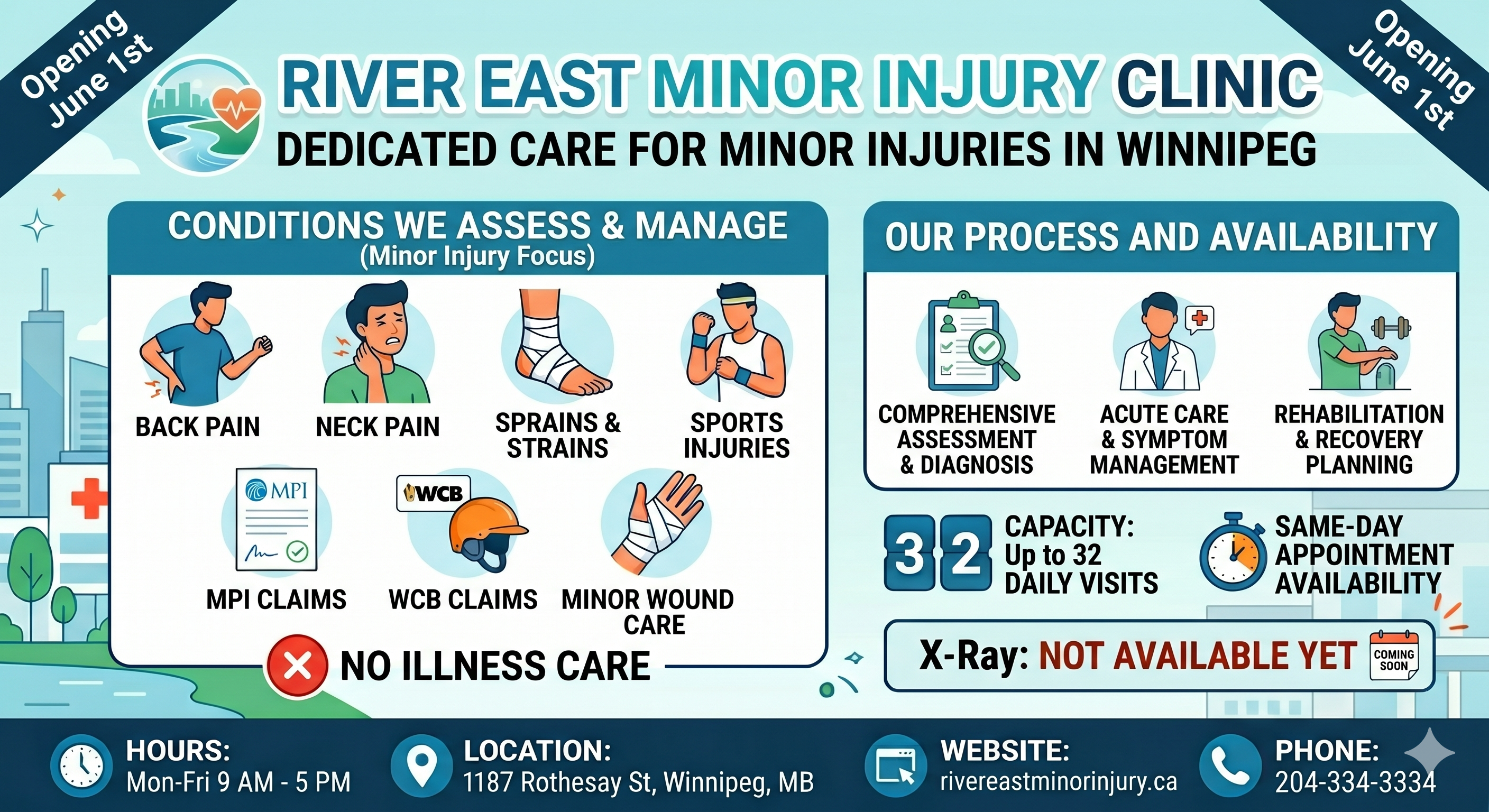
River East Minor Injury Clinic is officially open!
We provide dedicated, multidisciplinary assessment and treatment for minor physical injuries. If you have experienced a recent sprain, strain, minor fracture, or sports-related injury, our team of healthcare professionals is here to help you begin your recovery.
What we treat:
Sprains and strains
Minor fractures
Sports and activity injuries
Workplace and Motor Vehicle Injuries
What we do not treat:(Please visit your primary care provider, an emergency room, or a minor illness clinic for the following)
Coughs, colds, or flu
Fevers or infections
Chronic health conditions or illnesses
To ensure you receive timely care without the uncertainty of walk-in wait times, we offer scheduled same-day and next-day appointments.
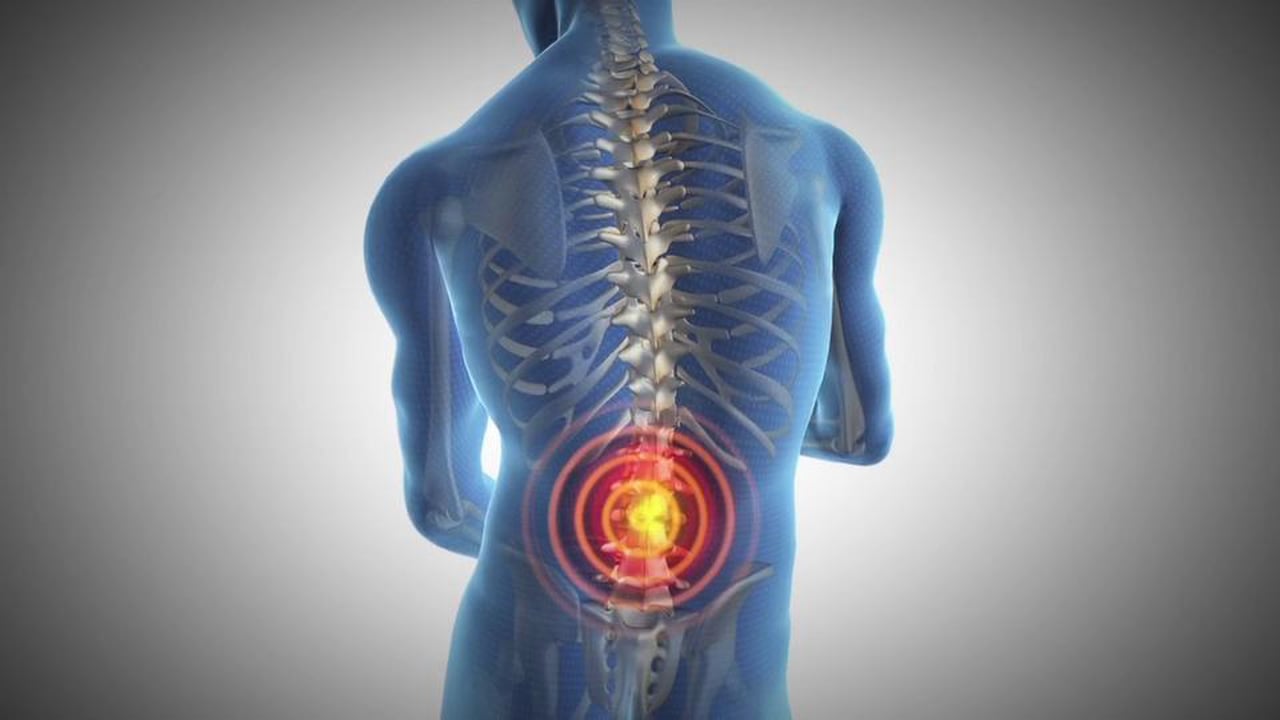
Your low back consists of 5 individual vertebrae stacked on top of each other. Flexible cushions called “discs” live between each set of vertebrae. A disc is made up of two basic components. The inner disc, called the “nucleus”, is like a ball of jelly about the size of a marble. This jelly is held in place by the outer part of the disc called the “annulus”, which is a tough ligament that wraps around the inner nucleus much like a ribbon wrapping around your finger. Your low back relies on discs and other ligaments for support. “Discogenic Low Back Pain” develops when these tissues are placed under excessive stress, much like a rope that frays when it is stretched beyond its normal capacity. Most commonly, disc pain is not the result of any single event, but rather from repeated overloading. Your lumbar discs generally manage small isolated stressors quite well, but repetitive challenges lead to injury in much the same way that constantly bending a piece of copper wire will cause it to break. Examples of these stressors include: bad postures, sedentary lifestyles, poor fitting workstations, repetitive movements, improper lifting, or being overweight.
Approximately one third of adults will experience pain from a lumbar disc at some point in their lifetime. The condition is more common in men. Most lumbar disc problems occur at one of the two lowest discs- L5 or L4. Smokers and people who are generally inactive have a higher risk of lumbar disc problems. Certain occupations may place you at a greater risk, especially if you spend extended periods of time sitting or driving. People who are tall or overweight have increased risk of disc problems.
Symptoms from disc pain may begin abruptly but more commonly develop gradually. Symptoms may range from dull discomfort to surprisingly debilitating pain that becomes sharper when you move. Rest may relieve your symptoms but often leads to stiffness. The pain is generally centered in your lower back but can spread towards your hips or thighs. Be sure to tell your doctor if your pain extends beyond your knee, or if you have weakness in your lower extremities or a fever.
Repeated injuries cause your normal healthy elastic tissue to be replaced with less elastic “scar tissue.” Over time, discs may dehydrate and thin. This process can lead to ongoing pain and even arthritis. Patients who elect to forego treatment and “just deal with it” develop chronic low back pain more than 60% of the time. Seeking early and appropriate treatment like the type provided in our office is critical.
Depending on the severity of your injury, you may need to limit your activity for a while, especially bending, twisting, and lifting, or movements that cause pain. Bed rest is not in your best interest. You should remain active and return to normal activities as your symptoms allow. Light aerobic exercise (i.e. walking, swimming, etc) has been shown to help back pain sufferers. The short-term use of a lumbar support belt may be helpful. Sitting makes your back temporarily more vulnerable to sprains and strains from sudden or unexpected movements. Be sure to take “micro breaks” from workstations for 10 seconds every 20 minutes.
Low back pain (LBP) can arise from disks, nerves, joints, and the surrounding soft tissues.
To simplify the task of determining “What is causing my LBP?” the Quebec Task Force recommends that LBP be divided into three main categories: 1) Mechanical LBP; 2) Nerve root related back pain; and 3) Pathology or fracture. We will address the first two, as they are most commonly managed by chiropractors.
Making the proper diagnosis points your doctor in the right direction regarding treatment. It avoids time wasted by treating an unrelated condition, which runs the risk of increased chances of a poor and/or prolonged recovery. Low back pain is no exception! The “correct” diagnosis allows treatment to be focused and specific so that it will yield the best results.
Mechanical low back pain is the most commonly seen type of back pain, and it encompasses pain that arises from sprains, strains, facet and sacroiliac (SI) syndromes, and more. The main difference between this and nerve root-related LBP is the ABSENCE of a pinched nerve. Hence, pain typically does NOT radiate, and if it does, it rarely goes beyond the knee and normally does not cause weakness in the leg.
The mechanism of injury for both types of LBP can occur when a person does too much, maintains an awkward position for too long, or over bends, lifts, and/or twists. However, LBP can also occur “insidiously” or for seemingly no reason at all. However, in most cases, if one thinks hard enough, they can identify an event or a series of “micro-traumas” extending back in time that may be the “cause” of their current low back pain issues.
Nerve root-related LBP is less common but it is often more severe—as the pain associated with a pinched nerve is often very sharp, can radiate down a leg often to the foot, and cause numbness, tingling, and muscle weakness. The location of the weakness depends on which nerve is pinched. Think of the nerve as a wire to a light and the switch of the nerve is located in the back where it exits the spine. When the switch is turned on (the nerve is pinched), and the “light” turns on—possibly in the outer foot, middle foot, inner foot, or front, back or side of the thigh. In fact, there are seven nerves that innervate or “run” into our leg, so usually, a very specific location “lights up” in the limb.
Determining the cause of your low back pain helps your doctor of chiropractic determine which treatments may work best to alleviate your pain as well as where such treatments can be focused.
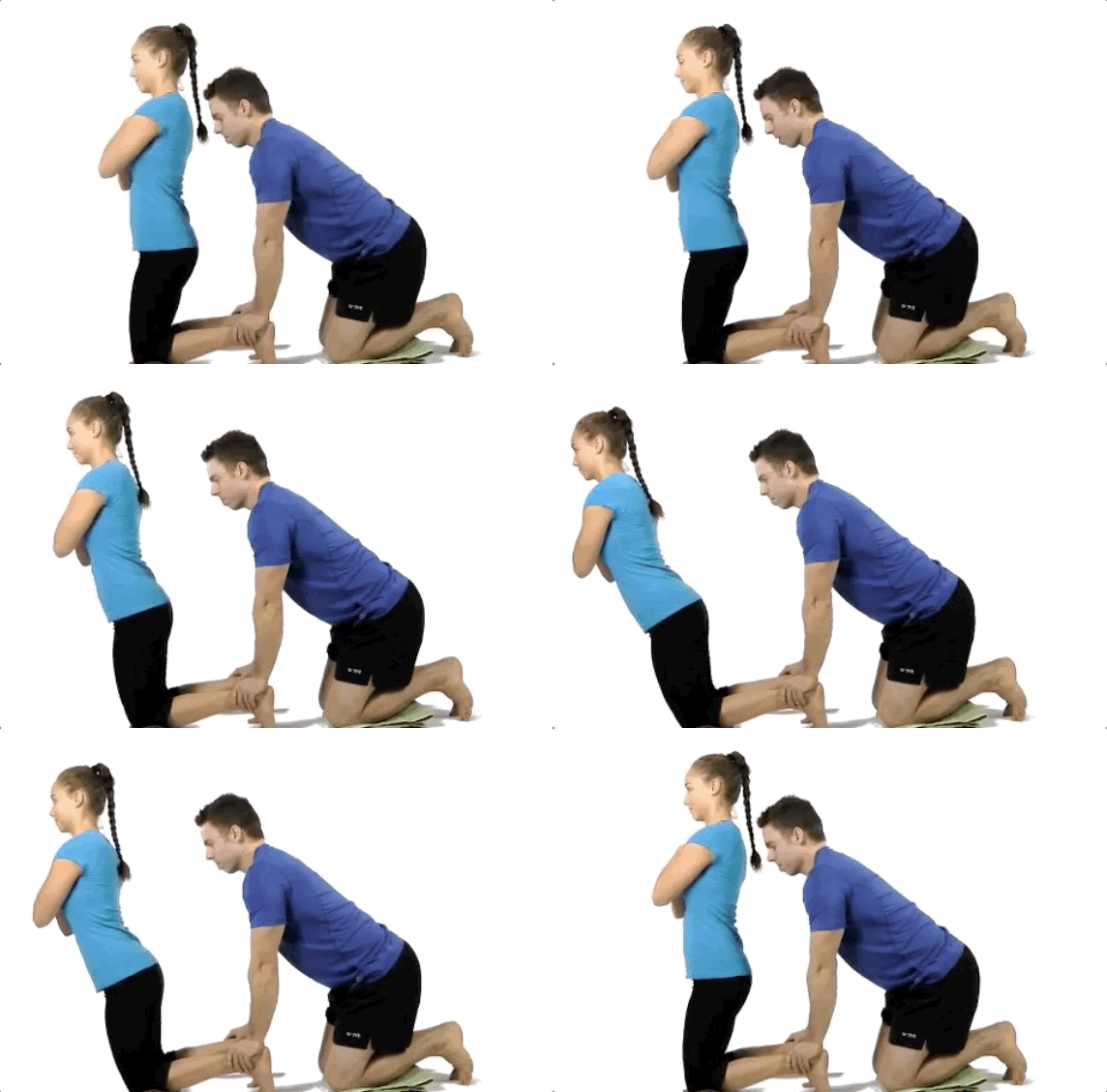
A great injury prevention movement is the glute-ham raise. Done after a warm up and prior to competition it will significantly reduce the odds of hamstring strains in running athletes in sports like Soccer, Football and Sprinting.
To perform the movement:
Begin in a tall kneeling position on a cushion or pillow.
Partner grabs and holds ankles to ground or hook your feet under a stable surface.
Keeping your torso neutral and your thighs in line with your body, bend forward at the knees, using your hamstrings to control the speed of your forward bend.
Go as far as you can without cramping, pain or falling to the ground.
Between 80% and 90% of the general population will experience an episode of lower back pain (LBP) at least once during their lives. When it affects the young to middle-aged, we often use the term “non-specific LBP” to describe the condition. The geriatric population suffers from the “aging effects” of the spine—things like degenerative joint disease, degenerative disk disease, and spinal stenosis. Fractures caused by osteoporosis can also result in back pain.
The “good news” is that there are rare times when your doctor must consider a serious cause of LBP. That’s why he or she will ask about or check the following during your initial consultation: 1) Have you had bowel or bladder control problems? (This is to make sure a patient doesn’t have “cauda equina syndrome”—a very severely pinched nerve.) 2) Take a patient’s temperature and ask about any recent urinary or respiratory tract infections to rule out spinal infections. 3) To rule out cancer, a doctor may ask about a family or personal history of cancer, recent unexplained weight loss, LBP that won’t go away with time, or sleep interruptions that are out of the ordinary. 4) To rule out fractures, a doctor may also take x-rays if a patient is over age 70 regardless of trauma due to osteoporosis, over age 50 with minor trauma, and at any age with major trauma.
Once a doctor of chiropractic can rule out the “dangerous” causes of LBP, the “KEY” form of treatment is giving reassurance that LBP is manageable and advise LBP sufferers of ALL ages (especially the elderly) to KEEP MOVING! Of course, the speed at which we move depends on many things—first is safety, but perhaps more importantly is to NOT BECOME AFRAID to do things! As we age, we gradually fall out of shape and end up blaming our age for the inability to do simple normal activities. Regardless of age, we must GRADUALLY increase our activities to avoid the trap of sedentary habits resulting in deconditioning followed “fear avoidant behavior!”
Here are a few “surprising” reasons your back may be “killing you”: 1) You’re feeling down – That’s right, having “the blues” and more serious mood disorders, like depression, can make it more difficult to cope with pain. Also, depression often reduces the drive to exercise, may disturb sleep, and can affect dietary decisions—all of which are LBP contributors. 2) Your phone – Poor posture caused by holding a phone between your bent head and shoulder (get a headset!) or prolonged mobile phone use can increase your risk for spinal pain. 3) Your feet hurt, which makes you walk with an altered gait pattern, forcing compensatory movements up the “kinetic chain” leading to LBP. 4) Core muscle weakness, especially if you add to that a “pendulous abdomen” from being overweight—this is a recipe for disaster for LBP. 5) Tight short muscles such as hamstrings, hip rotator muscles, and/or tight hip joint capsules are common problems that contribute to LBP. Stretching exercises can REALLY help!




 Your low back relies on discs and other ligaments for support. “Discogenic Low Back Pain” develops when these tissues are placed under excessive stress, much like a rope that frays when it is stretched beyond its normal capacity. Most commonly, disc pain is not the result of any single event, but rather from repeated overloading. Your lumbar discs generally manage small isolated stressors quite well, but repetitive challenges lead to injury in much the same way that constantly bending a piece of copper wire will cause it to break. Examples of these stressors include: bad postures, sedentary lifestyles, poor fitting workstations, repetitive movements, improper lifting, or being overweight.